
 Cleveland Museum of Art · CC0 1.0
Pages in this section
 Mission and MandateThe founding treaty, the mandate and the values that have guided OIMAP's action since 2007.›
 GovernanceThe General Assembly, the Executive Council and the five standing committees that run the Organization.›
 General SecretariatOIMAP's administration: a Secretary-General, nine directorates and about 410 staff.›
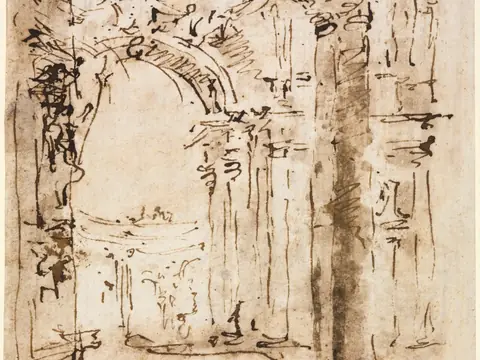 Paris OfficeThe Organization's headquarters, home to the Secretary-General, the directorates and the OIMAP Desk.›
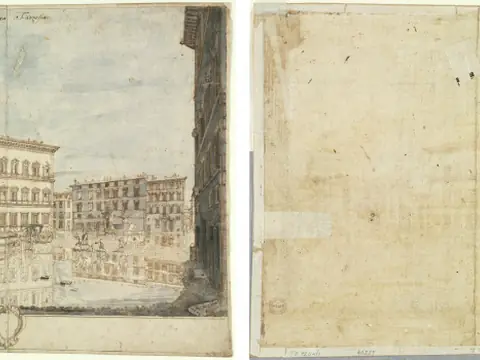 Geneva OfficeOIMAP's liaison outpost to international organizations, also responsible for monitoring the Middle East.›
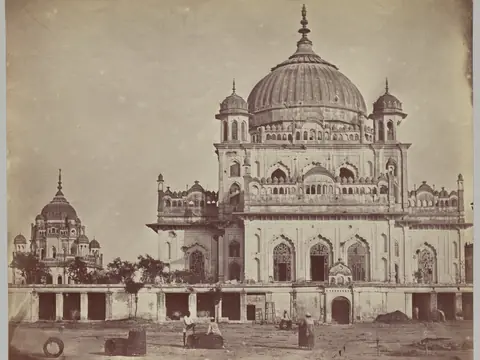 New York OfficeThe OIMAP branch for the Americas, at the heart of the world's leading art market.›
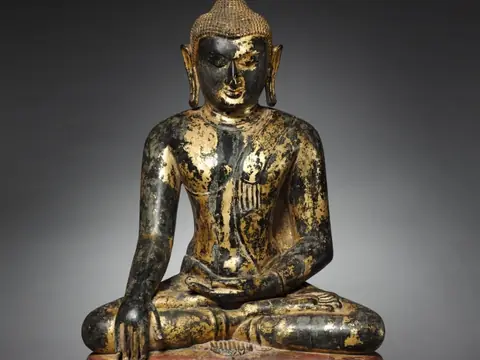 Singapore OfficeOIMAP's regional office for Asia-Pacific: missions, contacts and access.›
 Nairobi OfficeThe OIMAP regional office for Africa: missions, contacts and access.›
 OIMAP partnersThe Organization's partners: international organizations, museum institutions and private sector players.›
 Financial ReportsBudget, certified accounts and audit: how OIMAP finances its work and reports on it to the Member States.›
 Careers at OIMAPJoining an intergovernmental organization of 410 staff: positions, internships and how to apply.›
 Ethics and IntegrityCode of conduct, confidential reporting and management of conflicts of interest: the rules that guarantee the independence of OIMAP.›
 TransparencyPublic documents, the right of access to information and public procurement: how OIMAP reports on its work.›
 Legal NoticesThe site publisher, the processing of personal data and the use of cookies: the legal framework of this site.›
 Site MapThe site's sections, the search tool and accessibility commitments for easy navigation.›
Getting to Know the Organization
The International Organization for the Art Market and Heritage is an intergovernmental organization founded in 2007 by 23 pioneering States. It now has 67 Member States, its headquarters are in Paris and its motto consists of three verbs: Observe, Regulate, Protect.
This section presents the institution itself: its mandate, its decision-making bodies, its General Secretariat, its five offices, its partners, its finances, its ethics rules and its transparency commitments.
It is intended for State representatives, art market professionals, researchers, journalists and job or internship applicants.
The Organization in Figures
Source: OIMAP General Secretariat.
Sections of About
 IdentityMission and Mandate
Statutes, mandate and values of the Organization.
› BodiesGovernance
General Assembly, Executive Council and standing committees.
› AdministrationGeneral Secretariat
Secretary-General, directorates and organization chart.
› HeadquartersParis Office
Headquarters of the Organization, contacts and access.
› OfficeGeneva Office
Liaison with the UN and the WTO, Middle East.
› OfficeNew York Office
Regional office for the Americas.
› OfficeSingapore Office
Asia-Pacific regional office.
› OfficeNairobi Office
Regional office for Africa.
›CooperationPartnersInternational organizations, museums and the private sector.
›FinancesFinancial ReportsBudget, accounts and audit.
›EmploymentCareersJob vacancies, internships and applications.
›Professional ethicsEthics and IntegrityCode of conduct, reporting and conflicts of interest.
›InformationTransparencyPublic documents, access to information and public procurement.
›LegalLegal NoticesPublisher, personal data and cookies.
›NavigationSite MapSections, search and accessibility.
›
An Intergovernmental Organization
OIMAP was established by a founding treaty, the 2007 Statutes. It has international legal personality and acts in the service of its Member States. Its official languages are French, English and Spanish.
Its mandate is summed up in six missions: observing the market, regulating, protecting heritage, certifying, training and arbitrating. Each is entrusted to a directorate of the General Secretariat and monitored by a standing committee.
Clear Decision-Making Bodies
The General Assembly is the supreme body: each State has one vote and it meets every year. Its 19th session takes place in Singapore from 10 to 12 June 2026. The Executive Council, with fifteen members, prepares and follows up decisions between sessions.
Five standing committees examine questions of finance and audit, certification and standards, protection and restitution, arbitration and professional ethics, and cooperation and training.
A General Secretariat at the Service of States
The Secretary-General, Dr. Philippe Aubert de Vincelles, is elected by the General Assembly for four years, renewable once. He leads a Secretariat of about 410 staff members of 52 nationalities (indicative), organized into nine directorates.
The Secretariat implements the decisions of the bodies, manages services to users and represents the Organization before its partners.
A Presence on Five Sites
The Paris headquarters houses the leadership and most of the services. The offices in Geneva, New York, Singapore and Nairobi ensure proximity to the regions: liaison with the UN and the WTO and monitoring of the Middle East for Geneva, and the Americas, Asia-Pacific and Africa for the others.
Each office page indicates its missions, contacts and access.
Reporting and Acting with Integrity
The Organization publishes its accounts, subjects its purchases to competition and has adopted a code of conduct, a confidential reporting procedure and rules on conflicts of interest. These commitments appear in the Transparency, Financial Reports and Ethics and Integrity sections.
The Institution at a Glance
| Theme | Information |
|---|---|
| Headquarters | Paris |
| Offices | Geneva, New York, Singapore, Nairobi |
| Official languages | French, English, Spanish |
| Supreme body | General Assembly (one vote per State) |
| Secretary-General | Dr. Philippe Aubert de Vincelles |
Milestones
- Foundation
Twenty-three States sign the Statutes.
- OIMAP Directives
Seven binding directives.
- 67 States
More than sixty Member States.
- 19th General Assembly
Singapore, 10–12 June.
Institution or services
Understanding the Institution
Mandate, bodies, offices- Mission and Mandate
- Governance
- Offices
To get to know the Organization.
Engaging with It
Careers, transparency, contacts- Careers
- Access to information
- Office contacts
To get in touch.
Finding the Right Information
- Identify
The topic you are looking for.
- Open
The subsection.
- Read
The detailed pages.
- Download
The associated documents.
- Contact
The relevant office.
Before Contacting the Secretariat
A Diplomat
« A site that presents the bodies, budgets and procedures so clearly makes dealing with the Organization simpler. »
Institutional Vocabulary
- General Assembly
- Supreme body in which all States sit.
- Executive Council
- Body of fifteen members elected for three years.
- General Secretariat
- Administration headed by the Secretary-General.
- Standing Committee
- Specialized body of the Organization.
Frequently Asked Questions
Where is the headquarters?
In Paris: see Paris Office.
Who leads the Organization?
The Secretary-General: see Secretary-General.
How do I apply?
See Careers.
Where can I see the accounts?
See Financial Reports.
Useful Documents
Contacts
Related Pages
 Mission and MandateThe founding treaty, the mandate and the values that have guided OIMAP's action since 2007.›
 GovernanceThe General Assembly, the Executive Council and the five standing committees that run the Organization.›
 Paris OfficeThe Organization's headquarters, home to the Secretary-General, the directorates and the OIMAP Desk.›
 TransparencyPublic documents, the right of access to information and public procurement: how OIMAP reports on its work.›
Consult the governance pages
Image credits (40)
- The Grotto of Posillipo, Hubert Robert (c. 1769) — Cleveland Museum of Art, CC0 1.0
- Architectural Conference (c. 1622) — Cleveland Museum of Art, CC0 1.0
- The Victory Banquet: from Battle Scenes of the Quelling of Rebellions in the Western Regions, with Imperial Poems (c. 1765–74; poem dated 1760) — Cleveland Museum of Art, CC0 1.0
- Portrait of Sandford Peacocke, William Wood (1801) — Cleveland Museum of Art, CC0 1.0
- Pair of Drawings: Sketch of the Labyrinth of the Villa Pisani and Piazza San Marco with Doges' Palace, Francesco Guardi (1773–1778(?)) — Cleveland Museum of Art, CC0 1.0
- Eighteen Views of Rome: The Piazza Farnese (recto); Cartouche (verso), Lievin Cruyl (1664) — Cleveland Museum of Art, CC0 1.0
- Small Mosque in the Kaiserbagh, Felice A. Beato (1858) — Cleveland Museum of Art, CC0 1.0
- Seated Buddha (1100s) — Cleveland Museum of Art, CC0 1.0
- Power figure (nkisi) (late 1800s-early 1900s) — Cleveland Museum of Art, CC0 1.0
- The Dance at the Court of Herod, Israhel van Meckenem (c. 1500) — Cleveland Museum of Art, CC0 1.0
- Coin of Eukratides I (170–145 BCE) — Cleveland Museum of Art, CC0 1.0
- Artist with His Palette and Brushes (c. 1855) — Cleveland Museum of Art, CC0 1.0
- Dr. James Stuart; Mary Campbell Stuart, Gilbert Stuart (c. 1815) — Cleveland Museum of Art, CC0 1.0
- Temple of Ramesses II, Abu Simbel, Antonio Beato (c. 1860s) — Cleveland Museum of Art, CC0 1.0
- Portrait of John VIII Palaoelogus, Emperor of Constantinople, 1424-1428 (reverse), Pisanello (c. 1438–1439) — Cleveland Museum of Art, CC0 1.0
- Eighteen Views of Rome: The Piazza Farnese (recto), Lievin Cruyl (1664) — Cleveland Museum of Art, CC0 1.0
- Panel (c. 1780–1840) — Cleveland Museum of Art, CC0 1.0
- The Pyramid of Cestius, Rome, Michiel van Overbeek (c. 1650–80) — Cleveland Museum of Art, CC0 1.0
- Egypt and Nubia, Volume I: The Great Temple of Aboo-Simble, Nubia, Louis Haghe (1846) — Cleveland Museum of Art, CC0 1.0
- Edge of the Woods Near L'Hermitage, Pontoise, Camille Pissarro (1879) — Cleveland Museum of Art, CC0 1.0
- Maharaja of Kotah Listening to Music and Watching Dancers (c. 1820) — Cleveland Museum of Art, CC0 1.0
- The Four Seasons, Kano Tan’yū (1668) — Cleveland Museum of Art, CC0 1.0
- Nowshera, Kashmir (number 1000), Samuel Bourne (1864) — Cleveland Museum of Art, CC0 1.0
- Coronation of the Virgin, Christoffel Jegher (1632–36) — Cleveland Museum of Art, CC0 1.0
- The Apotheosis of Romulus: Design for a Ceiling, Domenico Maria Canuti (c. 1675–76) — Cleveland Museum of Art, CC0 1.0
- Portrait of a Man, Gustave Caillebotte (1880) — Cleveland Museum of Art, CC0 1.0
- A Palace with an Arched Bridge (A Roman Villa), Hubert Robert (1760) — Cleveland Museum of Art, CC0 1.0
- Gathering among the Members of Office Censor-General (1700s) — Cleveland Museum of Art, CC0 1.0
- Farmhouse on the Slope of a Hill, Fra Bartolommeo (c. 1508) — Cleveland Museum of Art, CC0 1.0
- Bidri Hookah Bowl with Roses (c. 1650s) — Cleveland Museum of Art, CC0 1.0
- Roman Ruins, Villa Pamfili, Hubert Robert (1774) — Cleveland Museum of Art, CC0 1.0
- Lace Towel End (c. 1700s–1800s) — Cleveland Museum of Art, CC0 1.0
- Capriccio: A Palace with a Courtyard by the Lagoon, Antonio Canaletto (c. 1750–55) — Cleveland Museum of Art, CC0 1.0
- Saint Jerome and the Lion (From the former Church of St. Peter in Erfurt), Tilman Riemenschneider (c. 1495) — Cleveland Museum of Art, CC0 1.0
- Temple at Naveshera, Kashmir, India, Samuel Bourne (1864) — Cleveland Museum of Art, CC0 1.0
- The Doge's Palace, Venice, Richard Parkes Bonington (1826) — Cleveland Museum of Art, CC0 1.0
- Self-Portrait, John I Smart (1802) — Cleveland Museum of Art, CC0 1.0
- Study for "A Sunday on La Grande Jatte", Georges Seurat (1884) — The Metropolitan Museum of Art, CC0 1.0
- Sketch of the Labyrinth of the Villa Pisani, Francesco Guardi (1773–1778(?)) — Cleveland Museum of Art, CC0 1.0
- Side Drawer for Cabinet, André-Charles Boulle (c. 1690) — Cleveland Museum of Art, CC0 1.0