
 Cleveland Museum of Art · CC0 1.0
One account, one verified identity
To open a case, you first need an account on the Desk. Registration takes ten minutes; identity verification, one to two working days.
The account ties all your procedures to a verified identity. It is personal for an individual, professional for a gallery or an auction house, institutional for a museum or an administration.
A verified account is essential to submit a case, collect a certificate or consult the detailed information on a work.
Registration in figures
Registering in five steps
- Choose your profile
Individual, professional or institution.
- Fill in your details
Identity, address, contact details, language of correspondence.
- Confirm your email address
A confirmation link is sent to the address given.
- Upload your identity document
Valid document, front and back, or passport.
- Activate two-factor authentication
Authentication app or code received by SMS.
The three profiles
| Profile | Documents requested | Specifics |
|---|---|---|
| Individual | Identity document | Full rate |
| Professional | Representative's identity document, registration extract | Secondary accounts for staff |
| Institution | Appointment decision, identification of the establishment | 30% reduced rate |
Personal data
Personal account or professional account
Personal account
One person- Cases in your name
- Payment by card or transfer
- Verification within 24 hours
For individuals.
Professional account
An organisation and its staff- Several users
- Cases on behalf of third parties with mandate
- Invoicing to the entity
For galleries and auction houses.
The first days of an account
- Registration
Form completed.
- Confirmation
Email address confirmed.
- Verification
Identity document checked.
- Active account
Case submission possible.
Case study: a regional museum
An institutional account
A regional museum opens an account to prepare the loans for an exhibition.
- Appointment of an account manager by the management.
- Submission of the appointment decision.
- Creation of secondary accounts for the registrars.
The museum benefits from the reduced rate and a dedicated contact.
Why an identity check?
OIMAP records in the Registry works, owners and acts that produce legal effects in 67 States. A verified identity protects owners from impersonation and buyers from false files.
Verification is carried out by a Desk officer, never by a commercial third party. Identity documents are encrypted, accessible only to authorised officers, and removed from the verification system once the account is validated.

Security tips
Why verify identity
« A registry is only reliable if we know who writes in it. »
Vocabulary of the account
- Verified account
- Account whose identity has been checked.
- Secondary account
- Access delegated by a professional account to a staff member.
- Two-factor authentication
- Second code required at login.
- Closure
- Closing of the account at the request of its holder.
Frequently asked questions
My identity document is foreign: is that a problem?
No, any passport or national document in date is accepted.
Can I change profile?
Yes, by supplying the documents of the new profile.
I have lost my second factor: what should I do?
Use the backup codes given at registration or request a verified reset.
Is my data passed on to third parties?
No, except under a legal obligation or with express consent.
Useful documents
Desk assistance
Related pages
 Submit a caseDescribe the work, choose the acts, upload the documents and pay the deposit: submitting a case step by step.›
 NewsletterSubscribe to the OIMAP newsletter, browse past issues and manage your preferences.›
 Legal NoticesThe site publisher, the processing of personal data and the use of cookies: the legal framework of this site.›
Submit a case
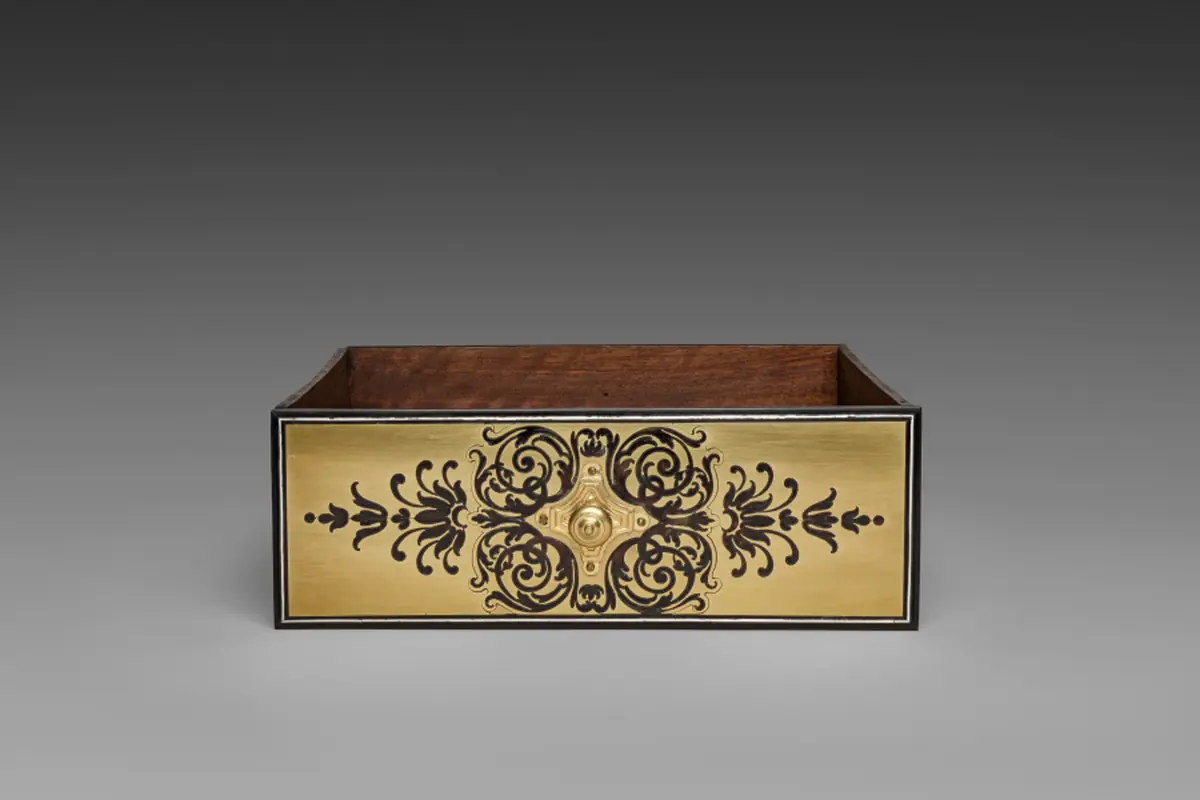
Image credits (16)
- Seal of Doge Michele Steno (reverse) (1400–1409) — Cleveland Museum of Art, CC0 1.0
- Altarpiece with Relics - God the Father, Joseph Matthias Götz (1735–40) — Cleveland Museum of Art, CC0 1.0
- Sweet Melancholy, Joseph-Marie Vien (1756) — Cleveland Museum of Art, CC0 1.0
- Side Drawer for Cabinet, André-Charles Boulle (c. 1690) — Cleveland Museum of Art, CC0 1.0
- Letter Box, Ogata Kōrin (1700s) — Cleveland Museum of Art, CC0 1.0
- Self-Portrait with Five Muses, Henry Church (c. 1880) — Cleveland Museum of Art, CC0 1.0
- Carnet (1863–1865) — Cleveland Museum of Art, CC0 1.0
- Twilight in the Wilderness, Frederic Edwin Church (1860) — Cleveland Museum of Art, CC0 1.0
- Carved Lacquer Scroll Box (1736–95) — Cleveland Museum of Art, CC0 1.0
- Study for "Bathers at Asnières", Georges Seurat (c. 1883–84) — Cleveland Museum of Art, CC0 1.0
- Seal with Two Qilin Playing (1849) — Cleveland Museum of Art, CC0 1.0
- The Pyramid of Cestius, Rome, Michiel van Overbeek (c. 1650–80) — Cleveland Museum of Art, CC0 1.0
- Chemin de fer de Toulouse à Bayonne. Pont de l'Aran (en trois arches de 17m d'ouverture chacune). Situation des travaux au 21 juillet 1861, Édouard Baldus (1861) — Cleveland Museum of Art, CC0 1.0
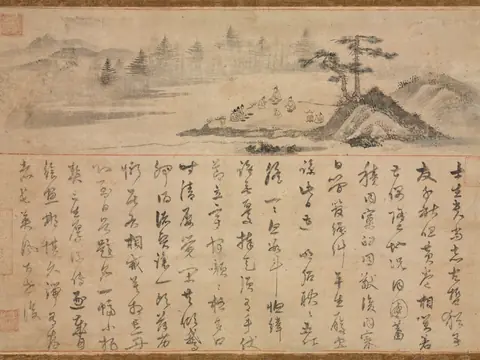
- Gathering among the Members of Office Censor-General (1700s) — Cleveland Museum of Art, CC0 1.0
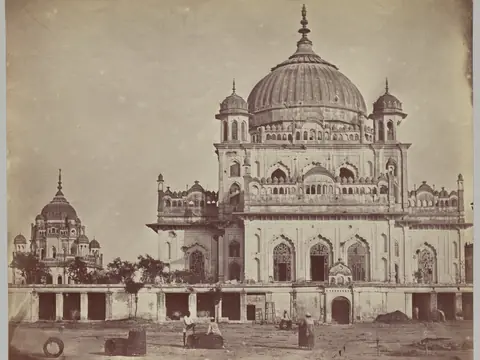
- Small Mosque in the Kaiserbagh, Felice A. Beato (1858) — Cleveland Museum of Art, CC0 1.0
- Interior Drawer for Cabinet, André-Charles Boulle (c. 1690) — Cleveland Museum of Art, CC0 1.0