
 Cleveland Museum of Art · CC0 1.0
What the arbitrators decided
Provenance decisions are among the most delicate: they involve family histories, sometimes collective ones. This page summarises four anonymised cases, adapted to guarantee confidentiality, and draws practical lessons from them.
Each sheet gives the facts, the question raised, the outcome and the lessons. For the full texts, see the decision database.
These cases illustrate a constant point: the tribunal seeks first the historical truth, then the equitable solution.
Provenance decisions in figures
Source: Registry of the OIMAP Arbitral Tribunal.
Case 1: the inherited painting
Two branches of a family were disputing a painting left without a will. One had put it up for sale, the other opposed. The tribunal reconstructed the succession, established the rights of each and ordered the price to be shared after sale, with a right of first offer for the family.
Lesson: international successions are better settled by a global solution than by a strict application of the law. Mediation had failed for lack of decision-making power of one of the heirs.
Case 2: the spoliated sculpture
A sculpture reappearing in a sale had been confiscated from a collector in 1941. The current buyer, in good faith, had bought after a serious but incomplete search. The tribunal found spoliation, ordered restitution to the heirs, and awarded the buyer compensation of a third of the value, payable by the seller.
Lesson: in the case of proven spoliation, restitution prevails even over long possession. The buyer's diligence influences compensation.
Cases 3 and 4: old theft and doubtful title
In a case of old theft (1978), the owner had not reported the theft and the work had changed hands three times. The tribunal applied the limitation period of the chosen law and dismissed the claim, but noted the fault of the original seller and ordered the seller to pay compensation to the buyer.
In a case of doubtful title, a museum and a collector claimed the same ceramic. An agreement resulted in a long-term loan, ownership remaining with the collector. This solution allowed the work to be exhibited without settling the question of origin.
Role of symbolic reparation
Beyond material questions, many families seek recognition: a mention of the spoliation in the catalogue, display of the work's history, a commemorative plaque. The tribunal may build such measures into the award or agreement.
They contribute to lasting reparation and help bring the dispute to an end. Institutions holding works concerned are increasingly attentive to this.
Four outcomes
| Case | Outcome | Principle |
|---|---|---|
| Inheritance | Sharing of the price | Equity among heirs |
| Spoliation | Restitution and compensation | Primacy of justice |
| Old theft | Dismissal by limitation | Security of trade |
| Doubtful title | Long-term loan | Creative solution |
Milestones
- First provenance decision
Succession.
- Spoliation
Restitution.
- Long-term loan
Creative solution.
- 90 decisions
Substantial case law.
Cases, not rules
Restitution or negotiated solution
Restitution
Return to the owner- Historical justice
- Sometimes indispensable
- Buyer sometimes compensated
Proven spoliation.
Negotiated
Compromise- Fast
- Flexible
- Respects the work
When the rights are uncertain.
Drawing lessons
- Research
Complete provenance.
- Document
File.
- Dialogue
Mediation.
- Decide
Arbitration.
- Enforce
Restitution.
Lessons
An arbitrator
« What struck me most is that the parties often seek recognition rather than victory. »
Vocabulary of decisions
- Spoliation
- Forced dispossession.
- Sharing
- Distribution among rightful claimants.
- Long-term loan
- Making available for several years.
- Compensation
- Sum paid by way of reparation.
Frequently asked questions
Are the cases real?
They are adapted from real, anonymised decisions.
Are there restitution decisions?
Yes, see the dedicated section.
May I cite them?
Via the database.
Where can I see restitution?
See Restitution disputes.
Useful documents
Contacts
Related pages
 Provenance disputesWho is the rightful owner? Principles, evidence and TAO decisions when the origin of a work is contested.›
 Decision database412 anonymised decisions: content, structure of an entry, themes, languages and conditions of access.›
 Restitution disputesStates, communities, museums and collectors: how the TAO handles claims for the return of cultural property.›
See restitution disputes
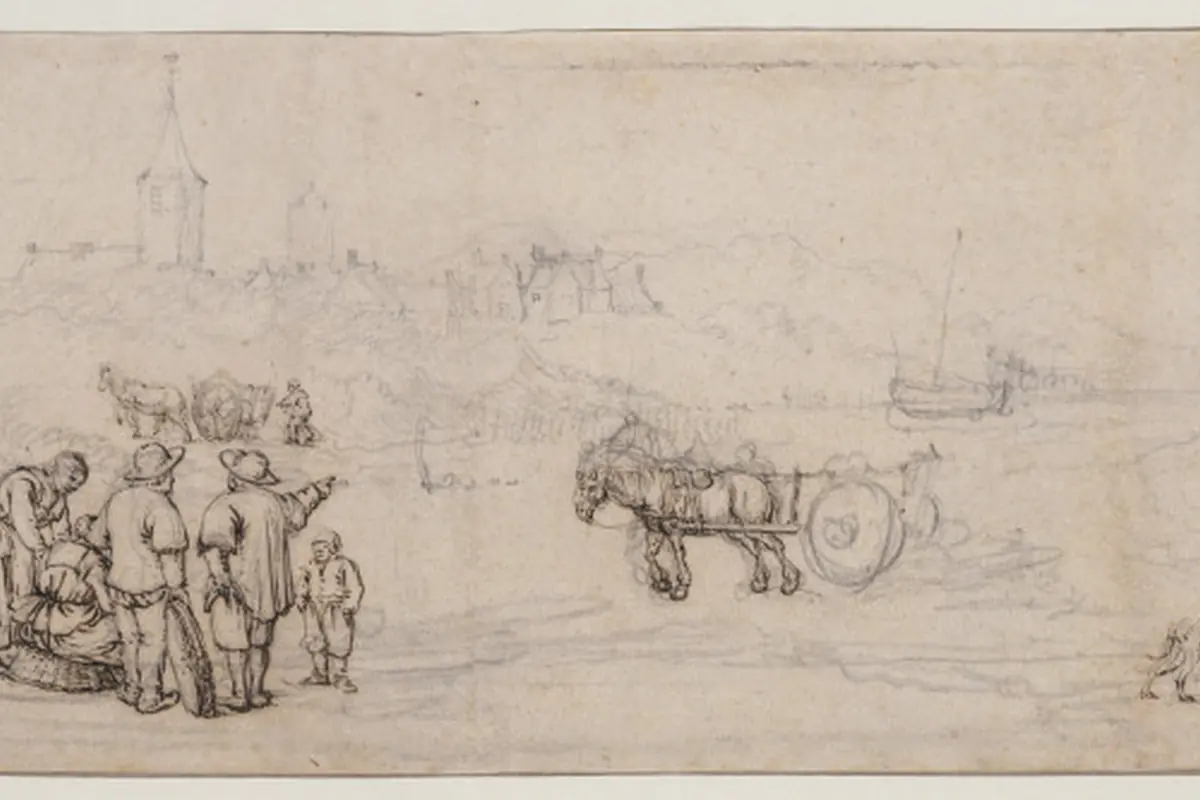
Image credits (16)
- Dr. James Stuart; Mary Campbell Stuart, Gilbert Stuart (c. 1815) — Cleveland Museum of Art, CC0 1.0
- Seal Color Box (1662–1722) — Cleveland Museum of Art, CC0 1.0
- The Calumny of Apelles, Giorgio Ghisi (1560) — Cleveland Museum of Art, CC0 1.0
- Seven Jeweled Mountain (late 1800s) — Cleveland Museum of Art, CC0 1.0
- The Judgment of Solomon and Esther before Ahasuerus (pair), Dirk Vellert (c. 1530) — Cleveland Museum of Art, CC0 1.0
- Carnet (1863–1865) — Cleveland Museum of Art, CC0 1.0
- Sketches in Belgium and Germany, Volume I: Hall of Justice of the Magistrates du Franc, Bruges, Louis Haghe (1840) — Cleveland Museum of Art, CC0 1.0
- Arrival of the "Southern Barbarians" (c. 1600) — Cleveland Museum of Art, CC0 1.0
- The Antechamber of the Palace of Justice, Paris, Charles Meryon (1855) — Cleveland Museum of Art, CC0 1.0
- Plaque (1500s–1600s) — Cleveland Museum of Art, CC0 1.0
- Mercury (Budha), from a Mandi Astrology Series, Sanju (c. 1810) — Cleveland Museum of Art, CC0 1.0
- Small Mosque in the Kaiserbagh, Felice A. Beato (1858) — Cleveland Museum of Art, CC0 1.0
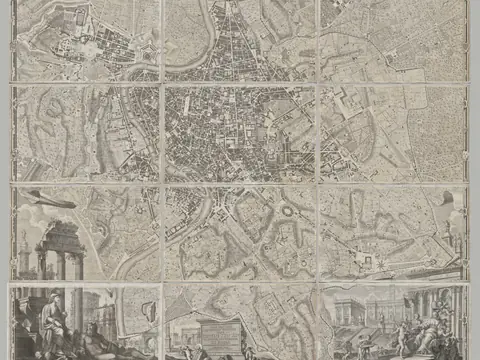
- Nuova pianta di Roma data in luce da Giambattista Nolli l’anno MDCCXLVII, known as La Pianta Grande di Roma, Giovanni Battista Nolli (1748) — Cleveland Museum of Art, CC0 1.0
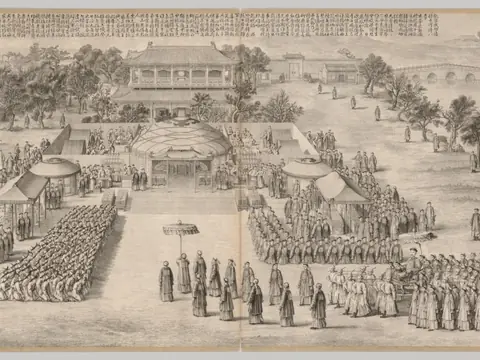
- The Victory Banquet: from Battle Scenes of the Quelling of Rebellions in the Western Regions, with Imperial Poems (c. 1765–74; poem dated 1760) — Cleveland Museum of Art, CC0 1.0
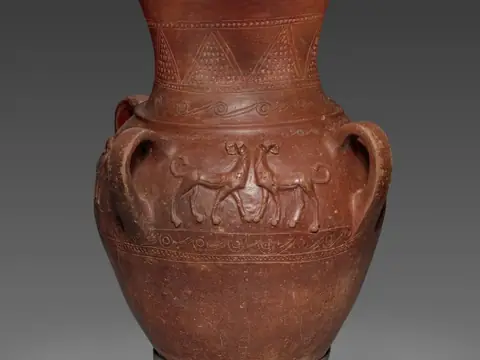
- Hittite Vessel with Four Scenes Molded and Carved in Relief (1400–1200 BCE) — Cleveland Museum of Art, CC0 1.0
- Dune Scene with Peasant Figures, Willem van de Velde (mid-1650s) — Cleveland Museum of Art, CC0 1.0