
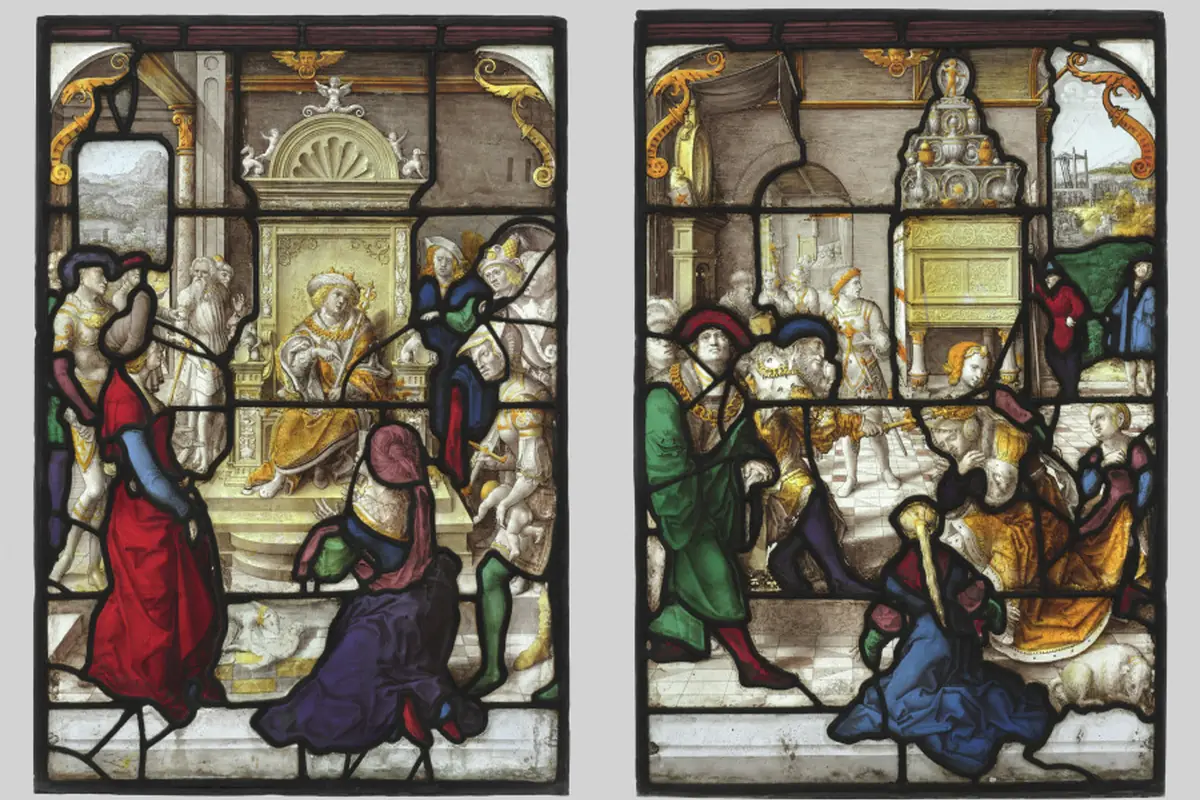
 Cleveland Museum of Art · CC0 1.0
Pages in this section
 Art market lawSales contract, warranty, authenticity, provenance and liability of intermediaries: the legal foundation of the programme.›
 Procedure and evidenceManaging an expert appraisal, ordering protective measures, cooperating with foreign courts: the procedural module.›
 Restitution of cultural propertyInternational conventions, State requests, mediation: the module devoted to the return of cultural property.›
Judging art cases
A judge faced for the first time with a dispute over the authenticity of a painting or a request for the restitution of a ritual mask finds unfamiliar notions: provenance, due diligence, expertise, international conventions. Since 2012 the Academy has offered specialised training for magistrates.
It has trained 1,120 judges, prosecutors and clerks from 49 States. The programme lasts two weeks in Paris, or one week in a decentralised session, and is free for officials of Member States.
This section presents art market law, procedure and restitution.
Training of magistrates in figures
Source: OIMAP Academy.
Three modules
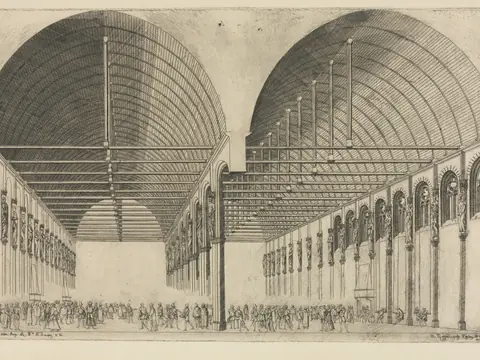
A tailor-made programme
The programme alternates legal talks, case studies, hearing simulations and visits to laboratories, auction rooms and museums. It draws on experienced magistrates, academics and arbitration practitioners.
Participants receive a manual, a collection of comparative case law and permanent access to the Academy's resources.
Practical cases
Three cases run through the training: a sale dispute over a contested painting, a criminal file of handling archaeological objects, a State's request for the restitution of cultural property. Each case is studied from the angle of applicable law, evidence, expertise and protective measures.
A hearing simulation closes the programme: each magistrate plays a role different from their usual one.
After the training
Former magistrates form an exchange network: they can find out about foreign procedures, ask a colleague's opinion and take part in working groups. Several have joined the list of arbitrators or mediators of the arbitral tribunal.
A one-day refresher module is offered each year to keep up with developments in the law.
Audience and conditions
The training is aimed at serving magistrates, clerks and judicial assistants. Enrolment goes through each State's justice administration, which appoints a focal point. Places are distributed so as to represent all regions.
Travel and accommodation costs are covered by a scholarship for magistrates from developing States.
The programme
| Week | Themes | Format |
|---|---|---|
| 1 | Market law, authenticity, provenance | Talks, cases |
| 2 | Procedure, restitution, arbitration | Simulation, visits |
Milestones
- First session
Thirty magistrates.
- Session in Nairobi
Africa.
- Online version
Pandemic.
- 1,120 magistrates
Review.
Free for Member States
In person or online
In person
Two weeks- Simulations
- Visits
- Network
Full format.
Online
Short modules- Flexibility
- Refresher
- Fewer exchanges
To update skills.
Take part
- Appoint
Focal point.
- Apply
File.
- Travel
Scholarship.
- Follow
Programme.
- Join
Network.
To prepare
A judge
« The training gave me the means to deal with a restitution file I dreaded. I was able to propose a mediation, which succeeded. »
Judicial vocabulary
- Judge
- Judge or prosecutor.
- Focal point
- Designated contact.
- Simulation
- Mock hearing.
- Comparative case law
- Decisions from several countries.
Independence of the judiciary
Trainers give no opinion on ongoing cases. Participants are free in their decisions: the training provides tools, not ready-made solutions. The cases studied are anonymised.
The Academy ensures that market operators do not take part in the programme, to preserve the impartiality of the training.
Frequently asked questions
Who can take part?
Serving magistrates.
Is it free?
Yes, for Member States.
In what language?
Three.
Where to see market law?
See Art market law.
Useful documents
Contacts
Related pages
 TrainingThe OIMAP Academy trains judges, customs officers, market professionals, experts and curators: certification programmes, online training, scholarships and regional sessions.›
 Art market lawSales contract, warranty, authenticity, provenance and liability of intermediaries: the legal foundation of the programme.›
 Procedure and evidenceManaging an expert appraisal, ordering protective measures, cooperating with foreign courts: the procedural module.›
 Restitution of cultural propertyInternational conventions, State requests, mediation: the module devoted to the return of cultural property.›
See market law
Image credits (23)
- The Judgment of Solomon and Esther before Ahasuerus (pair), Dirk Vellert (c. 1530) — Cleveland Museum of Art, CC0 1.0
- St. Anthony Reading, Albrecht Dürer (1519) — Cleveland Museum of Art, CC0 1.0
- Dr. James Stuart; Mary Campbell Stuart, Gilbert Stuart (c. 1815) — Cleveland Museum of Art, CC0 1.0
- The Calumny of Apelles, Giorgio Ghisi (1560) — Cleveland Museum of Art, CC0 1.0
- Leaf from a Lectionary with St. Luke (1057–1063) — Cleveland Museum of Art, CC0 1.0
- The Antechamber of the Palace of Justice, Paris, Charles Meryon (1855) — Cleveland Museum of Art, CC0 1.0
- Missale: Fol. 185v: Crucifixion with borders (full page), Bartolommeo Caporali (1469) — Cleveland Museum of Art, CC0 1.0
- Sketches in Belgium and Germany, Volume I: Hall of Justice of the Magistrates du Franc, Bruges, Louis Haghe (1840) — Cleveland Museum of Art, CC0 1.0
- High Class Students and Teachers at Bishop Cotton School, Shimla (verso), Raja Deen Dayal (c. 1882–87) — Cleveland Museum of Art, CC0 1.0
- Qur'an Manuscript Folio (recto; verso); Left side of Bifolio (800s) — Cleveland Museum of Art, CC0 1.0
- Woman Sitting Reading , Georges Lemmen (1905) — Cleveland Museum of Art, CC0 1.0
- Hours of Queen Isabella the Catholic, Queen of Spain, Master of the First Prayerbook of Maximillian (c. 1500) — Cleveland Museum of Art, CC0 1.0
- A Lady Reading, Francis Seymour Haden (1833–1910) — Cleveland Museum of Art, CC0 1.0
- Bookplate: Boylston Medical Library, George Girdler Smith (1806–39) — Cleveland Museum of Art, CC0 1.0
- Qur'an Manuscript Folio (800s) — Cleveland Museum of Art, CC0 1.0
- St. Catherine of Siena and the Beggar, Giovanni di Paolo (1460s) — Cleveland Museum of Art, CC0 1.0
- Miniature from a Manuscript of the Apocalypse: The War in Heaven (c. 1295) — Cleveland Museum of Art, CC0 1.0
- Nowshera, Kashmir (number 1000), Samuel Bourne (1864) — Cleveland Museum of Art, CC0 1.0
- Towel End (c 1700s- 1800s) — Cleveland Museum of Art, CC0 1.0
- A Manuscript of Five Sections of a Qur'an (18th century) — The Metropolitan Museum of Art, CC0 1.0
- Illuminated Opening Page Titled Laila and Majnun from a Khamsa (Quintet) of Nizami of Ganja, Ja'far Baisunghuri (835 AH/1431–32 CE) — The Metropolitan Museum of Art, CC0 1.0
- Left side of a double-page album folio: Outside a Royal Encampment (recto) and Calligraphy, Persian Verses (verso), Bihzad (c. 1485) — Cleveland Museum of Art, CC0 1.0
- Leaf from a Missal: The Crucifixion (recto) and Text (verso) (c. 1330–40) — Cleveland Museum of Art, CC0 1.0