
 Cleveland Museum of Art · CC0 1.0
Pages in this section
 OIMAP AcademyThree campuses, eighty-six trainers and seventeen years of experience: OIMAP's school at the service of heritage.›
 Certification programmesThree diploma programmes — market analyst, due diligence and provenance, expert-curator — recognised by Member States.›
 Customs training8,940 officers trained: identification of goods, controls and cooperation for the first line of defence of heritage.›
 Training of magistratesArt market law, procedure and restitution: a two-week training for judges and prosecutors dealing with cultural property.›
 Market professionalsAuctioneers, gallery owners and collectors: training to buy, sell and conserve safely.›
 Experts and curatorsAuthentication, conservation and ethics: the Expert-Curator Diploma and continuing training for collection professionals.›
 Session calendar410 sessions a year in Paris, Nairobi, Singapore and online: dates, venues, languages and places available.›
 EnrolmentEnrolling in an Academy course: online form, documents to provide and payment, in three steps.›
 Online training38,000 registered, 120 courses, 60 free courses: the Academy's learning platform, open everywhere, at any time.›
 Training scholarships320 scholarships a year covering 30 to 100% of costs: criteria, application and winners.›
 Regional trainingParis, Nairobi, Singapore: the flagship programmes of each campus, designed for the realities of their region.›
 Tailor-made trainingProgrammes designed for a State, an institution or a company, delivered on site or remotely, by quotation.›
 Teaching libraryManuals, case studies and videos: the Academy's resources, open to all heritage professionals.›
 Alumni9,600 Academy alumni: directory, professional network and testimonials to extend training through exchange.›
 Assessment and diplomasExams, scores, appeals and verification of diplomas: how the Academy assesses and certifies its trainees.›
Passing on heritage knowledge
Protecting works, certifying their authenticity, regulating their circulation: all of OIMAP's missions rest on human skills. The OIMAP Academy, created in 2008, passes them on to those who act every day in the field: customs officers, judges, experts, curators, dealers and collectors.
It has trained 12,400 trainees from 58 countries, has three campuses — Paris, Nairobi and Singapore — and an online platform with 38,000 registered users. Its 410 annual sessions are held in French, English and Spanish.
This section presents the Academy, the certification programmes, the calendar, scholarships and enrolment.
Training in figures
Source: OIMAP Academy.
Training sections
 InstitutionOIMAP Academy
Campuses, teaching staff.
› QualificationsCertification programmes
Catalogue, prerequisites, diplomas.
› RemoteOnline training
Platform, free courses.
› SupportTraining scholarships
Criteria, application.
› CalendarSession calendar
Dates and venues.
› ProcedureEnrolment
Form, documents, payment.
›
Field-based teaching
The Academy's training starts from real cases: a suspect work checked at a border, a provenance file to reconstruct, an arbitration clause to draft. Trainees handle documents, databases and objects under the direction of practising professionals.
Each session combines lectures, workshops and role-plays. Assessments test the ability to decide and justify rather than memorisation.
Pathways for every profession
A customs officer does not need the same tools as a gallery owner or a judge. The Academy therefore offers specialised pathways, from two days to twelve months, with common modules on law, provenance and ethics. Certification programmes award a qualification recognised by Member States.
Tailor-made training completes the offer: States, museums and auction houses can order a programme adapted to their teams, delivered on site.
Accessibility and diversity
Access to training must not depend on place of residence or income. Free online courses, regional sessions in Nairobi and Singapore and scholarships covering up to all the costs serve this aim. Sixty percent of trainees come from developing States.
Content is offered in three languages, with subtitles and accessible materials. A person with a disability may request adjustments when enrolling.
A link with the other missions
Training feeds the whole Organisation: trained customs officers feed the BIOP database, accredited experts carry out certifications, and trained judges know the arbitral tribunal better. It also spreads the good practices of the Market section.
Trainees' feedback in turn inspires changes to the programmes, through a teaching committee bringing together trainers and former students.
The offer at a glance
| Need | Offer | Duration |
|---|---|---|
| Train online | Platform and webinars | At one's own pace |
| Obtain a qualification | Certification programmes | 3 to 12 months |
| Train a team | Tailor-made training | According to quotation |
| Train close to home | Regional sessions | 3 to 10 days |
Milestones
- Creation of the Academy
First campus in Paris.
- Nairobi campus
Regional training.
- Online platform
Free courses.
- Singapore campus
Asia-Pacific.
- 12,400 trainees
All audiences.
Places are limited
In person or online
In person
On a campus- Practical workshops
- Direct network
- Travel required
For certification pathways.
Online
Platform- Flexibility
- Reduced cost
- Fewer direct exchanges
To train at one's own pace.
Choosing your training
- Identify
Your need.
- Compare
The programmes.
- Check
The prerequisites.
- Enrol
Via the Desk.
- Follow
The session.
Before applying
A trainee
« The programme gave me practical tools for checking shipments of works of art. I use them every week. »
Vocabulary of training
- Trainee
- Person following a training course.
- Cohort
- Group of trainees on a programme.
- Certification qualification
- Diploma awarded at the end of a programme.
- Webinar
- Online seminar.
Frequently asked questions
Is the training free?
Some online courses are.
In which languages?
French, English, Spanish.
Are there scholarships?
Yes, 320 a year.
Where can I see the dates?
See Session calendar.
Useful documents
Contacts
Related pages
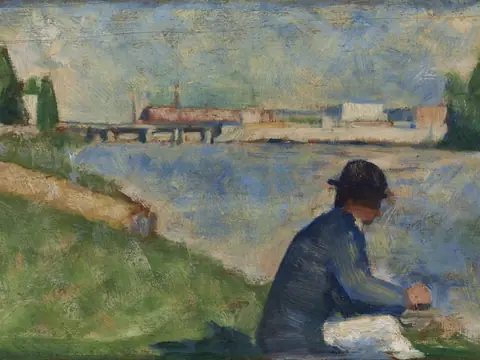 OIMAP AcademyThree campuses, eighty-six trainers and seventeen years of experience: OIMAP's school at the service of heritage.›
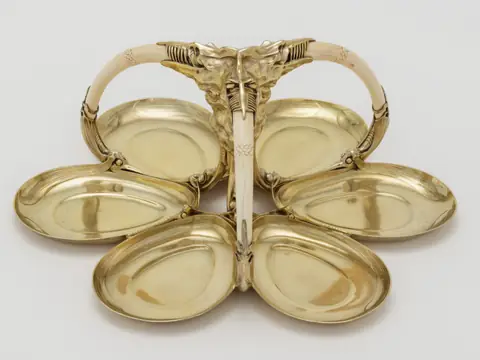 Certification programmesThree diploma programmes — market analyst, due diligence and provenance, expert-curator — recognised by Member States.›
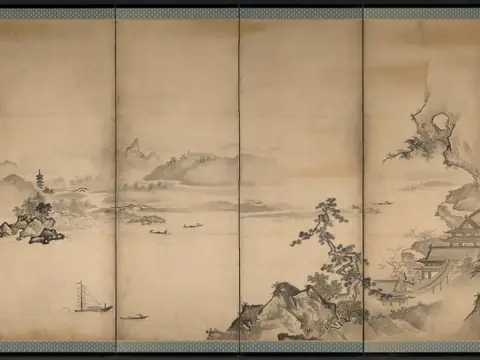 Session calendar410 sessions a year in Paris, Nairobi, Singapore and online: dates, venues, languages and places available.›
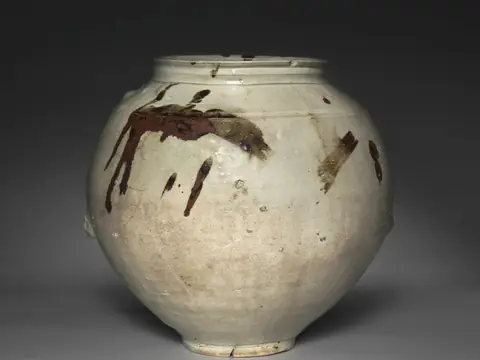 EnrolmentEnrolling in an Academy course: online form, documents to provide and payment, in three steps.›
Enrol
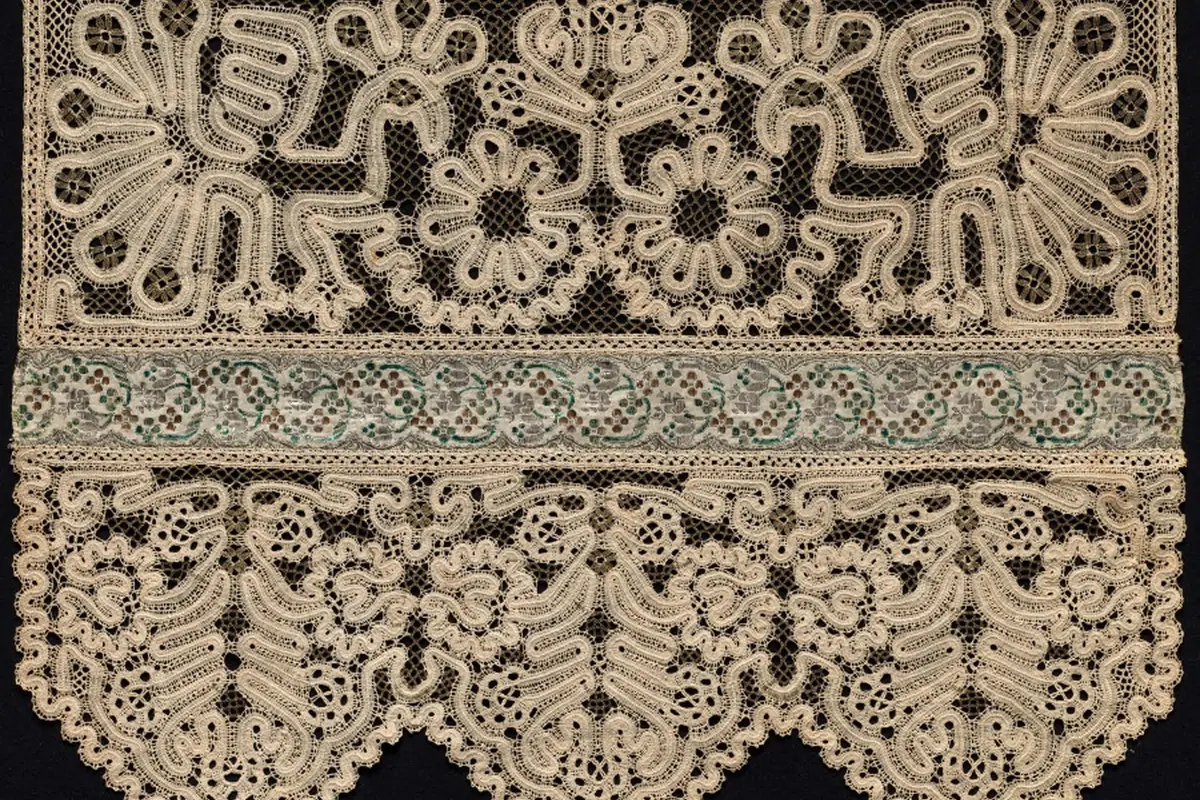
Image credits (38)
- Leaf from a Lectionary with St. Luke (1057–1063) — Cleveland Museum of Art, CC0 1.0
- Farmhouse on the Slope of a Hill, Fra Bartolommeo (c. 1508) — Cleveland Museum of Art, CC0 1.0
- Bookplate: Boylston Medical Library, George Girdler Smith (1806–39) — Cleveland Museum of Art, CC0 1.0
- The Fleet Off the Coast, Beachy Head, Samuel Atkins (c. 1790–1805) — Cleveland Museum of Art, CC0 1.0
- The Judgment of Solomon and Esther before Ahasuerus (pair), Dirk Vellert (c. 1530) — Cleveland Museum of Art, CC0 1.0
- Painting Enthusiasts at Auction House Bouillon, Honoré Daumier (1862, printed 1920) — Cleveland Museum of Art, CC0 1.0
- Fragment of a belt (hizam) (1800s) — Cleveland Museum of Art, CC0 1.0
- Twilight in the Wilderness, Frederic Edwin Church (1860) — Cleveland Museum of Art, CC0 1.0
- Corner Cabinet, René Dubois (c. 1765–1770) — Cleveland Museum of Art, CC0 1.0
- Lampas with foliate medallions in ogival lattice (1400s) — Cleveland Museum of Art, CC0 1.0
- A Lady Reading, Francis Seymour Haden (1833–1910) — Cleveland Museum of Art, CC0 1.0
- Gathering among the Members of Office Censor-General (1700s) — Cleveland Museum of Art, CC0 1.0
- Boy with Anchor, Winslow Homer (1873) — Cleveland Museum of Art, CC0 1.0
- Bifolium from a Bible: Initial E[t factum est] with Ezekiel (c. 1290) — Cleveland Museum of Art, CC0 1.0
- Side Drawer for Cabinet, André-Charles Boulle (c. 1690) — Cleveland Museum of Art, CC0 1.0
- Edge of the Woods Near L'Hermitage, Pontoise, Camille Pissarro (1879) — Cleveland Museum of Art, CC0 1.0
- Towel End (c 1700s- 1800s) — Cleveland Museum of Art, CC0 1.0
- St. Anthony Reading, Albrecht Dürer (1519) — Cleveland Museum of Art, CC0 1.0
- Head of Proserpina, Gian Lorenzo Bernini (1650–1700) — Cleveland Museum of Art, CC0 1.0
- High Class Students and Teachers at Bishop Cotton School, Shimla (verso), Raja Deen Dayal (c. 1882–87) — Cleveland Museum of Art, CC0 1.0
- The birth of Rama and his brothers, from Chapter 17 of the Bala Kanda (Book of Childhood) of the Adhyatma Ramayana (Rama's Journey of the Su (c. 1820–30) — Cleveland Museum of Art, CC0 1.0
- Woman Sitting Reading , Georges Lemmen (1905) — Cleveland Museum of Art, CC0 1.0
- Medal of Claude Joseph Rouget de L'Isle (1760-1836), Alfred Borrel (1911) — Cleveland Museum of Art, CC0 1.0
- Bowl with Chrysanthemums, Seifū Yohei IV (1914–46) — Cleveland Museum of Art, CC0 1.0
- Sake Pourers with Bamboo and Bellflowers, Seifū Yohei I (c. 1844–57) — Cleveland Museum of Art, CC0 1.0
- Cabinet Plate, W. T. Copeland & Sons (1883) — Cleveland Museum of Art, CC0 1.0
- Winding Yarn (Interior of a Nantucket Kitchen), Eastman Johnson (1872) — Cleveland Museum of Art, CC0 1.0
- Interior Drawer for Cabinet, André-Charles Boulle (c. 1690) — Cleveland Museum of Art, CC0 1.0
- Artist with His Palette and Brushes (c. 1855) — Cleveland Museum of Art, CC0 1.0
- Carpenter's Plane (1400s) — Cleveland Museum of Art, CC0 1.0
- The Shepherd, Paulus Potter (1644) — Cleveland Museum of Art, CC0 1.0
- Saint Jerome and the Lion (From the former Church of St. Peter in Erfurt), Tilman Riemenschneider (c. 1495) — Cleveland Museum of Art, CC0 1.0
- Architectural Conference (c. 1622) — Cleveland Museum of Art, CC0 1.0
- Study for "Bathers at Asnières", Georges Seurat (c. 1883–84) — Cleveland Museum of Art, CC0 1.0
- Salver, Carlo Bugatti (c. 1907) — Cleveland Museum of Art, CC0 1.0
- The Four Seasons, Kano Tan’yū (1668) — Cleveland Museum of Art, CC0 1.0
- Jar with Design in Underglaze Iron (1800s–1900s) — Cleveland Museum of Art, CC0 1.0
- Lace Towel End (c. 1700s–1800s) — Cleveland Museum of Art, CC0 1.0