
 Cleveland Museum of Art · CC0 1.0
The decisions of the Assembly
A resolution is the text by which the General Assembly expresses its will. It is adopted by consensus or, failing that, by a two-thirds majority of the States present and voting. Once adopted, it is published in the three working languages and incorporated into the compendium of resolutions.
Some resolutions bind the Member States; others are recommendations or guidance for the Secretariat.
Texts under discussion are found in the documents; the voting programme is in the agenda.
Resolutions in figures
Source: Events and Communications Directorate.
From idea to text
A draft resolution is submitted by one or more States, or by the Council. It is examined by the competent committee, which may amend it, then forwarded to the plenary. The Secretariat checks the legal consistency of the text with existing treaties and directives.
The submission is accompanied by an estimate of the cost of implementation, so that the Assembly can decide with full knowledge of the facts.
Legal scope
Budgetary and statutory resolutions, and those adopting directives, bind the Member States. The others express a position or a recommendation. Each text specifies its nature in its operative part, to avoid any ambiguity.
The 2019 OIMAP directives, including Directive No. 2019-07 on the authentication of cultural property, were thus adopted by resolution and then transposed by States into their domestic law.
Voting and its procedures
Voting is by show of hands, or by roll call at the request of a State. When the chair records a consensus, the resolution is declared adopted without a vote. States may explain their position before or after the vote.
Abstentions are not counted among the votes cast. Detailed results appear in the minutes of the session.
Follow-up of implementation
At each session the Secretariat reports on the implementation of previous resolutions. A tracking table shows, for each text, the actions taken, the deadlines and the difficulties encountered. States are invited to report the measures taken at national level.
Where a resolution has not been implemented, the Assembly may request a special report or instruct a committee to examine the causes.
Types of resolutions
| Type | Scope | Example |
|---|---|---|
| Statutory | Binds States | Budget, elections |
| Normative | Binds States | Adoption of directives |
| Recommendation | Guidance | Good market practices |
| Procedural | Internal | Creation of a working group |
Milestones
- First resolution
Statutes of the Organisation.
- Directives
Seven binding directives.
- Restitutions
Strengthened cooperation framework.
- 19th session
New texts submitted to a vote.
Status of texts
Consensus or vote
Consensus
No formal objection- Text easier to implement
- Prior negotiation
- No count
For major texts.
Vote
Two-thirds majority- Certain outcome
- Positions recorded
- Can divide
When consensus fails.
Finding a resolution
- Choose
The year or the theme.
- Search
By keyword.
- Read
The operative part.
- Check
The follow-up of implementation.
- Cite
With its number.
Implementing a text
A diplomat
« A resolution adopted by consensus has an authority that a vote does not give: everyone recognises themselves in it and undertakes to apply it. »
Resolutions vocabulary
- Operative part
- Part of a resolution that decides.
- Preamble
- Part that sets out the reasons.
- Roll call
- Vote in which each State is called.
- Compendium
- Collection of adopted resolutions.
The compendium of resolutions
Resolutions are numbered according to the year and order of adoption, for example "2026/07". The compendium can be searched by year, by theme and by keyword. Each text is accompanied by the history of its adoption and any declarations by States.
The complete compendium can be downloaded. It is a reference source for administrations, lawyers and art market professionals.
Frequently asked questions
Is a resolution binding?
Depending on its nature, specified in its operative part.
What majority without consensus?
Two thirds of those present and voting.
Can earlier texts be consulted?
Yes, in the compendium.
Where can I see the procedure?
See Agenda.
Useful documents
Contacts
Related pages
 General AssemblyThe supreme body of OIMAP: agenda, session documents and resolutions of the 19th General Assembly, in Singapore in June 2026.›
 AgendaThe items entered on the agenda of the 19th General Assembly, published 60 days before the opening in Singapore.›
 Session documentsReports, draft resolutions, accounts and information notes of the General Assembly, posted online 30 days before the opening.›
Read the documents
Image credits (16)
- The Dance at the Court of Herod, Israhel van Meckenem (c. 1500) — Cleveland Museum of Art, CC0 1.0
- Capriccio: A Palace with a Courtyard by the Lagoon, Antonio Canaletto (c. 1750–55) — Cleveland Museum of Art, CC0 1.0
- Coronation of the Virgin, Christoffel Jegher (1632–36) — Cleveland Museum of Art, CC0 1.0
- Self-Portrait, John I Smart (1802) — Cleveland Museum of Art, CC0 1.0
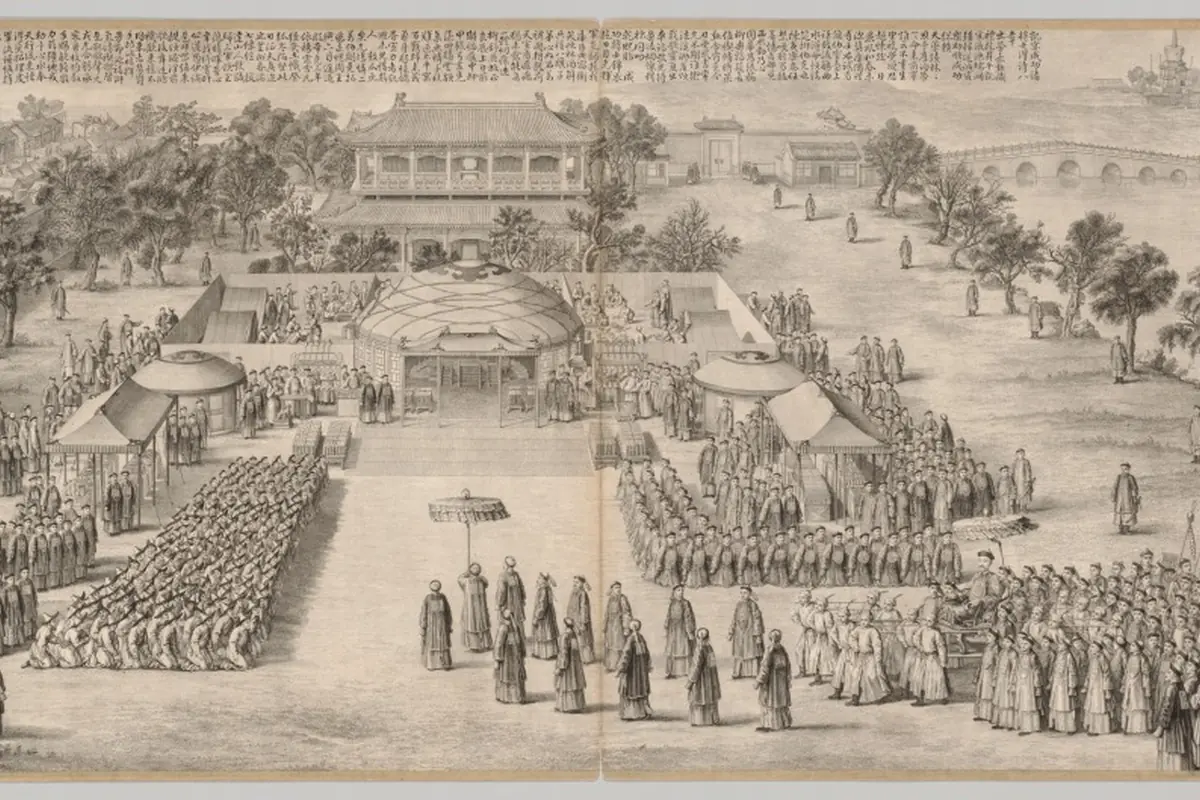
- The Victory Banquet: from Battle Scenes of the Quelling of Rebellions in the Western Regions, with Imperial Poems (c. 1765–74; poem dated 1760) — Cleveland Museum of Art, CC0 1.0
- Sketch of the Labyrinth of the Villa Pisani, Francesco Guardi (1773–1778(?)) — Cleveland Museum of Art, CC0 1.0
- Portrait of John VIII Palaoelogus, Emperor of Constantinople, 1424-1428 (reverse), Pisanello (c. 1438–1439) — Cleveland Museum of Art, CC0 1.0
- Portrait Bust of a Man (27 BCE–14 CE) — Cleveland Museum of Art, CC0 1.0
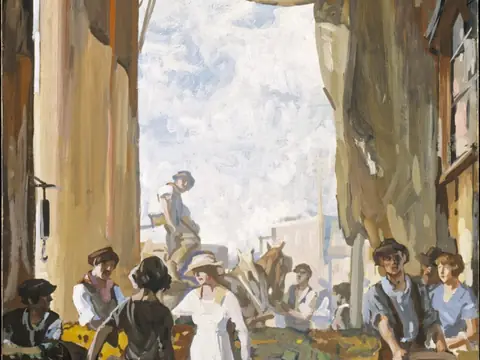
- The Old Market, Cleveland, Frank Wilcox (1920) — Cleveland Museum of Art, CC0 1.0
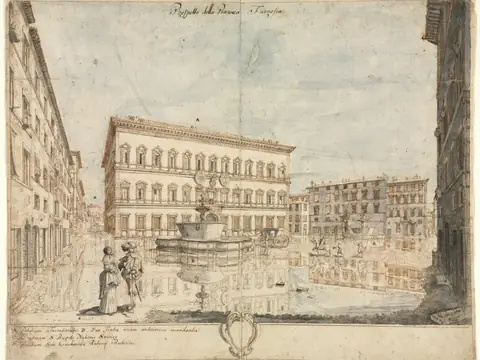
- Eighteen Views of Rome: The Piazza Farnese (recto), Lievin Cruyl (1664) — Cleveland Museum of Art, CC0 1.0
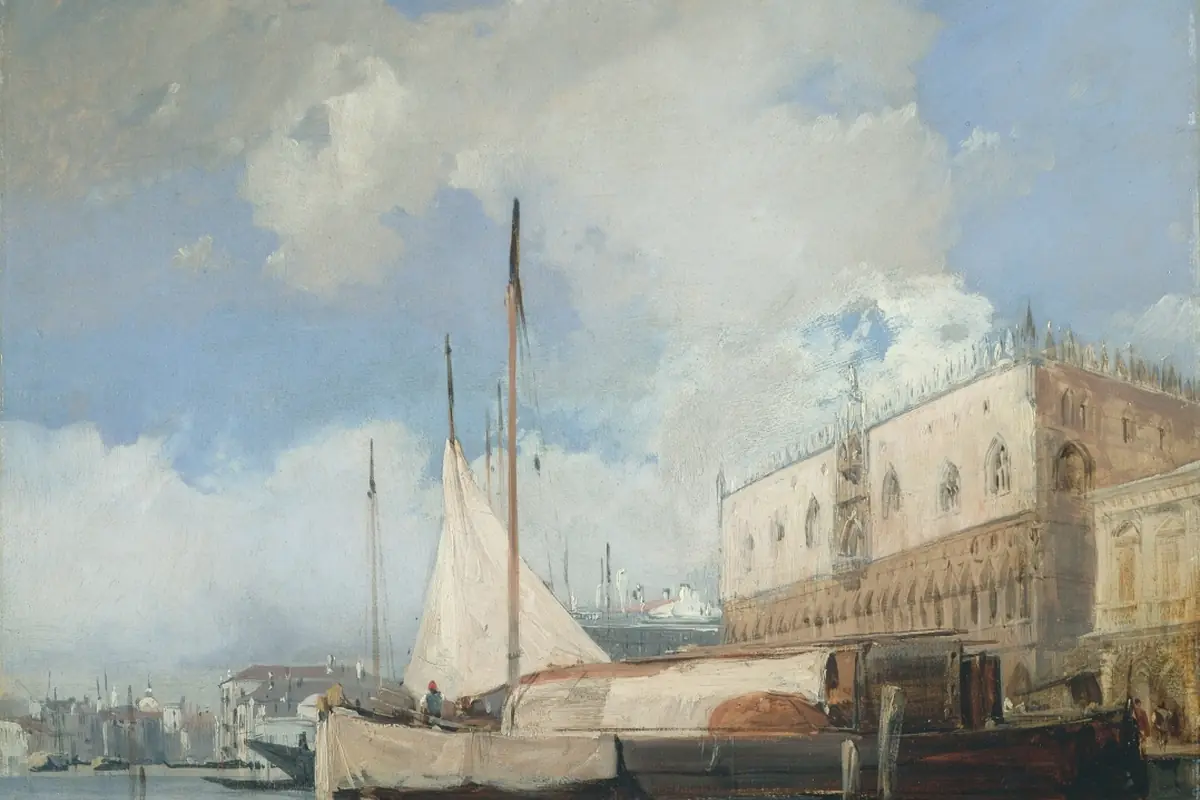
- The Doge's Palace, Venice, Richard Parkes Bonington (1826) — Cleveland Museum of Art, CC0 1.0
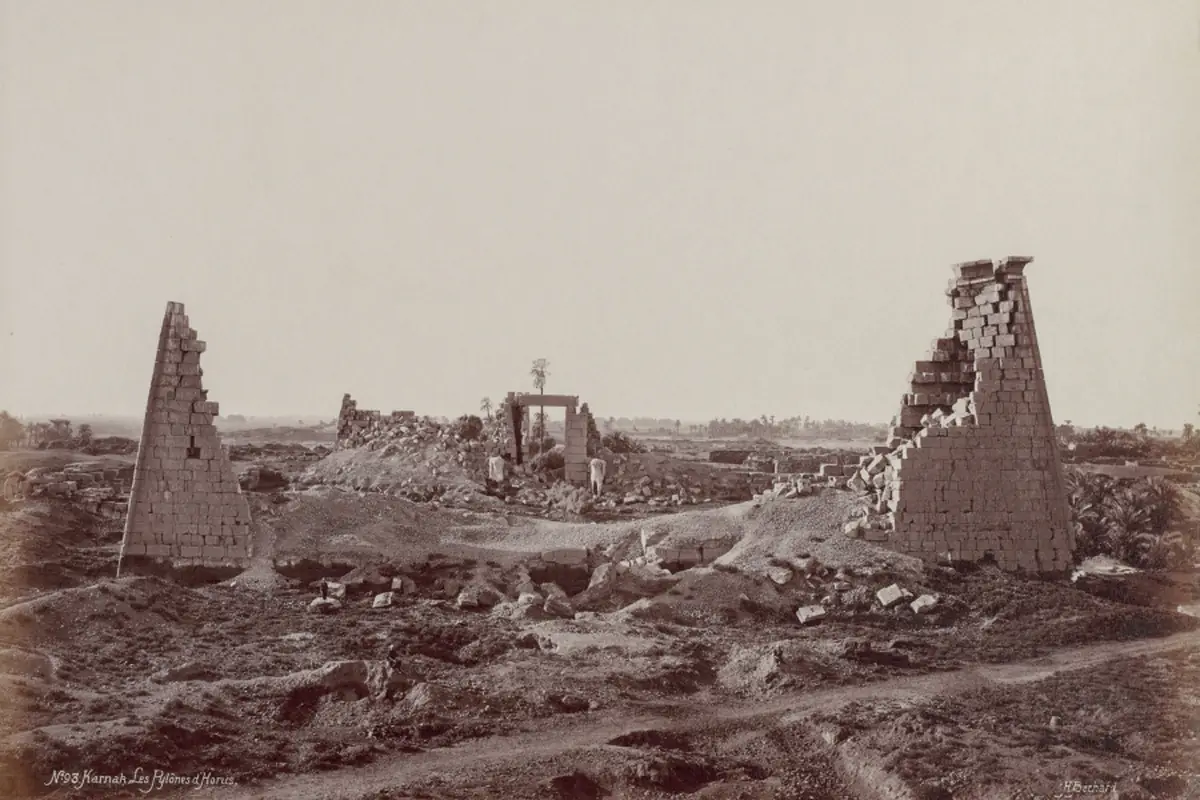
- Karnak, Les Pylônes d'Horus, Henri Béchard (1860s) — Cleveland Museum of Art, CC0 1.0
- The Apotheosis of Romulus: Design for a Ceiling, Domenico Maria Canuti (c. 1675–76) — Cleveland Museum of Art, CC0 1.0
- Roman Ruins, Villa Pamfili, Hubert Robert (1774) — Cleveland Museum of Art, CC0 1.0
- Portrait of a Man, Possibly Sir Soulden Lawrence, John I Smart (1770) — Cleveland Museum of Art, CC0 1.0
- Portrait of a Man, Italian Painter — The Metropolitan Museum of Art, CC0 1.0