
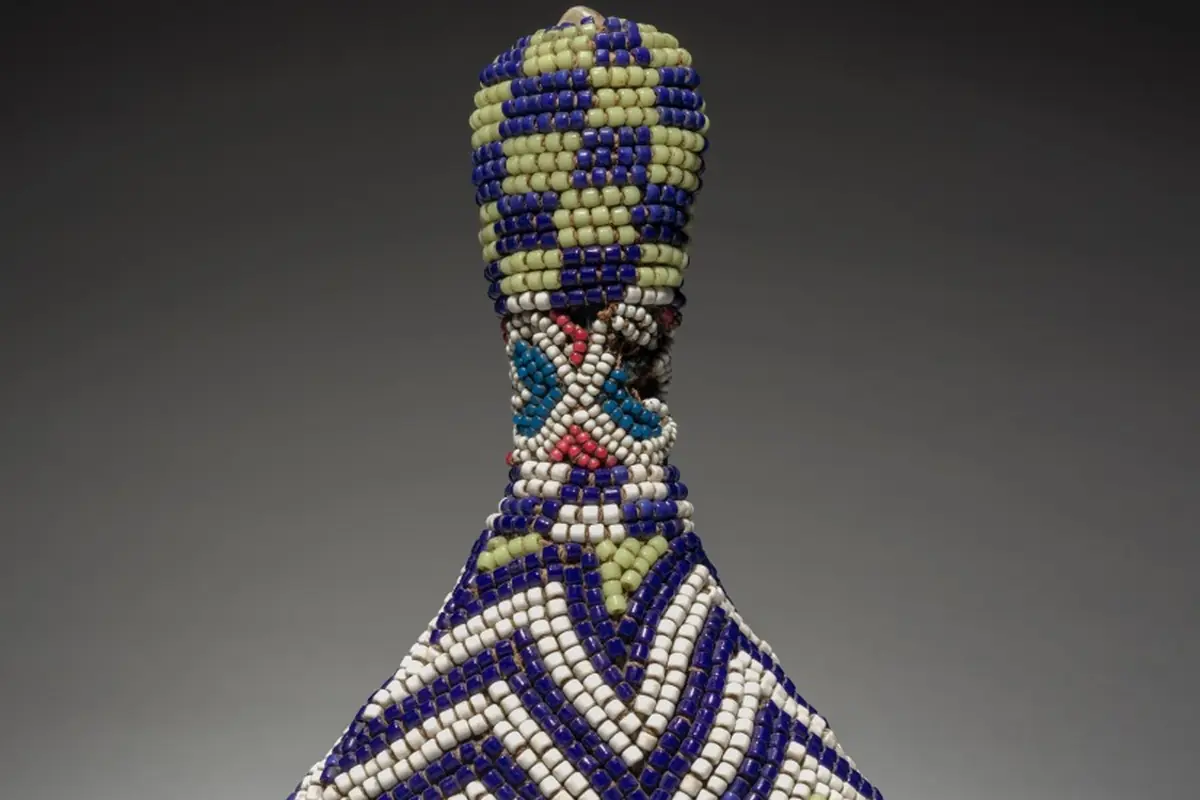
 Cleveland Museum of Art · CC0 1.0
Pages in this section
 Ongoing restitution casesThe 126 cases under investigation: nature, progress, time limits, steps and follow-up arrangements for the parties.›
 Restitutions completedThe 847 works returned since 2007: statistics, examples, lessons and handover ceremonies.›
 Request a restitutionHow to submit a case: who can request, conditions, documents to supply, process, costs and remedies.›
The last link in the chain
Finding a work is not enough: it must be returned. Restitution is the culmination of all protection work. It rests on a fair procedure that establishes ownership, respects the rights of good-faith holders and organises the return under good conditions.
Since 2007, 847 works have been restituted through OIMAP. In 2024, ninety-six were, and one hundred and twenty-six cases are under investigation.
The section presents the ongoing cases, the restitutions completed and the procedure to request a restitution.
Restitutions in figures
Source: OIMAP Heritage Protection Department.
What a restitution is
A restitution is the return of property to its lawful owner: a museum, a State, a family, a community. It presupposes that ownership is established and that the property left its place of origin in conditions contrary to the law or to an international convention.
It may result from a court decision, an amicable agreement or a mediation procedure. OIMAP intervenes mainly through mediation and technical support: identification, appraisal, logistics.
The role of OIMAP
OIMAP is not a judge: it does not decide ownership. It organises the meeting between the parties, provides independent experts, helps to gather the evidence and offers, if the parties wish, mediation or arbitration before the Arbitral Tribunal.
It also supports the physical return of the work: packing, secure transport, insurance, official handover. A ceremony is sometimes held to mark the event.
Rights of the good-faith holder
A restitution must not be made at the expense of a good-faith holder who acquired the work while respecting the rules of diligence. The UNIDROIT Convention provides for fair compensation in some cases, and OIMAP's directives encourage amicable solutions: buy-out, loan, sharing of enjoyment.
These solutions avoid lawsuits and make it possible to adapt the restitution to the circumstances: value, length of possession, the holder's attachment, the rights holder's needs.
Restitutions that make memory
Every restitution has a symbolic dimension. It restores a link between an object, a place and a community. It can also repair a historical injustice, as in cases of spoliation or colonial looting, which are receiving growing attention.
OIMAP handles these sensitive cases with caution, relying on historians' work and on the willingness of the States concerned to reach solutions acceptable to all.
The routes to restitution
| Route | Principle | Average time |
|---|---|---|
| Amicable | Agreement between the parties | 6 to 12 months |
| OIMAP mediation | Independent mediator | 9 to 14 months |
| Arbitration | Arbitral Tribunal | 12 to 18 months |
| Courts | National court | 2 to 5 years |
Landmarks
- First restitution
A painting stolen in 1996.
- Restitutions unit
Creation.
- Mediation procedure
Regulation.
- 96 restitutions
Annual record.
Restitution takes time
Amicable agreement or procedure
Amicable agreement
Direct negotiation- Quick
- Inexpensive
- Flexible
To be favoured.
Procedure
Mediation, arbitration or trial- More formal
- Longer
- Enforceable decision
If agreement is impossible.
A restitution step by step
- Identify
Find the work.
- Prove
Establish ownership.
- Negotiate
Seek an agreement.
- Decide
Mediation or arbitration.
- Return
Organise the return.
Elements of a restitution file
A curator
« The day the painting came home, people came from all over the country. For them it was not a work but a piece of their history. »
Vocabulary of restitution
- Restitution
- Return of property to its lawful owner.
- Rights holder
- Person who derives their rights from a holder.
- Mediation
- Amicable resolution with a third party.
- Good-faith holder
- Possessor who acted with diligence.
Frequently asked questions
Who can request a restitution?
An owner, a museum, a State or a rights holder.
Is the procedure free?
Mediation is free; appraisal costs are shared.
How long does it take?
Fourteen months on average.
Where can I find the texts?
Useful documents
Contacts
Related pages
 Ongoing restitution casesThe 126 cases under investigation: nature, progress, time limits, steps and follow-up arrangements for the parties.›
 Restitutions completedThe 847 works returned since 2007: statistics, examples, lessons and handover ceremonies.›
 Request a restitutionHow to submit a case: who can request, conditions, documents to supply, process, costs and remedies.›
Request a restitution
Image credits (19)
- Beaded Hat or Headpiece (early 1900s(?)) — Cleveland Museum of Art, CC0 1.0
- Figure (iginga) (probably 1800s) — Cleveland Museum of Art, CC0 1.0
- Buffalo Mask (early to mid-1900s) — Cleveland Museum of Art, CC0 1.0
- Male Figure (late 1800s-early 1900s) — Cleveland Museum of Art, CC0 1.0
- Black-Figure Neck-Amphora of Panathenaic Shape (Storage Vessel) (525–500 BCE) — Cleveland Museum of Art, CC0 1.0
- Coronet (oríkògbófo) (1900s) — Cleveland Museum of Art, CC0 1.0
- Coronation of the Virgin, Christoffel Jegher (1632–36) — Cleveland Museum of Art, CC0 1.0
- Lace Towel End (c. 1700s–1800s) — Cleveland Museum of Art, CC0 1.0
- Male Figure (late 1800s-early 1900s) — Cleveland Museum of Art, CC0 1.0
- Red-Figure Stamnos (Mixing/Storage Vessel): Komos (Musicians and Revelers), Kleophon Painter (c. 435–425 BCE) — Cleveland Museum of Art, CC0 1.0
- Mother and Child Figure (late 1800s–early 1900s) — Cleveland Museum of Art, CC0 1.0
- The Dance at the Court of Herod, Israhel van Meckenem (c. 1500) — Cleveland Museum of Art, CC0 1.0
- Male figure (probably 1800s) — Cleveland Museum of Art, CC0 1.0
- Bidri Hookah Bowl with Roses (c. 1650s) — Cleveland Museum of Art, CC0 1.0
- Eighteen Views of Rome: The Piazza Farnese (recto), Lievin Cruyl (1664) — Cleveland Museum of Art, CC0 1.0
- Relief of Three Offering Bearers (c. 2311–2281 BCE) — Cleveland Museum of Art, CC0 1.0
- Figurine (300–100 BCE) — Cleveland Museum of Art, CC0 1.0
- Portrait of John VIII Palaoelogus, Emperor of Constantinople, 1424-1428 (reverse), Pisanello (c. 1438–1439) — Cleveland Museum of Art, CC0 1.0
- Power figure (nkisi) (late 1800s-early 1900s) — Cleveland Museum of Art, CC0 1.0