
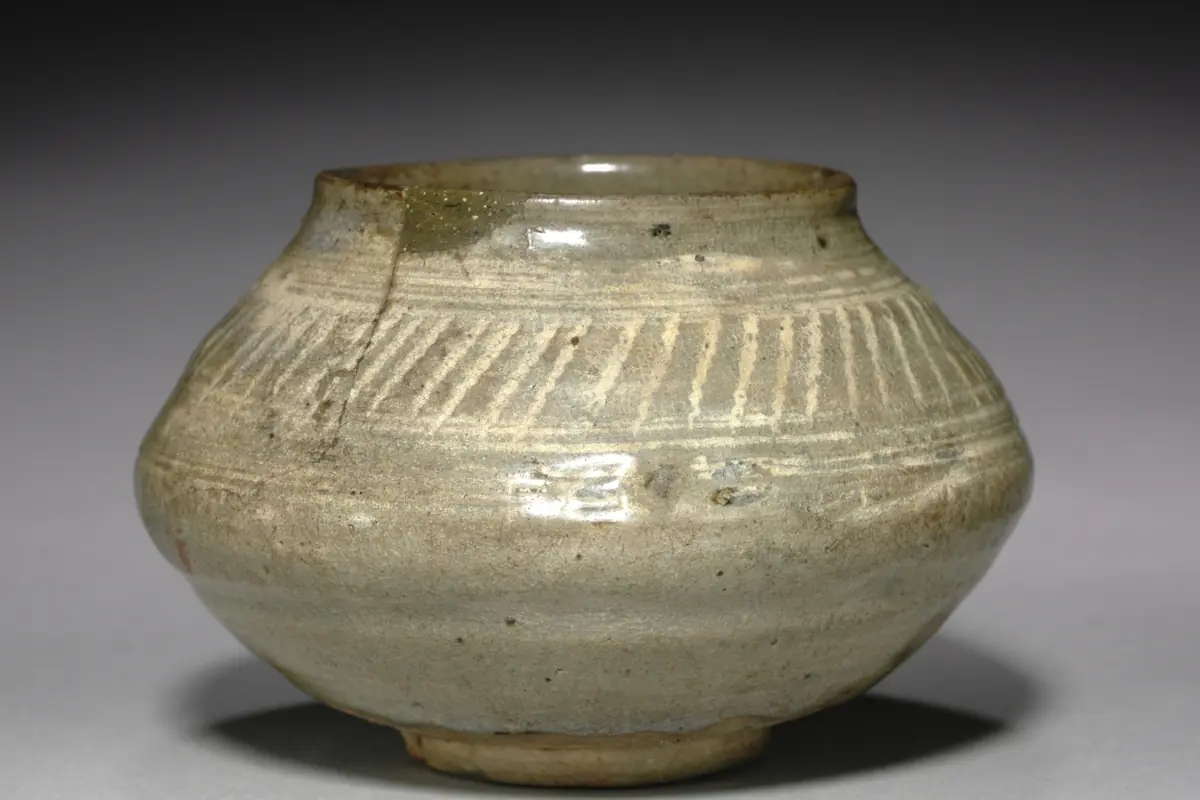
 Cleveland Museum of Art · CC0 1.0
Reading the composition of matter
Spectroscopy covers techniques that, by measuring the interaction between matter and radiation, reveal the chemical elements and molecules present. Applied to a work, it identifies pigments, alloys, binders or varnishes.
Its interest for authentication is direct: every pigment or material has a date of appearance. A synthetic blue invented in 1828 cannot appear in a painting of 1750; a modern zinc alloy betrays a supposedly ancient bronze.
Spectroscopic analyses cost from €350 to €800 excl. VAT and are carried out in one to three weeks.
Spectroscopy in figures
The three main techniques
| Technology | What it measures | Sampling? |
|---|---|---|
| X-ray fluorescence (XRF) | Chemical elements (lead, mercury, cobalt, titanium…) | No, portable |
| Raman spectroscopy | Molecules: fine identification of pigments | Sometimes, micro-sample |
| Infrared (FTIR) | Binders, varnishes, organic materials | Yes, micro-sample |
Course of an analysis
- Choice of zones
The expert designates representative zones, including suspect retouchings.
- Non-invasive measurements
X-ray fluorescence on site, without contact.
- Preliminary interpretation
Identification of elements and probable pigments.
- Additional documents
Raman or FTIR on a micro-sample if necessary.
- Report
Summary compared with the stated dating.

A few pigment dating reference points
| Pigment | Approximate appearance | Interest |
|---|---|---|
| Prussian blue | 1704 | Excludes earlier works |
| Artificial ultramarine | 1828 | Excludes earlier works |
| Zinc white (common use) | 1830-1840 | Helps to date white layers |
| Chrome yellow | About 1810 | Excludes earlier works |
| Titanium white | About 1920 | Frequent sign of a recent work or retouching |
One piece of evidence among others
X-ray fluorescence or Raman
X-ray fluorescence
Chemical elements- Non-invasive, on site
- Quick results
- Does not always distinguish compounds
First choice.
Raman
Molecules- Precise identification of the pigment
- Micro-sample sometimes necessary
- Laboratory equipment
To resolve a doubt.
Case study: a bronze too modern
An alloy betrays its date
A bronze presented as 17th-century is analysed by X-ray fluorescence.
- The alloy contains a proportion of zinc unusual for the period.
- The patina covers a modern surface.
- The expert concludes it is a 20th-century casting.
The certificate is refused; the owner is informed of the reasons.
Timeframe of an analysis
- Agreement
Analyses accepted.
- Measurements
X-ray fluorescence.
- Additional documents
Raman or FTIR.
- Report
Results integrated into the opinion.
Limits of the methods
Spectroscopy tells us about composition, not about the author or the date of execution. An ancient work retouched today will contain modern pigments; a skilful copy may use salvaged ancient pigments.
That is why the results are never read alone: they are set against visual examination, imaging and documentary sources, and their limits appear in the opinion.
A laboratory adage
« Chemistry does not lie, but it answers only the question it is asked. »
Vocabulary of spectroscopy
- Pigment
- Insoluble colouring substance used in painting.
- XRF
- X-ray fluorescence, measurement of chemical elements.
- Raman
- Vibrational spectroscopy identifying molecules.
- FTIR
- Fourier-transform infrared, identifies binders.
Frequently asked questions
Is X-ray fluorescence dangerous for the work?
No, the doses are very low and have no effect on the material.
Can one analyse without sampling?
Yes for X-ray fluorescence; Raman and FTIR sometimes require a micro-sample.
Are the results enough to authenticate?
No, they are added to the expert's examination.
How many zones are analysed?
From five to twenty depending on the size of the work.
Useful documents
Contacts
Related pages
 Scientific imagingInfrared reflectography, ultraviolet fluorescence, X-radiography, macrophotography and 3D survey: seeing below the surface without touching the work.›
 Certificates of authenticityThe OIMAP certificate of authenticity establishes, through independent expertise and scientific analysis, that the work is indeed the one claimed.›
 Carbon 14 datingDating the organic materials of a work — wood, canvas, paper, ivory, textile — by accelerator mass spectrometry.›
Request an analysis
Image credits (16)
- Jar with Stamped Decoration (1400s) — Cleveland Museum of Art, CC0 1.0
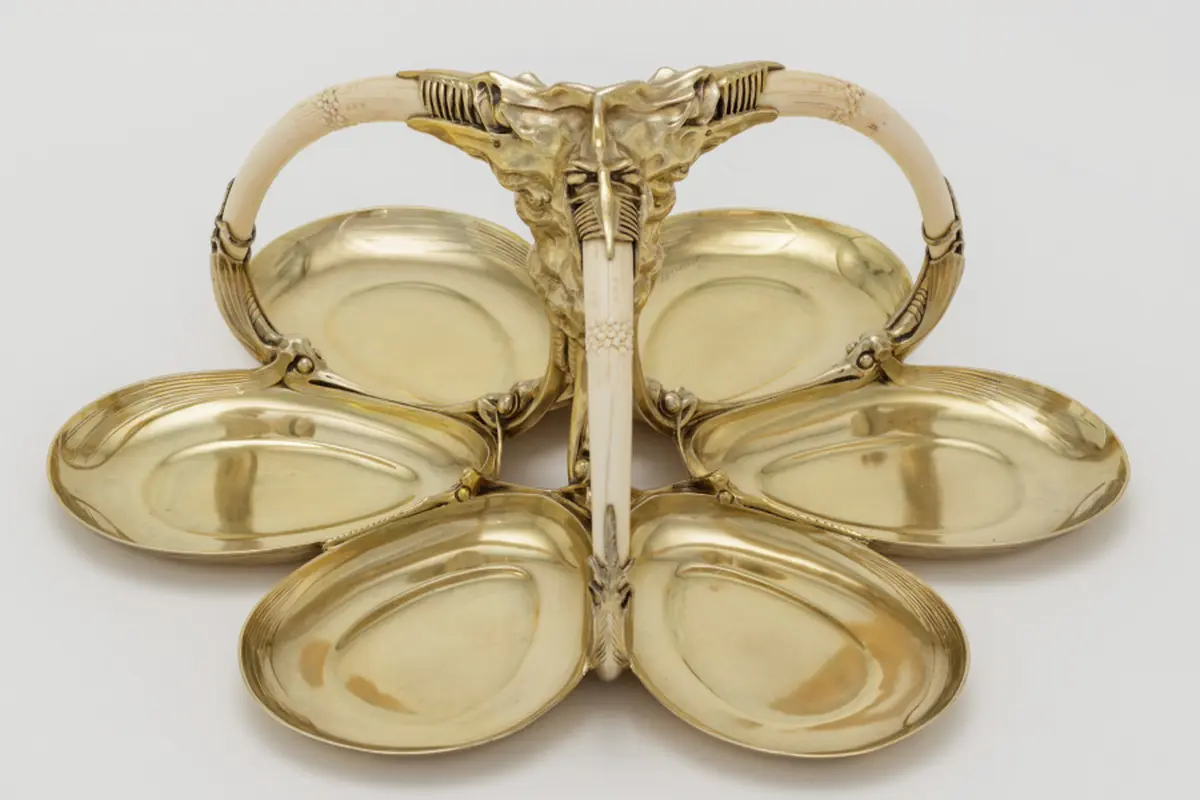
- Salver, Carlo Bugatti (c. 1907) — Cleveland Museum of Art, CC0 1.0
- Turtleback Reading Lamp, Tiffany Glass & Decorating Company (c. 1895–1902) — Cleveland Museum of Art, CC0 1.0
- Portrait of Sandford Peacocke, William Wood (1801) — Cleveland Museum of Art, CC0 1.0
- Annunciation to the Shepherds: Leaf from a Book of Hours (1 of 6 Excised Leaves), Henri d'Orquevaulx (c. 1420–30) — Cleveland Museum of Art, CC0 1.0
- Jar with Design in Underglaze Iron (1800s–1900s) — Cleveland Museum of Art, CC0 1.0
- Leaf from a Psalter and Prayerbook: Calendar Page with Labors (recto) (c. 1524) — Cleveland Museum of Art, CC0 1.0
- Portrait of a Man, Nicholas Freese (c. 1795–1800) — Cleveland Museum of Art, CC0 1.0
- Fragment of a Border with Standing and Seated Birds Amidst Vegetation (1500s) — Cleveland Museum of Art, CC0 1.0
- Portrait of Jean-Baptiste Lemoyne the Younger, Elisabeth Louise Vigée-LeBrun (1774) — Cleveland Museum of Art, CC0 1.0
- Telescoping basket (1800's) — Cleveland Museum of Art, CC0 1.0
- Egypt and Nubia, Volume I: The Great Temple of Aboo-Simble, Nubia, Louis Haghe (1846) — Cleveland Museum of Art, CC0 1.0
- Flowers and Trees of the Four Seasons, Watanabe Shikō (early-mid 1700s) — Cleveland Museum of Art, CC0 1.0
- Fish or Seal Club (X’ús’) (late 1800s–early 1900s) — Cleveland Museum of Art, CC0 1.0
- Taj Mahal, Back View of the Rest-House, with Figure, Dr. John Murray (c. 1858–1862) — Cleveland Museum of Art, CC0 1.0
- Portrait of Georges Arnold Fitzwilliam, Charles Balthazar Julien Fevret de Saint-Mémin (c. 1790–1852) — Cleveland Museum of Art, CC0 1.0