
 Cleveland Museum of Art · CC0 1.0
Acting at the same time, in several countries
A joint operation consists of carrying out checks, searches or verifications simultaneously in several States, on the basis of a common analysis. It surprises networks, which can no longer take refuge in a neighbouring country.
In 2024, twenty-three operations were conducted with the participation of forty-one States. They led to the seizure of 4,800 objects, the identification of eleven networks and several hundred arrests.
This page describes the preparation, the conduct and the results.
Joint operations with INTERPOL in figures
Source: OIMAP Heritage Protection Department.
Preparing an operation
An operation takes three to six months to prepare. Analysis of alerts and reports makes it possible to identify a type of trafficking or a region. A plan is then drawn up with the countries concerned: objectives, scope, timetable, means. Officers are trained to recognise the targeted property.
OIMAP supplies an analysis of the BIOP, identification sheets and experts who accompany the teams. Results are recorded in real time in a common system, so that each country sees what the others have found.
An example of an operation
In an operation devoted to archaeological objects, twelve countries simultaneously checked their airports, ports and antiques markets for ten days. More than a thousand objects were seized, three hundred of which could be quickly identified thanks to the BIOP database.
OIMAP experts authenticated the pieces on site, and several were returned to their country of origin in the following months. The operation also uncovered a network of false certificates used by several dealers.
After the operation
Each operation gives rise to a review, shared with participants, and to legal follow-up in each country. Seized objects are kept safe until they are identified. Those whose origin is established are returned according to the procedure described in the Restitutions section.
The lessons feed training, guides and database updates. A summary report is published each year together with the report on trafficking.
Online operations
Since 2022, specific operations have targeted online sales: monitoring of platforms, social networks and marketplaces. Analysts spot suspect listings and compare them with the BIOP database.
In 2024, an operation of this kind led to the removal of 2,300 listings and the identification of forty repeat sellers. Approved platforms cooperate in these actions.
2024 operations in figures
| Theme | Objects seized | States |
|---|---|---|
| Archaeology | 1,850 | 12 |
| Tribal art | 920 | 9 |
| Paintings and drawings | 610 | 11 |
| Books and manuscripts | 450 | 6 |
| Other | 970 | 10 |
Landmarks
- First operation
Nine countries.
- Ten operations
Extension.
- Online surveillance line
New strand.
- 23 operations
Record.
Seizures are not proof of guilt
Targeted or broad operation
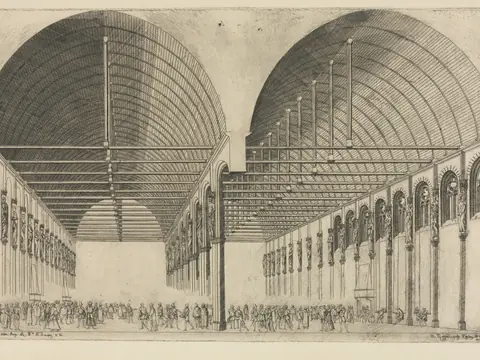
Targeted
One network or one item- Thorough preparation
- Clear results
- Fewer objects seized
To dismantle a network.
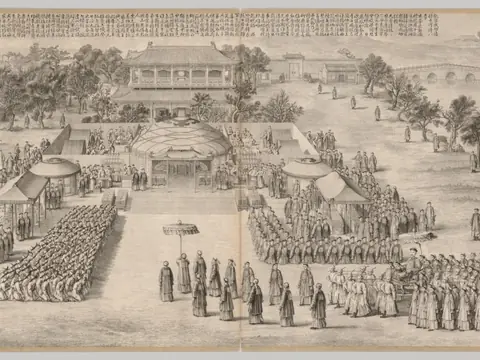
Broad
One theme over ten days- Many objects
- General deterrence
- Less precision
To raise awareness.
Taking part in an operation
- Apply
Announce your participation.
- Train
Follow the preparation.
- Act
Carry out the checks.
- Transmit
Record the results.
- Assess
Take part in the review.
Conditions of participation
A customs officer
« We opened a container that nobody would have looked at without the alert. It held thirty statuettes, eleven of which were in the database. »
Vocabulary of operations
- Search
- Search of a place by the police.
- Seizure
- Removal of property by the authority.
- Review
- Summary of results.
- Presumption of innocence
- Principle protecting persons prosecuted.
Frequently asked questions
How many States can take part?
As many as they wish, according to their means.
What happens to seized objects?
They are identified and then returned.
Who pays?
Each State for its teams, OIMAP for the experts.
Where do I register my interest?
With your focal point.
Useful documents
Contacts
Related pages
 Cooperation with INTERPOLThe cooperation agreement with INTERPOL: data exchange, joint operations, training and contacts for investigators.›
 RestitutionsReturning works to their lawful owners: 847 restitutions since 2007, ongoing cases and procedure for requesting a restitution.›
 Reports on illicit traffickingOIMAP publications on trafficking: annual report, thematic studies, summary notes and open data.›
See the restitutions
Image credits (16)
- Dr. James Stuart; Mary Campbell Stuart, Gilbert Stuart (c. 1815) — Cleveland Museum of Art, CC0 1.0
- The Dance at the Court of Herod, Israhel van Meckenem (c. 1500) — Cleveland Museum of Art, CC0 1.0
- The Calumny of Apelles, Giorgio Ghisi (1560) — Cleveland Museum of Art, CC0 1.0
- Ferry Slip, Edwin Kaufman (1927) — Cleveland Museum of Art, CC0 1.0
- The Judgment of Solomon and Esther before Ahasuerus (pair), Dirk Vellert (c. 1530) — Cleveland Museum of Art, CC0 1.0
- Coronation of the Virgin, Christoffel Jegher (1632–36) — Cleveland Museum of Art, CC0 1.0
- Sketches in Belgium and Germany, Volume I: Hall of Justice of the Magistrates du Franc, Bruges, Louis Haghe (1840) — Cleveland Museum of Art, CC0 1.0
- Bridge of Shops, Srinagar, Kashmir, Samuel Bourne (1864) — Cleveland Museum of Art, CC0 1.0
- The Antechamber of the Palace of Justice, Paris, Charles Meryon (1855) — Cleveland Museum of Art, CC0 1.0
- The Victory Banquet: from Battle Scenes of the Quelling of Rebellions in the Western Regions, with Imperial Poems (c. 1765–74; poem dated 1760) — Cleveland Museum of Art, CC0 1.0
- Portrait of John VIII Palaoelogus, Emperor of Constantinople, 1424-1428 (reverse), Pisanello (c. 1438–1439) — Cleveland Museum of Art, CC0 1.0
- Roman Ruins, Villa Pamfili, Hubert Robert (1774) — Cleveland Museum of Art, CC0 1.0
- The Fleet Off the Coast, Beachy Head, Samuel Atkins (c. 1790–1805) — Cleveland Museum of Art, CC0 1.0
- Beaded Hat or Headpiece (early 1900s(?)) — Cleveland Museum of Art, CC0 1.0
- Enjoying the Evening Cool Along the Sumida River, Kitagawa Utamaro (c. 1797–98) — Cleveland Museum of Art, CC0 1.0
- The Storm, James McNeill Whistler (1861) — Cleveland Museum of Art, CC0 1.0