
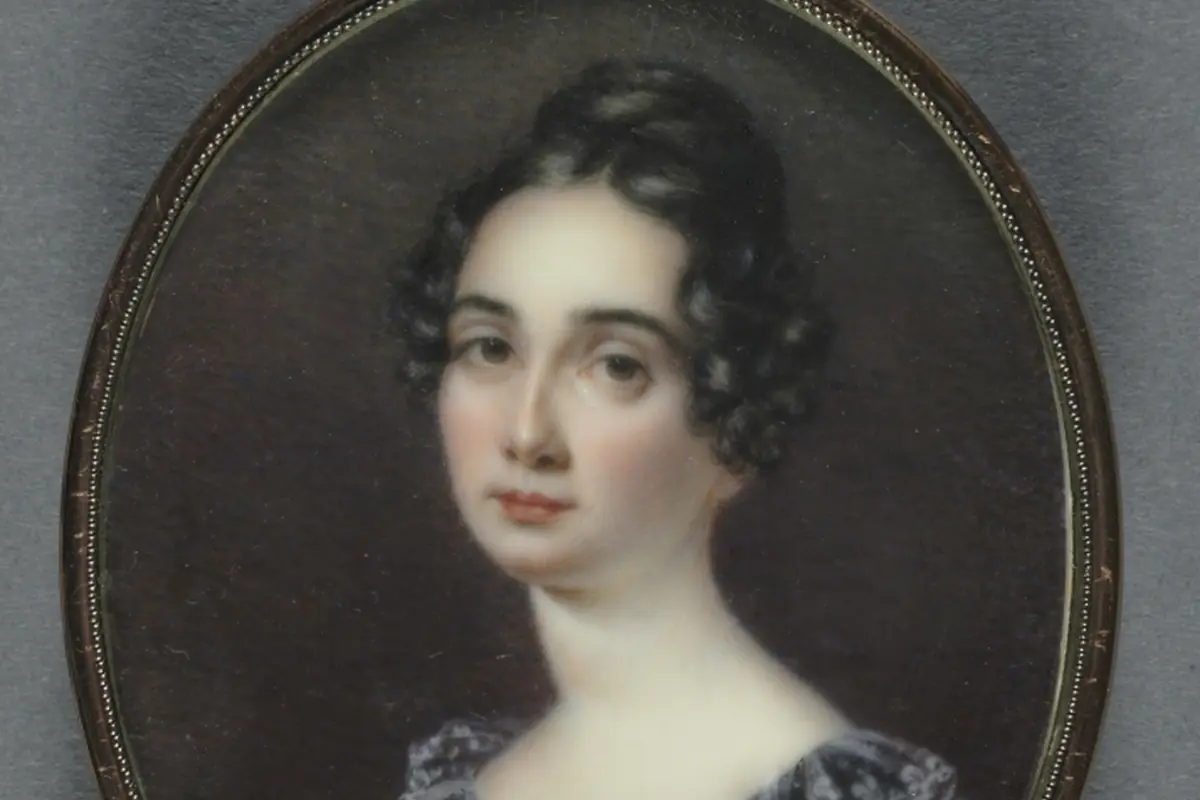
 Cleveland Museum of Art · CC0 1.0
Pages in this section
 DirectoryThe public directory of accredited experts: search by name, specialty, country and language, and check the validity of an accreditation.›
 Become an expertConditions, training, examination and accreditation procedure for becoming an OIMAP expert.›
 Code of ethicsThe ten principles binding on accredited experts: independence, impartiality, confidentiality, competence, prudence and transparency.›
Independent and qualified eyes
No OIMAP certification is issued without the opinion of an accredited expert. These 360 professionals are art historians, curators, restorers, scientists and lawyers, all subject to the same requirement of independence.
Accreditation lasts four years, is renewable and may be withdrawn. It requires ten years' experience, a doctorate or equivalent qualification, training at the OIMAP Academy and passing an ethics examination.
The network covers twelve specialties and more than forty working languages. It is present in the five OIMAP regions.
The network in figures
Source: OIMAP Observatory, 2024.
Three pages to go further
How an expert is appointed
For each case, the Secretariat draws lots for an expert from among those available in the specialty concerned and free from conflicts of interest. The applicant does not choose the expert; they may only request their reasoned challenge within five days.
This drawing of lots guarantees impartiality: no one can “buy” an opinion or steer a case towards an expert reputed to be favourable.
The twelve specialties
| Specialty | Period or field |
|---|---|
| Old masters | 15th – 18th century |
| 19th-century painting | 1800 – 1900 |
| Modern art | 1900 – 1960 |
| Contemporary art | Since 1960 |
| Tribal arts — Africa | All periods |
| Tribal arts — Oceania | All periods |
| Tribal arts — Americas | All periods |
| Decorative arts and furniture | 17th – 20th century |
| Graphic arts and prints | 15th – 20th century |
| Photography | Since 1839 |
| Sculpture | Antiquity – 20th century |
| Silverware and metalwork | All periods |
The course of an expert
- Application
Application file and references.
- Training
OIMAP Academy programme.
- Examination
Ethics test and practical cases.
- Accreditation
Committee decision for four years.
- Renewal
Assessment of activity and continuing training.
A status that must be earned
Accredited expert or independent expert
Accredited expert
Appointed by OIMAP- Monitored and trained
- Chosen by lot, challengeable
- Opinion recognised in 67 States
The only opinion valid for an OIMAP certificate.
Independent expert
Chosen by a party- Private opinion
- No guarantee of independence
- Variable value
May be added to the file as information.
Dates of the network
- First cohort
Forty-eight accredited experts.
- Code of ethics
Adoption of the ten principles.
- Directive No. 2019-07
Appointment by drawing lots.
- 360 experts
Presence in the five regions.
A few experts
Chair of the certification committee.
Head of the partner laboratories.
Expert in European silverware.
Case study: a challenge
An expert set aside
An applicant learns that the expert chosen by lot has already valued a neighbouring work for a competitor.
- He requests challenge within five days with his reasons.
- The Secretariat checks the declaration of interests.
- Another expert is chosen by lot.
The case resumes with a two-week delay; independence is no longer contested.
A principle of rigour
« One does not become an OIMAP expert because one is famous. One becomes one because one accepts being monitored. »
Vocabulary of experts
- Accreditation
- Official recognition of an expert for four years.
- Challenge
- Reasoned request to replace an expert.
- Drawing of lots
- Random appointment of an expert within a specialty.
- Continuing training
- Obligation to train during accreditation.
Frequently asked questions
Can I choose my expert?
No, the expert is chosen by lot to guarantee independence.
Are experts paid?
Yes, from the case price, according to a scale set by OIMAP.
How can I check that an expert is accredited?
In the directory, with the dates of validity.
Can an opinion be challenged?
Yes, by a request for review, then before the Arbitral Tribunal.
Useful documents
Contacts
Related pages
 PrinciplesIndependence, traceability, mutual recognition: the principles that guarantee the value of an OIMAP certificate.›
 OIMAP AcademyThree campuses, eighty-six trainers and seventeen years of experience: OIMAP's school at the service of heritage.›
 Partner laboratoriesThe network of 24 laboratories that carry out the scientific analyses of cases: spectroscopy, dating and imaging.›
Consult the directory
Image credits (22)
- Portrait of a Woman, Anna Claypoole Peale (1820) — Cleveland Museum of Art, CC0 1.0
- Portrait of a Woman, John I Smart (c. 1772) — Cleveland Museum of Art, CC0 1.0
- Portrait of a Man, Louis Lafitte (1793) — The Metropolitan Museum of Art, CC0 1.0
- The Antechamber of the Palace of Justice, Paris, Charles Meryon (1855) — Cleveland Museum of Art, CC0 1.0
- Fragment of a Border with Standing and Seated Birds Amidst Vegetation (1500s) — Cleveland Museum of Art, CC0 1.0
- Portrait of a Man, Possibly Sir Soulden Lawrence, John I Smart (1770) — Cleveland Museum of Art, CC0 1.0
- Bookplate: Boylston Medical Library, George Girdler Smith (1806–39) — Cleveland Museum of Art, CC0 1.0
- Leaf from a Psalter and Prayerbook: Calendar Page with Labors (recto) (c. 1524) — Cleveland Museum of Art, CC0 1.0
- Portrait of a Woman, Agnolo Bronzino (c. 1550) — Cleveland Museum of Art, CC0 1.0
- A Lady Reading, Francis Seymour Haden (1833–1910) — Cleveland Museum of Art, CC0 1.0
- Portrait of a Woman, Giovanni Domenico Tiepolo (1762–70) — Cleveland Museum of Art, CC0 1.0
- Annunciation to the Shepherds: Leaf from a Book of Hours (1 of 6 Excised Leaves), Henri d'Orquevaulx (c. 1420–30) — Cleveland Museum of Art, CC0 1.0
- Portrait of a Woman, Gerard ter Borch (c. 1665) — Cleveland Museum of Art, CC0 1.0
- St. Anthony Reading, Albrecht Dürer (1519) — Cleveland Museum of Art, CC0 1.0
- Portraits of the Qianlong Emperor and His Twelve Consorts, Giuseppe Castiglione (1736–70s) — Cleveland Museum of Art, CC0 1.0
- Jar with Stamped Decoration (1400s) — Cleveland Museum of Art, CC0 1.0
- Portrait of a Woman, Corneille de Lyon (c. 1540) — Cleveland Museum of Art, CC0 1.0
- Nowshera, Kashmir (number 1000), Samuel Bourne (1864) — Cleveland Museum of Art, CC0 1.0
- Farmhouse on the Slope of a Hill, Fra Bartolommeo (c. 1508) — Cleveland Museum of Art, CC0 1.0
- Leaf from a Lectionary with St. Luke (1057–1063) — Cleveland Museum of Art, CC0 1.0
- Presentation Bowl (1900) — Cleveland Museum of Art, CC0 1.0
- High Class Students and Teachers at Bishop Cotton School, Shimla (verso), Raja Deen Dayal (c. 1882–87) — Cleveland Museum of Art, CC0 1.0