
 Cleveland Museum of Art · CC0 1.0
Pages in this section
 North AmericaThe market's leading region: €27.1 billion in 2024, i.e. 40% of global volume.›
 EuropeThe market's second region: €21 billion in 2024, leading home of old masters and decorative arts.›
 Asia-PacificThe most dynamic region of the established market: €14.9 billion in 2024, +9.6% over a year.›
A market dominated by three poles
North America (40%), Europe (31%) and Asia-Pacific (22%) account for 93% of global volume. The Middle East, Africa and Latin America share the remaining 7%, but are growing fast.
The geographic breakdown attributes each sale to the place where it is concluded. It therefore measures the weight of marketplaces, not the origin of works or the nationality of buyers.
Three pages detail the major regions: North America, Europe and Asia-Pacific.
The regions in 2024
Share of transaction volume.
Reading the geography of the market
A marketplace is a place where auction houses, galleries, fairs, experts, carriers and collectors are concentrated. New York, London, Paris, Hong Kong and Geneva are the best known, but new marketplaces are emerging in Singapore, Dubai, Lagos and São Paulo.
Concentration is strong: ten cities account for 72% of global volume. This concentration is explained by economies of scale: a buyer goes where supply is abundant, and a seller sells where the buyers are.
It is also regulatory. Places that offer clear taxation, smooth customs procedures and a reliable legal framework attract more sales. Membership of OIMAP, with mutual recognition of certificates, promotes this smoothness.
Weight and change of the regions
| Region | Share | Volume | Index change |
|---|---|---|---|
| North America | 40% | €27.1bn | +5.1% |
| Europe | 31% | €21.0bn | +3.9% |
| Asia-Pacific | 22% | €14.9bn | +9.6% |
| Middle East | 4% | €2.7bn | +12.3% |
| Africa and Latin America | 3% | €2.0bn | +7.2% |
The shift of the market
- Europe 38%, North America 37%
A balanced market.
- North America ahead
The region takes first place.
- Asia-Pacific at 19%
Growth of private museums.
- Middle East at 4%
Museum acquisitions.
Place of sale and origin of works
Historic marketplaces and emerging marketplaces
Historic marketplaces
New York, London, Paris, Geneva- High volume
- Stable framework
- Moderate growth
Maximum liquidity.
Emerging marketplaces
Singapore, Dubai, Lagos, São Paulo- Rapid growth
- Lower volume
- Framework under construction
Significant potential.
How a sale is located
- Declaration
The place of sale is stated by the operator.
- Coding
The place is attributed to a Member State.
- Grouping
The State is assigned to one of the five regions.
- Aggregation
Volumes are added up by region.
Choosing a place of sale
An auctioneer
« The right place to sell is where the buyers for your segment are, not necessarily the best known. »
Geographic vocabulary
- Marketplace
- City where sales are concentrated.
- Region
- Grouping of States for statistical purposes.
- Mutual recognition
- Acceptance of certificates by the Member States.
- Liquidity
- Ease of buying and reselling.
Frequently asked questions
Why does North America dominate?
Through the size of its economy, the abundance of collectors and the density of its auction houses.
Is Africa under-represented?
In the figures, yes; it is nevertheless rising by 7.2%.
Where can I see the States?
In the list of the 67 States.
Where can I see the growth?
In the index by region.
Useful documents
Contacts
Related pages
 North AmericaThe market's leading region: €27.1 billion in 2024, i.e. 40% of global volume.›
 EuropeThe market's second region: €21 billion in 2024, leading home of old masters and decorative arts.›
 By regionThe global index broken down into five regions: North America, Europe, Asia-Pacific, Middle East, Africa and Latin America.›
Discover North America
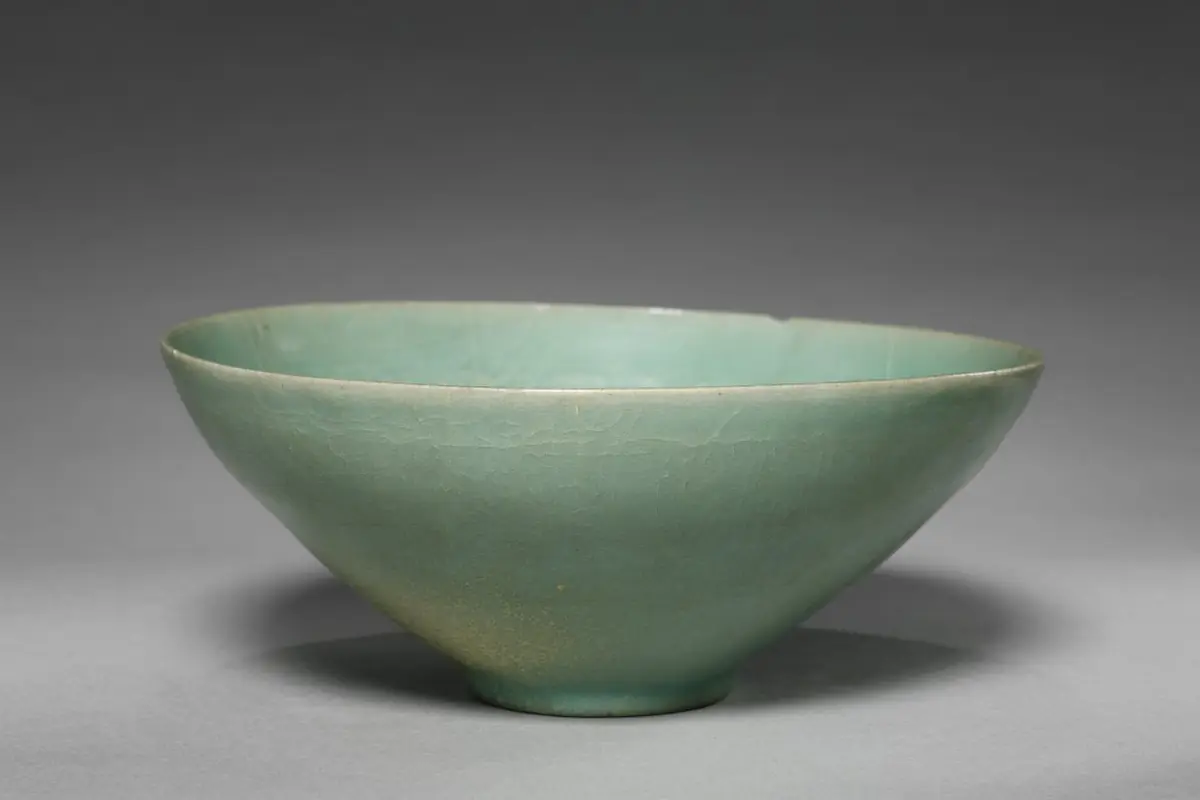
Image credits (19)
- Nuova pianta di Roma data in luce da Giambattista Nolli l’anno MDCCXLVII, known as La Pianta Grande di Roma, Giovanni Battista Nolli (1748) — Cleveland Museum of Art, CC0 1.0
- Nuova pianta di Roma data in luce da Giambattista Nolli l’anno MDCCXLVII, known as La Pianta Grande di Roma, Giovanni Battista Nolli (1748) — Cleveland Museum of Art, CC0 1.0
- Nuova pianta di Roma data in luce da Giambattista Nolli l’anno MDCCXLVII, known as La Pianta Grande di Roma, Giovanni Battista Nolli (1748) — Cleveland Museum of Art, CC0 1.0
- Enjoying the Evening Cool Along the Sumida River, Kitagawa Utamaro (c. 1797–98) — Cleveland Museum of Art, CC0 1.0
- Boating in Moonlight (1600s) — Cleveland Museum of Art, CC0 1.0
- Nuova pianta di Roma data in luce da Giambattista Nolli l’anno MDCCXLVII, known as La Pianta Grande di Roma, Giovanni Battista Nolli (1748) — Cleveland Museum of Art, CC0 1.0
- Third Print from A Low Tide Pentaptych, Utagawa Kuniyoshi (c. 1830) — Cleveland Museum of Art, CC0 1.0
- Nuova pianta di Roma data in luce da Giambattista Nolli l’anno MDCCXLVII, known as La Pianta Grande di Roma, Giovanni Battista Nolli (1748) — Cleveland Museum of Art, CC0 1.0
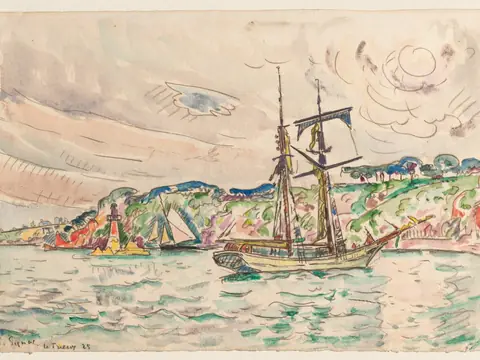
- Ships near the Trieux River, Paul Signac (1925) — Cleveland Museum of Art, CC0 1.0
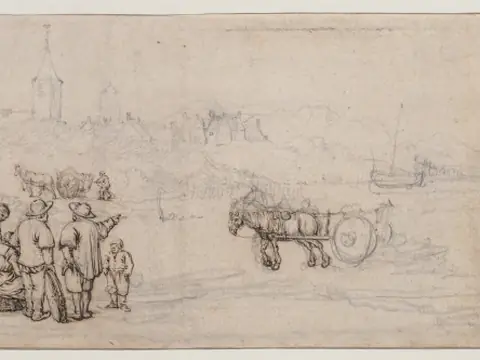
- Dune Scene with Peasant Figures, Willem van de Velde (mid-1650s) — Cleveland Museum of Art, CC0 1.0
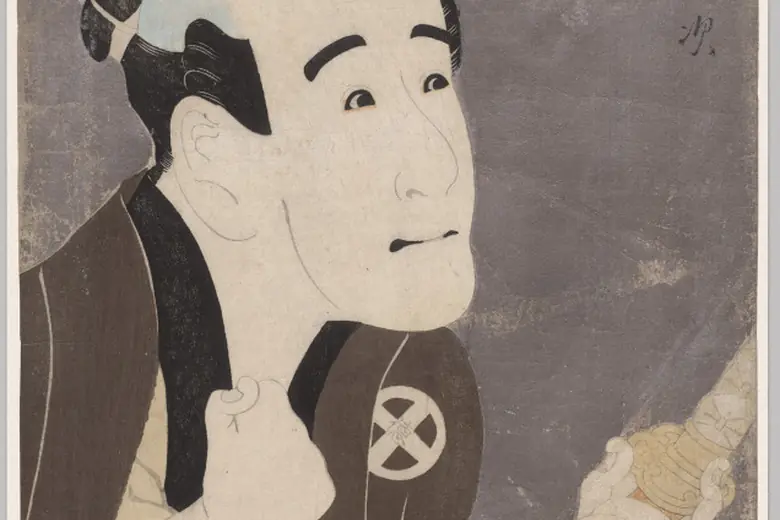
- Otani Tokuji I as the Retainer Sodesuke in "Flowering Irises: A Soga Vendetta of the Bunroku Era", Tōshūsai Sharaku (1794) — Cleveland Museum of Art, CC0 1.0
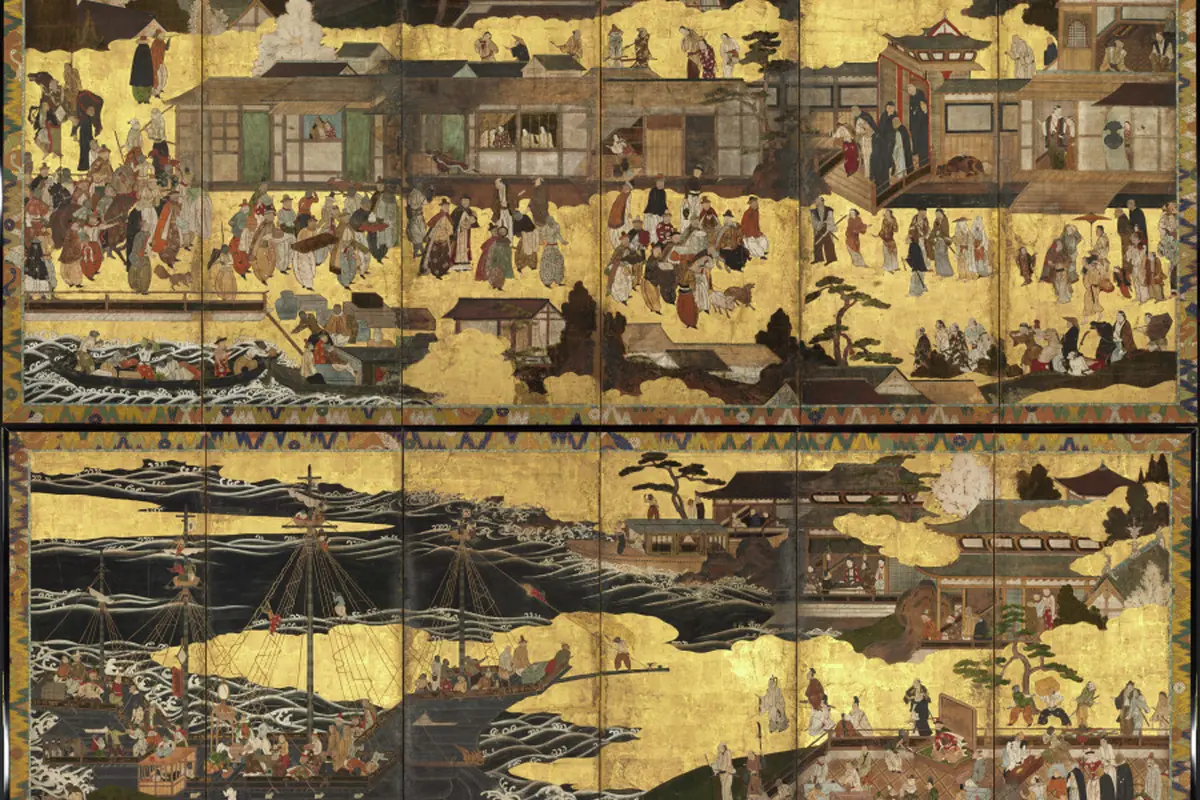
- Arrival of the "Southern Barbarians" (c. 1600) — Cleveland Museum of Art, CC0 1.0
- Whitby Harbor, Frank Meadow Sutcliffe (c. 1885) — Cleveland Museum of Art, CC0 1.0
- Seven Jeweled Mountain (late 1800s) — Cleveland Museum of Art, CC0 1.0
- Roman Ruins, Villa Pamfili, Hubert Robert (1774) — Cleveland Museum of Art, CC0 1.0
- A Rocky Cove with Fishing Boats, Allart van Everdingen (late 1650s) — Cleveland Museum of Art, CC0 1.0
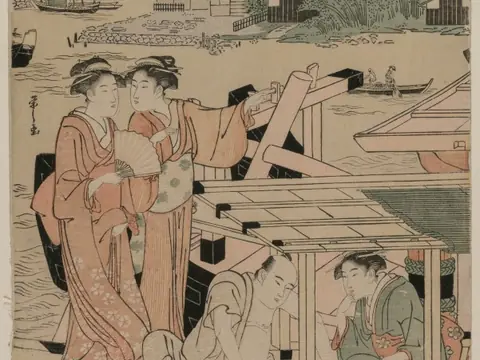
- Leftmost Print from Pleasure Boats on the Sumida River beneath Shin-Ōhashi Bridge, Chōbunsai Eishi (c. 1792) — Cleveland Museum of Art, CC0 1.0
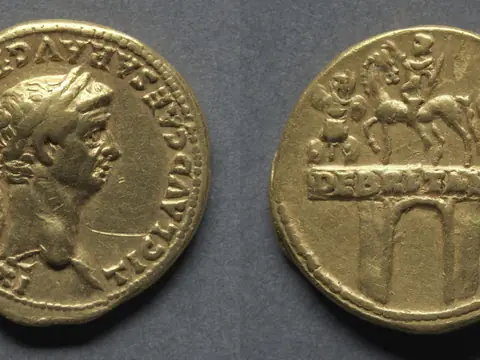
- Aureus: Bust of Claudius I (obverse); Triumphal Arch with Equestrian Statue and Trophies (reverse) (47–48 CE) — Cleveland Museum of Art, CC0 1.0
- Bowl with Flowering Vines Design in Relief (1100s–1200s) — Cleveland Museum of Art, CC0 1.0