
 Cleveland Museum of Art · CC0 1.0
The expert, the tribunal's eye
In 72% of authenticity disputes, the tribunal calls on an independent expert. The report informs the arbitrators on questions that neither law nor market experience can settle: style, materials, technique, dating, provenance.
The expert is not a judge: the expert answers the questions put by the tribunal, with respect for the adversarial principle. The arbitrators remain free to assess the report.
This page describes the appointment, the mission, the methods and possible criticisms.
Appraisal in authenticity matters in figures
Source: Registry of the OIMAP Arbitral Tribunal.
Appointing the expert
The parties propose names; failing agreement, the tribunal chooses from among the experts accredited by OIMAP or other recognised experts. The expert declares independence and any links, and accepts the tribunal's code of ethics. The expert may not have worked for one of the parties in the previous three years.
The tribunal may appoint several experts, for example an art historian and a scientist, or a single expert in charge of coordinating the specialists.
Mission and methods
The mission specifies the questions put: is the work by the artist to whom it is attributed, from what period, has it been restored, how does its provenance fit into the known history? It sets a time limit, a budget and arrangements for access to the work.
The expert combines visual examination, comparison with reference works, archival research, material analyses (pigments, supports, patinas) and imaging (infrared, X-rays, tomography). The analyses are carried out by accredited laboratories.
Report and adversarial process
The expert submits a draft report to the parties, who may make observations. The expert answers them in the final report. This adversarial phase guarantees fairness. The parties may bring in their own experts, who debate with the tribunal's expert at the hearing.
The report is one item of evidence among others. The tribunal may depart from it, giving reasons for its decision. A clear, structured and cautious report is very likely to be followed.
Cost of an appraisal
The cost of an authenticity appraisal ranges from €6,000 to €60,000 depending on the extent of the analyses. It is advanced by the parties in equal shares, then allocated by the award. To reduce the cost, the parties may agree on a programme of analyses limited to the essential points.
The OIMAP certification file, where one exists, may dispense with certain analyses: the tribunal may draw on it, with the parties' agreement, to go faster.
Stages of the appraisal
| Stage | Actor | Duration |
|---|---|---|
| Appointment | Tribunal, parties | 3 weeks |
| Examination | Expert | 6 weeks |
| Draft report | Expert | 4 weeks |
| Observations | Parties | 3 weeks |
| Final report | Expert | 2 weeks |
Milestones
- Appointment
Mission defined.
- Examination
Analyses.
- Draft
Delivery.
- Observations
Parties.
- Final report
Filing.
Protect the work during the appraisal
Sole expert or two experts
Sole expert
One person- Reduced cost
- Consistency
- Depends on a single viewpoint
Common case.
Two experts
Crossed specialisms- Complete view
- Higher cost
- Coordination needed
For major works.
Have appraised
- Put
The questions.
- Choose
Expert.
- Instruct
Written mission.
- Check
Draft report.
- Discuss
Hearing.
Qualities of a good report
An accredited expert
« A good report separates what is known, what is assumed and what is unknown. That is what is most useful to the tribunal. »
Vocabulary of appraisal
- Appraisal mission
- Questions and framework set for the expert.
- Destructive analysis
- Analysis involving sampling.
- Adversarial process
- Principle of discussion by all the parties.
- Pigments
- Colouring matter in paintings.
Frequently asked questions
Who pays the expert?
The parties advance the costs.
May I challenge the expert?
Yes, for lack of independence.
Will the work be damaged?
No, unless agreed.
Where can I see the decisions?
See Decisions.
Useful documents
Contacts
Related pages
 Authenticity disputesWhen the attribution of a work is contested: principles, appraisal and TAO decisions on authenticity.›
 Principles of authenticity disputesWarranty, mistake, fraud, burden of proof and limitation: the principles the tribunal applies on authenticity.›
 Authenticity decisionsA few anonymised TAO decisions on authenticity: facts, question raised, outcome and lessons.›
Consult the decisions
Image credits (16)
- Dr. James Stuart; Mary Campbell Stuart, Gilbert Stuart (c. 1815) — Cleveland Museum of Art, CC0 1.0
- Leaf from a Psalter and Prayerbook: Ornamental Border with Carnations, a Thistle, and a Cook Ladling Soup (verso) (c. 1524) — Cleveland Museum of Art, CC0 1.0
- The Calumny of Apelles, Giorgio Ghisi (1560) — Cleveland Museum of Art, CC0 1.0
- Still Life with Vegetables, Partridge, and a Jug, Adolphe-Félix Cals (1858) — Cleveland Museum of Art, CC0 1.0
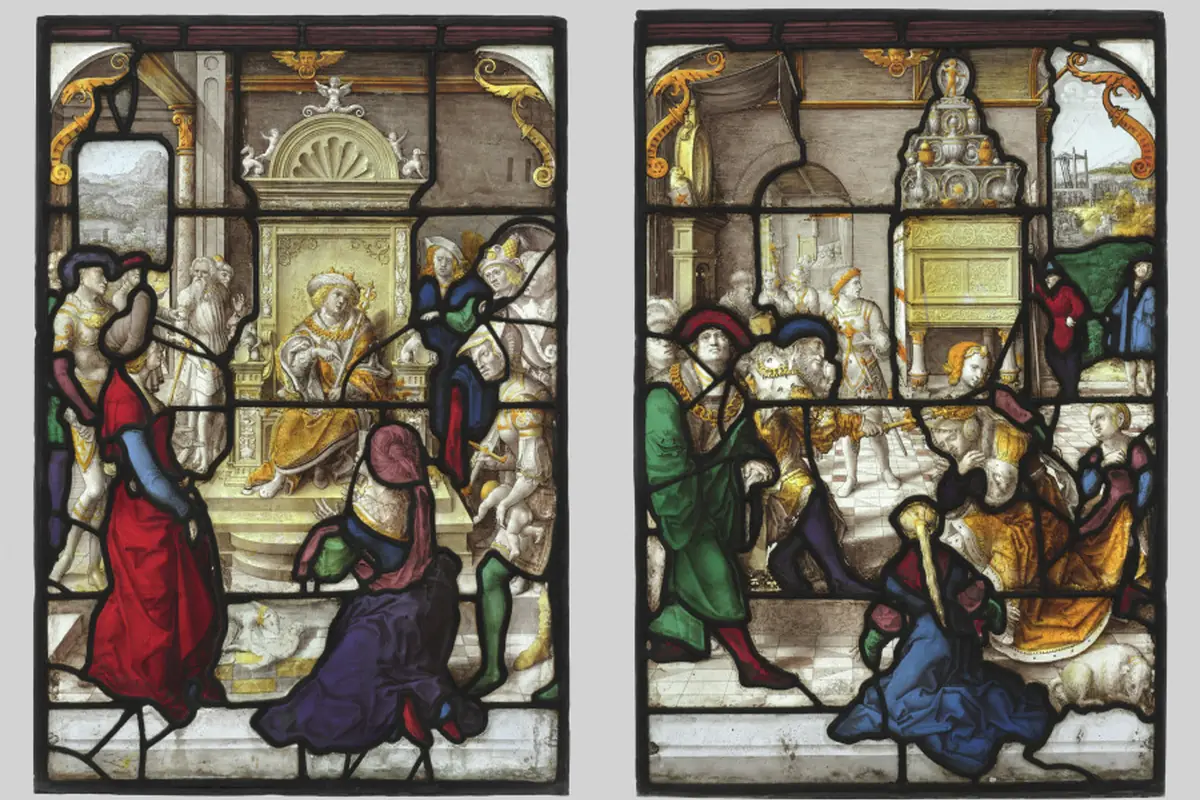
- The Judgment of Solomon and Esther before Ahasuerus (pair), Dirk Vellert (c. 1530) — Cleveland Museum of Art, CC0 1.0
- Flowers and Trees of the Four Seasons, Watanabe Shikō (early-mid 1700s) — Cleveland Museum of Art, CC0 1.0
- The Antechamber of the Palace of Justice, Paris, Charles Meryon (1855) — Cleveland Museum of Art, CC0 1.0
- Scenes of Witchcraft: Morning, Salvator Rosa (c. 1645–49) — Cleveland Museum of Art, CC0 1.0
- Sketches in Belgium and Germany, Volume I: Hall of Justice of the Magistrates du Franc, Bruges, Louis Haghe (1840) — Cleveland Museum of Art, CC0 1.0
- Medal: In Commemoration of the Fiftieth Anniversary - The Warner and Swasey Company, Victor D. Brenner (1930) — Cleveland Museum of Art, CC0 1.0
- Peregrine Falcons (Duck Hawks), John James Audubon (c. 1827) — Cleveland Museum of Art, CC0 1.0
- Roman Ruins, Villa Pamfili, Hubert Robert (1774) — Cleveland Museum of Art, CC0 1.0
- Annunciation to the Shepherds: Leaf from a Book of Hours (1 of 6 Excised Leaves), Henri d'Orquevaulx (c. 1420–30) — Cleveland Museum of Art, CC0 1.0
- Compass and Sun Dial (1700–1750) — Cleveland Museum of Art, CC0 1.0
- Telescoping basket (1800's) — Cleveland Museum of Art, CC0 1.0
- Nini in the Garden (Nini Lopez), Auguste Renoir (1876) — The Metropolitan Museum of Art, CC0 1.0