
 Cleveland Museum of Art · CC0 1.0
Excavating, an exceptional act
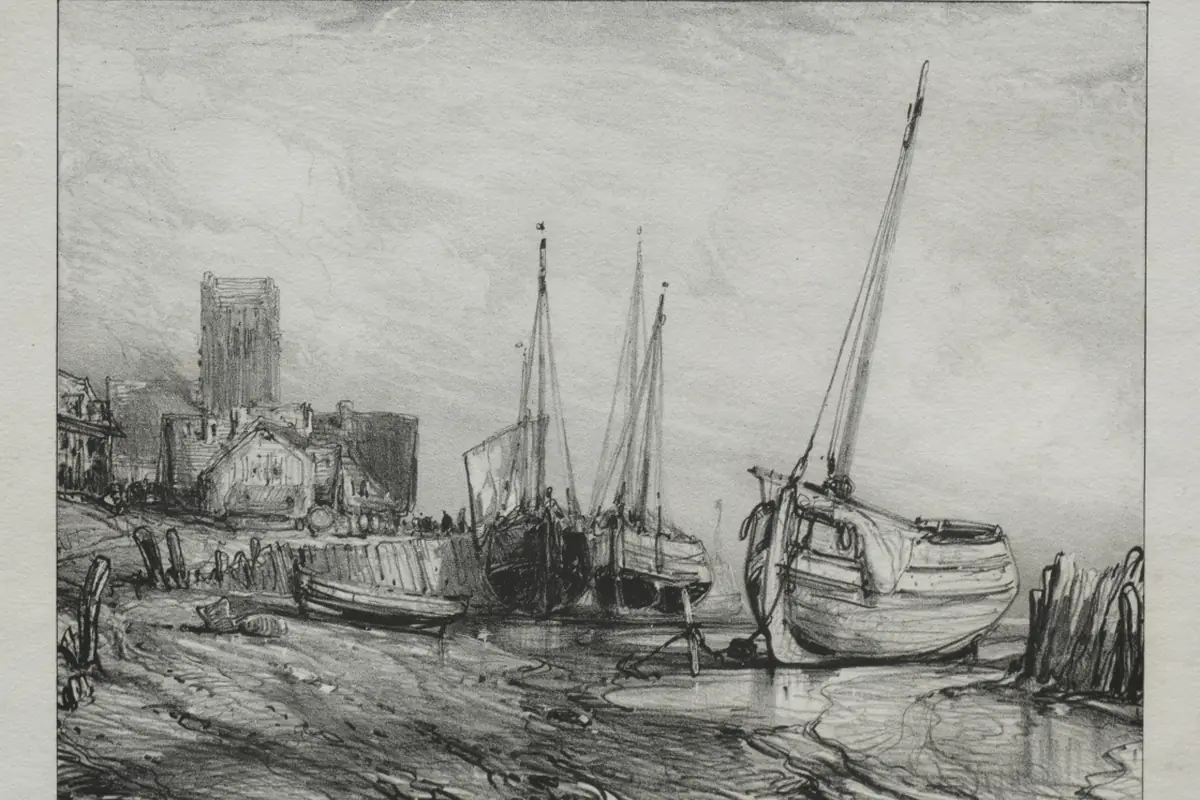
Excavating a wreck destroys the site by studying it. That is why archaeologists do it only when scientifically justified, to save a threatened site or answer an important question. Every excavation must be prepared, authorised, conducted by specialists and published.
About forty scientific underwater excavations are carried out each year with the support of OIMAP or Member States. They bring together archaeologists, divers, restorers and curators.
This page presents the rules, the methods and the stakes.
Underwater excavations in figures
Source: OIMAP Heritage Protection Department.
UNESCO's rules
The annex to the 2001 Convention sets out the rules for any excavation: a prior scientific project, a qualified archaeologist, a plan for conserving the objects brought up, sufficient funding, complete documentation and publication of results. No object may be sold, exchanged or dispersed.
The project is submitted to the competent authority, which may refuse it if it does not comply with these rules. States must also make sure that foreign teams cooperate with local institutions.
Methods and techniques
Underwater excavations use suitable methods: sonar survey, photogrammetric recording, gridding of the site, controlled suction of sediment, three-dimensional recording of objects. Divers work in teams, for limited periods, with rigorous safety protocols.
Objects brought up are immediately placed in tanks of fresh or sea water to avoid deterioration. Their treatment — desalination, stabilisation, controlled drying — may take years.
Conservation and publication
An excavated object is useless if it is not conserved and documented. Each excavation therefore provides for a conservation laboratory, storage space and a treatment budget. Results are published within five years: scientific report, database, exhibition.
Collections are handed to a museum or public institution, which undertakes to conserve them and make them accessible. No collection may be dispersed without the authorisation of the competent authority.
Excavations that train
Each supported project includes a training strand: placements for students, training of local diver-archaeologists, conservation workshops. The aim is for States eventually to have the skills needed to carry out and supervise excavations themselves.
In 2024, one hundred and twenty people were trained in this way, half of them in countries that previously had no underwater archaeology team.
Steps of an excavation
| Step | Content | Duration |
|---|---|---|
| Project | Questions, methods, budget | 6 to 12 months |
| Permit | Examination by the authority | 2 to 6 months |
| Field | Dives, recording | Several weeks |
| Conservation | Treatment of objects | Several years |
| Publication | Report, exhibition | Within 5 years |
Landmarks
- First laws
Permits compulsory.
- UNESCO annex
Scientific rules.
- OIMAP training
First placements.
- Support programme
Funding of 12 projects.
No excavation without conservation
Excavation or non-invasive survey
Excavation
Removal of sediment and objects- Detailed information
- Destruction of context
- Strict permit
Exceptional cases.
Non-invasive survey
Sonar, 3D recording- No destruction
- Precise mapping
- Less costly
To be favoured.
Setting up an excavation project
- Define
Set the scientific question.
- Prepare
Assemble the team.
- Apply
Obtain the permit.
- Excavate
Carry out the dives.
- Keep
Treat and publish.
Conditions for a permit
An excavation director
« We spent three years preparing the campaign, and three weeks underwater. That proportion says everything about what a responsible excavation is. »
Vocabulary of excavations
- Preventive excavation
- Excavation before works.
- Rescue excavation
- Excavation of a threatened site.
- Desalination
- Removal of salts from an object.
- Survey
- Search without excavating.
Frequently asked questions
Who can excavate?
Qualified archaeologists with a permit.
What happens to the objects?
They are kept in a public institution.
Does OIMAP fund excavations?
Yes, on a project basis.
Where can I find the rules?
See Regulation.
Useful documents
Contacts
Related pages
 Underwater heritageWrecks, sunken cities, submerged objects: protecting cultural heritage underwater and regulating excavations, looting and trade.›
 Wrecks and submerged sitesTypology of wrecks, scientific value, threats, reporting and management: getting to know submerged remains better.›
 Regulation of underwater heritageThe texts that protect wrecks and submerged sites: 2001 UNESCO Convention, law of the sea, national laws and operators' obligations.›
See the regulation
Image credits (16)
- Nuova pianta di Roma data in luce da Giambattista Nolli l’anno MDCCXLVII, known as La Pianta Grande di Roma, Giovanni Battista Nolli (1748) — Cleveland Museum of Art, CC0 1.0
- Fishing Boats along the Beach, Eugène Isabey (c. 1830) — Cleveland Museum of Art, CC0 1.0
- View of Venice, Jacopo de' Barbari (1500) — Cleveland Museum of Art, CC0 1.0
- River Landscape with Boats, Annibale Carracci (c. 1590) — Cleveland Museum of Art, CC0 1.0
- Nuova pianta di Roma data in luce da Giambattista Nolli l’anno MDCCXLVII, known as La Pianta Grande di Roma, Giovanni Battista Nolli (1748) — Cleveland Museum of Art, CC0 1.0
- Return of the Fishing Boats at Collioure, near the Spanish Border, Adolphe Appian (1878) — Cleveland Museum of Art, CC0 1.0
- Nuova pianta di Roma data in luce da Giambattista Nolli l’anno MDCCXLVII, known as La Pianta Grande di Roma, Giovanni Battista Nolli (1748) — Cleveland Museum of Art, CC0 1.0
- Alpine Landscape: The Handegg, Switzerland, Jean-Léon Gérôme (1850s) — Cleveland Museum of Art, CC0 1.0
- Dune Scene with Peasant Figures, Willem van de Velde (mid-1650s) — Cleveland Museum of Art, CC0 1.0
- Sketchbook, The Dells, N° 127, page 090 & 91: Harbor with a Road, Maurice Prendergast (c. 1919–1921) — Cleveland Museum of Art, CC0 1.0
- Arrival of the "Southern Barbarians" (c. 1600) — Cleveland Museum of Art, CC0 1.0
- The Grotto of Posillipo, Hubert Robert (c. 1769) — Cleveland Museum of Art, CC0 1.0
- Seven Jeweled Mountain (late 1800s) — Cleveland Museum of Art, CC0 1.0
- A Boat That Has for Sails the Wings of a Huge Bird, Filippo Morghen (about 1769) — Cleveland Museum of Art, CC0 1.0
- A Rocky Cove with Fishing Boats, Allart van Everdingen (late 1650s) — Cleveland Museum of Art, CC0 1.0
- Landscape with Winding Road, Thomas Doughty (1833) — Cleveland Museum of Art, CC0 1.0