
 Cleveland Museum of Art · CC0 1.0
Pages in this section
 Official speechesThe Secretary-General's public addresses before the General Assembly and international bodies.›
 Biography of the Secretary-GeneralThe background of Dr. Philippe Aubert de Vincelles, heritage lawyer and Secretary-General of OIMAP.›
 Interviews with the Secretary-GeneralThe interviews given to the press by the Secretary-General: themes, formats and conditions for requests.›
A message of trust
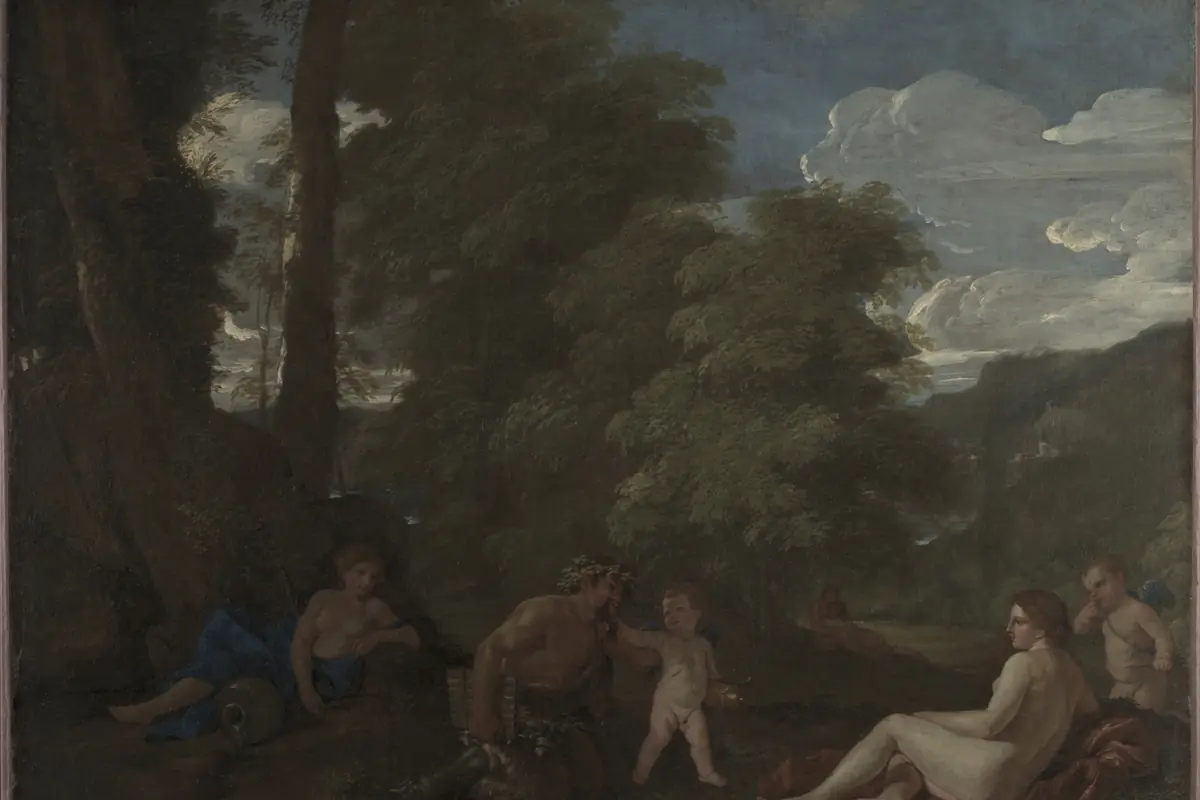
The Secretary-General heads the OIMAP Secretariat and reports on its work to the 67 Member States. This section brings together his message, public addresses, background and press interviews.
Dr. Philippe Aubert de Vincelles was elected for four years, a term renewable once. Find his official speeches, his biography and his interviews.
Message from the Secretary-General in figures
Source: OIMAP General Secretariat.
Three pages
Why a message from the Secretary-General
The Organization addresses very different audiences: diplomats, customs officers, gallery owners, curators, collectors. The Secretary-General's message gives everyone the same reading of the direction being followed and of the year's priorities, in direct language.
It replaces neither the official reports nor the decisions of the General Assembly. It explains the choices, recalls the commitments made before the States and places the Secretariat's daily work within the mandate conferred in 2007.
The three priorities of the term
The Secretary-General has placed his term under three priorities: strengthening the protection of cultural property, simplifying citizens' access to the Desk's services and broadening cooperation with partner organizations. Each is the subject of objectives monitored every year.
These priorities do not modify the mandate of the six missions. They indicate where the main effort is focused, and they are examined by the Executive Council before being presented to the General Assembly.
Accountable to the States
The Secretary-General is elected by the General Assembly. He presents it each year with a report on the implementation of the mandate and answers delegations' questions. This accountability shapes his public statements: nothing is announced that has not been voted or budgeted.
Between sessions, he reports to the Executive Council and exchanges with national focal points. The figures he cites come from the Organization's official publications.
A dialogue with the public
The Organization is not only a forum of States. It also addresses collectors, auction houses and museums, which keep the market alive. The Secretary-General meets them at public events and through regular interviews.
Questions from the public may be sent to the General Secretariat via the online form. They inform the preparation of addresses and policy documents.
The term in brief
| Element | Rule | Clarification |
|---|---|---|
| Election | By the General Assembly | Vote of the Member States |
| Duration | Four years | Term renewable once |
| Role | Head of the Secretariat | Implementation of decisions |
| Accountability | Annual report | Presented to the Assembly |
| Languages | French, English, Spanish | Translated addresses |
Milestones
- Foundation
Twenty-three States establish the Organization in Paris.
- 67 Member States
The Organization coordinates twenty-three operations.
- 19th General Assembly
Singapore, 10–12 June.
- Annual report
Presentation to delegations and online publication.
Texts to be cited precisely
Official address or interview
Official speech
Prepared and published text- Delivered before a body
- Published in three languages
- Commits the Organization
Institutional reference.
Interview
Exchange with the press- Questions from journalists
- Freer tone
- Published by the media outlet
Additional perspective.
Following the addresses
- Read the speeches
Read the texts, sorted by date and by body.
- Read the biography
Place his background and fields of expertise.
- Browse the interviews
Find the exchanges with the press.
- Asking a question
Write to the General Secretariat using the form.
Before quoting a statement
A delegate to the General Assembly
« What we expect from the Secretary-General is a clear voice, one that announces little but delivers what it announces. »
Glossary
- Mandate
- Period during which the Secretary-General holds office.
- General Assembly
- Body bringing together all Member States.
- Focal point
- Contact person designated by each State to liaise with the Secretariat.
- Accountability
- Obligation to report on one's actions.
How to read this section
The three pages offer three complementary entry points. The speeches give the Organization's official position, the biography presents the background of its leader and the interviews show how he answers the press's questions.
To understand the internal organization and the role of the Secretariat, see the Who we are page and the General Secretariat section.
Frequently asked questions
Who elects the Secretary-General?
The General Assembly, by the majority set out in the Statutes.
Can I write to him?
Yes, through the online form; the General Secretariat directs each message.
Are the speeches translated?
Yes, in French, English and Spanish.
Where can I find his background?
See Biography.
Useful documents
Contacts
Related pages
 HomeOverview of OIMAP, online services, protection alerts, news, partners, newsletter and contact.›
 Official speechesThe Secretary-General's public addresses before the General Assembly and international bodies.›
 Biography of the Secretary-GeneralThe background of Dr. Philippe Aubert de Vincelles, heritage lawyer and Secretary-General of OIMAP.›
 Interviews with the Secretary-GeneralThe interviews given to the press by the Secretary-General: themes, formats and conditions for requests.›
 General SecretariatOIMAP's administration: a Secretary-General, nine directorates and about 410 staff.›
Read the speeches
Image credits (24)
- Interior Drawer for Cabinet, André-Charles Boulle (c. 1690) — Cleveland Museum of Art, CC0 1.0
- Farmhouse on the Slope of a Hill, Fra Bartolommeo (c. 1508) — Cleveland Museum of Art, CC0 1.0
- Gathering among the Members of Office Censor-General (1700s) — Cleveland Museum of Art, CC0 1.0
- Saint Jerome and the Lion (From the former Church of St. Peter in Erfurt), Tilman Riemenschneider (c. 1495) — Cleveland Museum of Art, CC0 1.0
- Nymphs and a Satyr (Amor Vincit Omnia), Nicolas Poussin (c. 1625–27) — Cleveland Museum of Art, CC0 1.0
- The birth of Rama and his brothers, from Chapter 17 of the Bala Kanda (Book of Childhood) of the Adhyatma Ramayana (Rama's Journey of the Su (c. 1820–30) — Cleveland Museum of Art, CC0 1.0
- Hercules and the Hydra (late 1500s-early 1600s) — Cleveland Museum of Art, CC0 1.0
- Towel End (c 1700s- 1800s) — Cleveland Museum of Art, CC0 1.0
- Temple of Athene Nike. Venus Victrix—Wingless Victory, Dimitrios Constantin (c. 1850s–60s) — Cleveland Museum of Art, CC0 1.0
- Winding Yarn (Interior of a Nantucket Kitchen), Eastman Johnson (1872) — Cleveland Museum of Art, CC0 1.0
- Marie-Yolande de Fitz-James, Henri Fantin-Latour (1867) — Cleveland Museum of Art, CC0 1.0
- Cabinet Plate, W. T. Copeland & Sons (1883) — Cleveland Museum of Art, CC0 1.0
- Jonah Under the Gourd Vine (280–90 CE) — Cleveland Museum of Art, CC0 1.0
- Bowl with Chrysanthemums, Seifū Yohei IV (1914–46) — Cleveland Museum of Art, CC0 1.0
- View of the Gulf of Pozzuoli from Solfatara, Philipp Hackert (1803) — Cleveland Museum of Art, CC0 1.0
- Corner Cabinet, René Dubois (c. 1765–1770) — Cleveland Museum of Art, CC0 1.0
- Scenes of Witchcraft: Morning, Salvator Rosa (c. 1645–49) — Cleveland Museum of Art, CC0 1.0
- Eighteen Views of Rome: The Piazza Farnese (recto); Cartouche (verso), Lievin Cruyl (1664) — Cleveland Museum of Art, CC0 1.0
- Twilight in the Wilderness, Frederic Edwin Church (1860) — Cleveland Museum of Art, CC0 1.0
- Banks of the Oise at Dawn, Louis Hayet (1888) — Cleveland Museum of Art, CC0 1.0
- Nini in the Garden (Nini Lopez), Auguste Renoir (1876) — The Metropolitan Museum of Art, CC0 1.0
- Adoration of the Shepherds, Carlo Dolci (c. 1670) — Cleveland Museum of Art, CC0 1.0
- Portrait of Sandford Peacocke, William Wood (1801) — Cleveland Museum of Art, CC0 1.0
- Boy with Anchor, Winslow Homer (1873) — Cleveland Museum of Art, CC0 1.0