
 Cleveland Museum of Art · CC0 1.0
Pages in this section
 Open calls for projectsCurrently open calls: themes, budgets, deadlines, target audiences and required documents.›
 Closed calls for projectsCompleted calls: results, projects supported, breakdown by country and lessons learned.›
 Submitting a projectOnline filing procedure: account, form, documents, acknowledgement of receipt, evaluation and notification of the decision.›
Supporting projects that protect heritage
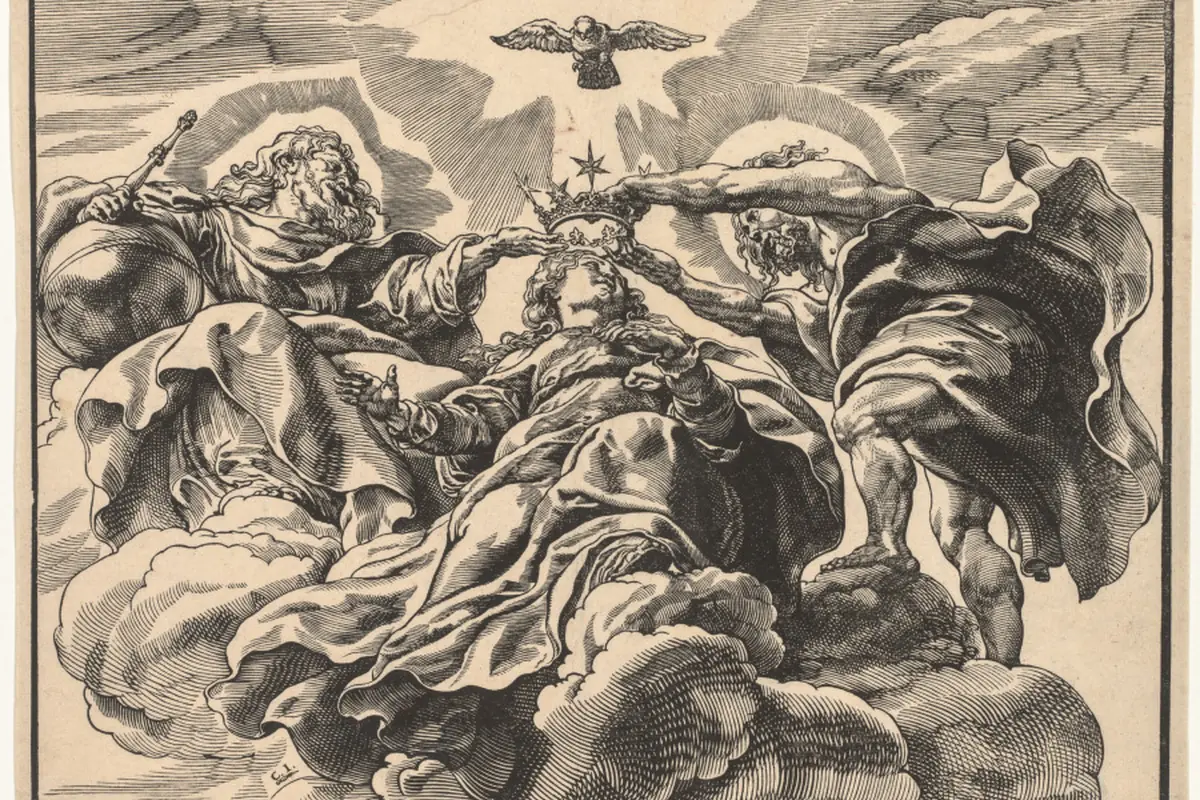
Each year, OIMAP launches five to eight calls for projects to support field initiatives: inventorying a collection, digitizing archives, training teams, provenance research, public awareness. They are aimed at institutions, associations and researchers in the Member States.
Each call specifies its theme, budget, criteria and timetable. Submission is online and results are communicated within 90 days.
This section presents the open calls, the closed calls and the procedure to submit a project.
Calls for projects in figures
Source: Events and Communications Directorate.
Three pages
Why calls for projects
Calls for projects make it possible to support initiatives that the Organization could not carry out alone. They bring out ideas from the field, fund teams that know their context and strengthen local capacities.
They respect the principle of equal treatment: all eligible applicants are assessed against the same criteria, published in advance.
Who can apply
Museums, libraries, archives, universities, public services, associations and foundations established in a Member State are eligible. Partnerships between several countries are encouraged.
Individuals cannot apply on their own. Art market businesses may take part as partners, but do not receive direct funding.
Nature and amount of support
Support ranges from €10,000 to €150,000 per project, on an indicative basis, for a period of twelve to twenty-four months. It covers staff, equipment, travel and training expenses, but not excessive overheads.
Co-financing by the project lead is appreciated, but not required for low-income countries.
The selection committee
A selection committee, made up of independent experts and representatives of the Organization, assesses the applications. Each application is read by at least two evaluators, who score the project on the basis of a public grid.
Committee members declare their conflicts of interest and withdraw from deliberations concerning their own institutions.
Typical timetable of a call (indicative)
| Stage | Duration | Remark |
|---|---|---|
| Opening | Month 0 | Publication of the criteria |
| Questions | Month 1 | Frequently asked questions |
| Closing | Month 2 | Exact deadline |
| Results | Month 5 | 90 days after closing |
Milestones
- First call
Inventory.
- Thematic calls
Five per year.
- Online submission
Paperless filing.
- Eight calls
Record.
One call, its own rules
Local or regional project
Local
One institution- Simple implementation
- Concrete impact
- Modest budget
To get started.
Regional
Several countries- Network effect
- More partners
- Heavier management
For a broader impact.
Responding to a call
- Read
The rules.
- Frame
The project.
- Cost
The budget.
- Submit
Online.
- Follow
The decision.
Before submitting
A project lead
« The call for projects allowed us to inventory three thousand objects that no one had catalogued. The support was decisive. »
Glossary of calls
- Call for projects
- Public invitation to submit a project.
- Eligibility
- Conditions for applying.
- Co-financing
- Share funded by the project lead.
- Grid
- Scoring scale.
Monitoring and evaluation
Supported projects submit an interim report and a final report. Monitoring visits are organized for the largest projects.
Results are published in the closed calls section in order to share lessons learned.
Frequently asked questions
Useful documents
Contacts
Related pages
 ActivitiesEvents, conferences, publications, media, prizes, exhibitions and the sales calendar: the public life of OIMAP throughout the year.›
 Open calls for projectsCurrently open calls: themes, budgets, deadlines, target audiences and required documents.›
 Closed calls for projectsCompleted calls: results, projects supported, breakdown by country and lessons learned.›
 Submitting a projectOnline filing procedure: account, form, documents, acknowledgement of receipt, evaluation and notification of the decision.›
See the open calls
Image credits (23)
- Saint Jerome and the Lion (From the former Church of St. Peter in Erfurt), Tilman Riemenschneider (c. 1495) — Cleveland Museum of Art, CC0 1.0
- Panel (c. 1780–1840) — Cleveland Museum of Art, CC0 1.0
- Side Drawer for Cabinet, André-Charles Boulle (c. 1690) — Cleveland Museum of Art, CC0 1.0
- Portrait of a Man, Gustave Caillebotte (1880) — Cleveland Museum of Art, CC0 1.0
- Coronation of the Virgin, Christoffel Jegher (1632–36) — Cleveland Museum of Art, CC0 1.0
- Bidri Hookah Bowl with Roses (c. 1650s) — Cleveland Museum of Art, CC0 1.0
- Leaf from a Lectionary with St. Luke (1057–1063) — Cleveland Museum of Art, CC0 1.0
- Lace Towel End (c. 1700s–1800s) — Cleveland Museum of Art, CC0 1.0
- The Dance at the Court of Herod, Israhel van Meckenem (c. 1500) — Cleveland Museum of Art, CC0 1.0
- Farmhouse on the Slope of a Hill, Fra Bartolommeo (c. 1508) — Cleveland Museum of Art, CC0 1.0
- St. Anthony Reading, Albrecht Dürer (1519) — Cleveland Museum of Art, CC0 1.0
- Gathering among the Members of Office Censor-General (1700s) — Cleveland Museum of Art, CC0 1.0
- Portrait of John VIII Palaoelogus, Emperor of Constantinople, 1424-1428 (reverse), Pisanello (c. 1438–1439) — Cleveland Museum of Art, CC0 1.0
- The Four Seasons, Kano Tan’yū (1668) — Cleveland Museum of Art, CC0 1.0
- High Class Students and Teachers at Bishop Cotton School, Shimla (verso), Raja Deen Dayal (c. 1882–87) — Cleveland Museum of Art, CC0 1.0
- The Victory Banquet: from Battle Scenes of the Quelling of Rebellions in the Western Regions, with Imperial Poems (c. 1765–74; poem dated 1760) — Cleveland Museum of Art, CC0 1.0
- Edge of the Woods Near L'Hermitage, Pontoise, Camille Pissarro (1879) — Cleveland Museum of Art, CC0 1.0
- The Grotto of Posillipo, Hubert Robert (c. 1769) — Cleveland Museum of Art, CC0 1.0
- Twilight in the Wilderness, Frederic Edwin Church (1860) — Cleveland Museum of Art, CC0 1.0
- Bookplate: Boylston Medical Library, George Girdler Smith (1806–39) — Cleveland Museum of Art, CC0 1.0
- Winding Yarn (Interior of a Nantucket Kitchen), Eastman Johnson (1872) — Cleveland Museum of Art, CC0 1.0
- Woman Sitting Reading , Georges Lemmen (1905) — Cleveland Museum of Art, CC0 1.0
- Corner Cabinet, René Dubois (c. 1765–1770) — Cleveland Museum of Art, CC0 1.0