
 Cleveland Museum of Art · CC0 1.0
The historic heart of the market
North America records €27.1 billion in transactions in 2024, with index growth of 5.1%. New York alone accounts for 38% of regional volume.
The region stands out for the depth of its market: a large number of collectors, powerful private museums and top-ranking auction houses. It dominates the high end: 54 of the 112 lots sold for more than €5 million in 2024 were sold in North America.
This page presents the region's profile, its strong segments and the regulatory points to watch.
North America in 2024
Source: OIMAP Observatory.
The strengths of the North American market
The first strength is liquidity: a quality lot almost always finds a buyer there. The second is diversity: modern painting, contemporary art, 20th-century design, photography, tribal art. The third is the supporting ecosystem: experts, curators, carriers, lawyers and specialised insurers.
Foundations and private museums play a driving role, buying, lending and financing exhibitions that feed demand.
A fragmented regulatory framework
Unlike Europe, the region has no single framework: each federated State has its own rules on resale, taxation and cultural property law. OIMAP, through mutual recognition of certificates, eases the circulation of works between jurisdictions.
Operators must also contend with strict financial compliance obligations, which require identifying buyers and keeping transaction records for several years.
The region's buyers
A North American buyer is on average younger than a European buyer and more inclined to buy online. Nearly 31% of the region's lots were sold online in 2024, against 22% in Europe.
They also more often use art advisers and financing secured on works. These practices reinforce the demand for reliable documents: a lender requires a certificate, a conservation report and a valuation before accepting a work as security.
Dominant segments
| Segment | Share of regional volume | Change |
|---|---|---|
| Contemporary art | 29% | +7.4% |
| Modern painting | 27% | +4.8% |
| 20th-century design and furniture | 14% | +3.9% |
| Photography | 8% | +5.6% |
| Other | 22% | +3.2% |
Landmarks of the region
- Leading region in growth
Rise in contemporary sales.
- Overtakes Europe
First place worldwide.
- Post-crisis recovery
Return of the major sales.
- €27.1bn
All-time high.
Concentration
Two models of sale
Public sales
World-renowned houses- Published estimates
- Maximum visibility
- High fees
For major works.
Private sales
Galleries and intermediaries- Discretion
- Negotiated price
- Less public data
For sensitive transactions.
Selling a work in North America
- Prepare
Gather certificates and provenance.
- Choose
Select the auction house.
- Ship
Arrange transport and insurance.
- Clear customs
Obtain the import licence if necessary.
- Sell
Present the work for sale.
Before selling in the region
A New York collector
« Here, no one buys an important work without having seen a complete file: certificate, provenance, condition. »
Regional vocabulary
- Resale right
- Royalty paid to the artist on a resale.
- Private sale
- Transaction concluded outside auction.
- Compliance
- Compliance with legal obligations.
- Estimate
- Price range announced before the sale.
Frequently asked questions
Are OIMAP certificates recognised?
Yes, by the region's Member States, according to the list of States.
Is a licence needed to import?
Depending on the work and the State: see the import licence.
Where are the fairs held?
Mainly in New York, Miami and Los Angeles.
How does it compare with Europe?
See the Europe page.
Useful documents
Contacts
Related pages
 Geographic breakdownWhere sales are concluded: North America, Europe, Asia-Pacific, Middle East, Africa and Latin America.›
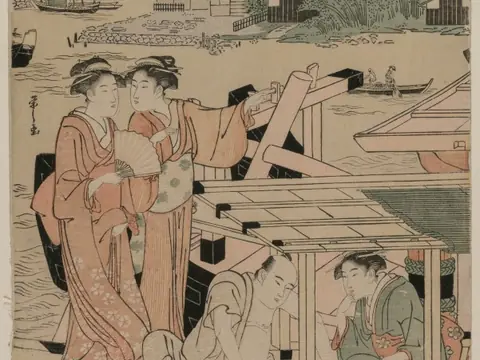 EuropeThe market's second region: €21 billion in 2024, leading home of old masters and decorative arts.›
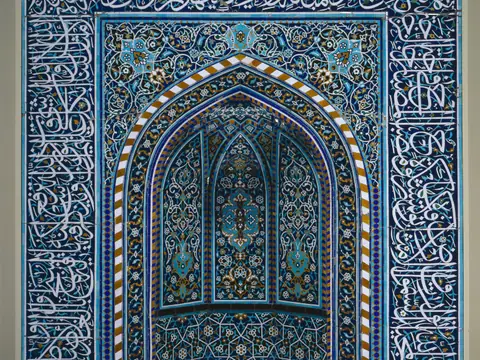 Contemporary artThe contemporary art market: emerging artists, galleries and fairs, a dynamic and volatile segment.›
Compare with Europe
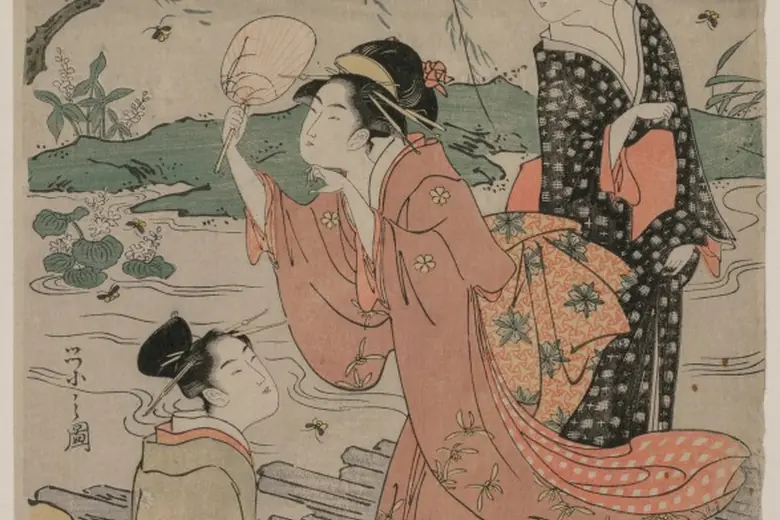
Image credits (16)
- Nuova pianta di Roma data in luce da Giambattista Nolli l’anno MDCCXLVII, known as La Pianta Grande di Roma, Giovanni Battista Nolli (1748) — Cleveland Museum of Art, CC0 1.0
- A Rocky Cove with Fishing Boats, Allart van Everdingen (late 1650s) — Cleveland Museum of Art, CC0 1.0
- View of Venice, Jacopo de' Barbari (1500) — Cleveland Museum of Art, CC0 1.0
- Zulaykha in her palace and as an old woman with Joseph, from a Panj Ganj (Five Treasures) of Abd al-Rahman Jami (Persian, 1414–1492); verso , Mushfiq (Text copied by Sultan-Ali Mashhadi (Pers) — Cleveland Museum of Art, CC0 1.0
- Nuova pianta di Roma data in luce da Giambattista Nolli l’anno MDCCXLVII, known as La Pianta Grande di Roma, Giovanni Battista Nolli (1748) — Cleveland Museum of Art, CC0 1.0
- Enjoying the Evening Cool Along the Sumida River, Kitagawa Utamaro (c. 1797–98) — Cleveland Museum of Art, CC0 1.0
- Nuova pianta di Roma data in luce da Giambattista Nolli l’anno MDCCXLVII, known as La Pianta Grande di Roma, Giovanni Battista Nolli (1748) — Cleveland Museum of Art, CC0 1.0
- Stele with Shakyamuni and Maitreya (c. 570s) — Cleveland Museum of Art, CC0 1.0
- Nuova pianta di Roma data in luce da Giambattista Nolli l’anno MDCCXLVII, known as La Pianta Grande di Roma, Giovanni Battista Nolli (1748) — Cleveland Museum of Art, CC0 1.0
- Net Fishing at Night on the Sumida River, Kitagawa Utamaro (c. 1800) — Cleveland Museum of Art, CC0 1.0
- Seven Jeweled Mountain (late 1800s) — Cleveland Museum of Art, CC0 1.0
- A Palace with an Arched Bridge (A Roman Villa), Hubert Robert (1760) — Cleveland Museum of Art, CC0 1.0
- Boating in Moonlight (1600s) — Cleveland Museum of Art, CC0 1.0
- Leftmost Print from Pleasure Boats on the Sumida River beneath Shin-Ōhashi Bridge, Chōbunsai Eishi (c. 1792) — Cleveland Museum of Art, CC0 1.0
- Prayer Niche (Mihrab) (c. 1500s or mid-1900s) — Cleveland Museum of Art, CC0 1.0
- Women Beside a Stream Chasing Fireflies, Chōbunsai Eishi (c. 1796–97) — Cleveland Museum of Art, CC0 1.0