
 Cleveland Museum of Art · CC0 1.0
One project, one file
Any museum, university, Member State or association may propose an exhibition project related to OIMAP's missions: heritage protection, the fight against trafficking, authentication, restitution or the history of the art market. Proposals are reviewed once a year.
The file is submitted online from the Desk. A scientific committee assesses it on its interest, its feasibility and its consistency with the Organization's direction.
This page details the criteria, the documents to provide, the timetable and the commitments.
Proposing an exhibition in figures
Source: Events and Communications Directorate.
Who may propose
Member States, museums, universities, foundations and recognised associations may submit a project. An individual project leader must be supported by a sponsoring institution.
Projects may be led jointly by several partners, which is encouraged when they involve several countries.
Preparing the file
The file includes a two-page statement of intent, a synopsis of the visitor route, an indicative list of works, a budget, a timetable and the lenders' letters of commitment. Works whose provenance is not documented are excluded.
A template is available in the useful documents on this page. The file may be written in French, English or Spanish.
The committee's review
The scientific committee reviews files in plenary session. It may request additional information, hear the project leader or propose a reorientation. It assesses the quality of the proposal, the rigour of the documentation and the educational value.
The decision is notified within 60 days (indicative). It is reasoned, including in the event of refusal, so as to allow a new application.
Funding and sharing of roles
OIMAP may cover all or part of the exhibition design, transport and insurance depending on the year's budget. The project leader contributes through the loan of works, research and hosting.
A co-production agreement specifies rights over the content, credits and the dissemination schedule.
Timetable of a proposal (indicative)
| Stage | Period | Responsible body |
|---|---|---|
| Submission | Before 31 March | Project leader |
| Review | April – May | Committee |
| Notification | June | Events Directorate |
| Production | July – December | Project leader and OIMAP |
Milestones
- Submission deadline
Online file.
- Hearing
If necessary.
- Notification
Reasoned decision.
- Opening
Exhibition of the following year.
Documented provenance
Single project or co-production
Single project
A project leader- Quick decisions
- Sole responsibility
- Limited resources
For a modest-sized exhibition.
Co-production
Several partners- Shared resources
- Wider network
- Heavier coordination
For a touring project.
Submitting a file
- Frame
The subject.
- Gather
The lenders.
- Write
Statement and budget.
- Submit
Online.
- Defend
Possible hearing.
Documents in the file
A curator
« The committee asked demanding questions about provenance. They improved our project. »
Vocabulary of the file
- Statement of intent
- Short presentation of the project.
- Synopsis
- Plan of the route.
- Co-production
- Production by several partners.
- Curator
- Scientific lead.
After selection
A curator is appointed to support the project. A production timetable is set: texts, visuals, insurance, packing. Regular progress meetings make it possible to correct deviations quickly.
The opening is prepared with the Events Directorate and the press, with a file and a press release approved by all parties.
Frequently asked questions
When should I submit?
Before 31 March.
In which language?
French, English or Spanish.
Are there application fees?
No.
Where can I see current exhibitions?
See Now showing.
Useful documents
Contacts
Related pages
 ExhibitionsSix exhibitions on show each year, four of them travelling: programme, international circulation and project proposals.›
 Exhibitions now showingThe year's six exhibitions: themes, venues, dates, prices, guided tours and accessibility.›
 Travelling exhibitionsFour exhibitions that travel the world: modular format, schedule of stops, host conditions and shared costs.›
 Submitting a projectOnline filing procedure: account, form, documents, acknowledgement of receipt, evaluation and notification of the decision.›
See what is now showing
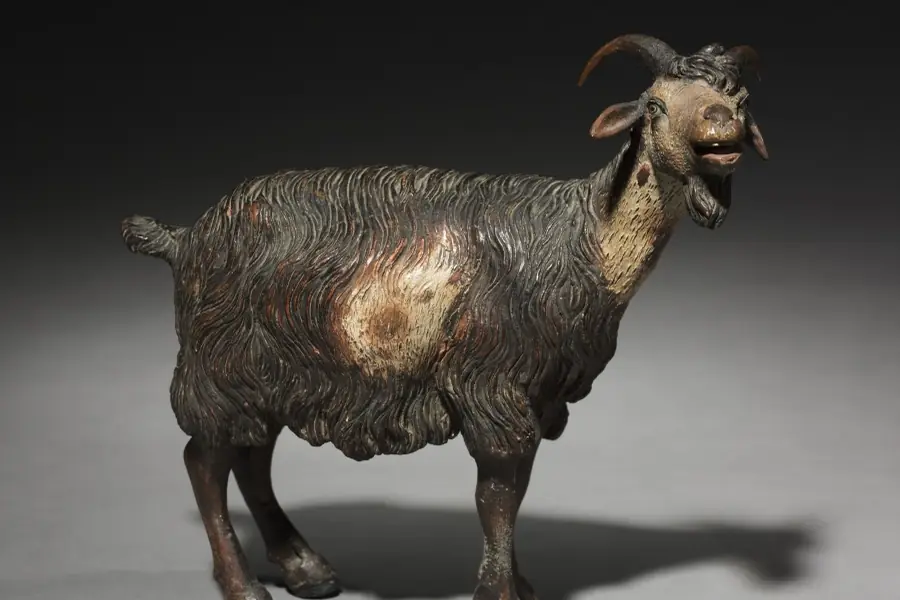
Image credits (17)
- Portrait of a Man, Gustave Caillebotte (1880) — Cleveland Museum of Art, CC0 1.0
- Nini in the Garden (Nini Lopez), Auguste Renoir (1876) — The Metropolitan Museum of Art, CC0 1.0
- The Four Seasons, Kano Tan’yū (1668) — Cleveland Museum of Art, CC0 1.0
- Bull Head Attachment (c. 700–600 BCE) — Cleveland Museum of Art, CC0 1.0
- Edge of the Woods Near L'Hermitage, Pontoise, Camille Pissarro (1879) — Cleveland Museum of Art, CC0 1.0
- Still Life with Vegetables, Partridge, and a Jug, Adolphe-Félix Cals (1858) — Cleveland Museum of Art, CC0 1.0
- Panel (c. 1780–1840) — Cleveland Museum of Art, CC0 1.0
- Offering Table (305–30 BCE) — Cleveland Museum of Art, CC0 1.0
- Lace Towel End (c. 1700s–1800s) — Cleveland Museum of Art, CC0 1.0
- Scenes of Witchcraft: Morning, Salvator Rosa (c. 1645–49) — Cleveland Museum of Art, CC0 1.0
- Bidri Hookah Bowl with Roses (c. 1650s) — Cleveland Museum of Art, CC0 1.0
- The Grotto of Posillipo, Hubert Robert (c. 1769) — Cleveland Museum of Art, CC0 1.0
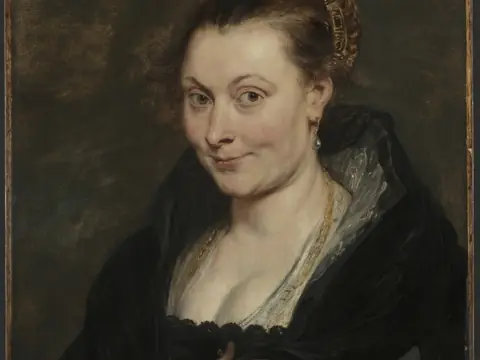
- Portrait of Isabella Brant, Peter Paul Rubens (c. 1620–25) — Cleveland Museum of Art, CC0 1.0
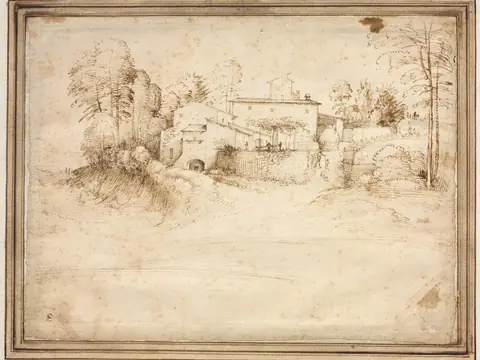
- Farmhouse on the Slope of a Hill, Fra Bartolommeo (c. 1508) — Cleveland Museum of Art, CC0 1.0
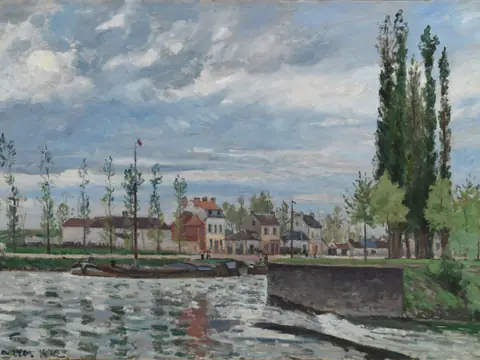
- The Lock at Pontoise, Camille Pissarro (1872) — Cleveland Museum of Art, CC0 1.0
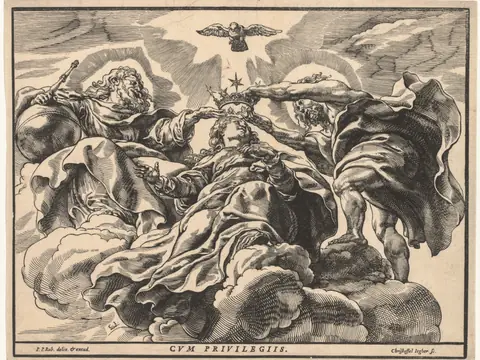
- Coronation of the Virgin, Christoffel Jegher (1632–36) — Cleveland Museum of Art, CC0 1.0
- Figure from a Crèche: Standing Mountain Goat (1780–1830) — Cleveland Museum of Art, CC0 1.0