
 Cleveland Museum of Art · CC0 1.0
Three questions of law
Every provenance dispute boils down to three questions: who was the owner originally, how did that owner lose the property, and can the present buyer invoke protection? The answers depend on the applicable law and the facts.
The rules vary greatly from one country to another, which makes the choice of applicable law decisive. The tribunal examines it carefully, after hearing the parties.
This page presents the general principles and the international standards taken into account.
Principles of provenance disputes in figures
Source: Registry of the OIMAP Arbitral Tribunal.
Title and dispossession
The claimant must first establish ownership, by producing titles, inheritances, inventories. The claimant must then show the circumstances of the loss: theft, spoliation, forced sale, confiscation, loss during a conflict. Proof may result from a body of indications where documents have disappeared.
The tribunal takes account of historical circumstances: victims of persecution have not always been able to keep or produce documents. The standards of proof are adapted.
Good faith and diligence
A good-faith buyer is one who legitimately did not know of the defect in title. It is not enough to plead ignorance: the tribunal examines the diligence shown before the purchase. Checking databases, studying provenance, a consistent price, export documents: all are assessed with growing strictness.
For high-risk works (wartime, conflict regions), the diligence requirement is stronger. The absence of research could lead to loss of protection.
Prescription and equity
In some legal systems, the buyer becomes the owner after a period (acquisitive prescription). In others, the original owner may sue for a very long time. The tribunal applies the chosen law but may refuse to draw from it effects contrary to international public policy, notably in cases of spoliation.
Equity plays an important part in seeking a solution: sharing the value, restitution against compensation, long-term loan. The arbitrators may propose these solutions if the parties consent.
International standards
The 1998 Washington Principles and later declarations call for "just and fair" solutions for spoliated property. They are not binding, but they guide the arbitrators, who refer to them in assessing the circumstances of the spoliation and the buyer's diligence.
The 1970 UNESCO Convention and the 1995 UNIDROIT Convention also inspire the tribunal's reasoning, without applying directly between private persons unless incorporated by contractual reference or national law.
What weighs in the balance
| Factor | Effect on the outcome |
|---|---|
| Proof of the old title | Strengthens the claimant |
| Complete purchase documents | Strengthens the buyer |
| Prior provenance research | Strengthens good faith |
| Circumstances of spoliation | May set aside prescription |
Milestones
- UNESCO Convention
Fight against trafficking.
- UNIDROIT
Restitution of stolen property.
- Washington Principles
Spoliated property.
- TAO practice
Standards of diligence.
The applicable law changes everything
Protection of the owner or of the buyer
Owner
Protection of title- Return of the work
- Principle of justice
- Proof sometimes difficult
Traditional civil law.
Buyer
Protection of good faith- Security of transactions
- Smoother market
- May wrong the victim
Common-law systems.
Analysing your situation
- Identify
Applicable law.
- Prove
Title or good faith.
- Date
Time limits.
- Negotiate
Amicable solutions.
- Refer
If necessary.
Good acquisition practices
A historian
« Reconstructing the course of a work is a patient task. An invoice forgotten in a private collection can change the outcome of the dispute. »
Vocabulary of principles
- Acquisitive prescription
- Acquisition of ownership through passage of time.
- Diligence
- Care shown before purchase.
- International public policy
- Shared fundamental values.
- Body of indications
- Set of converging elements.
Frequently asked questions
Does long possession protect?
Depending on the applicable law.
Is good faith enough?
No, diligence is needed.
Can the tribunal propose a division?
Yes, if the parties accept.
Where can I see the evidence?
See Evidence.
Useful documents
Contacts
Related pages
 Provenance disputesWho is the rightful owner? Principles, evidence and TAO decisions when the origin of a work is contested.›
 Evidence of provenanceArchives, inventories, invoices, photographs, appraisals: how to build and present a body of evidence before the TAO.›
 Provenance decisionsA few anonymised TAO decisions on provenance: inheritances, old thefts, spoliations and equitable solutions.›
See the evidence
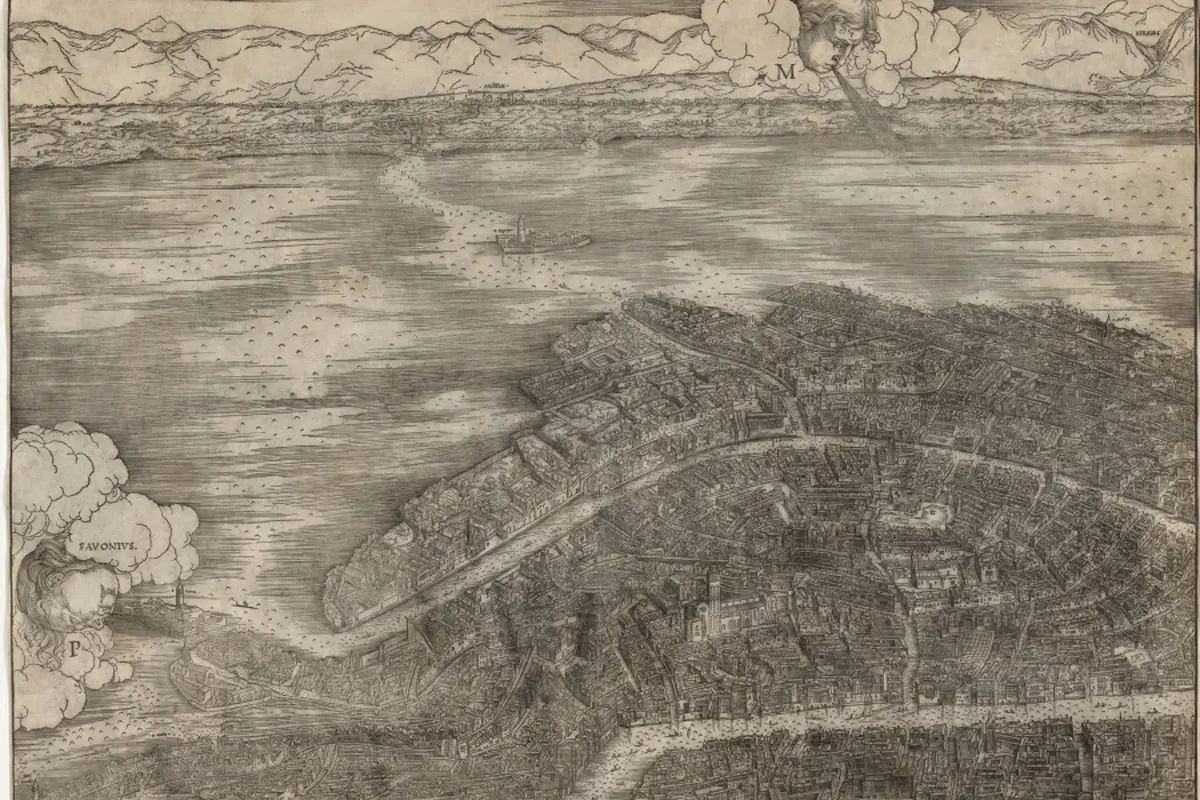
Image credits (16)
- The Antechamber of the Palace of Justice, Paris, Charles Meryon (1855) — Cleveland Museum of Art, CC0 1.0
- Chemin de fer de Toulouse à Bayonne. Pont de l'Aran (en trois arches de 17m d'ouverture chacune). Situation des travaux au 21 juillet 1861, Édouard Baldus (1861) — Cleveland Museum of Art, CC0 1.0
- Sketches in Belgium and Germany, Volume I: Hall of Justice of the Magistrates du Franc, Bruges, Louis Haghe (1840) — Cleveland Museum of Art, CC0 1.0
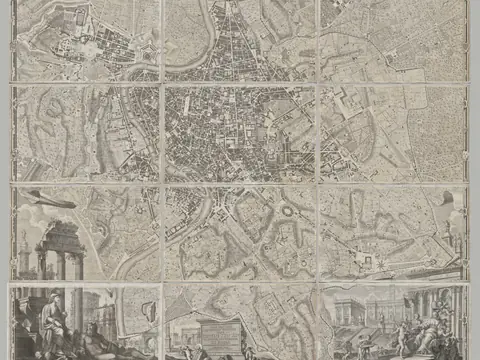
- Nuova pianta di Roma data in luce da Giambattista Nolli l’anno MDCCXLVII, known as La Pianta Grande di Roma, Giovanni Battista Nolli (1748) — Cleveland Museum of Art, CC0 1.0
- The Judgment of Solomon and Esther before Ahasuerus (pair), Dirk Vellert (c. 1530) — Cleveland Museum of Art, CC0 1.0
- Mercury (Budha), from a Mandi Astrology Series, Sanju (c. 1810) — Cleveland Museum of Art, CC0 1.0
- The Calumny of Apelles, Giorgio Ghisi (1560) — Cleveland Museum of Art, CC0 1.0
- Nuova pianta di Roma data in luce da Giambattista Nolli l’anno MDCCXLVII, known as La Pianta Grande di Roma, Giovanni Battista Nolli (1748) — Cleveland Museum of Art, CC0 1.0
- Dr. James Stuart; Mary Campbell Stuart, Gilbert Stuart (c. 1815) — Cleveland Museum of Art, CC0 1.0
- Seal Color Box (1662–1722) — Cleveland Museum of Art, CC0 1.0
- The Triumph of Mordecai, Lucas van Leyden (1515) — Cleveland Museum of Art, CC0 1.0
- The Grotto of Posillipo, Hubert Robert (c. 1769) — Cleveland Museum of Art, CC0 1.0
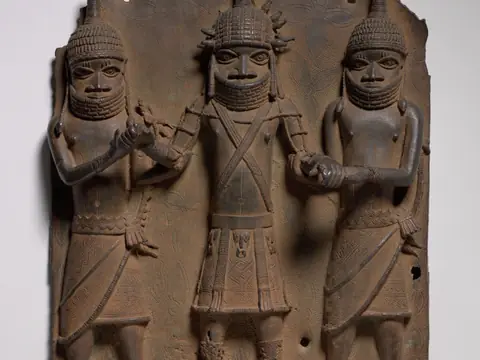
- Plaque (1500s–1600s) — Cleveland Museum of Art, CC0 1.0
- Nuova pianta di Roma data in luce da Giambattista Nolli l’anno MDCCXLVII, known as La Pianta Grande di Roma, Giovanni Battista Nolli (1748) — Cleveland Museum of Art, CC0 1.0
- Seal Color Box (1662–1722) — Cleveland Museum of Art, CC0 1.0
- View of Venice, Jacopo de' Barbari (1500) — Cleveland Museum of Art, CC0 1.0