
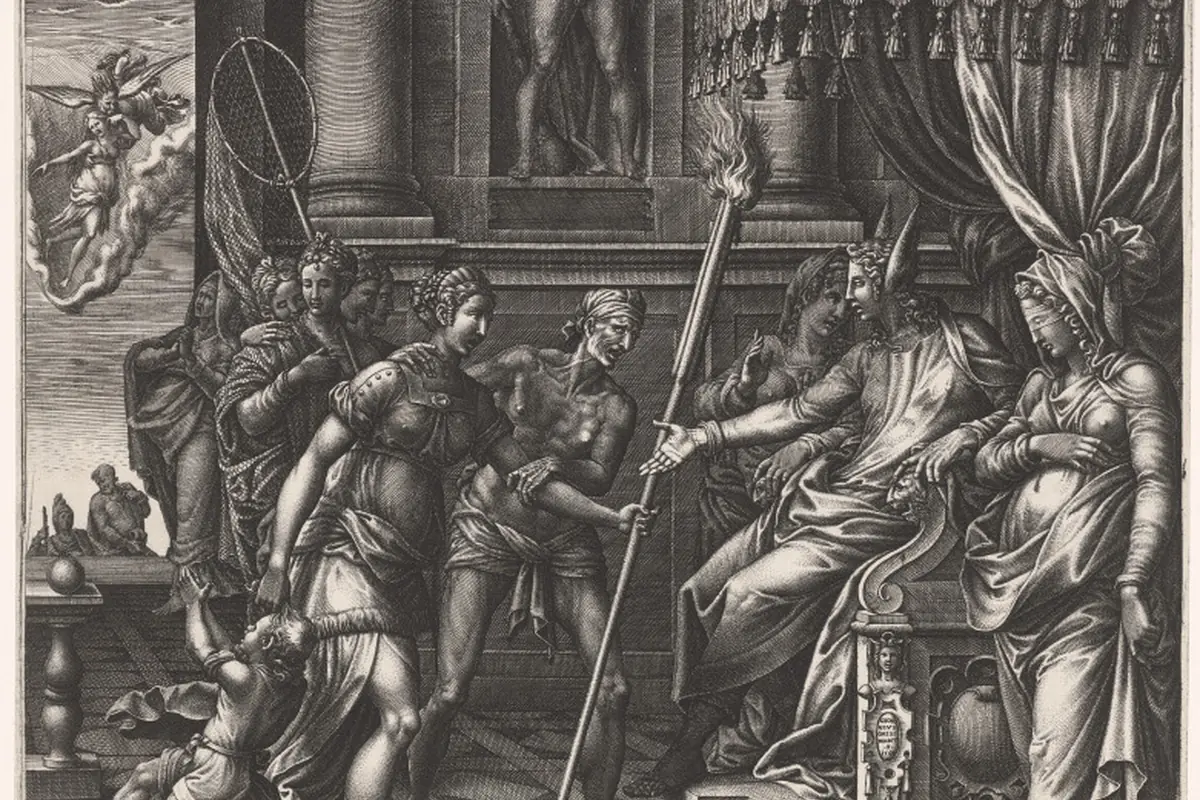
 Cleveland Museum of Art · CC0 1.0
Making the award enforceable
To have an award enforced that the losing party refuses to apply, exequatur must be obtained: a judge's decision giving it enforceable force in the judge's country. The procedure is brief and limited to a formal check.
In 17% of cases exequatur was requested. Judges have granted it in every case since 2019, on average within five months.
This page details the stages, the documents and the possible challenges.
Recognition and exequatur in figures
Source: Registry of the OIMAP Arbitral Tribunal.
Where and how to apply
The application is brought before the judge of the State where enforcement of the award is sought, that is, where the assets or the seat of the losing party are located. It is generally filed as an ex parte application, sometimes without an adversarial hearing at first (procedure on application).
The applicant produces the certified award, the arbitration agreement, the translations and proof of notification. A local lawyer is strongly advised.



Challenges and appeals
The losing party may contest exequatur by invoking the grounds provided by the convention. It may also bring an action for annulment before the judge of the seat of the arbitration, generally Paris, within one month of notification of the award.
An action for annulment does not suspend enforcement unless the judge decides otherwise. The grounds for annulment are limited: lack of jurisdiction, irregular composition, breach of the rights of the defence, public policy.
Enforcement measures
Once exequatur is obtained, the winning party may use the measures provided by local law: bank attachment, attachment of receivables, attachment of works, judicial mortgage. Protective measures may be requested before or during the procedure to prevent assets from being dissipated.
For works, attachment and forced sale raise specific difficulties: appraisal, conservation, publicity. The Registry can advise specialised professionals.
The case of States
Against a State, compulsory enforcement runs up against immunities from enforcement. Assets used for commercial purposes can be attached; those used for diplomatic or cultural missions cannot. The tribunal takes these rules into account and favours negotiated solutions.
States that take part in a TAO arbitration generally undertake to comply with the award. Cooperation agreements sometimes provide for enforcement in stages.
Stages of exequatur
| Stage | Actor | Duration |
|---|---|---|
| Requête | Applicant | Day 0 |
| Order | Judge | 1 to 2 months |
| Notification | Bailiff | 1 month |
| Possible challenge | Respondent | 2 to 3 months |
| Enforcement measures | Bailiff | Variable |
Milestones
- Award
Notification.
- Voluntary compliance
Time limit.
- Requête
Exequatur.
- Exequatur
Order.
- Measures
Attachments.
Request protective measures
Exequatur alone or with protective measures

Exequatur alone
Simple procedure- Less costly
- Five-month time frame
- Risk of assets being dissipated
If the party is solvent.
With measures
Reinforced procedure- Protects assets
- Additional cost
- Guarantee of payment
If the party is recalcitrant.
Applying for exequatur
- Certify
Award.
- Translate
Documents.
- Appoint
Local lawyer.
- File
Application.
- Enforce
Measures.
Exequatur file
A bailiff
« In nine cases out of ten, merely announcing the exequatur application is enough to unlock payment. »
Vocabulary of exequatur
- Requête
- Application addressed to a judge.
- Order
- Decision of a judge.
- Protective measure
- Preventive measure protecting rights.
- Bailiff
- Officer in charge of enforcement.
Frequently asked questions
Who pays for exequatur?
The applicant, reimbursed according to the award.
Is a local lawyer needed?
Yes, in practice.
How long does it take?
Five months on average.
Where can I see the follow-up?
See Follow-up.
Useful documents
Contacts
Related pages
 Enforcement of awardsAn award is worth something only if it is enforced: New York Convention, recognition and follow-up of TAO awards throughout the world.›
 New York ConventionThe 1958 convention on the recognition and enforcement of foreign arbitral awards: principles, scope and refusal.›
 Follow-up of enforcementThe Registry follows up the enforcement of awards: time limits, reminders, reports and publication in the event of refusal to comply.›
See the follow-up

Image credits (16)
- The Calumny of Apelles, Giorgio Ghisi (1560) — Cleveland Museum of Art, CC0 1.0
- Portrait of John VIII Palaoelogus, Emperor of Constantinople, 1424-1428 (reverse), Pisanello (c. 1438–1439) — Cleveland Museum of Art, CC0 1.0
- Dr. James Stuart; Mary Campbell Stuart, Gilbert Stuart (c. 1815) — Cleveland Museum of Art, CC0 1.0
- Carnet (1863–1865) — Cleveland Museum of Art, CC0 1.0
- The Judgment of Solomon and Esther before Ahasuerus (pair), Dirk Vellert (c. 1530) — Cleveland Museum of Art, CC0 1.0
- The Victory Banquet: from Battle Scenes of the Quelling of Rebellions in the Western Regions, with Imperial Poems (c. 1765–74; poem dated 1760) — Cleveland Museum of Art, CC0 1.0
- Sketches in Belgium and Germany, Volume I: Hall of Justice of the Magistrates du Franc, Bruges, Louis Haghe (1840) — Cleveland Museum of Art, CC0 1.0
- Seal of Doge Michele Steno (reverse) (1400–1409) — Cleveland Museum of Art, CC0 1.0
- The Antechamber of the Palace of Justice, Paris, Charles Meryon (1855) — Cleveland Museum of Art, CC0 1.0
- Coronation of the Virgin, Christoffel Jegher (1632–36) — Cleveland Museum of Art, CC0 1.0
- The Dance at the Court of Herod, Israhel van Meckenem (c. 1500) — Cleveland Museum of Art, CC0 1.0
- Architectural Conference (c. 1622) — Cleveland Museum of Art, CC0 1.0
- Letter Box, Ogata Kōrin (1700s) — Cleveland Museum of Art, CC0 1.0
- Plaque (1500s–1600s) — Cleveland Museum of Art, CC0 1.0
- Seal Color Box (1662–1722) — Cleveland Museum of Art, CC0 1.0
- Sweet Melancholy, Joseph-Marie Vien (1756) — Cleveland Museum of Art, CC0 1.0