
 Cleveland Museum of Art · CC0 1.0
The hours that count
When danger approaches, the difference is made in the first hours: protecting the most precious works, documenting the state of the premises, getting people to safety. OIMAP offers an emergency system to support threatened institutions and communities.
It rests on a standard plan, a 24-hour call line, teams of experts that can be mobilised within seventy-two hours and an emergency fund. It has been activated fourteen times since 2013.
This page describes the steps to take and the means that can be mobilised.
Emergency protection in figures
Source: OIMAP Heritage Protection Department.
The essential steps
The safety of people comes first. Next, set priorities: the most precious, most vulnerable and easiest-to-move works are put to safety first. Each piece is photographed, numbered and listed before it is moved.
Fragile or bulky pieces are protected on site: covering, wedging, walling up. Painted floors and walls are covered with geotextile. Archives are put in watertight crates and digitised as soon as possible.

The OIMAP system
On receiving a call, the emergency unit assesses the situation with the institution concerned and local partners. It activates the emergency fund if necessary, mobilises conservation, logistics and digitisation experts, and organises transport of teams and equipment.
The teams work in accessible and safe areas. They do not replace local actors but support them: they bring equipment, know-how and coordination. A referent stays on site until the end of the intervention.
After the intervention
Once the crisis has passed, the team draws up a review: state of the collections, losses, restoration needs. A recovery plan is proposed, with a timetable and a budget. Works taken out are returned to their places of origin when conditions allow.
A lessons-learned report is written and shared with other institutions. Each intervention has enriched the standard plan and the training offered by OIMAP.
Preparing before the crisis
The best emergency protection is the one that has been prepared. OIMAP offers a standard protection plan, adaptable to each institution: list of priority pieces, evacuation procedures, contacts, equipment, refuge sites.
It also offers annual exercises, simulating a crisis scenario. Institutions that have prepared in this way react markedly better and lose fewer works.
Priorities for moving to safety
| Criterion | Example | Action |
|---|---|---|
| Heritage value | Unique or major piece | Evacuate first |
| Fragility | Textile, paper, mural painting | Protect on site |
| Mobility | Portable object | Pack and move |
| Documentation | Inventory, archives | Digitise and copy |
Landmarks
- Call
Assessment.
- Decision
Activation of the fund.
- Mobilisation
Team constituted.
- Arrival
Deployment.
- Review
Recovery plan.
Take no unnecessary risk
Evacuate or secure on site
Evacuate
Transport out of the zone- Maximum protection
- Complex and costly
- Risk en route
If danger is imminent.
Secure on site
Local protection- Quick
- Suited to large objects
- Less effective against bombardment
If evacuation is impossible.
Triggering emergency protection
- Call
Contact the emergency line.
- Describe
Describe the situation.
- Prioritise
Choose the pieces.
- Move to safety
Apply the plan.
- Report back
Submit the review.
Basic equipment
A team leader
« When you arrive, the first thing you see is the staff's fear. Our role is to tell them we are here and that we will do this together. »
Vocabulary of emergency
- Evacuation
- Moving to a safe place.
- Geotextile
- Protective fabric.
- Recovery plan
- Reconstruction programme.
- Lessons-learned report
- Analysis after an intervention.
Frequently asked questions
Who can request an intervention?
A museum, a State, a field organisation.
Is it free of charge?
Yes for Member States, on criteria for others.
Does OIMAP intervene alone?
No, with local actors.
How is it financed?
See Emergency fund.
Useful documents
Contacts
Related pages
 Cultural property in armed conflictProtecting heritage when the guns speak: risk zones, emergency protection, emergency fund and cooperation with field actors.›
 Risk zonesThe eighteen zones monitored by OIMAP: classification criteria, indicators, alert levels and prevention measures.›
 Emergency fundThe 4.2 million euro fund that finances protection of heritage in crisis: criteria, procedure, examples of use and follow-up.›
See the emergency fund
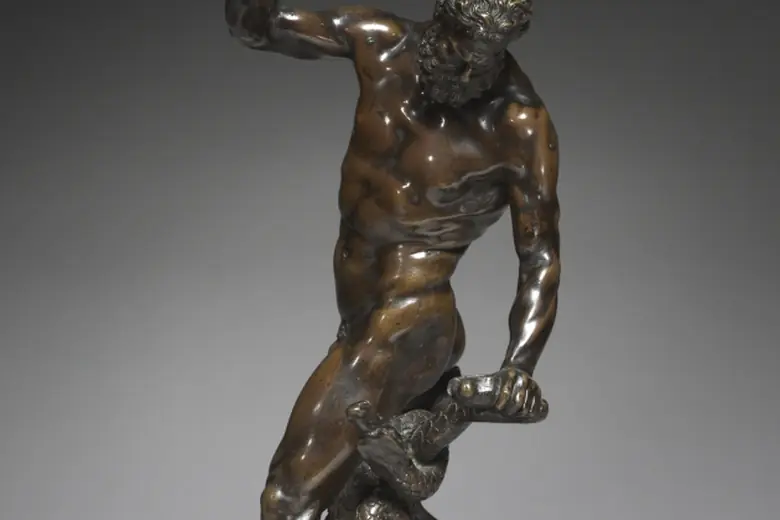
Image credits (16)
- Karnak, Les Pylônes d'Horus, Henri Béchard (1860s) — Cleveland Museum of Art, CC0 1.0
- The Grotto of Posillipo, Hubert Robert (c. 1769) — Cleveland Museum of Art, CC0 1.0
- View of the Gulf of Pozzuoli from Solfatara, Philipp Hackert (1803) — Cleveland Museum of Art, CC0 1.0
- Amitabha Triad (1400s) — Cleveland Museum of Art, CC0 1.0
- Temple of Athene Nike. Venus Victrix—Wingless Victory, Dimitrios Constantin (c. 1850s–60s) — Cleveland Museum of Art, CC0 1.0
- Small Mosque in the Kaiserbagh, Felice A. Beato (1858) — Cleveland Museum of Art, CC0 1.0
- Châteauvieux-sur-Suran, Antoine-Claude Ponthus-Cinier (1848) — Cleveland Museum of Art, CC0 1.0
- Jonah Under the Gourd Vine (280–90 CE) — Cleveland Museum of Art, CC0 1.0
- Album with Views of Rome and Surroundings, Landscape Studies, page 23a: Castle Saint Angelo, Rome, Franz Johann Heinrich Nadorp (c. 1830s-70s) — Cleveland Museum of Art, CC0 1.0
- Maharaja of Kotah Listening to Music and Watching Dancers (c. 1820) — Cleveland Museum of Art, CC0 1.0
- Egypt and Nubia, Volume I: The Great Sphinx, Pyramids of Gezeeh, Louis Haghe (1846) — Cleveland Museum of Art, CC0 1.0
- Nowshera, Kashmir (number 1000), Samuel Bourne (1864) — Cleveland Museum of Art, CC0 1.0
- Figure from a Crèche: Standing Man (1780–1830) — Cleveland Museum of Art, CC0 1.0
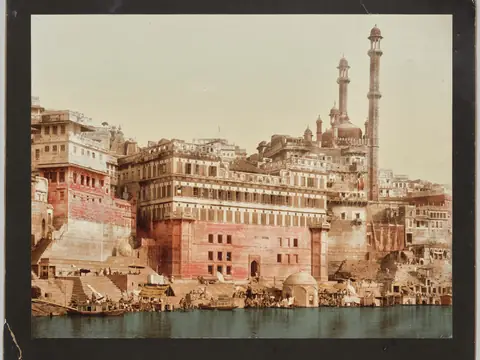
- India. Benares. Aurangzeb's Mosque, after a photo by Dr. Kurt Boeck, Photoglob Co. (c. 1890–1910) — Cleveland Museum of Art, CC0 1.0
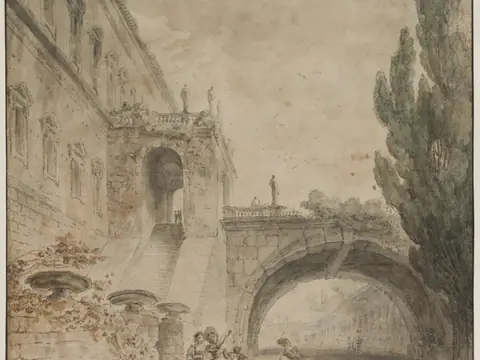
- A Palace with an Arched Bridge (A Roman Villa), Hubert Robert (1760) — Cleveland Museum of Art, CC0 1.0
- Hercules and the Hydra (late 1500s-early 1600s) — Cleveland Museum of Art, CC0 1.0