
 Cleveland Museum of Art · CC0 1.0
A seizure that holds up
A well-conducted seizure protects both the object and the procedure. It must respect national law, protect the object from any deterioration, document every action and allow later identification and restitution.
The procedure described here is a common framework. It does not replace national law, which specifies seizure powers, formalities and remedies.
It presents the steps, the precautions and the mistakes to avoid.
Seizure procedure in figures
Source: OIMAP Heritage Protection Department.
Secure and document
From the moment of discovery, secure the premises, limit access and identify everyone present. Photograph and film the whole scene before any handling: position of the objects, packaging, associated documents. Everything is noted in a timestamped report.
Each object is numbered and has a description sheet. Documents found — invoices, certificates, correspondence — are seized with the objects, because they prove provenance or its absence.
Handling and packing
Objects are handled with cotton or nitrile gloves, with both hands, as close to their centre of gravity as possible. An object is never cleaned, neither earth nor concretions are removed, and no attempt is made to glue fragments back together. Fragile objects are placed in boxes with tissue paper or neutral foam.
Heavy objects are moved with suitable means. Paintings are carried upright, face against a support, sculptures by their base. In case of doubt, the emergency line guides the team live.
Keeping and passing on
Seized objects must be kept in a safe place, at stable temperature and humidity, away from light, with controlled access. A conservation register records every movement. For high-value pieces, a partner museum may be asked.
The BIOP unit is informed within forty-eight hours. It compares, verifies, identifies possible owners and puts the officers in touch with foreign investigators. Legal follow-up and restitution then proceed according to the applicable procedure.
Respect rights
A seizure must respect people's rights: information on the reason, presence of a representative if the law requires, possibility of challenging. Good-faith holders are treated with respect and informed of their remedies, notably the possibility of fair compensation.
Respecting these rules protects the investigation and preserves the market's confidence in the procedure. OIMAP recommends consulting a specialised magistrate in a complex situation.
The six steps
| Step | Key actions | Document |
|---|---|---|
| Securing | Limit access | Opening report |
| Documentation | Photograph, film, number | Description sheet |
| Handling | Gloves, packing, transport | Movement register |
| Conservation | Safe place, stable conditions | Conservation register |
| Information | Alert the BIOP unit | Secure message |
| Follow-up | Appraisal, courts, restitution | Investigation file |
Landmarks
- Discovery
Securing.
- Documentation
Photos, report.
- Transfer
Place of conservation.
- BIOP information
Secure message.
- Expertise
Report.
Never clean
Conservation on site or transfer
On site
The service's warehouse- Quick
- Limited control of conditions
- Risk over a long period
For a few days.
Transfer
Museum or laboratory- Suitable conditions
- Experts available
- Requires coordination
For the duration of the investigation.
Carrying out a seizure
- Secure
Protect the premises.
- Document
Photograph everything.
- Handle
Pack with care.
- Keep
Choose a suitable place.
- Inform
Alert the BIOP unit.
Equipment and documents
A prosecutor
« A badly documented seizure is a seizure lost at trial. A good file is photographs, numbers, signatures and common sense. »
Vocabulary of seizure
- Report
- Instrument recording facts.
- Movement register
- Log of an object's movements.
- Relative humidity
- Moisture content of the air.
- Chain of custody
- Series of persons who have held the object.
Frequently asked questions
Who bears the conservation costs?
According to national law and agreement between States.
Can a seized object be exhibited?
No, during the investigation.
How long can an object be kept?
According to the judicial procedure.
Where can I find templates?
In the useful documents on this page.
Useful documents
Contacts
Related pages
 Law enforcement guideRecognising cultural property, carrying out a seizure by the book and knowing whom to contact: OIMAP's practical guide for police officers, gendarmes and magistrates.›
 Identify cultural propertyRecognising cultural property in the field: signs, categories, marks, photographs and comparison with the BIOP database.›
 RestitutionsReturning works to their lawful owners: 847 restitutions since 2007, ongoing cases and procedure for requesting a restitution.›
See the contacts
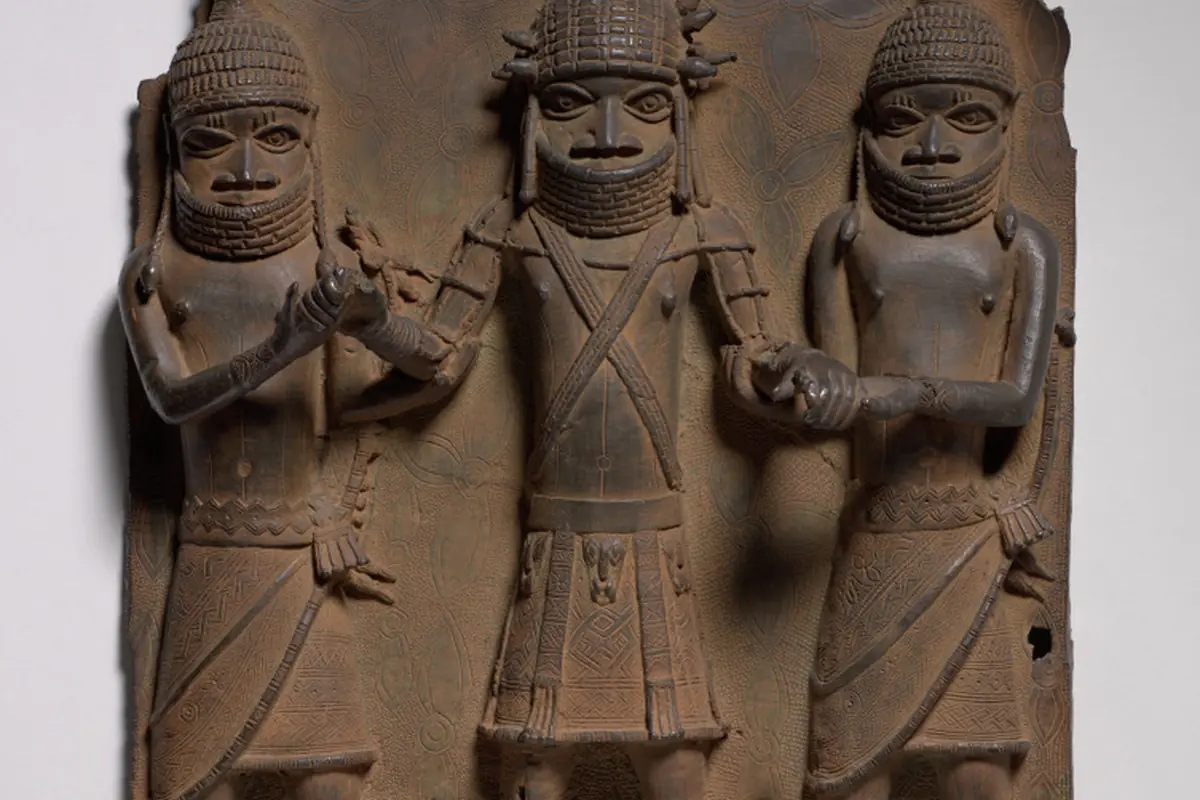
Image credits (16)
- Dr. James Stuart; Mary Campbell Stuart, Gilbert Stuart (c. 1815) — Cleveland Museum of Art, CC0 1.0
- Ships near the Trieux River, Paul Signac (1925) — Cleveland Museum of Art, CC0 1.0
- The Calumny of Apelles, Giorgio Ghisi (1560) — Cleveland Museum of Art, CC0 1.0
- Seal Color Box (1662–1722) — Cleveland Museum of Art, CC0 1.0
- The Judgment of Solomon and Esther before Ahasuerus (pair), Dirk Vellert (c. 1530) — Cleveland Museum of Art, CC0 1.0
- S. Giorgio Maggiore, Michele Marieschi (1741) — Cleveland Museum of Art, CC0 1.0
- Sketches in Belgium and Germany, Volume I: Hall of Justice of the Magistrates du Franc, Bruges, Louis Haghe (1840) — Cleveland Museum of Art, CC0 1.0
- Carnet (1863–1865) — Cleveland Museum of Art, CC0 1.0
- The Antechamber of the Palace of Justice, Paris, Charles Meryon (1855) — Cleveland Museum of Art, CC0 1.0
- Whitby Harbor, Frank Meadow Sutcliffe (c. 1885) — Cleveland Museum of Art, CC0 1.0
- Boating in Moonlight (1600s) — Cleveland Museum of Art, CC0 1.0
- Roman Ruins, Villa Pamfili, Hubert Robert (1774) — Cleveland Museum of Art, CC0 1.0
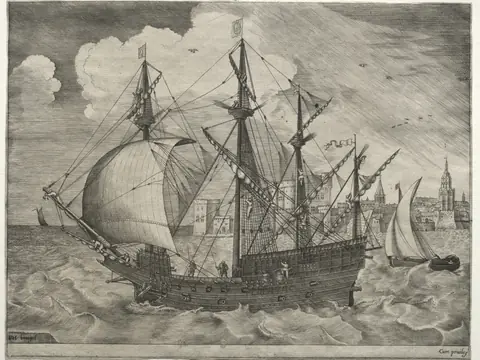
- Sailing Vessels: Armed Four-Master Putting Out to Sea, Pieter Bruegel (1561–65) — Cleveland Museum of Art, CC0 1.0
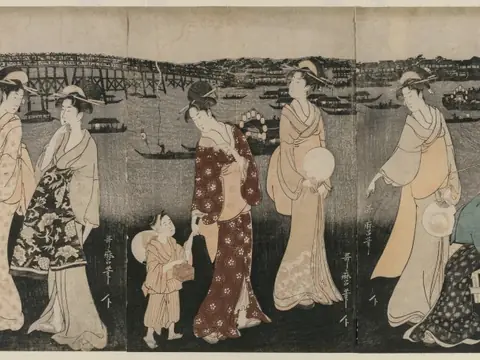
- Enjoying the Evening Cool Along the Sumida River, Kitagawa Utamaro (c. 1797–98) — Cleveland Museum of Art, CC0 1.0
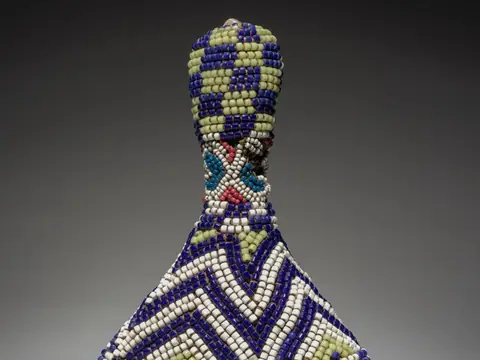
- Beaded Hat or Headpiece (early 1900s(?)) — Cleveland Museum of Art, CC0 1.0
- Plaque (1500s–1600s) — Cleveland Museum of Art, CC0 1.0