
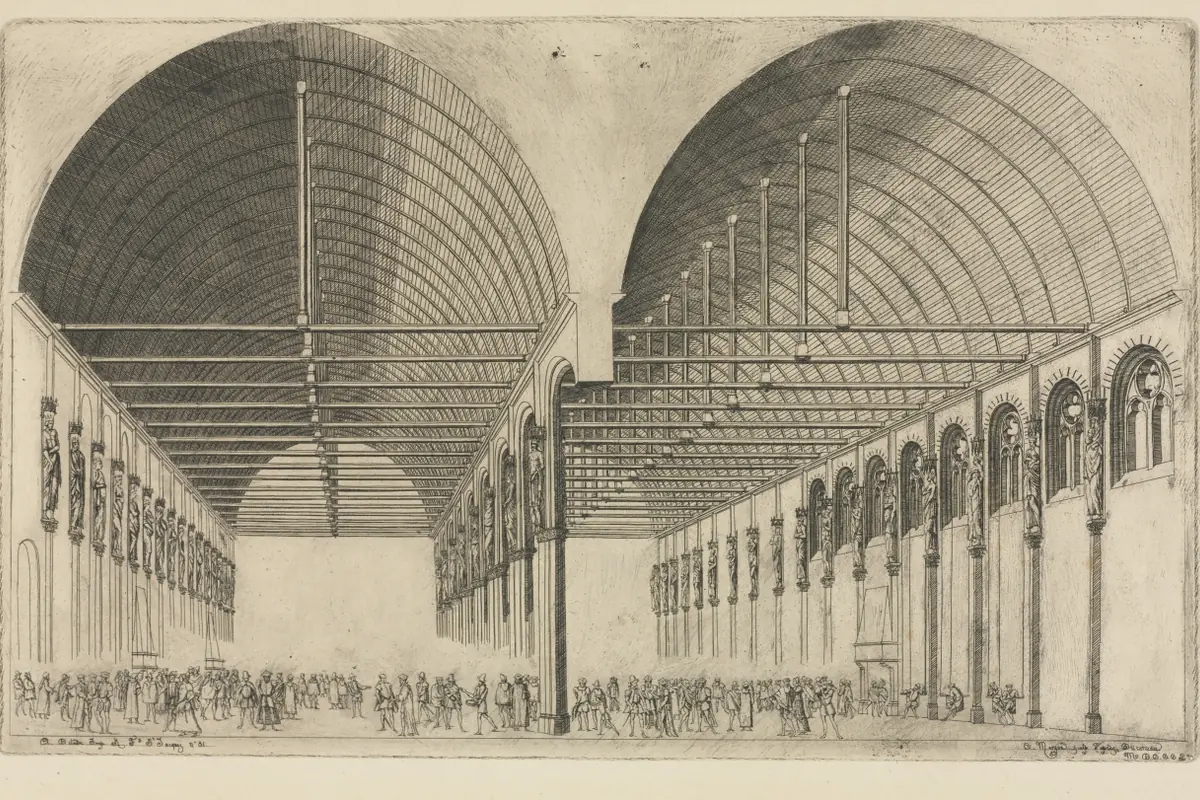
 Cleveland Museum of Art · CC0 1.0
Why a specialised arbitration tribunal
The art world is an economy of trust: a badly settled dispute loses far more than a sum of money, it damages a reputation. In 2011, OIMAP created the TAO to offer fast, discreet and competent dispute resolution.
This tribunal is not meant to try offences or to replace State courts. It offers a private answer to private disputes that the parties have agreed to submit to arbitration.
This page tells its history, its values and its day-to-day workings.
Presentation of the TAO in figures
Source: Registry of the OIMAP Arbitral Tribunal.
A history in three stages
The first period (2011-2015) set up the institution: rules, first list of sixty arbitrators, eighty cases. The second (2016-2020) diversified the offer with mediation, the expedited procedure and publication of anonymised awards. The third, since 2021, is that of digitisation: online filing, remote hearings, tracking on the Desk.
At each stage, developments were discussed with practitioners — lawyers, dealers, curators — and approved by the tribunal's council.
Values and commitments
The TAO has set itself five commitments: independence, competence, speed, confidentiality and accessibility. Each translates into concrete rules: arbitrators' declaration of independence, continuing training, binding procedural timetables, secrecy of debates, sliding scale and financial assistance.
A quality committee, made up of outside practitioners, evaluates completed proceedings each year and publishes its recommendations. The parties also answer a satisfaction questionnaire at the end of the case.
Workings of the Registry
The Registry receives requests, checks their admissibility within five days, notifies documents, organises hearings and keeps the files. It is the parties' sole contact during the procedure and ensures that arbitrators and counsel keep to time limits.
It also manages the hearing calendar in Paris, Geneva, Singapore and Dubai, the security of digital exchanges and the archiving of awards for thirty years.
Proceedings are conducted in French, English or Spanish, with interpretation if needed. The legal seat of the arbitration is Paris by default, but the parties may choose another. Hearings may be held on site or remotely.
Videoconferencing is secure and recorded only with the parties' agreement. Documents are exchanged on an encrypted platform with access limited to authorised persons.
Being accountable for activity
Each year the tribunal publishes a report accounting for its activity: number of cases, durations, mediation results, evolution of disputes, quality assessment. This report is presented to the council and circulated free of charge.
Detailed statistics are available in the dedicated section. They allow the parties to gauge real time limits and usual costs before committing.
The tribunal in figures
| Element | Value |
|---|---|
| Chambers | 4 |
| Arbitrators listed | 142 |
| Mediators | 36 |
| Hearing venues | Paris, Geneva, Singapore, Dubai |
Milestones
- Foundation
First arbitrators.
- Mediation
New offer.
- Expedited
Fast procedure.
- Remote
Digital hearings.
- Online
Digital request.
A tribunal free of conflicts of interest
Institution or ad hoc arbitration

Institution
TAO- Tried and tested rules
- Registry and timetable
- Known scale of fees
Security of the procedure.
Ad hoc
Organised by the parties- Great freedom
- No administrator
- Risk of deadlock
Reserved for experienced practitioners.
Getting to know the tribunal
- Read
Browse the Rules.
- Compare
Weigh arbitration and mediation.
- Contact
Put your questions to the Registry.
- Prepare
Choose the clause.
- Refer
File the request.
Quality commitments
A registrar
« Our role is to make the procedure legible: each party must know at every moment where its file stands and what is expected of it. »
Vocabulary of the tribunal
- Registry
- Administration of the tribunal.
- Notification
- Official sending of an act.
- Adversarial process
- Principle of hearing each party.
- Quality committee
- Group evaluating the proceedings.
Frequently asked questions
Where is the tribunal?
In Paris, at OIMAP's head office.
May I plead remotely?
Yes, by videoconference.
Who keeps the files?
The Registry, thirty years.
Where can I see the composition?
See Composition.
Useful documents
Contacts
Related pages
 Arbitral Tribunal (TAO)An arbitral jurisdiction specialised in the art market and heritage: mission, organisation, principles and figures of the TAO.›
 Composition of the tribunalPresident, council, chambers, Registry and list of arbitrators: who sits on the TAO, how they are chosen and how their independence is guaranteed.›
 Tribunal rulesThe TAO arbitration rules: full text, model clauses and history of amendments, in French, English and Spanish.›
See the composition
Image credits (16)
- The Antechamber of the Palace of Justice, Paris, Charles Meryon (1855) — Cleveland Museum of Art, CC0 1.0
- The Pyramid of Cestius, Rome, Michiel van Overbeek (c. 1650–80) — Cleveland Museum of Art, CC0 1.0
- Sketches in Belgium and Germany, Volume I: Hall of Justice of the Magistrates du Franc, Bruges, Louis Haghe (1840) — Cleveland Museum of Art, CC0 1.0
- Portrait of John VIII Palaoelogus, Emperor of Constantinople, 1424-1428 (reverse), Pisanello (c. 1438–1439) — Cleveland Museum of Art, CC0 1.0
- The Judgment of Solomon and Esther before Ahasuerus (pair), Dirk Vellert (c. 1530) — Cleveland Museum of Art, CC0 1.0
- Egypt and Nubia, Volume I: The Great Temple of Aboo-Simble, Nubia, Louis Haghe (1846) — Cleveland Museum of Art, CC0 1.0
- Dr. James Stuart; Mary Campbell Stuart, Gilbert Stuart (c. 1815) — Cleveland Museum of Art, CC0 1.0
- The Victory Banquet: from Battle Scenes of the Quelling of Rebellions in the Western Regions, with Imperial Poems (c. 1765–74; poem dated 1760) — Cleveland Museum of Art, CC0 1.0
- The Calumny of Apelles, Giorgio Ghisi (1560) — Cleveland Museum of Art, CC0 1.0
- Pair of Drawings: Sketch of the Labyrinth of the Villa Pisani and Piazza San Marco with Doges' Palace, Francesco Guardi (1773–1778(?)) — Cleveland Museum of Art, CC0 1.0
- Maharaja of Kotah Listening to Music and Watching Dancers (c. 1820) — Cleveland Museum of Art, CC0 1.0
- Album with Views of Rome and Surroundings, Landscape Studies, page 23a: Castle Saint Angelo, Rome, Franz Johann Heinrich Nadorp (c. 1830s-70s) — Cleveland Museum of Art, CC0 1.0
- Eighteen Views of Rome: The Piazza Farnese (recto), Lievin Cruyl (1664) — Cleveland Museum of Art, CC0 1.0
- The Apotheosis of Romulus: Design for a Ceiling, Domenico Maria Canuti (c. 1675–76) — Cleveland Museum of Art, CC0 1.0
- Coronation of the Virgin, Christoffel Jegher (1632–36) — Cleveland Museum of Art, CC0 1.0
- Nowshera, Kashmir (number 1000), Samuel Bourne (1864) — Cleveland Museum of Art, CC0 1.0