
 Cleveland Museum of Art · CC0 1.0
Museums at the heart of protection
Museums preserve, study and display heritage. They are also the first to spot suspect works and to record the condition of collections. OIMAP therefore cooperates with a network of museum institutions, national or private, around the world.
For the list of network members, see the Museums page. Museums also take part in the exhibitions organized with the Organization.
Partner museum institutions in figures
Source: OIMAP General Secretariat.
The role of museums
Museums hold collections whose provenance must be documented. They have laboratories, libraries and networks of researchers, and they welcome the public. Their voice is essential for raising awareness of the issues of trafficking and restitution.
Their cooperation with OIMAP makes it possible to harmonize acquisition, documentation and loan practices between countries.
Restitutions and mediation
When an object is claimed by a State or a community, the holding museum is a central player. OIMAP offers a mediation that brings the parties together, examines the evidence and seeks an acceptable solution: restitution, long-term loan or joint study ownership.
Partner museums undertake to examine any documented request in good faith and not to conceal information about provenance.
Training of professionals
Training cycles are organized for curators, registrars and documentalists. They cover provenance research, management of donations, international loans and verification of export documents.
Partner establishments host trainees from the OIMAP Academy, who thus discover varied practices from one country to another.
Forms of museum cooperation
| Form | Content | Usual duration (indicative) |
|---|---|---|
| Framework agreement | Principles of general cooperation | Five years |
| Expertise agreement | Secondment of curators | Two years |
| Training programme | Internships and joint cycles | Annual |
| Exhibition project | Design and circulation of an exhibition | One to two years |
Milestones
- First partner museums
A few national institutions (indicative).
- Museum network
Establishment of annual meetings (indicative).
- Provenance principles
Adoption of a common charter.
- Touring exhibitions
Circulation of projects between regions (indicative).
Provenance before acquisition
Loan or restitution
Long-term loan
Compromise- Work retained
- Owner recognized
- Shared enhancement
Negotiated solution.
Restitution
Return of the object- Handover to the rightful claimant
- Documented file
- Monitoring of conservation
Where the law so justifies.
Establishing museum cooperation
- First contact
Letter to the General Secretariat.
- Assessment
Collections, resources, reputation.
- Proposal
Tailored agreement.
- Validation
Bodies of the Organization.
- Implementation
Annual programme.
- Review
Joint report.
A partner museum undertakes to
A chief curator
« Cooperation forced us to clarify our acquisition policy. Our collections are only stronger for it. »
Vocabulary
- Provenance
- History of the successive owners of a work.
- Registrar
- Professional who organises the movement of works.
- Mediation
- Facilitated dialogue between parties.
- Long-term loan
- Loan granted for several years.
Exhibitions and cultural outreach
The exhibitions produced with partner museums raise public awareness of endangered heritage and of the solutions available to protect it. They show, for example, recovered works, famous forgeries or authentication techniques.
They travel from one country to another: the travelling exhibitions programme gives the details.
Frequently Asked Questions
Can a museum become a partner?
Yes, on proposal and after review.
Does OIMAP require restitution?
No, it facilitates dialogue.
How can I request an expert opinion?
See the OIMAP Desk.
Where can I see the exhibitions?
See Exhibitions.
Useful Documents
Contacts
Related Pages
 OIMAP partnersThe Organization's partners: international organizations, museum institutions and private sector players.›
 Partner international organisationsCooperation agreements concluded with international and intergovernmental organisations.›
 Private sector partnersAuction houses, companies and technical service providers that cooperate with OIMAP, in compliance with strict rules of independence.›
 Partner museumsThe network of partner museums: collection documentation, restitutions and joint programmes.›
See the private sector
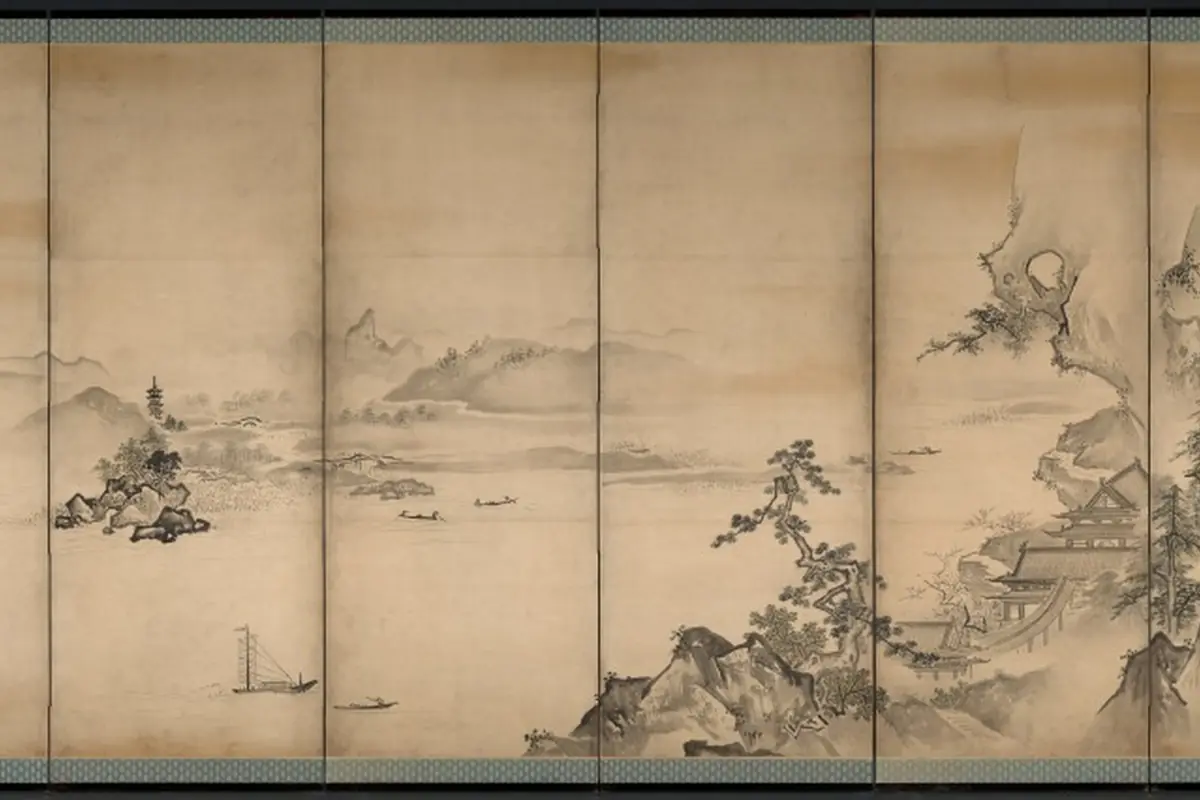
Image credits (17)
- Pair of Drawings: Sketch of the Labyrinth of the Villa Pisani and Piazza San Marco with Doges' Palace, Francesco Guardi (1773–1778(?)) — Cleveland Museum of Art, CC0 1.0
- Coronation of the Virgin, Christoffel Jegher (1632–36) — Cleveland Museum of Art, CC0 1.0
- Egypt and Nubia, Volume I: The Great Temple of Aboo-Simble, Nubia, Louis Haghe (1846) — Cleveland Museum of Art, CC0 1.0
- Panel (c. 1780–1840) — Cleveland Museum of Art, CC0 1.0
- The Pyramid of Cestius, Rome, Michiel van Overbeek (c. 1650–80) — Cleveland Museum of Art, CC0 1.0
- The Dance at the Court of Herod, Israhel van Meckenem (c. 1500) — Cleveland Museum of Art, CC0 1.0
- The Apotheosis of Romulus: Design for a Ceiling, Domenico Maria Canuti (c. 1675–76) — Cleveland Museum of Art, CC0 1.0
- Portrait of a Man, Gustave Caillebotte (1880) — Cleveland Museum of Art, CC0 1.0
- Nowshera, Kashmir (number 1000), Samuel Bourne (1864) — Cleveland Museum of Art, CC0 1.0
- Portrait of John VIII Palaoelogus, Emperor of Constantinople, 1424-1428 (reverse), Pisanello (c. 1438–1439) — Cleveland Museum of Art, CC0 1.0
- Maharaja of Kotah Listening to Music and Watching Dancers (c. 1820) — Cleveland Museum of Art, CC0 1.0
- Temple of Athene Nike. Venus Victrix—Wingless Victory, Dimitrios Constantin (c. 1850s–60s) — Cleveland Museum of Art, CC0 1.0
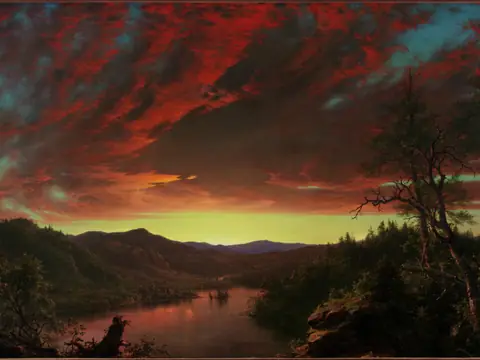
- Twilight in the Wilderness, Frederic Edwin Church (1860) — Cleveland Museum of Art, CC0 1.0
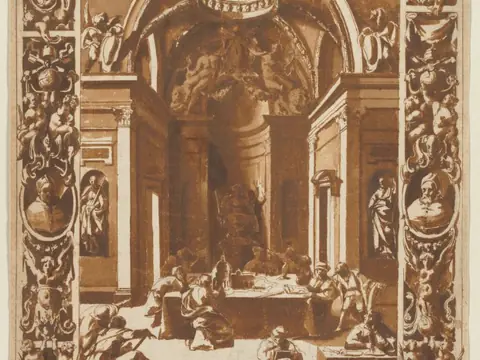
- Architectural Conference (c. 1622) — Cleveland Museum of Art, CC0 1.0
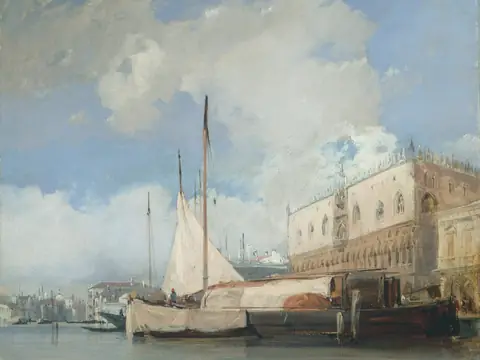
- The Doge's Palace, Venice, Richard Parkes Bonington (1826) — Cleveland Museum of Art, CC0 1.0
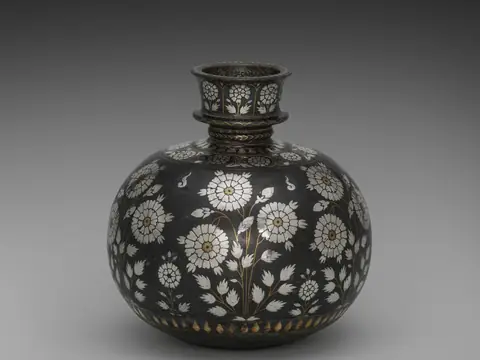
- Bidri Hookah Bowl with Roses (c. 1650s) — Cleveland Museum of Art, CC0 1.0
- The Four Seasons, Kano Tan’yū (1668) — Cleveland Museum of Art, CC0 1.0