
 Cleveland Museum of Art · CC0 1.0
Whom to contact in each State
The practical part of a country profile indicates the contact person to reach in the State concerned. For each member, the table of States gives a "Heritage Department" and a national focal point designated by the government. The focal point answers legal questions, relays the Organisation's requests and coordinates national experts.
The personal contact details of focal points appear in the member area directory. This page describes the public information and how to use it.
For a general request, the Member States Relations Directorate in Paris remains the first-level contact. See also the national focal points page.
Country profile contacts in figures
Source: Member States Relations Directorate.
What the practical part contains
Each profile gives the State's heritage department, in the form "Heritage Department — name of country", the correspondence address, a generic e-mail address and a telephone line. It specifies the languages in which correspondence is accepted and the opening hours.
Officials' personal contact details are not published. They are reserved for logged-in members, in order to protect officials and limit abusive solicitations.
The role of the national focal point
The focal point is the person designated by the State to represent its country to the Organisation. They receive circulars, transmit statistical data, relay theft alerts and prepare their State's position ahead of the General Assembly.
They are the first contact for any question of national law or procedure. When the focal point changes, the State informs the Member States Relations Directorate, which updates the profile.
The regional offices
Requests may also go through the competent regional office. Paris covers Europe, Geneva handles liaison with the United Nations and the WTO and covers the Middle East, New York covers the Americas, Singapore Asia-Pacific and Nairobi Africa.
Each office has a dedicated address of the form paris, geneve, newyork, singapour or nairobi followed by @oimap.example. The offices know local specificities and can quickly direct you to the right contact person.
Formulating a request well
An effective request states the State concerned, the nature of the property, the context (sale, export, return) and the deadlines. Attaching the references of the texts cited speeds up processing. For a theft report, the dedicated Desk service replies within 24 hours.
Statistical requests are addressed to the Studies Directorate, legal requests to the focal point or to legal assistance, and accession questions to the Member States Relations Directorate.
Contact persons by purpose
| Purpose of the request | Contact | Time frame (indicative) |
|---|---|---|
| National law | State focal point | Variable |
| Statistics | Studies Directorate | 15 days |
| Accession and scale of contributions | Member States Relations Directorate | 15 days |
| Theft or loss | Desk — report | 24 hours |
Milestones
- First focal points
Designated by the 23 founders.
- Online directory
Setting up of the member area.
- Annual plenary meeting
Regular meetings of the focal points.
- 67 focal points
All States have designated a contact person.
Personal contact details reserved
Directorate or regional office
Directorate in Paris
First level- General questions
- Accession and scale of contributions
- Guidance
For a general request.
Regional office
Proximity- Local language and time zone
- Knowledge of the field
- Relay to the focal point
For a local procedure.
Reaching the right contact person
- Qualify
The purpose of the request.
- Choose
Focal point, office or Directorate.
- Draft
A precise request.
- Reach
The relevant documents.
- Follow up
The reply within fifteen days.
Before writing
An administration official
« Knowing whom to contact in another country saves us weeks. The directory has changed the way we handle foreign requests. »
Contacts vocabulary
- Focal point
- Contact designated by the State.
- Heritage Department
- National service in charge of heritage.
- Regional office
- Organisation's branch in a region.
- Directory
- List of contacts in the member area.
Data protection and updates
Contact information is processed in accordance with the Organisation's data protection policy. Officials may request the correction or removal of their contact details.
States are invited to check their information at each plenary meeting of the focal points. Any change may be reported at any time through the member area.
Frequently Asked Questions
Where is the directory?
In the member area, after logging in.
Can I contact an official directly?
Members can, through the directory.
How do I change a contact?
Inform the Member States Relations Directorate.
Useful Documents
Contacts
Related pages
 Country ProfilesOne profile per Member State: national legal framework, art market figures and focal point contacts.›
 Focal points directoryContact details of the sixty-seven focal points, available to logged-in members, with their organisation and rules of use.›
 Login to the member areaThe online login module: credentials, two-factor authentication, first access and forgotten password.›
 Market figuresThe statistical part of the country profiles: indicative size of the art market, dominant segments and sales venues.›
Access the directory
Image credits (17)
- The Doge's Palace, Venice, Richard Parkes Bonington (1826) — Cleveland Museum of Art, CC0 1.0
- Nuova pianta di Roma data in luce da Giambattista Nolli l’anno MDCCXLVII, known as La Pianta Grande di Roma, Giovanni Battista Nolli (1748) — Cleveland Museum of Art, CC0 1.0
- Architectural Conference (c. 1622) — Cleveland Museum of Art, CC0 1.0
- Portrait of John VIII Palaoelogus, Emperor of Constantinople, 1424-1428 (reverse), Pisanello (c. 1438–1439) — Cleveland Museum of Art, CC0 1.0
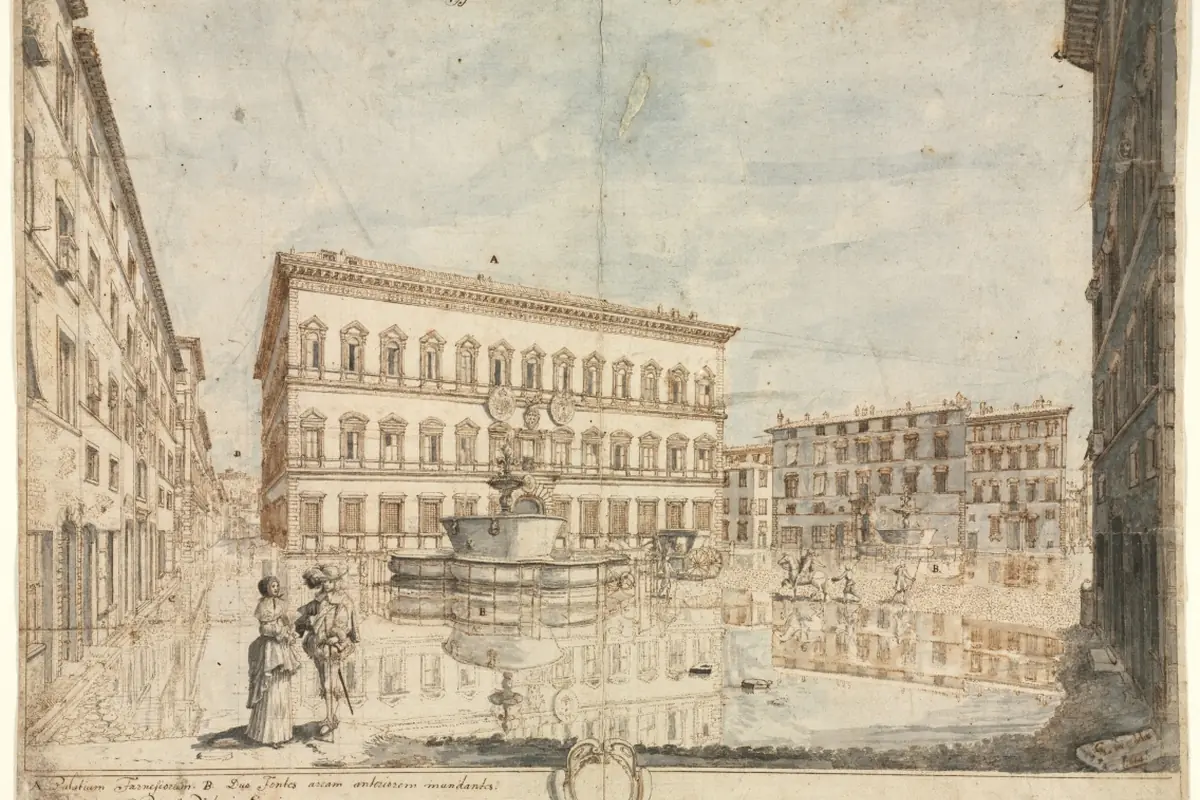
- Eighteen Views of Rome: The Piazza Farnese (recto), Lievin Cruyl (1664) — Cleveland Museum of Art, CC0 1.0
- Royal Retainer (early 1900s) — Cleveland Museum of Art, CC0 1.0
- The Old Market, Cleveland, Frank Wilcox (1920) — Cleveland Museum of Art, CC0 1.0
- Bowl with Flowering Vines Design in Relief (1100s–1200s) — Cleveland Museum of Art, CC0 1.0
- Sketch of the Labyrinth of the Villa Pisani, Francesco Guardi (1773–1778(?)) — Cleveland Museum of Art, CC0 1.0
- Mask (1–550 CE) — Cleveland Museum of Art, CC0 1.0
- Capriccio: A Palace with a Courtyard by the Lagoon, Antonio Canaletto (c. 1750–55) — Cleveland Museum of Art, CC0 1.0
- Vue générale prise à l'angle sud-ouest, Philoe, Maxime Du Camp (1849–50) — Cleveland Museum of Art, CC0 1.0
- View of Venice, Jacopo de' Barbari (1500) — Cleveland Museum of Art, CC0 1.0
- Portrait of a Woman, Gerard ter Borch (c. 1665) — Cleveland Museum of Art, CC0 1.0
- Nuova pianta di Roma data in luce da Giambattista Nolli l’anno MDCCXLVII, known as La Pianta Grande di Roma, Giovanni Battista Nolli (1748) — Cleveland Museum of Art, CC0 1.0
- Coronation of the Virgin, Christoffel Jegher (1632–36) — Cleveland Museum of Art, CC0 1.0
- Jar (1700s) — Cleveland Museum of Art, CC0 1.0