
 Cleveland Museum of Art · CC0 1.0
Pages in this section
 The OIMAP StatutesThe 2007 constituent treaty: structure, members' rights and rules of revision.›
 The Organization's mandateThe six missions entrusted to OIMAP and how they translate into daily practice.›
 OIMAP valuesIntegrity, scientific independence, cooperation, transparency and respect for communities of origin.›
Observe, regulate, protect
OIMAP is an intergovernmental organization founded in 2007 by 23 pioneering States. It now brings together 67 Member States and works for an art and heritage market that is transparent, secure and respectful of communities of origin.
This section presents the Statutes, the mandate entrusted to the General Secretariat and the values of the Organization.
Mission and mandate in figures
Source: OIMAP General Secretariat.
Three Pages
An organization born of a treaty
OIMAP rests on a constituent treaty, the Statutes, signed in 2007 by twenty-three States. This text gives it international legal personality: it can conclude agreements, own property, bring legal proceedings and enjoy the privileges necessary for its functioning.
The Statutes define the organs, the rights and obligations of members and the powers of the General Secretariat. They may be amended only by the General Assembly, by a qualified majority.
A mandate in six missions
The Organization's mandate is summed up in its motto: Observe, Regulate, Protect. It is broken down into six concrete missions: observing the market, regulating through common standards, protecting cultural property, certifying works, training professionals and arbitrating disputes.
Each mission corresponds to one or more directorates of the General Secretariat and to a standing committee responsible for monitoring its implementation before the Member States.
Values that guide decisions
Five values structure day-to-day work: integrity, scientific independence, cooperation, transparency and respect for communities of origin. They are set out in the code of conduct that applies to all staff and experts.
These values are not decorative. They serve as criteria when the Organization arbitrates between conflicting interests, for example between a good-faith purchaser and a State claiming an object.
Action in the service of States
OIMAP does not replace States. It provides them with a common framework, technical tools and a space for dialogue. Decisions of general scope are taken by the States themselves, meeting in the General Assembly.
The General Secretariat carries out these decisions and reports on their implementation at each session. This separation between political decision and technical execution underpins the credibility of the whole.
The six missions at a glance
| Mission | Concrete application | Lead directorate |
|---|---|---|
| Observe | Market barometer, statistics | Market and Studies |
| Regulate | Guidelines and recommendations | Regulation and Law |
| Protect | Stolen works database, restitutions | Protection (BIOP) |
| Certify | Certificates and work passports | Certification (Desk) |
| Train | Curriculum for staff and experts | OIMAP Academy |
| Arbitrate | Mediation and arbitration | Regulation and Law |
Milestones
- Signing of the Statutes
Twenty-three States create the Organization in Paris.
- Enlargement
The Organization passes the forty-member mark (indicative).
- OIMAP Directives
Adoption of seven binding directives.
- 19th General Assembly
Singapore, 10–12 June.
A treaty, not a mere charter
Statutes and mandate
The Statutes
The legal text- Establish the organs
- Define the rights of members
- Amended in Assembly
The lasting framework.
The mandate
The operational mission- Six missions
- Entrusted to the General Secretariat
- Assessed every year
Day-to-day action.
Browse the section
- Read the Statutes
Understand the legal framework.
- Consult the mandate
Identify the six missions.
- Discover the values
Learn the principles.
- Explore governance
See who decides.
Key facts
A Diplomat Posted in Geneva
« The Statutes provide a common language: whatever the State's legal tradition, everyone knows what the Organization can and cannot do. »
Vocabulary
- Constituent treaty
- Founding text that creates the Organization and sets its rules.
- Legal personality
- Capacity to act in one's own name under international law.
- Mandate
- All the missions entrusted to the Organization.
- Community of origin
- Human group from which a cultural object originates.
Read this section
The three pages that follow answer three questions: what text is the Organization based on, what must it do, and according to what principles. They complement one another and can be read in any order.
To understand who decides, see the Governance section. To find out who implements, see the General Secretariat.
Frequently Asked Questions
Is OIMAP a United Nations agency?
No. It is an independent intergovernmental organization that cooperates with the United Nations system.
What are the official languages?
French, English and Spanish.
Where can I consult the Statutes?
See Statutes.
Who oversees the execution of the mandate?
The General Assembly, with the support of the Executive Council and the committees.
Useful Documents
Contacts
Related Pages
 AboutMission, governance, General Secretariat, offices, partners, finances, careers, ethics, transparency, legal notices and site map.›
 The OIMAP StatutesThe 2007 constituent treaty: structure, members' rights and rules of revision.›
 The Organization's mandateThe six missions entrusted to OIMAP and how they translate into daily practice.›
 OIMAP valuesIntegrity, scientific independence, cooperation, transparency and respect for communities of origin.›
Read the Statutes
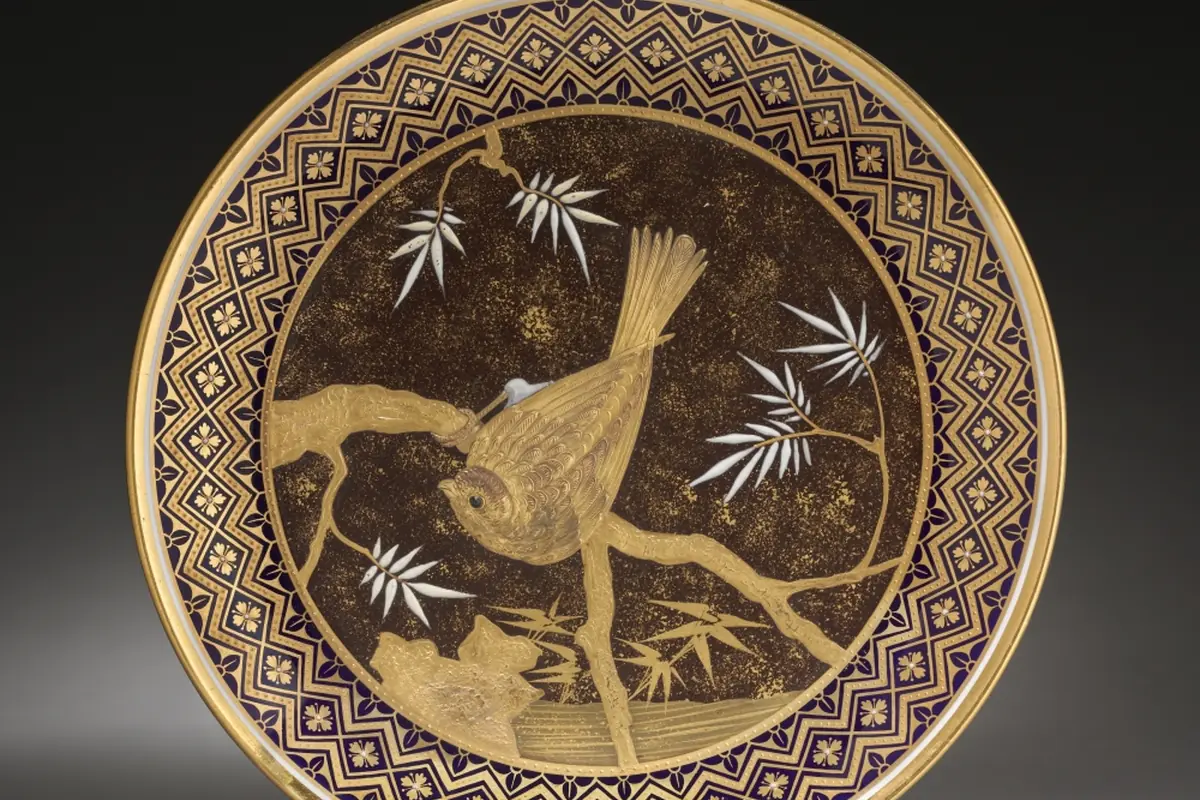
Image credits (23)
- Architectural Conference (c. 1622) — Cleveland Museum of Art, CC0 1.0
- The Grotto of Posillipo, Hubert Robert (c. 1769) — Cleveland Museum of Art, CC0 1.0
- Roman Ruins, Villa Pamfili, Hubert Robert (1774) — Cleveland Museum of Art, CC0 1.0
- Small Mosque in the Kaiserbagh, Felice A. Beato (1858) — Cleveland Museum of Art, CC0 1.0
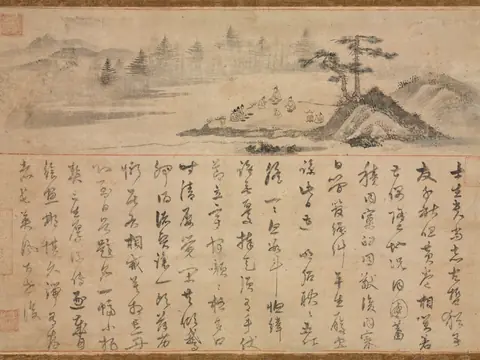
- The Victory Banquet: from Battle Scenes of the Quelling of Rebellions in the Western Regions, with Imperial Poems (c. 1765–74; poem dated 1760) — Cleveland Museum of Art, CC0 1.0
- The Doge's Palace, Venice, Richard Parkes Bonington (1826) — Cleveland Museum of Art, CC0 1.0
- Interior Drawer for Cabinet, André-Charles Boulle (c. 1690) — Cleveland Museum of Art, CC0 1.0
- Eighteen Views of Rome: The Piazza Farnese (recto), Lievin Cruyl (1664) — Cleveland Museum of Art, CC0 1.0
- Portrait of John VIII Palaoelogus, Emperor of Constantinople, 1424-1428 (reverse), Pisanello (c. 1438–1439) — Cleveland Museum of Art, CC0 1.0
- Sketch of the Labyrinth of the Villa Pisani, Francesco Guardi (1773–1778(?)) — Cleveland Museum of Art, CC0 1.0
- Towel End (c 1700s- 1800s) — Cleveland Museum of Art, CC0 1.0
- Capriccio: A Palace with a Courtyard by the Lagoon, Antonio Canaletto (c. 1750–55) — Cleveland Museum of Art, CC0 1.0
- The Dance at the Court of Herod, Israhel van Meckenem (c. 1500) — Cleveland Museum of Art, CC0 1.0
- The Old Market, Cleveland, Frank Wilcox (1920) — Cleveland Museum of Art, CC0 1.0
- The birth of Rama and his brothers, from Chapter 17 of the Bala Kanda (Book of Childhood) of the Adhyatma Ramayana (Rama's Journey of the Su (c. 1820–30) — Cleveland Museum of Art, CC0 1.0
- Coronation of the Virgin, Christoffel Jegher (1632–36) — Cleveland Museum of Art, CC0 1.0
- Eighteen Views of Rome: The Piazza Farnese (recto); Cartouche (verso), Lievin Cruyl (1664) — Cleveland Museum of Art, CC0 1.0
- Temple at Naveshera, Kashmir, India, Samuel Bourne (1864) — Cleveland Museum of Art, CC0 1.0
- Panel (c. 1780–1840) — Cleveland Museum of Art, CC0 1.0
- Edge of the Woods Near L'Hermitage, Pontoise, Camille Pissarro (1879) — Cleveland Museum of Art, CC0 1.0
- Gathering among the Members of Office Censor-General (1700s) — Cleveland Museum of Art, CC0 1.0
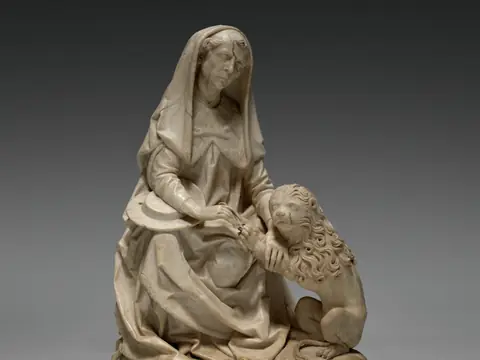
- Saint Jerome and the Lion (From the former Church of St. Peter in Erfurt), Tilman Riemenschneider (c. 1495) — Cleveland Museum of Art, CC0 1.0
- Cabinet Plate, W. T. Copeland & Sons (1883) — Cleveland Museum of Art, CC0 1.0