
 Cleveland Museum of Art · CC0 1.0
Pages in this section
 RequestConditions, documents and course of an application for a title of ownership.›
 TransferHow a title of ownership passes from one owner to another: sale, gift, inheritance, contribution to a company.›
 EnforceabilityWhat the title of ownership allows you to assert, against whom, and within what limits.›
Having ownership of a work recognised
The OIMAP title of ownership is the act by which the Registry officially recognises an owner. Once published, it is enforceable against third parties: it lets you assert your rights against a buyer, an heir or an administration.
It does not replace each State's rules on ownership, which remain applicable, but it provides centralised proof, verifiable everywhere, of ownership at a given date.
Issued in 15 days for an indicative €320 excl. VAT, it presupposes sufficiently established provenance: most often a certificate of provenance or equivalent documents.
The title in figures
Source: OIMAP Registry.
Three pages to understand
What the title recognises
The title attests that, at the date of its publication, the named owner is recognised as such by the OIMAP Registry, on the basis of the documents in the file and the absence of any well-founded opposition.
It mentions the work (OIMAP number), the holder, the date of publication, any encumbrances (pledge, usufruct, deposit) and the reference of the provenance on which it is based.
From application to publication
- Request
Filing of a file with proof of ownership and provenance.
- Processing
Checking of documents, BIOP query, committee opinion.
- Publication
Entry of the title in the Registry.
- Opposition period
A 30-day period during which a third party may contest.
- Effect
The title becomes enforceable against third parties when the period expires.
A title does not create ownership
Encumbrances that may appear on the title
| Encumbrance | Effect |
|---|---|
| Pledge | Work given as security for a debt |
| Usufruct | A third party has the right to use the work |
| Submission | The work is entrusted to a museum or institution |
| Joint ownership | Several owners hold the work |
Title of ownership or certificate of provenance
Title of ownership
Establishes the right- Recognises the current owner
- Enforceable against third parties
- Published in the Registry
Legal act.
Provenance certificate
Tells the story- Documents the successive owners
- Assesses the reliability of the chain
- No effect on rights
Information document.
The stages of a title
- Submission
Complete file.
- Admissibility
Check of documents.
- Opinion
Committee opinion.
- Publication
Title entered in the Registry.
- Enforceability
End of the opposition period.
Case study: an inheritance
A title for three heirs
Three heirs inherit a sculpture and wish to have their joint ownership recognised.
- Filing of the probate certificate and a certificate of provenance.
- Entry of the title with mention of the joint ownership.
- 30-day opposition period.
The title is enforceable; the sculpture can then be lent or sold with the agreement of the three holders.
On legal certainty
« A title is not a luxury for wealthy collectors: it is the protection of tomorrow's heirs. »
Vocabulary of the title
- Enforceability
- Ability to assert a right against third parties.
- Holder
- Person whose right is recognised by the title.
- Joint ownership
- Ownership shared between several people.
- Pledge
- Security given to a creditor over an asset.
Frequently asked questions
Is a title necessary to sell?
No, but it eases the sale and the sale approval.
Is the title valid against a thief?
No: a stolen asset remains claimable. A BIOP alert prevails.
Can I get a title for a work bought ten years ago?
Yes, with the purchase documents and sufficient provenance.
Is the title public?
Its mention is public (existence, date); the holder's identity is protected.
Useful documents
Contacts
Related pages
 Provenance certificatesThe provenance certificate reconstructs and attests the chain of ownership of a work, from its creation to its current owner.›
 Registration of a workEntering a work in the OIMAP Registry: unique number, certified description and work passport, first step of any certification.›
 ArbitrationThe OIMAP Arbitral Tribunal (TAO) settles art and heritage disputes: authenticity, provenance, restitution and contracts, through arbitration or mediation.›
Apply for a title
Image credits (22)
- The Calumny of Apelles, Giorgio Ghisi (1560) — Cleveland Museum of Art, CC0 1.0
- Dr. James Stuart; Mary Campbell Stuart, Gilbert Stuart (c. 1815) — Cleveland Museum of Art, CC0 1.0
- The Antechamber of the Palace of Justice, Paris, Charles Meryon (1855) — Cleveland Museum of Art, CC0 1.0
- Letter Box, Ogata Kōrin (1700s) — Cleveland Museum of Art, CC0 1.0
- Carved Lacquer Scroll Box (1736–95) — Cleveland Museum of Art, CC0 1.0
- Nowshera, Kashmir (number 1000), Samuel Bourne (1864) — Cleveland Museum of Art, CC0 1.0
- Sketches in Belgium and Germany, Volume I: Hall of Justice of the Magistrates du Franc, Bruges, Louis Haghe (1840) — Cleveland Museum of Art, CC0 1.0
- Seal with Two Qilin Playing (1849) — Cleveland Museum of Art, CC0 1.0
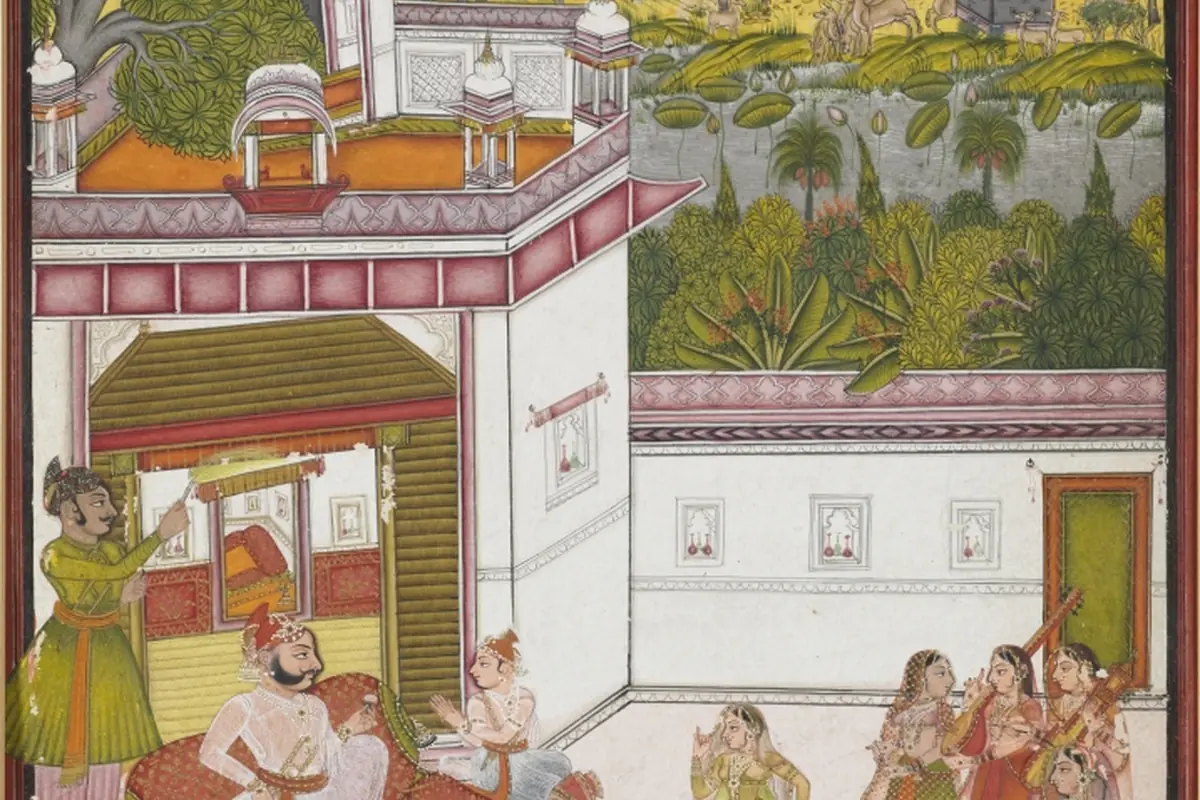
- Maharaja of Kotah Listening to Music and Watching Dancers (c. 1820) — Cleveland Museum of Art, CC0 1.0
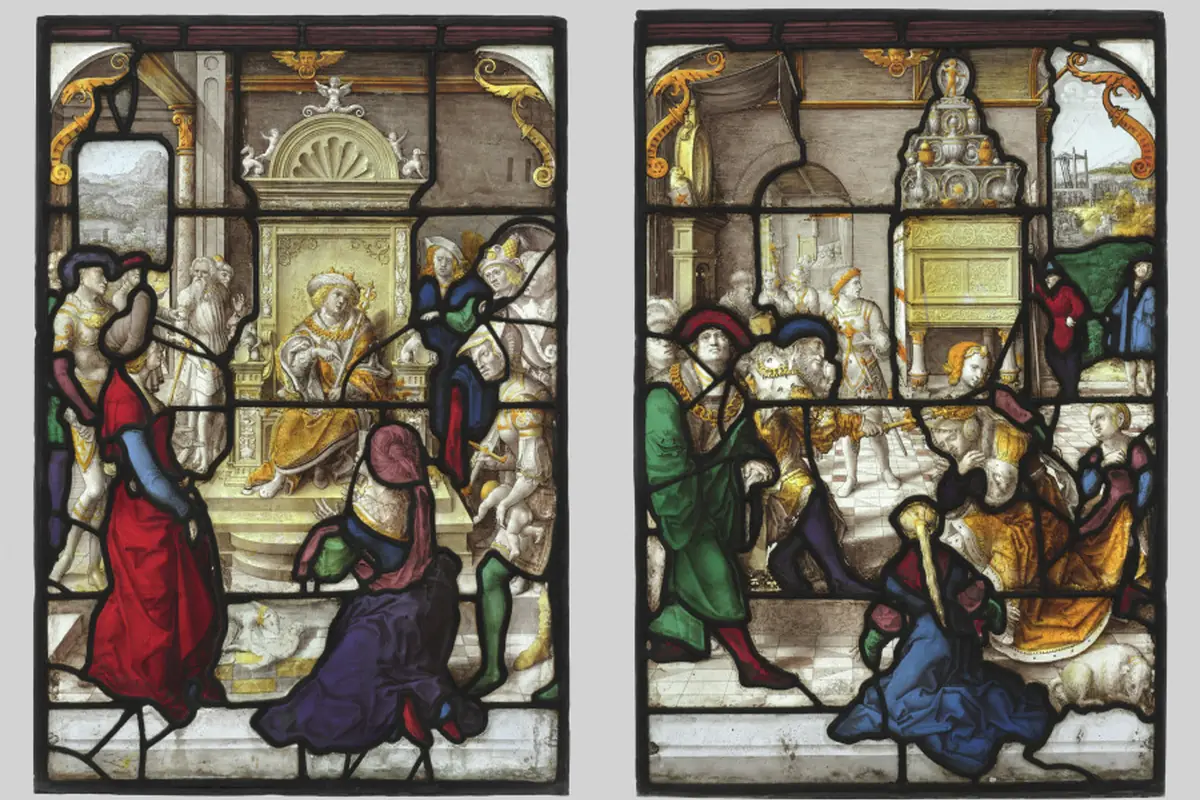
- The Judgment of Solomon and Esther before Ahasuerus (pair), Dirk Vellert (c. 1530) — Cleveland Museum of Art, CC0 1.0
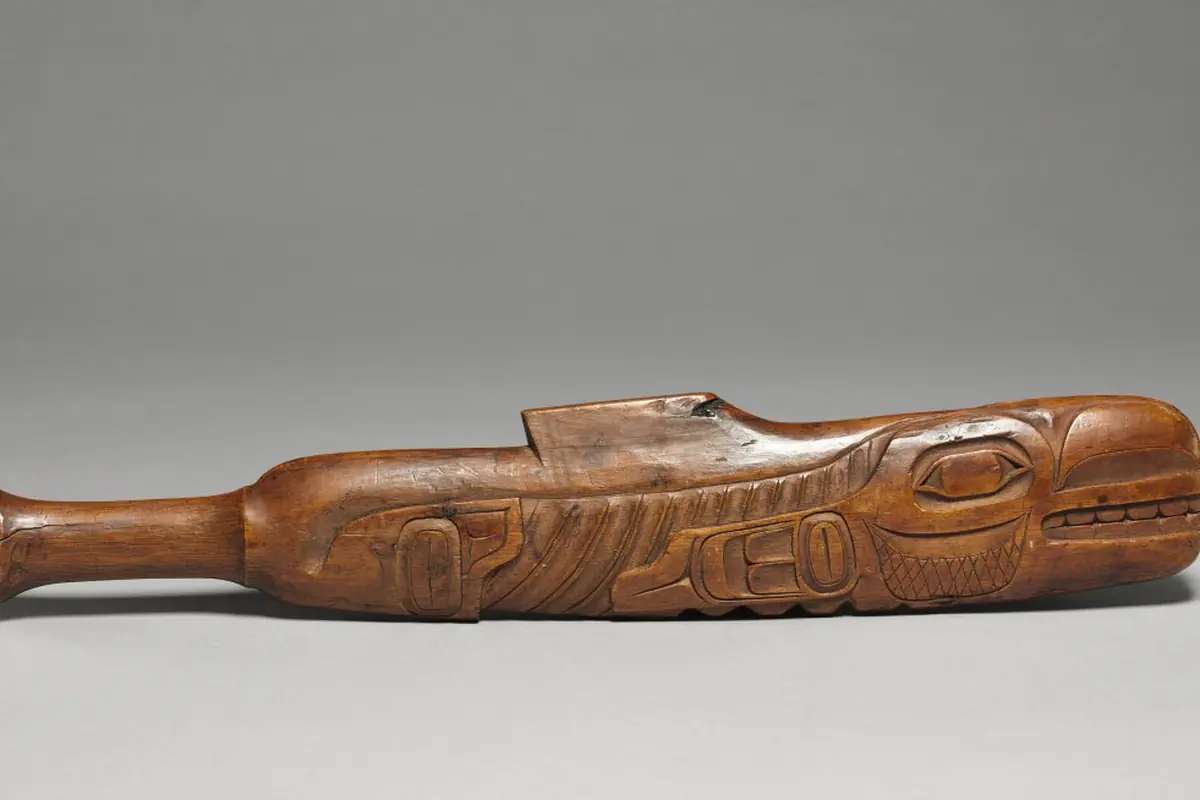
- Fish or Seal Club (X’ús’) (late 1800s–early 1900s) — Cleveland Museum of Art, CC0 1.0
- Carnet (1863–1865) — Cleveland Museum of Art, CC0 1.0
- The Apotheosis of Romulus: Design for a Ceiling, Domenico Maria Canuti (c. 1675–76) — Cleveland Museum of Art, CC0 1.0
- Document Box (Ryōshibako) with Chrysanthemum and Plum (lid) (late 1800s-early 1900s) — Cleveland Museum of Art, CC0 1.0
- Teapot with Landscape and Imperial Poem, Chen Hanwen (1762–95) — Cleveland Museum of Art, CC0 1.0
- Seal of Doge Michele Steno (reverse) (1400–1409) — Cleveland Museum of Art, CC0 1.0
- The Pyramid of Cestius, Rome, Michiel van Overbeek (c. 1650–80) — Cleveland Museum of Art, CC0 1.0
- Châteauvieux-sur-Suran, Antoine-Claude Ponthus-Cinier (1848) — Cleveland Museum of Art, CC0 1.0
- Sweet Melancholy, Joseph-Marie Vien (1756) — Cleveland Museum of Art, CC0 1.0
- Portrait of a Man, Gustave Caillebotte (1880) — Cleveland Museum of Art, CC0 1.0
- Portrait of John VIII Palaoelogus, Emperor of Constantinople, 1424-1428 (reverse), Pisanello (c. 1438–1439) — Cleveland Museum of Art, CC0 1.0
- Chemin de fer de Toulouse à Bayonne. Pont de l'Aran (en trois arches de 17m d'ouverture chacune). Situation des travaux au 21 juillet 1861, Édouard Baldus (1861) — Cleveland Museum of Art, CC0 1.0