
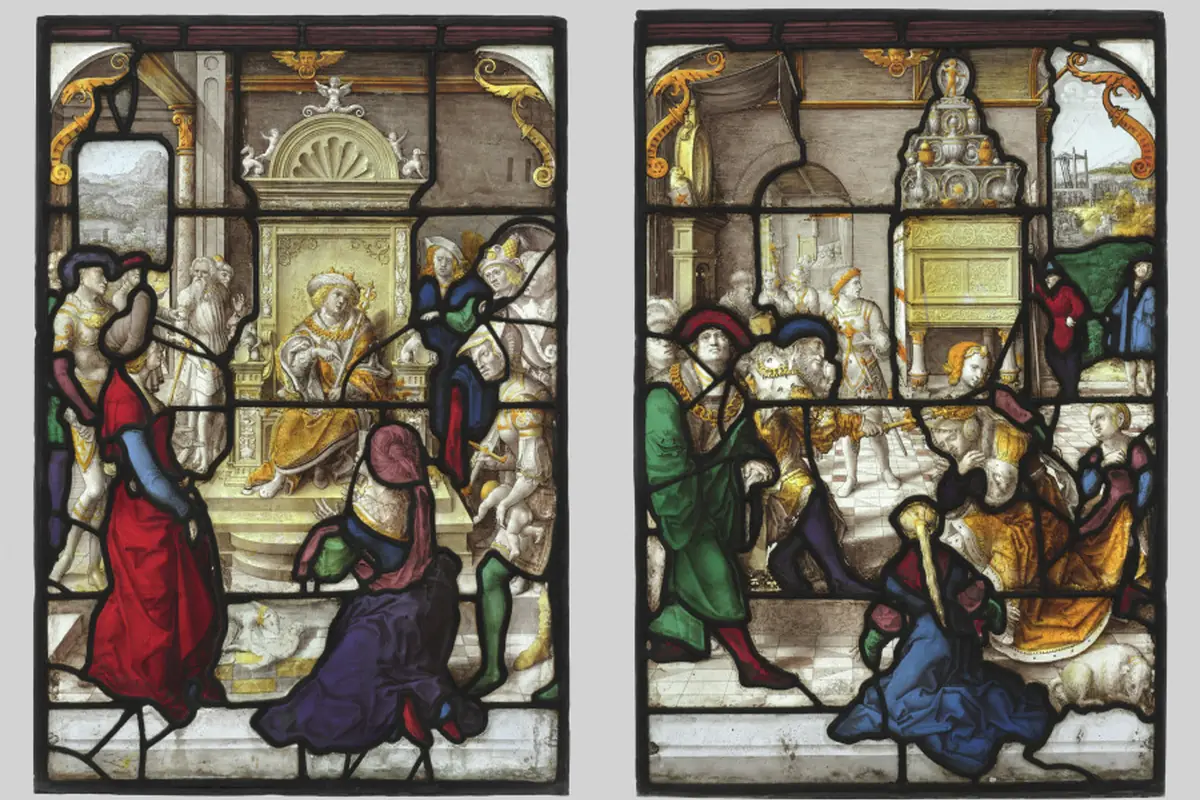
 Cleveland Museum of Art · CC0 1.0
The legal foundation
The five-day module gives magistrates the bearings needed to judge an art market dispute. It starts from the contract of sale and its specificities — price, warranty, risk — then explores questions of authenticity, provenance and the liability of intermediaries.
It comprises twenty hours of lectures and ten hours of case studies, with a collection of decisions from several countries.
This page details the content, the questions of private international law and the resources.
Art market law in figures
Source: OIMAP Academy.
Sales and warranties
The module recalls the rules of sale, warranty against hidden defects, mistake as to substance and fraud as applied to works of art. It distinguishes catalogue descriptions ("by", "attributed to", "workshop of") and their legal effect. It examines limitation clauses and market usages.
Comparisons between civil-law and common-law systems show how the same fact can lead to different outcomes.
Authenticity and provenance
Magistrates learn to read an expert report, to distinguish opinion from scientific evidence, to question an expert. They study the burden of proof regarding authenticity and title. The role of the buyer's due diligence is analysed on the basis of recent decisions.
A workshop is devoted to reading a provenance file, with its gaps and clues.
Intermediaries and platforms
Auction houses, galleries, advisers and online platforms are intermediaries whose liability varies according to their role. The module examines the mandate, the duty of advice, liability for erroneous attribution and verification obligations.
One chapter is devoted to online sales and new forms of transaction.
Private international law
A large share of disputes involve a foreign element. Magistrates see how to determine the competent court, the applicable law, the validity of an arbitration clause and the enforcement of a decision abroad. They become familiar with the Hague, New York and UNIDROIT conventions.
Comparative cases illustrate the pitfalls of forum shopping and of the law applicable to the transfer of ownership.
Programme of the module
| Day | Theme | Work |
|---|---|---|
| 1 | Sale, warranties | Talk, cases |
| 2 | Authenticity | Reading expert reports |
| 3 | Provenance | Archive workshop |
| 4 | Intermediaries | Case study |
| 5 | Private international law | Simulation |
Milestones
- Creation of the module
First session.
- Comparative case law
Collection.
- Online sales
Chapter.
- 14 countries
Case law studied.
No opinion on ongoing cases
Civil law or common law

Civil law
Codes- Statutory warranties
- Role of mistake
- Variable buyer protection
French, Spanish, Italian approach.
Common law
Case law- Caveat emptor
- Role of the contract
- Protection of good faith
English, American approach.
Preparing for the module
- Read
Manual.
- Choose
Case to present.
- Follow
Lectures.
- Debate
Workshops.
- Apply
On return.
To remember
A judge
« I discovered that most difficulties come down to evidence. Knowing what questions to ask the expert changes everything. »
Market vocabulary
- Catalogue description
- Term describing attribution.
- Caveat emptor
- Let the buyer beware.
- Forum shopping
- Opportunistic choice of court.
- Applicable law
- Law governing the merits.
Resources
Each participant receives the Academy's manual, a collection of case law in three languages and access to the arbitral tribunal's decision database. They may consult Academy experts for a year after the training.
An annotated bibliography guides further reading.
Frequently asked questions
Is the module open to lawyers?
No, to magistrates.
Is there an exam?
No, a certificate.
In which languages?
Three.
Where to see procedure?
See Procedure.
Useful documents
Contacts
Related pages
 Training of magistratesArt market law, procedure and restitution: a two-week training for judges and prosecutors dealing with cultural property.›
 Procedure and evidenceManaging an expert appraisal, ordering protective measures, cooperating with foreign courts: the procedural module.›
 Restitution of cultural propertyInternational conventions, State requests, mediation: the module devoted to the return of cultural property.›
See procedure
Image credits (16)
- The Judgment of Solomon and Esther before Ahasuerus (pair), Dirk Vellert (c. 1530) — Cleveland Museum of Art, CC0 1.0
- St. Anthony Reading, Albrecht Dürer (1519) — Cleveland Museum of Art, CC0 1.0
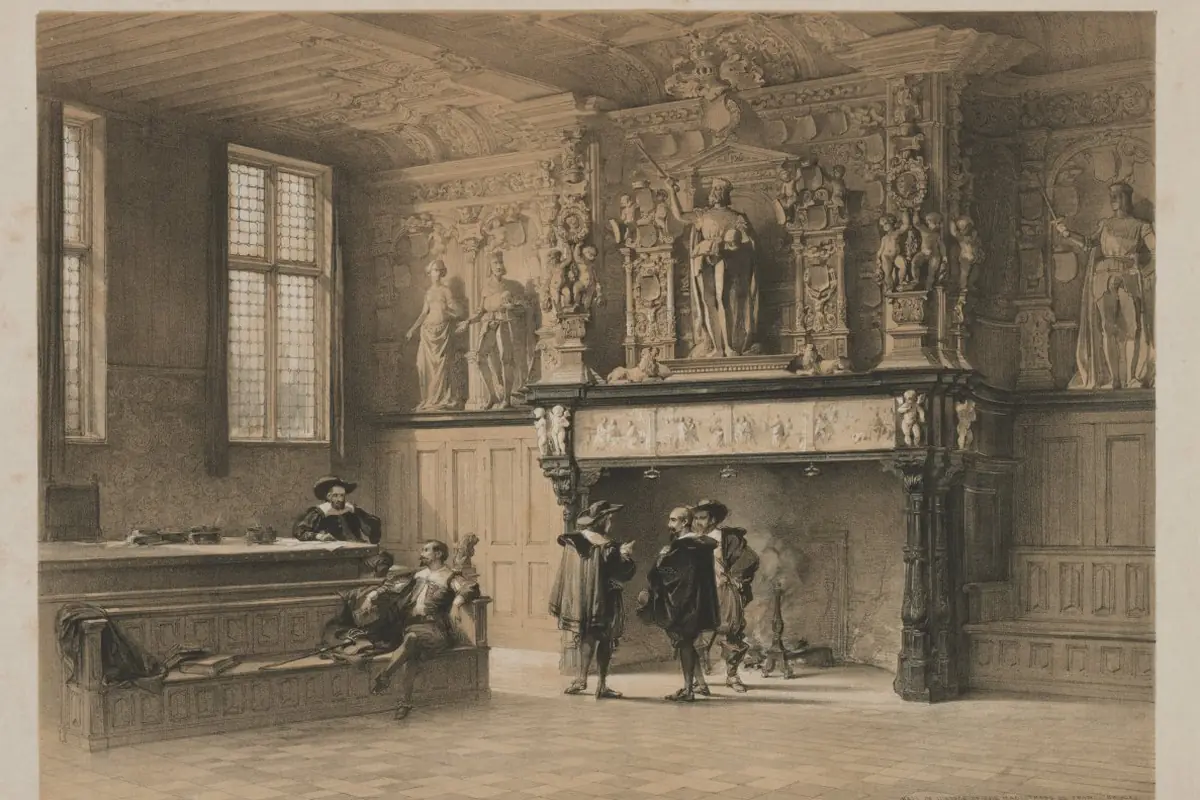
- Sketches in Belgium and Germany, Volume I: Hall of Justice of the Magistrates du Franc, Bruges, Louis Haghe (1840) — Cleveland Museum of Art, CC0 1.0
- A Manuscript of Five Sections of a Qur'an (18th century) — The Metropolitan Museum of Art, CC0 1.0
- The Antechamber of the Palace of Justice, Paris, Charles Meryon (1855) — Cleveland Museum of Art, CC0 1.0
- High Class Students and Teachers at Bishop Cotton School, Shimla (verso), Raja Deen Dayal (c. 1882–87) — Cleveland Museum of Art, CC0 1.0
- Dr. James Stuart; Mary Campbell Stuart, Gilbert Stuart (c. 1815) — Cleveland Museum of Art, CC0 1.0
- Left side of a double-page album folio: Outside a Royal Encampment (recto) and Calligraphy, Persian Verses (verso), Bihzad (c. 1485) — Cleveland Museum of Art, CC0 1.0
- The Calumny of Apelles, Giorgio Ghisi (1560) — Cleveland Museum of Art, CC0 1.0
- Woman Sitting Reading , Georges Lemmen (1905) — Cleveland Museum of Art, CC0 1.0
- Bookplate: Boylston Medical Library, George Girdler Smith (1806–39) — Cleveland Museum of Art, CC0 1.0
- The Apotheosis of Romulus: Design for a Ceiling, Domenico Maria Canuti (c. 1675–76) — Cleveland Museum of Art, CC0 1.0
- Leaf from a Lectionary with St. Luke (1057–1063) — Cleveland Museum of Art, CC0 1.0
- A Lady Reading, Francis Seymour Haden (1833–1910) — Cleveland Museum of Art, CC0 1.0
- Bifolium from a Bible: Initial E[t factum est] with Ezekiel (c. 1290) — Cleveland Museum of Art, CC0 1.0
- Illuminated Opening Page Titled Laila and Majnun from a Khamsa (Quintet) of Nizami of Ganja, Ja'far Baisunghuri (835 AH/1431–32 CE) — The Metropolitan Museum of Art, CC0 1.0