
 Cleveland Museum of Art · CC0 1.0
Pages in this section
 Authentication of worksStylistic examination, scientific analysis, archival research: the three pillars of attribution, taught with real cases.›
 Conservation and documentationConserving, documenting and inventorying: good practice to protect collections and their history.›
 Ethics of experts and curatorsIndependence, conflicts of interest, confidentiality, respect for communities: the code of conduct taught to all trainees.›
Those who look closely at works
Experts and curators are the guardians of knowledge about works: they attribute, date, document, protect. Their judgement affects the value of works, the reputation of collections and public trust. The Academy offers them training to deepen their method and keep up with the evolution of tools.
The Expert-Curator Diploma, lasting twelve months, is the reference of the section. Short modules allow professionals to update their skills.
This section presents authentication, conservation and ethics.
Experts and curators in figures
Source: OIMAP Academy.
Three modules
A demanding training
The diploma combines courses, placements in laboratories and museums, and a research dissertation. Trainees work on cases of attribution, dating and restoration, with the support of accredited experts. The programme is recognised by several universities, which award credits.
A third of trainees are museum curators, a third independent experts and a third restorers or researchers.
Complementary methods
The art historian's eye, the scientist's analysis, the archivist's research and knowledge of the market complement one another. The programme teaches how to cross-check them and to formulate cautious, nuanced and justified conclusions.
Trainees also practise writing expert reports that are readable by judges or buyers.
Accreditation of experts
OIMAP accredits experts for its certification procedure. Accreditation, valid for five years, requires a diploma, experience, a declaration of independence and an ethical commitment. The Expert-Curator Diploma is one of the routes.
The list of accredited experts is public and updated every quarter.
Continuing training
Practising experts and curators can take modules of three to five days: new analysis techniques, provenance law, artificial intelligence applied to attribution, digital documentation. Hands-on laboratory workshops are offered in Paris and Singapore.
One day of continuing training a year is mandatory to keep accreditation.
Careers
| Careers | Duration | Audience |
|---|---|---|
| Expert-Curator Diploma | 12 months | Experts, curators |
| Specialisation modules | 3 to 5 days | Practising professionals |
| Annual continuing training | 1 day | Accredited experts |
Milestones
- First diploma
Twelve trainees.
- Accreditation
List of experts.
- Partner laboratories
24.
- 360 experts
Current list.
Independence of the expert
Full diploma or module
Diploma
12 months- Recognised qualification
- Accreditation possible
- Significant investment
For career progression.
Module
3 to 5 days- Targeted skill
- Little availability
- No title
To update skills.
Becoming an accredited expert
- Train
Diploma.
- Practise
Experience.
- Apply
File.
- Be evaluated
Jury.
- Being accredited
5 years.
Qualities expected
A curator
« The diploma gave me a method: document before concluding, doubt before asserting. »
Vocabulary of expertise
- Attribution
- Naming the author of a work.
- Accreditation
- Official recognition.
- Preventive conservation
- Measures preventing deterioration.
- Dissertation
- Research work.
Research and publications
Trainees and trainers publish work in the teaching library and in an online journal of the Academy. A prize rewards the best dissertation each year. Research projects may benefit from access to partner laboratories.
This research dynamic enriches OIMAP's certification and arbitration practices.
Frequently asked questions
Does the diploma give accreditation?
It leads to it.
Can one study part time?
For some modules.
Are there scholarships?
Yes.
Where to see authentication?
See Authentication.
Useful documents
Contacts
Related pages
 TrainingThe OIMAP Academy trains judges, customs officers, market professionals, experts and curators: certification programmes, online training, scholarships and regional sessions.›
 Authentication of worksStylistic examination, scientific analysis, archival research: the three pillars of attribution, taught with real cases.›
 Conservation and documentationConserving, documenting and inventorying: good practice to protect collections and their history.›
 Ethics of experts and curatorsIndependence, conflicts of interest, confidentiality, respect for communities: the code of conduct taught to all trainees.›
See authentication
Image credits (23)
- Fragment of a belt (hizam) (1800s) — Cleveland Museum of Art, CC0 1.0
- Jar with Design in Underglaze Iron (1800s–1900s) — Cleveland Museum of Art, CC0 1.0
- Self-Portrait with Five Muses, Henry Church (c. 1880) — Cleveland Museum of Art, CC0 1.0
- Salver, Carlo Bugatti (c. 1907) — Cleveland Museum of Art, CC0 1.0
- Annunciation to the Shepherds: Leaf from a Book of Hours (1 of 6 Excised Leaves), Henri d'Orquevaulx (c. 1420–30) — Cleveland Museum of Art, CC0 1.0
- Panel (c. 1780–1840) — Cleveland Museum of Art, CC0 1.0
- Compass and Sun Dial (1700–1750) — Cleveland Museum of Art, CC0 1.0
- Miniature Teapot, Mikhail Evlampievich Perkhin (1886–96) — Cleveland Museum of Art, CC0 1.0
- The Four Seasons, Kano Tan’yū (1668) — Cleveland Museum of Art, CC0 1.0
- Portfolio I, Plate 34: The Blanket Weaver-Navaho, Edward S. Curtis (1904) — Cleveland Museum of Art, CC0 1.0
- Jar with Stamped Decoration (1400s) — Cleveland Museum of Art, CC0 1.0
- Centerpiece, Eugène Rousseau (c. 1880) — Cleveland Museum of Art, CC0 1.0
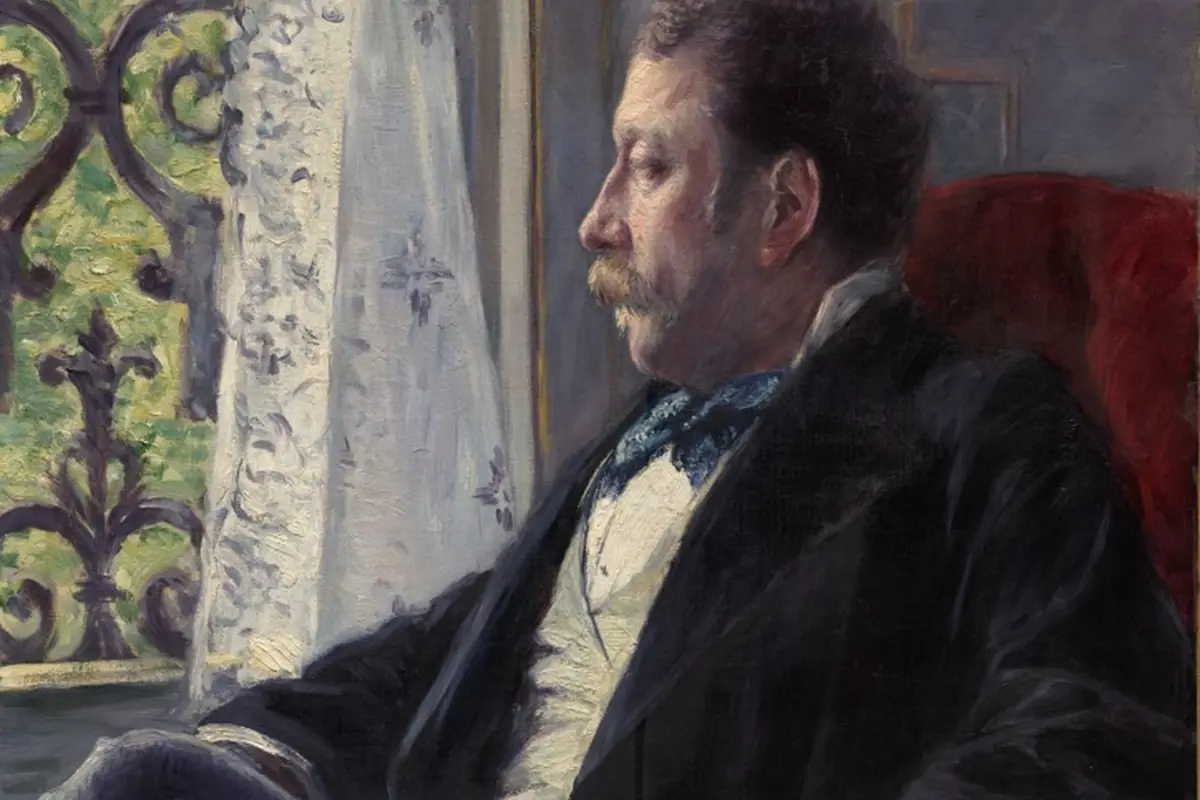
- Portrait of a Man, Gustave Caillebotte (1880) — Cleveland Museum of Art, CC0 1.0
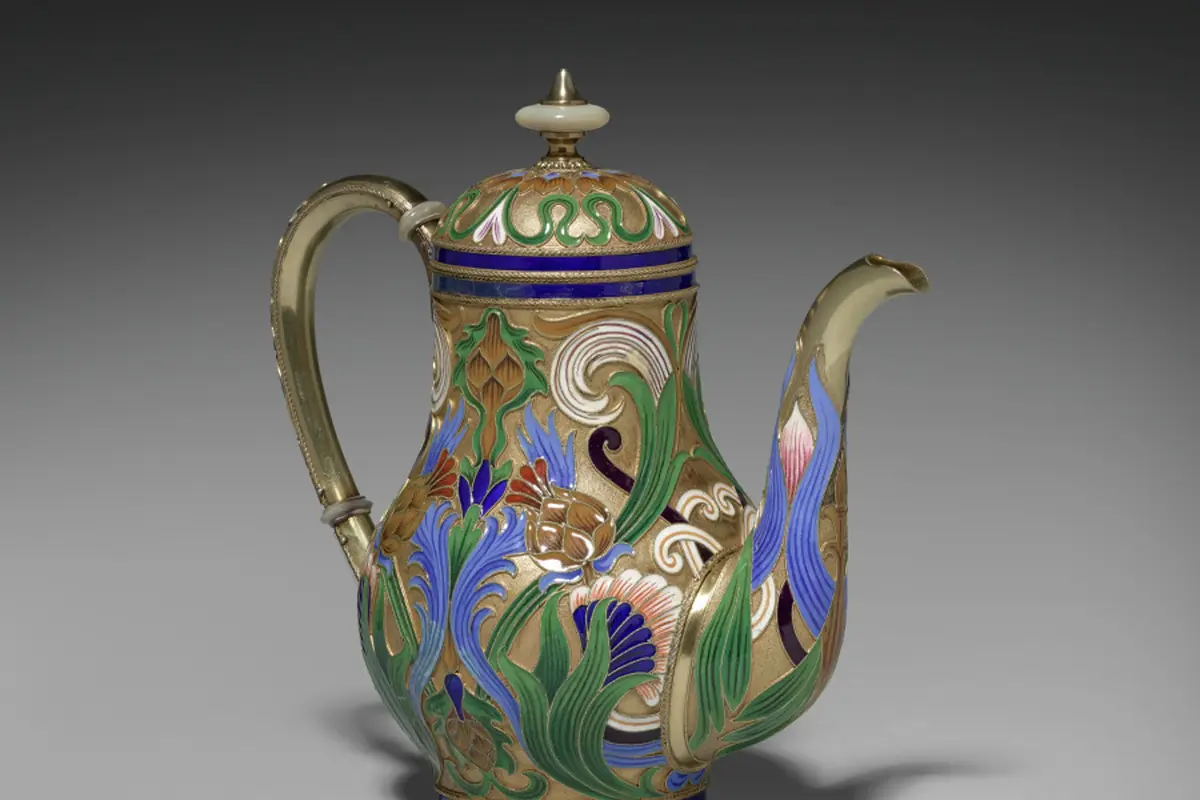
- Covered Hot Water Pot, Feodor Ivanovich Rückert (1887–96) — Cleveland Museum of Art, CC0 1.0
- Turtleback Reading Lamp, Tiffany Glass & Decorating Company (c. 1895–1902) — Cleveland Museum of Art, CC0 1.0
- Portrait of Jean-Baptiste Lemoyne the Younger, Elisabeth Louise Vigée-LeBrun (1774) — Cleveland Museum of Art, CC0 1.0
- Edge of the Woods Near L'Hermitage, Pontoise, Camille Pissarro (1879) — Cleveland Museum of Art, CC0 1.0
- Eighteen Views of Rome: The Piazza Farnese (recto); Cartouche (verso), Lievin Cruyl (1664) — Cleveland Museum of Art, CC0 1.0
- Leaf from a Lectionary with St. Luke (1057–1063) — Cleveland Museum of Art, CC0 1.0
- Presentation Bowl (1900) — Cleveland Museum of Art, CC0 1.0
- Taj Mahal, Back View of the Rest-House, with Figure, Dr. John Murray (c. 1858–1862) — Cleveland Museum of Art, CC0 1.0
- Study of Hands (recto); Sketch of a Hand (verso), Pierre Lenfant (1700s) — Cleveland Museum of Art, CC0 1.0
- Leaf from a Psalter and Prayerbook: Calendar Page with Labors (recto) (c. 1524) — Cleveland Museum of Art, CC0 1.0