
 Cleveland Museum of Art · CC0 1.0
Pages in this section
 Global indexThe OIMAP global index tracks changes in art market prices at constant quality, every month, since 2015.›
 OIMAP ObservatoryThe OIMAP Observatory produces and publishes the reference statistics of the global art and heritage market.›
 2024 annual reportThe OIMAP Observatory's 2024 annual report: €67.8 billion in transactions, growth of 5.8% and a market that is becoming global.›
 Breakdown by segmentHow the market's volume is split between painting, contemporary art, furniture, sculpture and tribal art.›
 Geographic breakdownWhere sales are concluded: North America, Europe, Asia-Pacific, Middle East, Africa and Latin America.›
 Top 10 salesThe ten biggest sales of the year: 2024 ranking, earlier rankings and breakdown by auction house.›
 PaintingThe painting market: old masters, the 19th century and the modern period, with their prices, players and precautions.›
 Contemporary artThe contemporary art market: emerging artists, galleries and fairs, a dynamic and volatile segment.›
 Tribal artThe market for the arts of Africa, Oceania and the Americas: provenance, restitutions, ethics and growth of 9.4%.›
 Decorative arts and furnitureThe market for antique furniture, glass, ceramics and silverware: stamps, hallmarks, restorations and prices.›
 Photography and graphic artsThe market for photographic prints, limited editions and artists' books: prints, editions, states and authentication.›
 Auction housesThe auction houses approved by OIMAP: directory, approval procedure and sales calendar.›
 Galleries and dealersThe galleries and dealers labelled by OIMAP: directory, conformity label and code of ethics.›
 Digital market and NFTsThe market for digital works and backed tokens: regulation, blockchain certification and approved platforms.›
 Studies and publicationsAnalysis notes, sector studies and databases of the OIMAP Observatory, in open access.›
The art market, measured with method
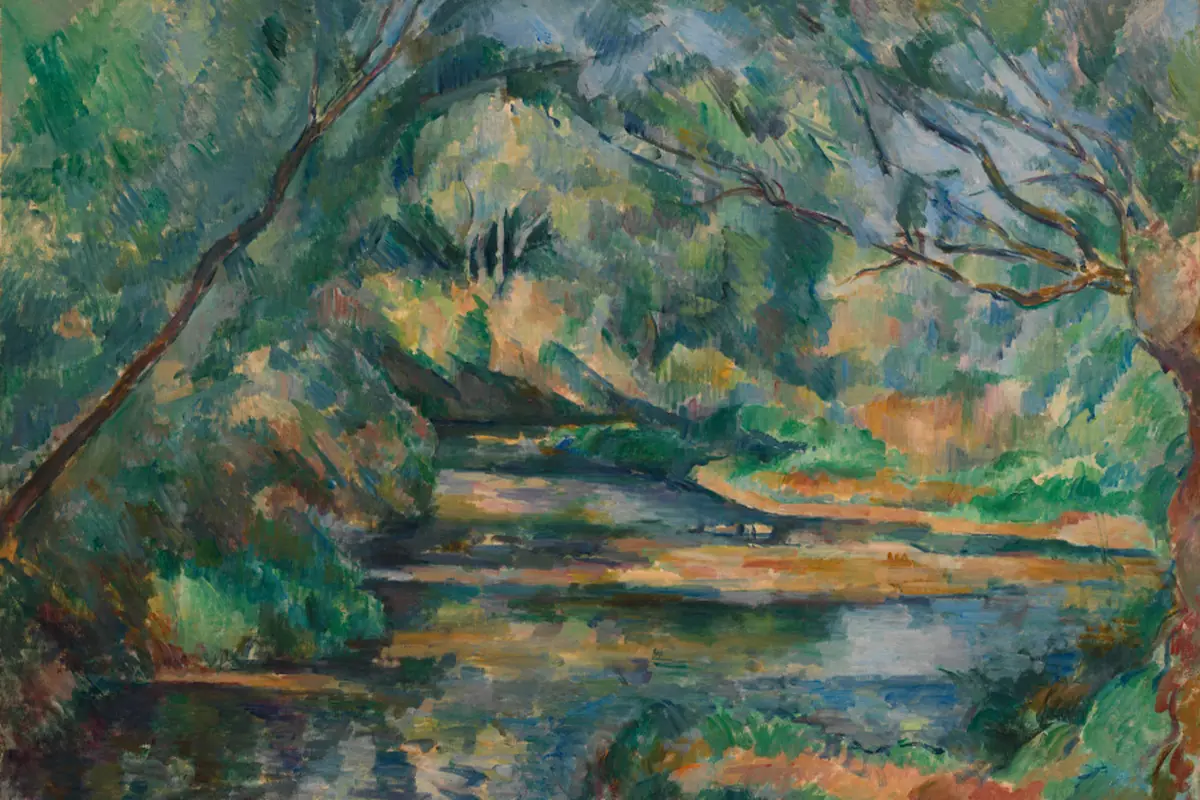
With €67.8 billion in transactions in 2024, the global art and heritage market grew by 5.8%. The OIMAP Observatory tracks its pulse every month, by segment and by region.
The Market section brings together OIMAP's public indicators: the global index, breakdowns by segment and region, the ranking of the biggest sales, the directory of approved operators and the Observatory's publications.
These data rest on transactions certified and declared to the Member States. They are published with their method, so that everyone can check, cite and reuse them.
The market in 2024
Source: OIMAP Observatory, 2024 annual report.
Why a public observatory
Measure to understand, publish to share.
The art market has long suffered from an information deficit: prices known to a small circle, estimated volumes, methods rarely published. OIMAP took the opposite choice. The series, the methods and the databases are open.
This transparency serves all players: buyers who compare, insurers who value, States that regulate, researchers who analyse and journalists who report.
The main chapters of the section
 IndicatorGlobal index
Monthly trend, by segment and by region since 2015.
› InstitutionOIMAP Observatory
Mission, methodology and team of the Observatory.
› Publication2024 annual report
Summary, full report and statistical annexes.
› AnalysisBreakdown by segment
Painting, sculpture, furniture: the weight of each segment.
› AnalysisGeographic breakdown
North America, Europe, Asia-Pacific and other regions.
› RankingsTop 10 sales
The 2024 ranking and earlier rankings.
›
The segments in 2024
| Segment | Volume | Index change |
|---|---|---|
| Painting | €25.8bn | +4.9% |
| Contemporary art | €14.9bn | +8.7% |
| Furniture and other | €12.2bn | +3.1% |
| Sculpture | €9.5bn | +5.2% |
| Tribal art | €5.4bn | +9.4% |
Tribal art and contemporary art drive growth.
Fifteen years of measurement
- First statistics
Collection of declared sales in the founding States.
- Creation of the index
Base 100 in January 2015, repeat-sales method.
- Open data
Publication of the series under an open licence.
- Regional index
Breakdown of the index across five regions.
- 67 contributing States
Coverage of all the Member States.
Reading a market figure
Two complementary readings
Volume
Sum of the year's sales- Measures activity
- Sensitive to large sales
- Expressed in current euros
Ideal for comparing markets.
Index
Change in prices at constant quality- Measures the price level
- Neutralises the effect of exceptional works
- Base 100 in 2015
Ideal for following the trend.
Making good use of the Observatory's data
An economist's view
« A market whose methods are not published is a market that cannot be criticised. »
Vocabulary of the market
- Index
- Measure of the change in prices at constant quality.
- Repeat sales
- Method comparing the successive prices of the same work.
- Unsold rate
- Share of lots offered for sale and not sold.
- Hammer price
- Price at which a lot is sold at auction.
Frequently asked questions
Where do the figures come from?
From sales declared by approved auction houses, galleries and platforms, cross-checked with the certificates issued.
Is the data free?
Yes. The series are published under an open licence in the databases.
Who checks the calculations?
An independent scientific council reviews the method every year: see the methodology.
Are private sales counted?
Yes, when they are declared by an approved operator.
Useful documents
Contact the Observatory
Related pages
 Global indexThe OIMAP global index tracks changes in art market prices at constant quality, every month, since 2015.›
 2024 annual reportThe OIMAP Observatory's 2024 annual report: €67.8 billion in transactions, growth of 5.8% and a market that is becoming global.›
 Top 10 salesThe ten biggest sales of the year: 2024 ranking, earlier rankings and breakdown by auction house.›
 Studies and publicationsAnalysis notes, sector studies and databases of the OIMAP Observatory, in open access.›
Explore the data
Image credits (38)
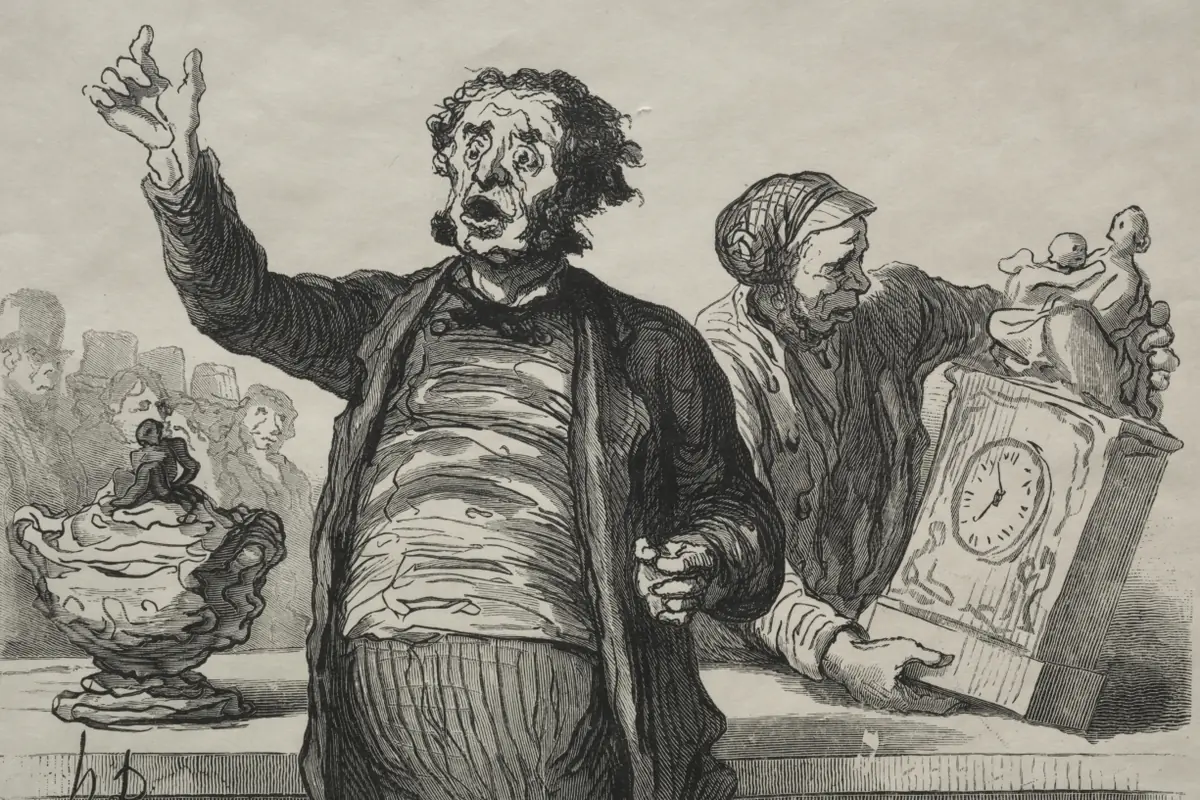
- The Auction House: The Town Crier, Honoré Daumier (1864, printed 1920) — Cleveland Museum of Art, CC0 1.0
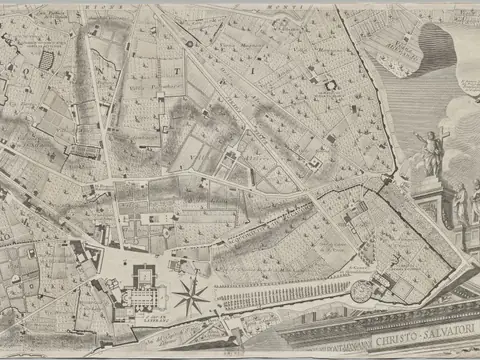
- Nuova pianta di Roma data in luce da Giambattista Nolli l’anno MDCCXLVII, known as La Pianta Grande di Roma, Giovanni Battista Nolli (1748) — Cleveland Museum of Art, CC0 1.0
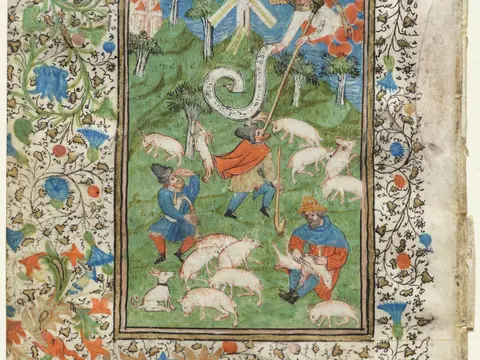
- Annunciation to the Shepherds: Leaf from a Book of Hours (1 of 6 Excised Leaves), Henri d'Orquevaulx (c. 1420–30) — Cleveland Museum of Art, CC0 1.0
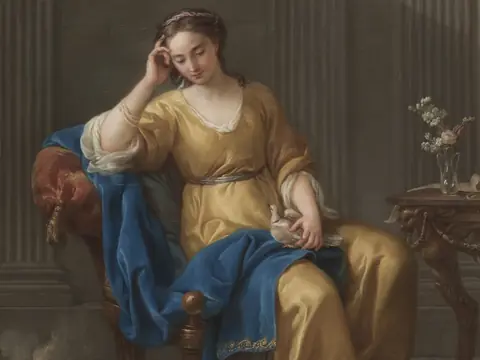
- Sweet Melancholy, Joseph-Marie Vien (1756) — Cleveland Museum of Art, CC0 1.0
- Christ in the Garden of Gethsemane, Hans Daucher (1500s) — Cleveland Museum of Art, CC0 1.0
- Nuova pianta di Roma data in luce da Giambattista Nolli l’anno MDCCXLVII, known as La Pianta Grande di Roma, Giovanni Battista Nolli (1748) — Cleveland Museum of Art, CC0 1.0
- Marie-Yolande de Fitz-James, Henri Fantin-Latour (1867) — Cleveland Museum of Art, CC0 1.0
- Sports on a Frozen River, Aert van der Neer (ca. 1660) — The Metropolitan Museum of Art, CC0 1.0
- Prayer Niche (Mihrab) (c. 1500s or mid-1900s) — Cleveland Museum of Art, CC0 1.0
- Buffalo Mask (early to mid-1900s) — Cleveland Museum of Art, CC0 1.0
- Month of May: Scene of May Day Festival, Gobelins Manufactory (1723–1774) — Cleveland Museum of Art, CC0 1.0
- Portrait of a Naval Officer, Lai Fong (1870s) — Cleveland Museum of Art, CC0 1.0
- Creamer, Louis Rorimer (c. 1910) — Cleveland Museum of Art, CC0 1.0
- Scenes of Daily Life, Roads and Paths: Road to Market (Scènes de la vie quotidienne, Routes et Chemins: Route du Marché), Carle Vernet (1819) — Cleveland Museum of Art, CC0 1.0
- Lampas with foliate medallions in ogival lattice (1400s) — Cleveland Museum of Art, CC0 1.0
- Hours of Queen Isabella the Catholic, Queen of Spain, Master of the First Prayerbook of Maximillian (c. 1500) — Cleveland Museum of Art, CC0 1.0
- The Brook, Paul Cezanne (c. 1895–1900) — Cleveland Museum of Art, CC0 1.0
- An Old Clothes Shop, Seven Dials, John Thomson (1877) — Cleveland Museum of Art, CC0 1.0
- Relief of Apollo with Nike (27 BCE–14 CE) — Cleveland Museum of Art, CC0 1.0
- Views: The Market on the Molo, Antonio Canaletto (1735–1746) — Cleveland Museum of Art, CC0 1.0
- Fragment Mounted as a Box Cover with a Scene from Amida's Paradise (1100s) — Cleveland Museum of Art, CC0 1.0
- At the Market, Camille Pissarro (late 1800s) — Cleveland Museum of Art, CC0 1.0
- The Departure of Saints Paula and Eustochium for the Holy Land, Giuseppe Bottani — The Metropolitan Museum of Art, CC0 1.0
- Saucer with Scene in style of Watteau (c. 1750–60) — Cleveland Museum of Art, CC0 1.0
- Figure from a Crèche: Angel (1780–1830) — Cleveland Museum of Art, CC0 1.0
- Vanity Case (Nécessaire) (c. 1760) — Cleveland Museum of Art, CC0 1.0
- Box (1800s) — Cleveland Museum of Art, CC0 1.0
- The Market Place, Wells, Muirhead Bone (1891–1953) — Cleveland Museum of Art, CC0 1.0
- Still Life with Sweets, Juan van der Hamen y Léon (1622) — Cleveland Museum of Art, CC0 1.0
- The Four Markets: The Fruit Market, Richard Earlom (1775) — Cleveland Museum of Art, CC0 1.0
- Figure from a Crèche: Standing Mountain Goat (1780–1830) — Cleveland Museum of Art, CC0 1.0
- Sugar Bowl, Louis Rorimer (c. 1910) — Cleveland Museum of Art, CC0 1.0
- The Apotheosis of Romulus: Design for a Ceiling, Domenico Maria Canuti (c. 1675–76) — Cleveland Museum of Art, CC0 1.0
- Stater: BODVOC on plain field (obverse); Horse, Wheel, and Crescent (reverse) (10 BCE–20 CE) — Cleveland Museum of Art, CC0 1.0
- Solidus with Busts of Constans II and Constantine IV (obverse) (659–661) — Cleveland Museum of Art, CC0 1.0
- Portrait of a Woman, Anna Claypoole Peale (1820) — Cleveland Museum of Art, CC0 1.0
- Leaf from a Lectionary with St. Luke (1057–1063) — Cleveland Museum of Art, CC0 1.0
- Autumn: Vintage Scene, Gobelins Manufactory (designed c. 1535, woven mid- to late 160) — Cleveland Museum of Art, CC0 1.0