
 Cleveland Museum of Art · CC0 1.0
Pages in this section
 The ten good practicesThe detail of the Charter's ten commitments, from provenance to the reporting of anomalies.›
 Download the CharterThe text of the Collector's Charter in PDF, in French, English and Spanish, with advice on use.›
 Collector's practical guideA concrete manual for applying the Charter: before, during and after the acquisition of a work.›
Collecting with confidence
The Collector's Charter brings together ten good practices intended for anyone who acquires, holds or sells works of art and cultural property. It creates no new legal obligation, but translates the requirements of law and market custom into simple actions.
This section presents the ten good practices, the text to download and a practical guide.
The Collector's Charter in figures
Source: OIMAP General Secretariat.
Three pages
Why a charter
A good-faith collector may unknowingly become the owner of a stolen or illicitly exported work. The consequences are serious: seizure, restitution, financial loss. The Charter helps reduce this risk through simple checks and preserved documents.
It also serves as a common reference among collectors, galleries, auction houses and museums, which thus share the same vocabulary of diligence.
Who it is for
The Charter is intended for private individuals, companies holding collections, foundations and market professionals. Public institutions may draw on it for their acquisition policies, in addition to their own rules.
It may be cited in a contract, internal regulations or a code of ethics, with a mention of its version.
A charter grounded in law
The ten practices rest on international instruments: the 1970 UNESCO Convention on illicit transfers, the 1995 UNIDROIT Convention on stolen or illegally exported cultural objects, the 1954 Hague Protocol and the OIMAP Guidelines 2019.
They translate the principle of due diligence: whoever buys must be able to show that they took the precautions expected of a prudent purchaser.
A voluntary commitment
Adherence to the Charter is free. A collector or institution may declare their commitment to the Desk, which issues a certificate of adherence. It is not a certification, but a sign of seriousness appreciated by partners.
The certificate may be withdrawn in case of proven breach, after an exchange with the person concerned.
The ten practices at a glance
| Number | Practice | Timing |
|---|---|---|
| 1 | Verify provenance | Before purchase |
| 2 | Require a certificate | Before purchase |
| 3 | Keep invoices | At purchase |
| 4 | Check BIOP before purchase | Before purchase |
| 5 | Declare exports | On export |
| 6 | Insure and document | During possession |
| 7 | Return in good faith | In case of a claim |
| 8 | Cooperate with the authorities | In case of an investigation |
| 9 | Train your teams | Ongoing |
| 10 | Report any anomaly | Ongoing |
Milestones
- Foundation
Principle of cooperation with collectors.
- BIOP
The database becomes searchable before purchase.
- Directives
Binding framework for States.
- Charter
Distribution in three languages.
A charter is not a certificate
Charter and law
Charter
Voluntary commitment- Good practices
- Free adherence
- Certificate possible
Prevent.
Law
Legal obligation- Varies by State
- Sanctions possible
- Enforced by the courts
Compel.
Adopt the Charter
- Read the ten practices
Understand their scope.
- Download the text
In your language.
- Put in place
Following the practical guide.
- Declare your adherence
To the Desk.
First reflexes
A collector from Brussels (example)
« The Charter gave me a method. I now know which questions to ask and which documents to demand before signing. »
Glossary
- Due diligence
- Precautions expected of a prudent purchaser.
- Good faith
- Legitimate ignorance of a defect in title.
- Certificate of adherence
- Document attesting to commitment to the Charter.
- Illicit transfer
- Movement of an item contrary to law.
Links with OIMAP services
Several practices rely on services already described: consulting BIOP, the Desk's certificates and document verification. The Charter organizes them into a coherent path.
It adds no administrative procedure. It merely recommends using, in a useful order, what already exists.
Frequently asked questions
Is the Charter mandatory?
No, adherence is voluntary.
Is there a fee?
The text is free. The certificate of adherence is too (indicative).
Can professionals adopt it?
Yes, galleries and auction houses are invited to do so.
Where can I download it?
See Download the Charter.
Useful documents
Contacts
Related pages
 The ten good practicesThe detail of the Charter's ten commitments, from provenance to the reporting of anomalies.›
 Download the CharterThe text of the Collector's Charter in PDF, in French, English and Spanish, with advice on use.›
 Collector's practical guideA concrete manual for applying the Charter: before, during and after the acquisition of a work.›
 ProtectionRecovering stolen works, fighting illicit trafficking and protecting heritage: the BIOP database, international cooperation, restitutions and guides for law enforcement.›
Read the ten practices
Image credits (23)
- Gathering among the Members of Office Censor-General (1700s) — Cleveland Museum of Art, CC0 1.0
- Lace Towel End (c. 1700s–1800s) — Cleveland Museum of Art, CC0 1.0
- Sports on a Frozen River, Aert van der Neer (ca. 1660) — The Metropolitan Museum of Art, CC0 1.0
- Interior Drawer for Cabinet, André-Charles Boulle (c. 1690) — Cleveland Museum of Art, CC0 1.0
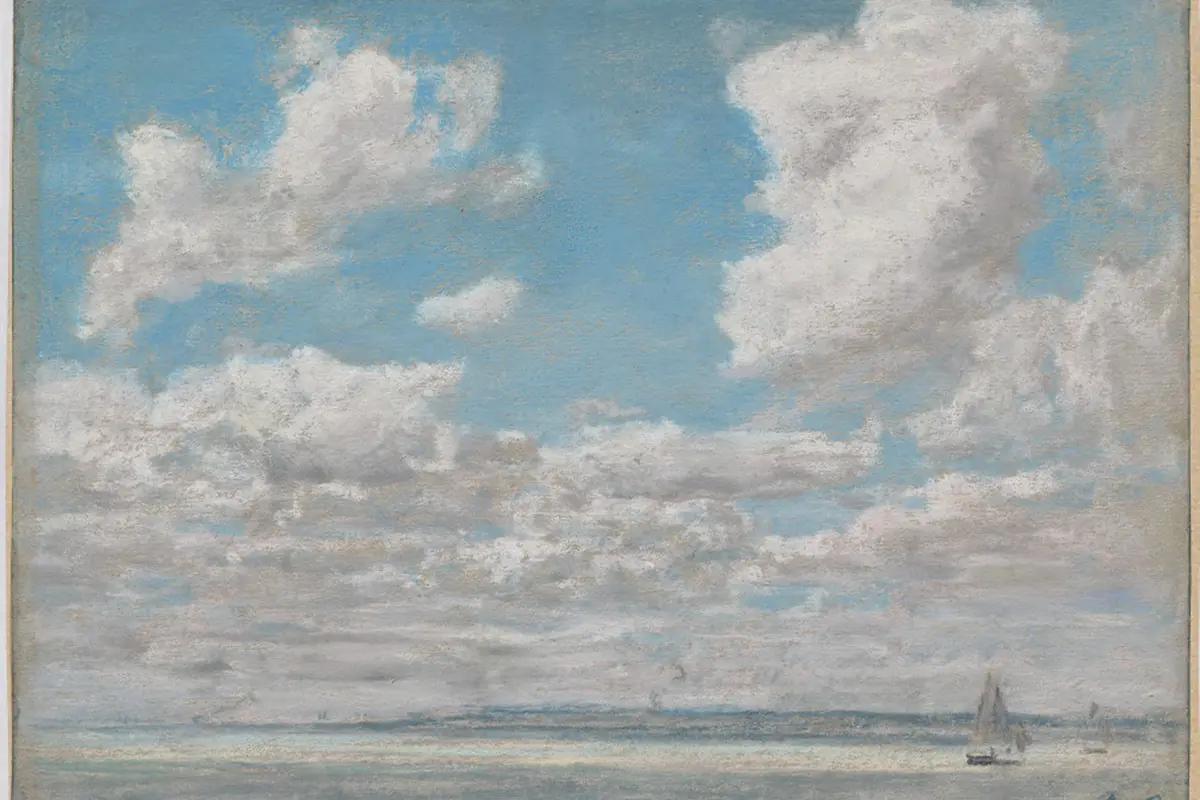
- Seascape with Open Sky, Eugène Boudin (1860) — Cleveland Museum of Art, CC0 1.0
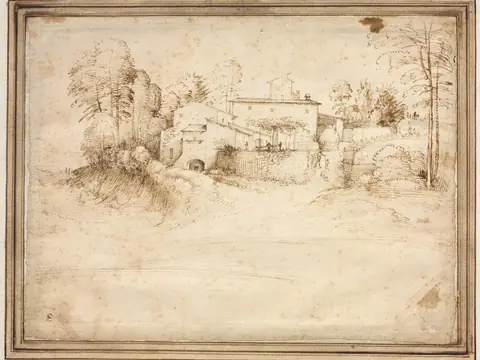
- Farmhouse on the Slope of a Hill, Fra Bartolommeo (c. 1508) — Cleveland Museum of Art, CC0 1.0
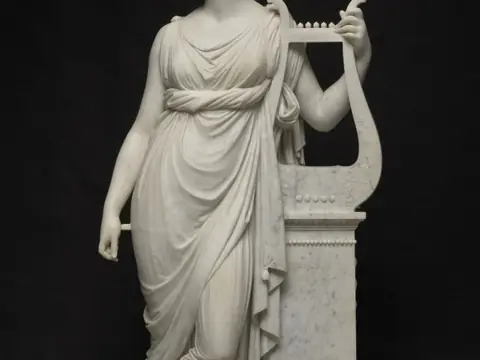
- Terpsichore Lyran (Muse of Lyric Poetry), Antonio Canova (1816) — Cleveland Museum of Art, CC0 1.0
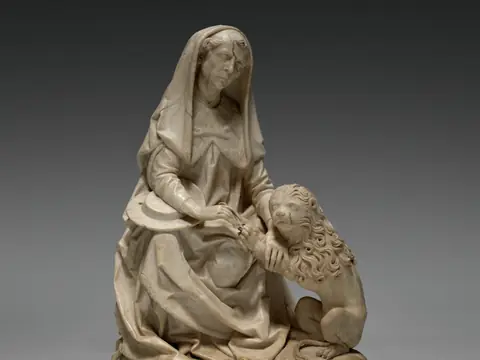
- Saint Jerome and the Lion (From the former Church of St. Peter in Erfurt), Tilman Riemenschneider (c. 1495) — Cleveland Museum of Art, CC0 1.0
- Châteauvieux-sur-Suran, Antoine-Claude Ponthus-Cinier (1848) — Cleveland Museum of Art, CC0 1.0
- Bidri Hookah Bowl with Roses (c. 1650s) — Cleveland Museum of Art, CC0 1.0
- Marie-Yolande de Fitz-James, Henri Fantin-Latour (1867) — Cleveland Museum of Art, CC0 1.0
- Seated Buddha (sculpture) (1100s) — Cleveland Museum of Art, CC0 1.0
- Panel (c. 1780–1840) — Cleveland Museum of Art, CC0 1.0
- Temple of Athene Nike. Venus Victrix—Wingless Victory, Dimitrios Constantin (c. 1850s–60s) — Cleveland Museum of Art, CC0 1.0
- Edge of the Woods Near L'Hermitage, Pontoise, Camille Pissarro (1879) — Cleveland Museum of Art, CC0 1.0
- Nymphs and a Satyr (Amor Vincit Omnia), Nicolas Poussin (c. 1625–27) — Cleveland Museum of Art, CC0 1.0
- The Four Seasons, Kano Tan’yū (1668) — Cleveland Museum of Art, CC0 1.0
- The Old Market, Cleveland, Frank Wilcox (1920) — Cleveland Museum of Art, CC0 1.0
- Adoration of the Shepherds, Bernardo Cavallino (c. 1650) — Cleveland Museum of Art, CC0 1.0
- Bull Head Attachment (c. 700–600 BCE) — Cleveland Museum of Art, CC0 1.0
- Adoration of the Shepherds, Carlo Dolci (c. 1670) — Cleveland Museum of Art, CC0 1.0
- Head of a Bearded Man (c. 125 CE) — Cleveland Museum of Art, CC0 1.0
- Relief Portrait Head of the Emperor Balbinus (c. 238 CE) — Cleveland Museum of Art, CC0 1.0