
 Cleveland Museum of Art · CC0 1.0
Gathering the links of the chain
For a provenance, the file is an investigation. The more documents you provide on the successive owners, the shorter the research and the more solid the conclusion.
The file comprises four sets: identity and right-to-act documents, documents on the work itself, documents relating to owners and transactions, and the physical elements (labels, stamps) visible on the work.
If you do not have everything, submit what you have: the expert fills in with archive research.
The file in figures
Acquisition and transmission documents
Where to find the documents
| Document | Where to look |
|---|---|
| Old invoice | Seller's archives, gallery, auction house |
| Post-death inventory | Notarial and departmental archives |
| Exhibition catalogue | Museum library, national libraries |
| Sale catalogue | Auction house, libraries, digitised databases |
| Transport label | Back of the work, carriers' archives |
Reading the marks on the work
On the back or the stretcher, labels, stamps and inventory numbers are so many links: they point to galleries, collections, exhibitions, carriers. Photograph them all, even damaged.
Do not remove any label and do not try to clean them: their condition is part of the evidence. The expert will know how to date them and match them with the archives.
Keep, always
Putting together your provenance file
- List the known owners
From oldest to most recent, even approximately.
- Attach a document to each link
Invoice, letter, photograph, testimony.
- Photograph the marks
Labels, stamps, inscriptions on the back.
- Flag the gaps
Indicate the periods with no document.
- Submit
Upload the documents, naming each file.
Documents depending on the nature of the acquisition
| Mode of acquisition | Documents expected |
|---|---|
| Purchase from a gallery | Invoice, gallery certificate, correspondence |
| Public sale | Auction record, catalogue |
| Succession | Certificate of notoriety, inventory, partition |
| Donation | Notarial deed, declaration of gift |
| Purchase from the artist | Receipt, correspondence, studio document |
Written documents or testimonies
Written documents
Dated and signed document- Strong probative value
- Verifiable in archives
- Kept in the Registry
To be preferred whenever possible.
Testimonies
Statement from a third party- Value as an indication
- Must be dated and signed
- Complements a document
Useful to fill a short gap.
Case study: the label on the back
A gallery found
A painting bears on the back an old label illegible to the naked eye.
- Photograph in raking light and in infrared.
- Reading of the mention of a Brussels gallery.
- Research in the gallery's archives: invoice of 1936.
A 23-year link is filled by a simple label.
Templates and guides
Vocabulary of the file
- Link
- An owner or a period in the chain of provenance.
- Auction record
- Public sale document stating the buyer and the price.
- Inventory
- Detailed list of property, often drawn up after a death.
- Transport label
- Mark of a courier or carrier of works of art.
Frequently asked questions
Must I supply originals?
No, legible copies suffice. Originals are requested only in case of doubt.
Will my documents be published?
No. Only the conclusion sheet appears in the Registry; the documents remain confidential.
Can I submit a case without any acquisition document?
Yes, if you supply equivalent elements. The result will depend on what the expert finds.
Is research included in the price?
Yes, up to ten days of research; beyond that, an additional quote is offered.
Contacts
Related pages
 Supporting documentsThe identity, ownership, description and provenance documents to attach to a registration case.›
 Submit a caseDescribe the work, choose the acts, upload the documents and pay the deposit: submitting a case step by step.›
 TimeframesFrom 3 to 6 weeks: the timeline of an application for a provenance certificate and the factors that lengthen it.›
Submit the file
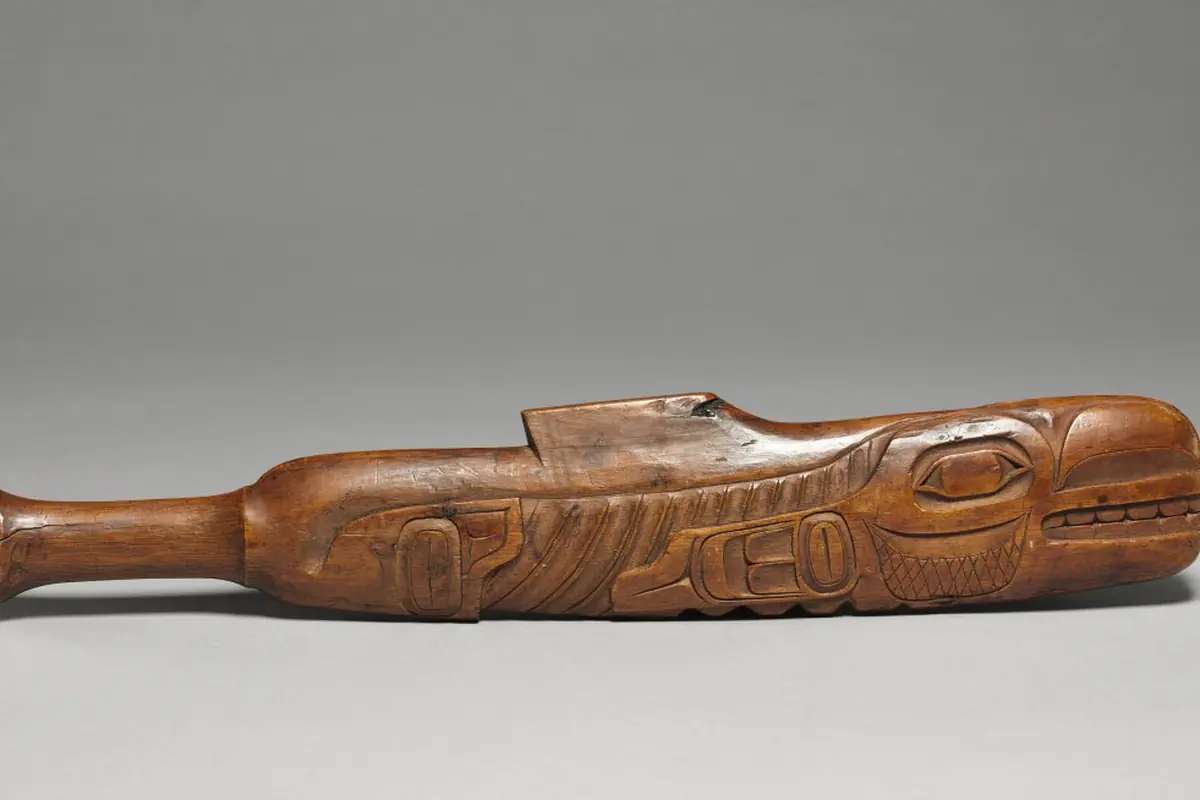
Image credits (15)
- Sweet Melancholy, Joseph-Marie Vien (1756) — Cleveland Museum of Art, CC0 1.0
- Nuova pianta di Roma data in luce da Giambattista Nolli l’anno MDCCXLVII, known as La Pianta Grande di Roma, Giovanni Battista Nolli (1748) — Cleveland Museum of Art, CC0 1.0
- Letter Box, Ogata Kōrin (1700s) — Cleveland Museum of Art, CC0 1.0
- Illuminated Opening Page Titled Laila and Majnun from a Khamsa (Quintet) of Nizami of Ganja, Ja'far Baisunghuri (835 AH/1431–32 CE) — The Metropolitan Museum of Art, CC0 1.0
- Seal of Doge Michele Steno (reverse) (1400–1409) — Cleveland Museum of Art, CC0 1.0
- View of Venice, Jacopo de' Barbari (1500) — Cleveland Museum of Art, CC0 1.0
- Teapot with Landscape and Imperial Poem, Chen Hanwen (1762–95) — Cleveland Museum of Art, CC0 1.0
- Left side of a double-page album folio: Outside a Royal Encampment (recto) and Calligraphy, Persian Verses (verso), Bihzad (c. 1485) — Cleveland Museum of Art, CC0 1.0
- Document Box (Ryōshibako) with Chrysanthemum and Plum (lid) (late 1800s-early 1900s) — Cleveland Museum of Art, CC0 1.0
- Nuova pianta di Roma data in luce da Giambattista Nolli l’anno MDCCXLVII, known as La Pianta Grande di Roma, Giovanni Battista Nolli (1748) — Cleveland Museum of Art, CC0 1.0
- The Grotto of Posillipo, Hubert Robert (c. 1769) — Cleveland Museum of Art, CC0 1.0
- Mercury (Budha), from a Mandi Astrology Series, Sanju (c. 1810) — Cleveland Museum of Art, CC0 1.0
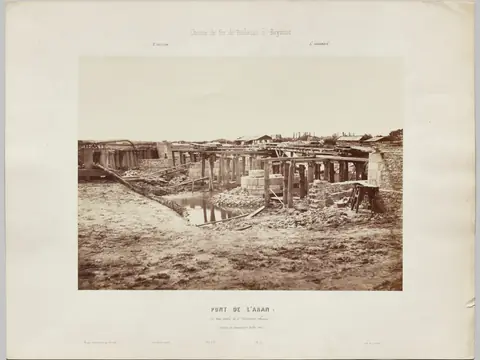
- Chemin de fer de Toulouse à Bayonne. Pont de l'Aran (en trois arches de 17m d'ouverture chacune). Situation des travaux au 21 juillet 1861, Édouard Baldus (1861) — Cleveland Museum of Art, CC0 1.0
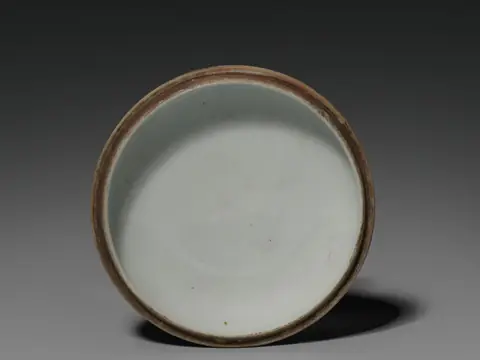
- Seal Color Box (1662–1722) — Cleveland Museum of Art, CC0 1.0
- Fish or Seal Club (X’ús’) (late 1800s–early 1900s) — Cleveland Museum of Art, CC0 1.0