
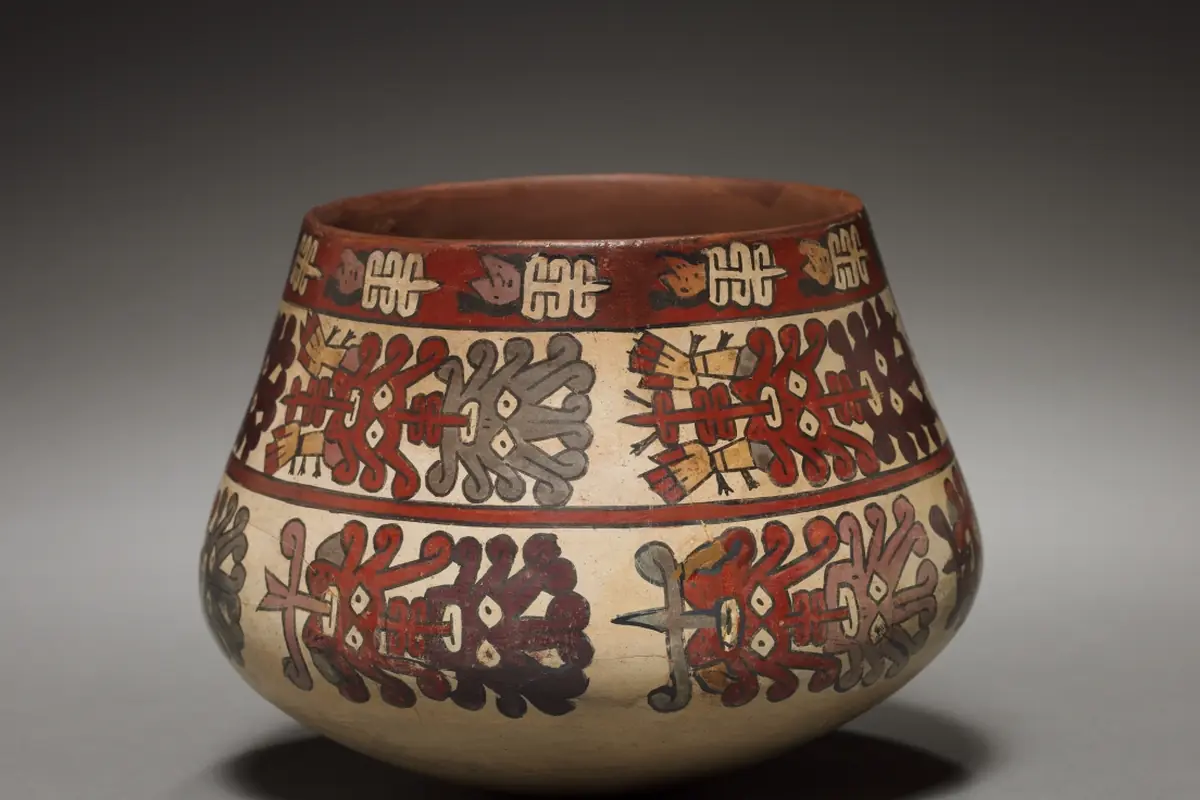
 Cleveland Museum of Art · CC0 1.0
The most regulated segment
The arts of the Americas account for €1.2 billion in 2024. It is the group most tightly framed in law: many countries prohibit the export of pre-Columbian objects and require specific documents.
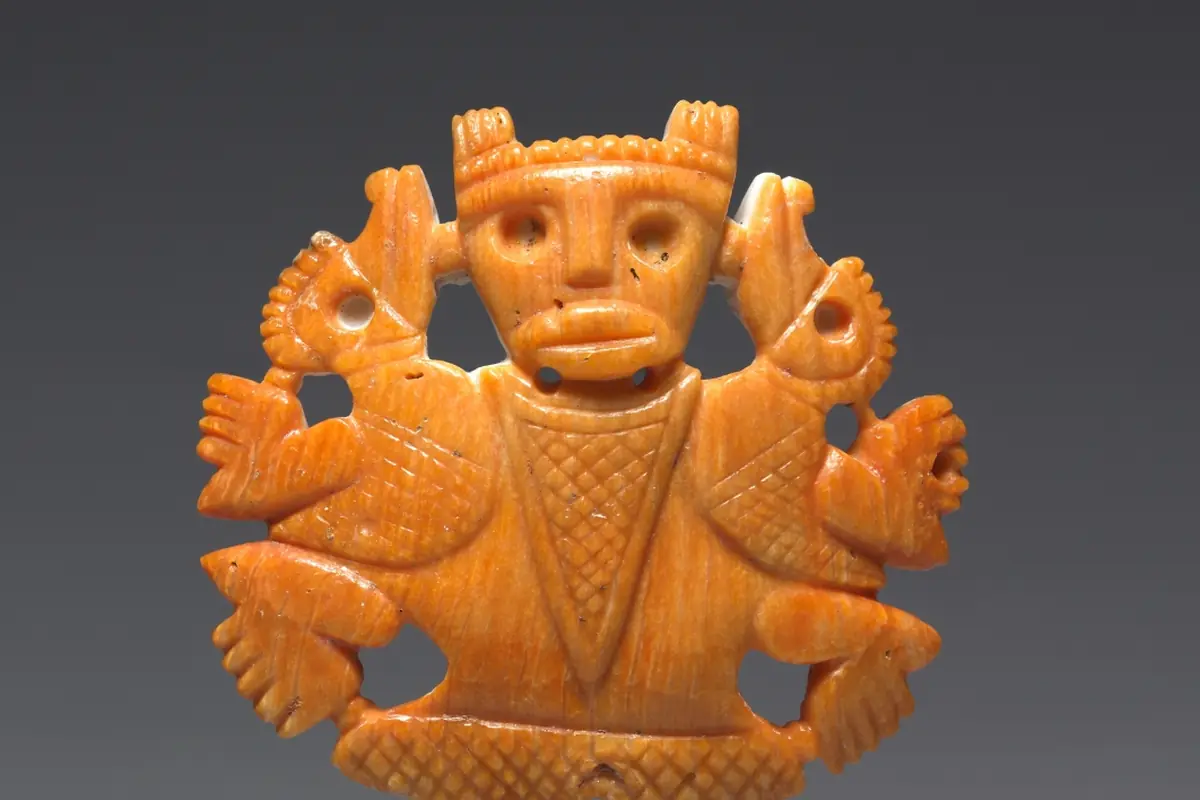
The segment brings together pre-Columbian arts (Maya, Aztec, Inca, Nazca, Moche), indigenous arts of North America (Haida, Navajo, Lakota) and Latin American folk arts.
This page presents the legal framework, the markets and the precautions to take.
Arts of the Americas in figures
Source: OIMAP Observatory.
A strict legal framework
Most Latin American countries consider pre-Columbian property to belong to the State. Its export is prohibited or subject to authorisation, and objects that left illegally can be claimed without time limit. In the United States, the law on the protection of indigenous burial sites requires the return of certain sacred objects and human remains.
For a buyer, the consequence is simple: documents are needed. A pre-Columbian object without justification of its departure or of long-standing possession must be considered at risk.
Provenance and clandestine digs
The main scourge of the segment is archaeological looting. Tombs and sites are dug up clandestinely, and the objects are sold to intermediaries. These objects are often sold on with false provenance papers.
OIMAP collaborates with Member States' police forces, museums and laboratories to detect these networks. Analysis of terracotta, pigment readings and databases of stolen objects make it possible to identify many cases.
Museums and cooperation
Several museums in Latin America and North America cooperate with OIMAP to inventory their collections and ease international loans. These partnerships make it possible to replace certain definitive restitutions with long-term loans, with a guarantee of return.
They also contribute to the training of curators and the digitisation of holdings, for the benefit of the market and of research alike.
Groups and legislation
| Group | Typical objects | Regime | Median price |
|---|---|---|---|
| Pre-Columbian | Ceramics, jewellery, textiles | Often State property | €5,600 |
| Indigenous North American | Basketry, totems, adornments | Burial site protection | €4,900 |
| Folk art | Textiles, retables, masks | Free in most cases | €1,800 |
Landmarks
- International convention
Fight against illicit trafficking.
- American burial sites law
Restitutions of remains.
- Digital inventories
Creation of databases of stolen objects.
- €1.2bn
Up 8.0%.
Archaeological property
Pre-Columbian object or folk art
Pre-Columbian
Before the conquest- Very strict regime
- High prices
- Provenance decisive
Very tightly regulated market.
Folk art
Current or recent production- More flexible regime
- Accessible prices
- Authenticity of the craftsperson
Open market.
Acquiring an object from the Americas
- Check
Law of the country of origin.
- Document
Provenance predating 1970.
- Consult
BIOP and databases of stolen objects.
- Certify
Authenticity and conservation.
- Declare
Export or import licence.
Essential documents
An archaeologist
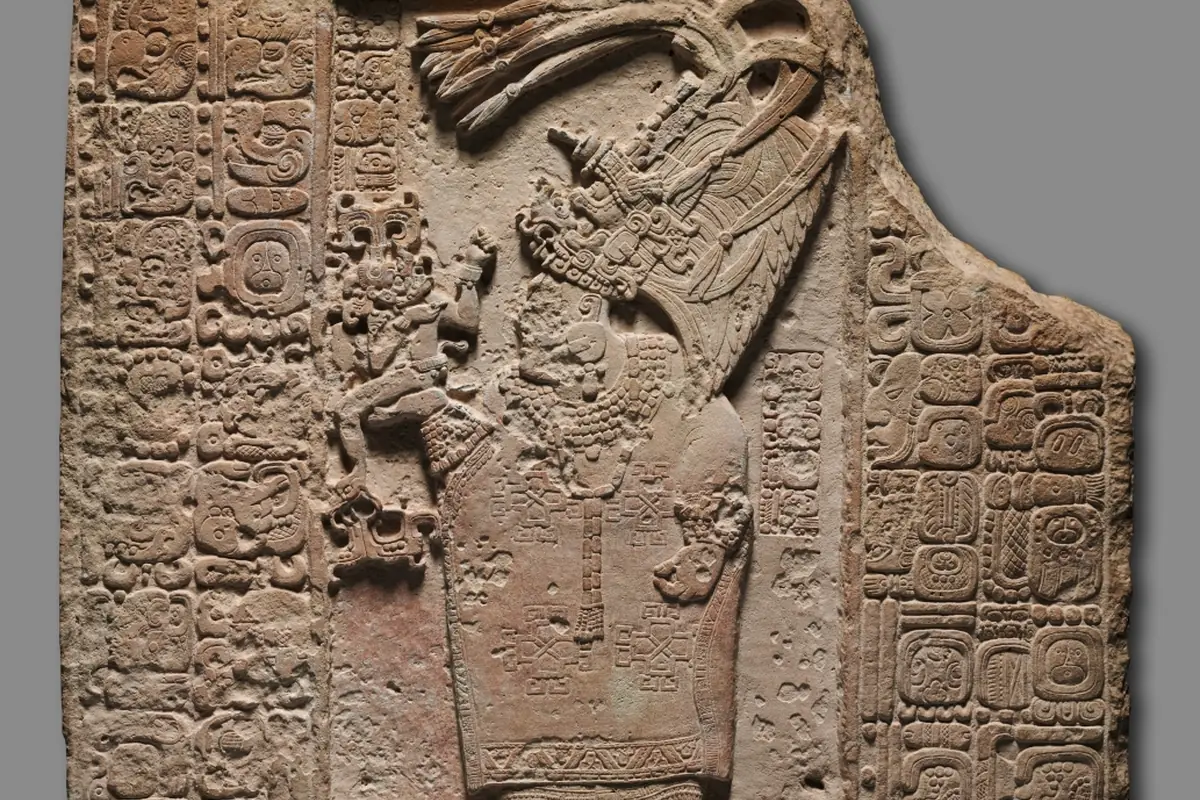
« An object taken out of the ground without documentation has lost most of what it could teach us. »
Vocabulary of the arts of the Americas
- Pre-Columbian
- Predating the conquest of America.
- Looting
- Clandestine digging of archaeological sites.
- 1970 Convention
- Treaty against the illicit trafficking of cultural property.
- Burial
- Tomb or place of interment.
Frequently asked questions
Can I buy a pre-Columbian object?
Yes, with provenance predating 1970 and the necessary authorisations.
What should be done with a suspect object?
Report it to the BIOP.
Are copies legal?
Yes, if they are presented as such.
Where can I see the legislation?
In the Regulation section.
Useful documents
Contacts
Related pages
 Tribal artThe market for the arts of Africa, Oceania and the Americas: provenance, restitutions, ethics and growth of 9.4%.›
 BIOP databaseThe international database of protected works: 48,200 stolen, lost or suspect works, searchable by all and enriched by police forces and museums.›
 Import and export licenceAuthorisation for the cross-border movement of a work, in conformity with the 1970 UNESCO and 1995 UNIDROIT conventions.›
Back to tribal art
Image credits (16)
- Vessel with Abstract Heads (100 BCE–700 CE) — Cleveland Museum of Art, CC0 1.0
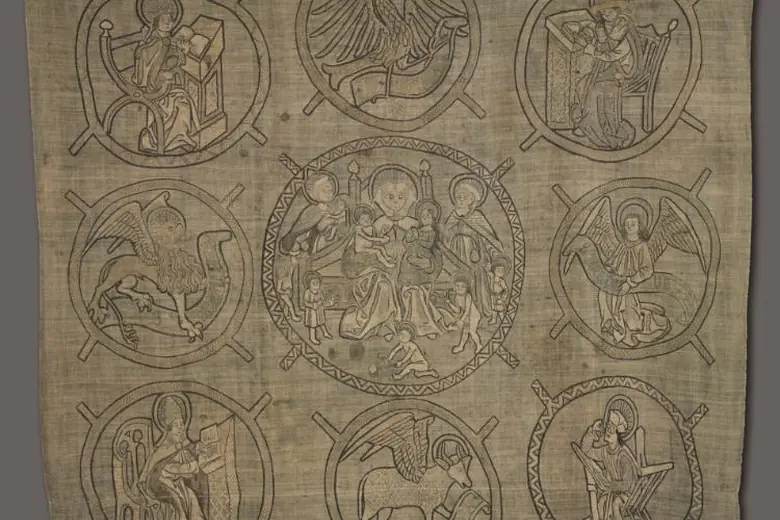
- Embroidered Panel: Holy Kinship (1500s) — Cleveland Museum of Art, CC0 1.0
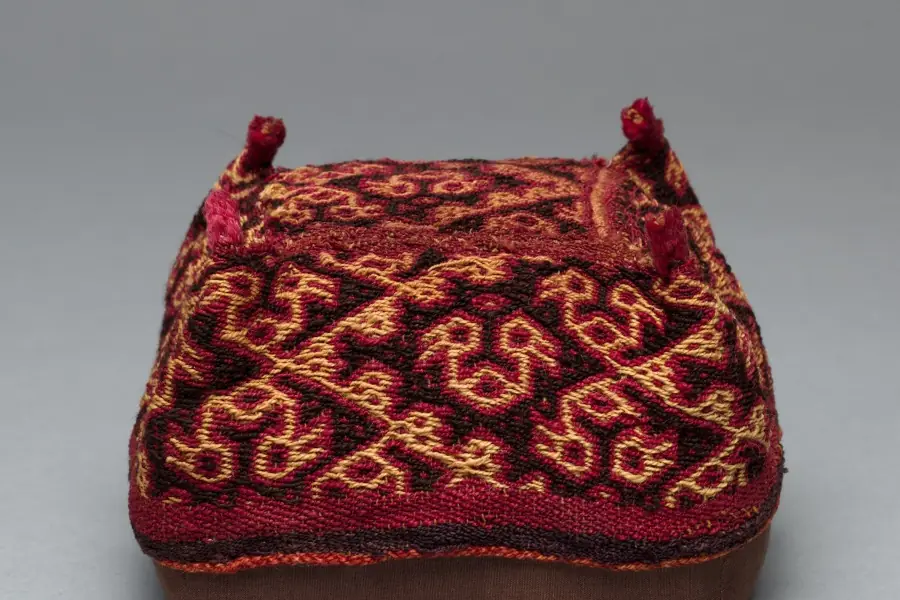
- Four-Cornered Hat (c. 1400–1532) — Cleveland Museum of Art, CC0 1.0
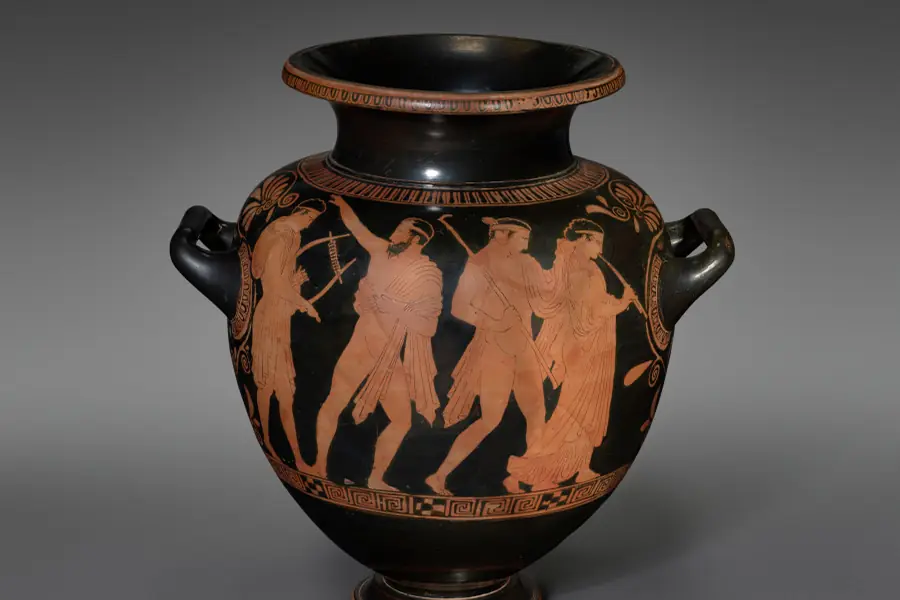
- Red-Figure Stamnos (Mixing/Storage Vessel): Komos (Musicians and Revelers), Kleophon Painter (c. 435–425 BCE) — Cleveland Museum of Art, CC0 1.0
- Miniature Mask (c. 900–400 BCE) — Cleveland Museum of Art, CC0 1.0
- Jacket with Octopus (c. 1800–1868) — Cleveland Museum of Art, CC0 1.0
- Sea Lion Pup Vessel (200–850 CE) — Cleveland Museum of Art, CC0 1.0
- Black-Figure Neck-Amphora of Panathenaic Shape (Storage Vessel) (525–500 BCE) — Cleveland Museum of Art, CC0 1.0
- Figure-and-Birds Pendant (c. 300–700 CE) — Cleveland Museum of Art, CC0 1.0
- Noh Costume (Atsuita) (1800–1850) — Cleveland Museum of Art, CC0 1.0
- Panel with Royal Woman, K’in Lakam Chahk (c. 795) — Cleveland Museum of Art, CC0 1.0
- A Palace with an Arched Bridge (A Roman Villa), Hubert Robert (1760) — Cleveland Museum of Art, CC0 1.0
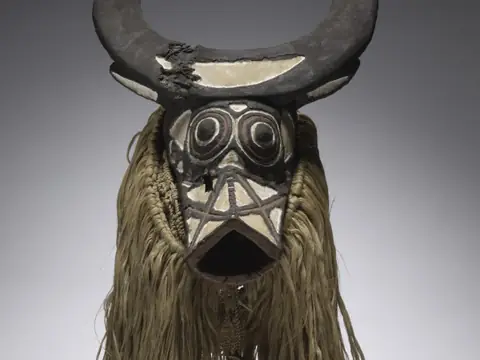
- Buffalo Mask (early to mid-1900s) — Cleveland Museum of Art, CC0 1.0
- Seal with Two Qilin Playing (1849) — Cleveland Museum of Art, CC0 1.0
- Boating in Moonlight (1600s) — Cleveland Museum of Art, CC0 1.0
- Hittite Vessel with Four Scenes Molded and Carved in Relief (1400–1200 BCE) — Cleveland Museum of Art, CC0 1.0