
 Cleveland Museum of Art · CC0 1.0
Pages in this section
 Seminars for AfricaThe two annual seminars held in Nairobi: borders, archaeological heritage, training and cooperation.›
 Seminars for Asia-PacificThe two annual seminars held in Singapore: a growing market, online sales, fairs and maritime cooperation.›
 Seminars for the AmericasThe two annual seminars held in New York: the North American market, Latin America, hemispheric cooperation.›
Meetings close to the field
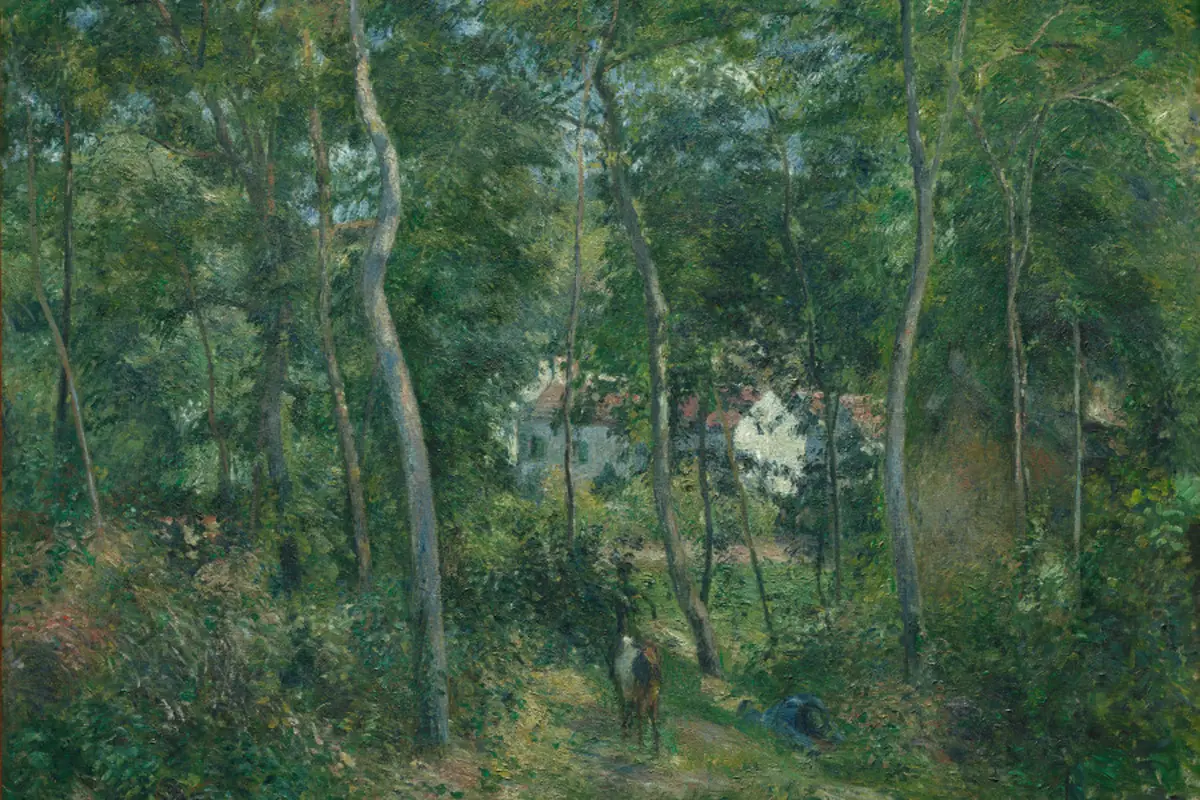
The regional seminars bring OIMAP closer to practitioners. Each region — Africa, Asia-Pacific, the Americas — hosts two seminars a year, organised by the local office in Nairobi, Singapore and New York. They address questions specific to the region: trafficking routes, national legislation, emerging markets.
The three pages of this section present Africa, Asia-Pacific and the Americas.
Participation follows the general registration procedure.
The seminars in figures
Source: Events and Communications Directorate.
Three regions
Why regional seminars
The issues facing a West African country are not those of a Pacific country. Regional seminars make it possible to adapt the discussion to local realities: forms of trafficking, institutional constraints, training needs.
They also create local networks between neighbouring administrations, which are more effective for cross-border cooperation.
The role of the regional offices
The Nairobi office for Africa, the Singapore office for Asia-Pacific and the New York office for the Americas design the programme with a local committee of experts. They handle logistics, reception and follow-up.
Each office has a contact person who can advise delegations on preparing their visit.
Audience and languages
The seminars are aimed mainly at customs, law enforcement, museums, cultural authorities and market professionals of the region. Working languages are adapted: French and English in Africa, English in Asia-Pacific, English and Spanish in the Americas.
Interpretation is provided so that everyone can speak in their own language.
Typical programme
A seminar lasts two days. The first is devoted to the regional overview and feedback from experience. The second is more practical: workshops, case simulations, a visit to a conservation site or a border post.
It concludes with recommendations adopted at the closing session and forwarded to the Events Directorate.
The three regions
| Region | Bureau | Languages |
|---|---|---|
| Africa | Nairobi | French, English |
| Asia-Pacific | Singapore | English |
| Americas | New York | English, Spanish |
Milestones
- First seminar
Each region.
- Interim review
Online.
- Second seminar
Recommendations.
- Follow-up
Working group.
Open to all States
In person or online
In person
On site- Face-to-face meetings
- Field visits
- Travel required
For networking.
Online
Remote- No travel needed
- Replay available
- Fewer informal exchanges
For flexibility.
Taking part in a seminar
- Browse
The calendar.
- Register
Online.
- Prepare
The application.
- Attend
At the sessions.
- Follow
The recommendations.
Before the seminar
A participant
« Meeting with our neighbours to talk about our shared borders was the best training I have ever attended. »
Seminar vocabulary
- Regional seminar
- A meeting specific to one region.
- Regional office
- Local branch of OIMAP.
- Follow-up group
- Network of participants.
- Observer
- Participant from another region.
Outcomes of the seminars
The recommendations feed into the regional action plan, the OIMAP Academy training programmes and, where appropriate, the proposals submitted to the General Assembly. A review is presented at the following seminar.
Participants form a follow-up group that communicates through secure messaging and meets online every quarter.
Frequently asked questions
Who organises the seminars?
The regional offices.
Which languages?
Depending on the region, with interpretation.
Where to register?
See Registration.
Where to see the programmes?
See Programme.
Useful documents
Contacts
Related pages
 ActivitiesEvents, conferences, publications, media, prizes, exhibitions and the sales calendar: the public life of OIMAP throughout the year.›
 Seminars for AfricaThe two annual seminars held in Nairobi: borders, archaeological heritage, training and cooperation.›
 Seminars for Asia-PacificThe two annual seminars held in Singapore: a growing market, online sales, fairs and maritime cooperation.›
 Seminars for the AmericasThe two annual seminars held in New York: the North American market, Latin America, hemispheric cooperation.›
Register
Image credits (23)
- Panel (c. 1780–1840) — Cleveland Museum of Art, CC0 1.0
- Boy with Anchor, Winslow Homer (1873) — Cleveland Museum of Art, CC0 1.0
- Side Drawer for Cabinet, André-Charles Boulle (c. 1690) — Cleveland Museum of Art, CC0 1.0
- Coronation of the Virgin, Christoffel Jegher (1632–36) — Cleveland Museum of Art, CC0 1.0
- Edge of the Woods Near L'Hermitage, Pontoise, Camille Pissarro (1879) — Cleveland Museum of Art, CC0 1.0
- St. Anthony Reading, Albrecht Dürer (1519) — Cleveland Museum of Art, CC0 1.0
- The Four Seasons, Kano Tan’yū (1668) — Cleveland Museum of Art, CC0 1.0
- The Dance at the Court of Herod, Israhel van Meckenem (c. 1500) — Cleveland Museum of Art, CC0 1.0
- Portrait of a Man, Gustave Caillebotte (1880) — Cleveland Museum of Art, CC0 1.0
- High Class Students and Teachers at Bishop Cotton School, Shimla (verso), Raja Deen Dayal (c. 1882–87) — Cleveland Museum of Art, CC0 1.0
- Gathering among the Members of Office Censor-General (1700s) — Cleveland Museum of Art, CC0 1.0
- Portrait of John VIII Palaoelogus, Emperor of Constantinople, 1424-1428 (reverse), Pisanello (c. 1438–1439) — Cleveland Museum of Art, CC0 1.0
- Farmhouse on the Slope of a Hill, Fra Bartolommeo (c. 1508) — Cleveland Museum of Art, CC0 1.0
- Woman Sitting Reading , Georges Lemmen (1905) — Cleveland Museum of Art, CC0 1.0
- Saint Jerome and the Lion (From the former Church of St. Peter in Erfurt), Tilman Riemenschneider (c. 1495) — Cleveland Museum of Art, CC0 1.0
- The Victory Banquet: from Battle Scenes of the Quelling of Rebellions in the Western Regions, with Imperial Poems (c. 1765–74; poem dated 1760) — Cleveland Museum of Art, CC0 1.0
- Bidri Hookah Bowl with Roses (c. 1650s) — Cleveland Museum of Art, CC0 1.0
- Eighteen Views of Rome: The Piazza Farnese (recto), Lievin Cruyl (1664) — Cleveland Museum of Art, CC0 1.0
- Twilight in the Wilderness, Frederic Edwin Church (1860) — Cleveland Museum of Art, CC0 1.0
- Corner Cabinet, René Dubois (c. 1765–1770) — Cleveland Museum of Art, CC0 1.0
- Leaf from a Lectionary with St. Luke (1057–1063) — Cleveland Museum of Art, CC0 1.0
- A Lady Reading, Francis Seymour Haden (1833–1910) — Cleveland Museum of Art, CC0 1.0
- Bookplate: Boylston Medical Library, George Girdler Smith (1806–39) — Cleveland Museum of Art, CC0 1.0