
 Cleveland Museum of Art · CC0 1.0
Pages in this section
 Wrecks and submerged sitesTypology of wrecks, scientific value, threats, reporting and management: getting to know submerged remains better.›
 Underwater excavationsWhen and how to excavate underwater: scientific principles, permits, methods, conservation and the role of operators.›
 Regulation of underwater heritageThe texts that protect wrecks and submerged sites: 2001 UNESCO Convention, law of the sea, national laws and operators' obligations.›
The last great territory of heritage
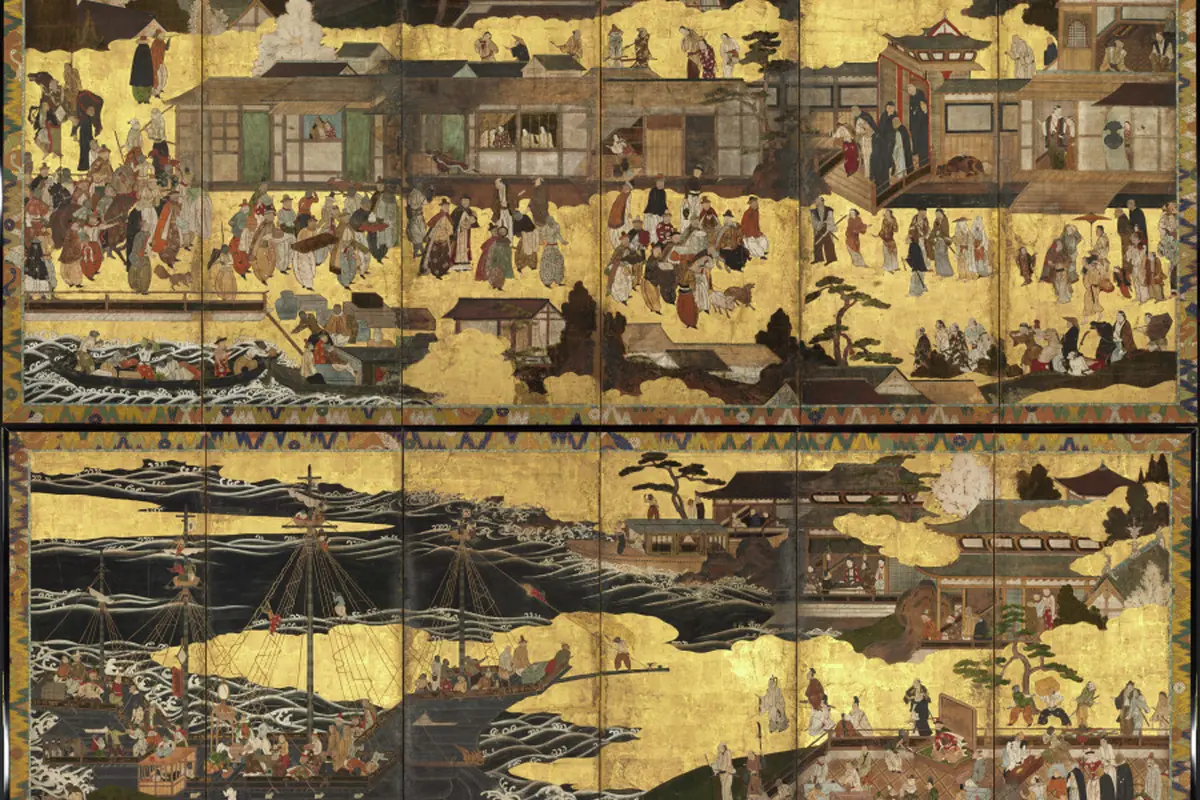
Seas, lakes and rivers hold hundreds of thousands of sites: shipwrecks, sunken ports, flooded villages, objects thrown or lost. The number of wrecks in the world is estimated at more than three million. Most have never been excavated.
This heritage is fragile and increasingly accessible: diving and detection techniques allow looters to reach sites that were previously preserved. Trade in objects from wrecks then enters the art market.
The section presents wrecks, excavations and regulation.
Underwater heritage in figures
Source: OIMAP Heritage Protection Department.
Why protect it
A wreck is a time capsule: a sunken ship carries with it its cargo, its everyday objects, its navigation instruments and, often, its secrets. Underwater conditions sometimes preserve organic materials remarkably well, such as wood or textile, which disappear on land.
If the site is damaged by looting or a poorly conducted excavation, this information is lost for ever. That is why archaeologists consider that underwater heritage should, as a priority, stay in place, with as little intervention as possible.
The applicable law
The 2001 UNESCO Convention on the Protection of the Underwater Cultural Heritage lays down four principles: the obligation to preserve, the preference for in situ conservation, the prohibition of commercial exploitation and cooperation between States. About seventy States have ratified it.
The law of the sea, the sovereignty of the flag State, the rights of the coastal State and the rules of maritime salvage come on top, with tensions at times. OIMAP helps its members to fit these texts together.
The market in wreck objects
Objects from wrecks regularly appear on the market: ceramics, coins, instruments, cannon, tableware. Their origin is often hard to establish, because looters document nothing. The 2001 Convention prohibits their commercialisation, but some States do not recognise it.
OIMAP asks operators for particular vigilance: demand proof of the date and place of discovery, check the excavation permit and refuse objects from protected sites. The BIOP database lists known looting.
A heritage for all
Underwater heritage belongs to humanity. Underwater museums, supervised dive trails and digital exhibitions let the public discover it without destroying it. These initiatives also create jobs and income for coastal communities.
OIMAP supports these projects and encourages States to involve divers, fishers and residents in monitoring: they are often the first to discover or report looting.
Legal framework
| Text | Purpose | Scope |
|---|---|---|
| 2001 UNESCO Convention | Protection of underwater heritage | About 70 States |
| Law of the sea | Competences of States | Universal |
| National laws | Excavation permits | National |
| OIMAP directives | Diligence on provenance | Member States |
Landmarks
- Law of the sea
General framework.
- UNESCO Convention
Adoption.
- Entry into force
Twenty ratifications.
- OIMAP programme
Support to States.
- 12 projects
Excavations and training.
Leave in place
Preservation or exploitation
Preservation
Conserve in place- Protects the context
- Moderate cost
- Access through supervised visits
Principle of the Convention.
Commercial exploitation
Sell the objects- Quick gains
- Destroys information
- Prohibited by the Convention
To be refused.
Acting for a site
- Report
Declare the discovery.
- Protect
Delimit a zone.
- Assess
Carry out an appraisal.
- Decide
Conserve or excavate.
- Showcase
Inform the public.
An operator's reflexes
An underwater archaeologist
« A wreck that is looted is a library that is burned. All the knowledge it contained disappears with the objects. »
Underwater vocabulary
- In situ
- In place, without moving.
- Wreck
- Remains of a sunken ship.
- Flag
- Nationality of a ship.
- Maritime salvage
- Assistance to a ship or its property.
Frequently asked questions
Who owns a wreck?
It depends on the applicable law: flag State, coastal State, shipowner.
Can one dive on a wreck?
Often, but with restrictions.
What to do with an object found?
Declare it to the authorities.
Where can I see the regulation?
See Regulation.
Useful documents
Contacts
Related pages
 Wrecks and submerged sitesTypology of wrecks, scientific value, threats, reporting and management: getting to know submerged remains better.›
 Underwater excavationsWhen and how to excavate underwater: scientific principles, permits, methods, conservation and the role of operators.›
 Regulation of underwater heritageThe texts that protect wrecks and submerged sites: 2001 UNESCO Convention, law of the sea, national laws and operators' obligations.›
See the wrecks
Image credits (19)
- Seven Jeweled Mountain (late 1800s) — Cleveland Museum of Art, CC0 1.0
- Nuova pianta di Roma data in luce da Giambattista Nolli l’anno MDCCXLVII, known as La Pianta Grande di Roma, Giovanni Battista Nolli (1748) — Cleveland Museum of Art, CC0 1.0
- Nuova pianta di Roma data in luce da Giambattista Nolli l’anno MDCCXLVII, known as La Pianta Grande di Roma, Giovanni Battista Nolli (1748) — Cleveland Museum of Art, CC0 1.0
- A Rocky Cove with Fishing Boats, Allart van Everdingen (late 1650s) — Cleveland Museum of Art, CC0 1.0
- Arrival of the "Southern Barbarians" (c. 1600) — Cleveland Museum of Art, CC0 1.0
- River Landscape with Boats, Annibale Carracci (c. 1590) — Cleveland Museum of Art, CC0 1.0
- Dune Scene with Peasant Figures, Willem van de Velde (mid-1650s) — Cleveland Museum of Art, CC0 1.0
- Enjoying the Evening Cool Along the Sumida River, Kitagawa Utamaro (c. 1797–98) — Cleveland Museum of Art, CC0 1.0
- Alpine Landscape: The Handegg, Switzerland, Jean-Léon Gérôme (1850s) — Cleveland Museum of Art, CC0 1.0
- Nuova pianta di Roma data in luce da Giambattista Nolli l’anno MDCCXLVII, known as La Pianta Grande di Roma, Giovanni Battista Nolli (1748) — Cleveland Museum of Art, CC0 1.0
- Ferry Slip, Edwin Kaufman (1927) — Cleveland Museum of Art, CC0 1.0
- Nuova pianta di Roma data in luce da Giambattista Nolli l’anno MDCCXLVII, known as La Pianta Grande di Roma, Giovanni Battista Nolli (1748) — Cleveland Museum of Art, CC0 1.0
- Landscape with Winding Road, Thomas Doughty (1833) — Cleveland Museum of Art, CC0 1.0
- Bridge of Shops, Srinagar, Kashmir, Samuel Bourne (1864) — Cleveland Museum of Art, CC0 1.0
- Small Mosque in the Kaiserbagh, Felice A. Beato (1858) — Cleveland Museum of Art, CC0 1.0
- A Boat That Has for Sails the Wings of a Huge Bird, Filippo Morghen (about 1769) — Cleveland Museum of Art, CC0 1.0
- Fishing Boats along the Beach, Eugène Isabey (c. 1830) — Cleveland Museum of Art, CC0 1.0
- Landscape with the Town on a River and the Cottage between Trees, Hanns Lautensack (1551) — Cleveland Museum of Art, CC0 1.0
- Nuova pianta di Roma data in luce da Giambattista Nolli l’anno MDCCXLVII, known as La Pianta Grande di Roma, Giovanni Battista Nolli (1748) — Cleveland Museum of Art, CC0 1.0