
 Cleveland Museum of Art · CC0 1.0
Pages in this section
 Presentation of the TAOOrigin, mission, values and workings of the OIMAP Arbitral Tribunal, seen from the inside.›
 Composition of the tribunalPresident, council, chambers, Registry and list of arbitrators: who sits on the TAO, how they are chosen and how their independence is guaranteed.›
 Tribunal statisticsActivity, durations, costs and results of the TAO: the essential figures to gauge what awaits you before bringing a case.›
Private justice for a global market
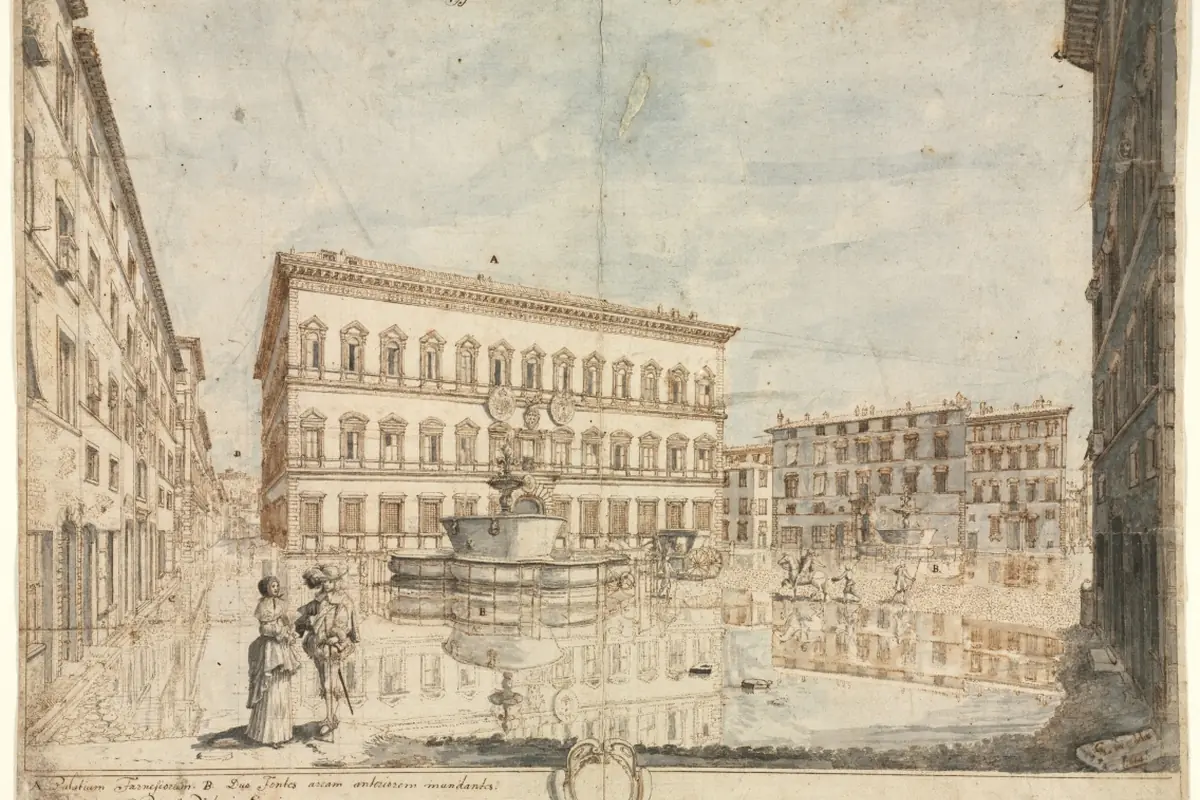
The OIMAP Arbitral Tribunal is an arbitration institution founded in 2011 to meet a simple need: to offer players in the art world a neutral, specialised jurisdiction able to make decisions enforceable anywhere in the world.
It is independent of OIMAP's management, certification departments and decision-making bodies. Its arbitrators are appointed for their competence and commit to strict impartiality.
This page presents its mission, organisation and principles. The following pages detail its presentation, composition and statistics.
Arbitral Tribunal (TAO) in figures
Source: Registry of the OIMAP Arbitral Tribunal.
The tribunal's mission
The TAO settles, through arbitration, disputes relating to works of art, collectors' items and cultural heritage. It rules on the authenticity of a work, its provenance, its restitution and the contracts linked to its trade: sales, deposits, warranties, consignments.
It also offers amicable settlement through mediation. It replaces neither the criminal courts, competent for offences, nor the administrative procedures proper to States.
Organisation and independence
The president of the tribunal, Pr. Henri-Louis Vasseur, chairs a nine-member council that oversees the list of arbitrators and the Rules. The Registry, headed by Me Sofia Ndiaye, administers the cases. No member of the council may sit in a case.
Independence is guaranteed by several rules: written declaration of any relationship with the parties, possibility of challenge, rotation of appointments and a ban on the Organisation giving instructions to the arbitrators.
Principles of procedure
TAO procedure rests on four principles: equality of the parties, the adversarial principle, speed and confidentiality. The parties may choose the language, the applicable law, the number of arbitrators and the seat. Failing that, the Rules provide default solutions.
A procedural timetable is set at the first meeting and may be adjusted. An expedited procedure is provided for disputes below €250,000, with a sole arbitrator and an award within six months.
The TAO contributes to confidence in the market by offering a clear outcome to disagreements. It delivers its awards within controlled time limits and publishes an anonymised version when the parties authorise it.
It also works with bar associations, chambers of commerce and universities to train people in the specifics of art law, and publishes an activity report each year.
A tribunal open to all
The TAO handles disputes between major market players as well as private individuals' cases. A sliding scale and funding assistance of up to fifty percent of costs make arbitration accessible to small parties.
Parties who are unfamiliar with the procedure may seek the Registry's advice, which gives no legal consultation but explains the stages, time limits and forms.
Tribunal key figures
| Indicator | 2023 | 2024 |
|---|---|---|
| Requests registered | 188 | 212 |
| Awards made | 151 | 169 |
| Average duration | 11 months | 11 months |
| Agreements in mediation | 64% | 66% |
Milestones
- Creation
First rules.
- List of arbitrators
Opening to 60 nationalities.
- Expedited procedure
Six months.
- Remote hearings
Secure videoconferencing.
- Online request
Digital filing.
Confidentiality
Sole arbitrator or tribunal of three
Sole arbitrator
Faster- Eight months on average
- Reduced costs
- Suited to medium disputes
Expedited procedure possible.
Three arbitrators
More collegial- Fourteen months on average
- Collective decision
- Suited to complex disputes
Recommended for major disputes.
Entering the procedure
- Read
Consult the Rules.
- Check
Check the clause.
- File
Send the request.
- Respond
Respondent's answer.
- Plead
Hearing and award.
What the tribunal guarantees
A collector
« I feared a long public trial. In reality, everything took place discreetly and in under a year. »
Vocabulary of the tribunal
- Chamber
- Specialised panel of the tribunal.
- Registry
- Administrative department of the tribunal.
- Challenge
- Request to remove an arbitrator.
- Seat
- Legal place of the arbitration.
Frequently asked questions
Is the TAO linked to certification?
It examines appeals, but remains independent.
Who pays for the arbitration?
The parties, according to the scale.
Can one choose one's arbitrator?
Yes, from the list or outside it by agreement.
Where can I see the figures?
See TAO statistics.
Useful documents
Contacts
Related pages
 Presentation of the TAOOrigin, mission, values and workings of the OIMAP Arbitral Tribunal, seen from the inside.›
 Composition of the tribunalPresident, council, chambers, Registry and list of arbitrators: who sits on the TAO, how they are chosen and how their independence is guaranteed.›
 Tribunal statisticsActivity, durations, costs and results of the TAO: the essential figures to gauge what awaits you before bringing a case.›
Read the presentation
Image credits (19)
- The Antechamber of the Palace of Justice, Paris, Charles Meryon (1855) — Cleveland Museum of Art, CC0 1.0
- The Pyramid of Cestius, Rome, Michiel van Overbeek (c. 1650–80) — Cleveland Museum of Art, CC0 1.0
- Sketches in Belgium and Germany, Volume I: Hall of Justice of the Magistrates du Franc, Bruges, Louis Haghe (1840) — Cleveland Museum of Art, CC0 1.0
- The Grotto of Posillipo, Hubert Robert (c. 1769) — Cleveland Museum of Art, CC0 1.0
- Eighteen Views of Rome: The Piazza Farnese (recto), Lievin Cruyl (1664) — Cleveland Museum of Art, CC0 1.0
- Coronation of the Virgin, Christoffel Jegher (1632–36) — Cleveland Museum of Art, CC0 1.0
- The Judgment of Solomon and Esther before Ahasuerus (pair), Dirk Vellert (c. 1530) — Cleveland Museum of Art, CC0 1.0
- Capriccio: A Palace with a Courtyard by the Lagoon, Antonio Canaletto (c. 1750–55) — Cleveland Museum of Art, CC0 1.0
- The Calumny of Apelles, Giorgio Ghisi (1560) — Cleveland Museum of Art, CC0 1.0
- The Dance at the Court of Herod, Israhel van Meckenem (c. 1500) — Cleveland Museum of Art, CC0 1.0
- Dr. James Stuart; Mary Campbell Stuart, Gilbert Stuart (c. 1815) — Cleveland Museum of Art, CC0 1.0
- Sketch of the Labyrinth of the Villa Pisani, Francesco Guardi (1773–1778(?)) — Cleveland Museum of Art, CC0 1.0
- The Old Market, Cleveland, Frank Wilcox (1920) — Cleveland Museum of Art, CC0 1.0
- Portrait of John VIII Palaoelogus, Emperor of Constantinople, 1424-1428 (reverse), Pisanello (c. 1438–1439) — Cleveland Museum of Art, CC0 1.0
- Temple of Athene Nike. Venus Victrix—Wingless Victory, Dimitrios Constantin (c. 1850s–60s) — Cleveland Museum of Art, CC0 1.0
- Egypt and Nubia, Volume I: The Great Temple of Aboo-Simble, Nubia, Louis Haghe (1846) — Cleveland Museum of Art, CC0 1.0
- The Apotheosis of Romulus: Design for a Ceiling, Domenico Maria Canuti (c. 1675–76) — Cleveland Museum of Art, CC0 1.0
- Small Mosque in the Kaiserbagh, Felice A. Beato (1858) — Cleveland Museum of Art, CC0 1.0
- The Doge's Palace, Venice, Richard Parkes Bonington (1826) — Cleveland Museum of Art, CC0 1.0