
 Cleveland Museum of Art · CC0 1.0
Pages in this section
 AgendaThe items entered on the agenda of the 19th General Assembly, published 60 days before the opening in Singapore.›
 Session documentsReports, draft resolutions, accounts and information notes of the General Assembly, posted online 30 days before the opening.›
 ResolutionsThe decisions adopted by the General Assembly: adoption procedure, legal scope, follow-up of implementation and consultation of the compendium.›
The supreme body of the Organisation
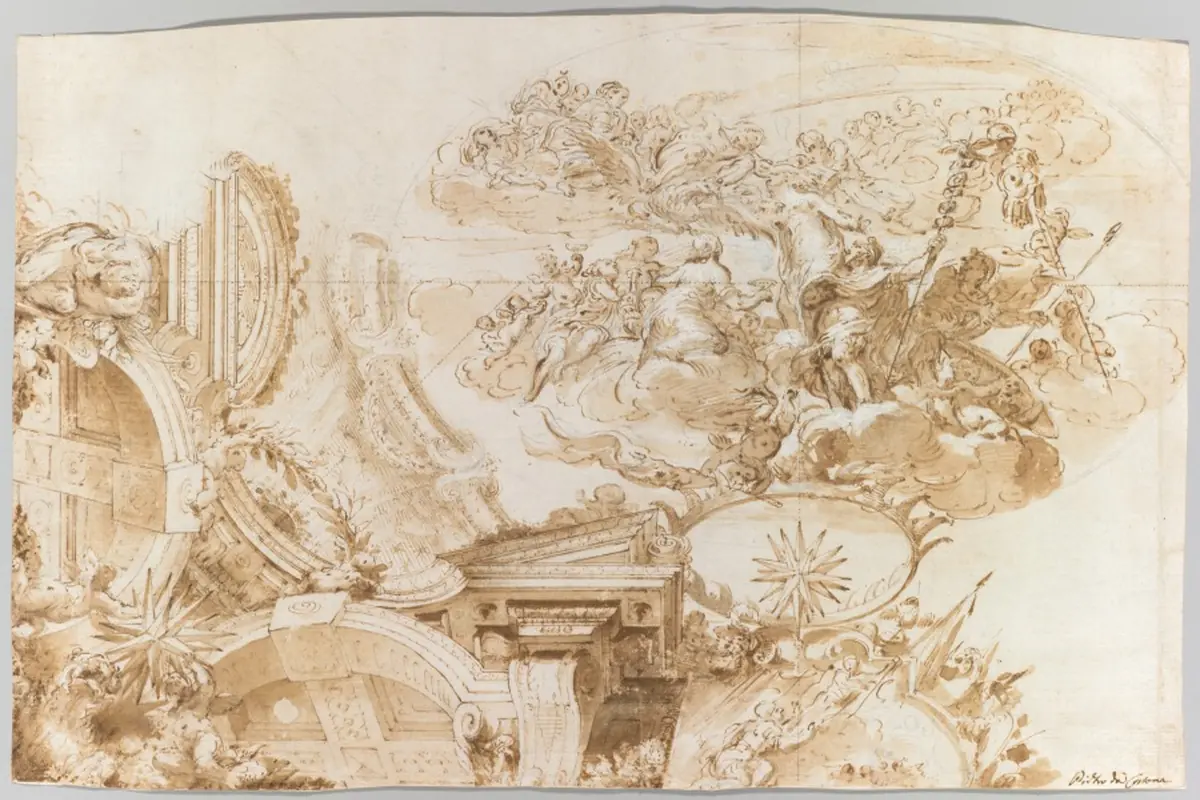
The General Assembly brings together the 67 Member States of OIMAP. Each State has one vote, whatever its size or its place in the art market. The Assembly sets the Organisation's direction, votes the budget, elects its bodies and adopts the resolutions that bind States. The 19th session takes place in Singapore from 10 to 12 June 2026.
The proceedings are prepared several months in advance by the General Secretariat and the Bureau of the Assembly. The agenda is published 60 days before the opening, and the session documents 30 days before.
This section presents the agenda, the documents and the resolutions.
The General Assembly in figures
Source: Events and Communications Directorate.
Three pages
The role of the Assembly
The General Assembly is the body where OIMAP policy is decided. It examines the Secretary-General's activity report, approves the accounts, sets the work programme and the budget for the following period, and elects the members of the Council. It may also create subsidiary bodies, such as a working group on a specific subject.
States exercise equal power there. One vote per State means that a small importing country carries as much weight as a major market centre: this is a founding principle, laid down in 2007 by the twenty-three pioneer States.
How a session unfolds
A session lasts three days. The first day is devoted to the opening, the verification of credentials and the adoption of the agenda. The second is divided between plenary sessions and committees. The third is reserved for votes, the closing and the presentation of the restoration and collector awards.
Observers — international organisations, professional associations, universities — follow the debates without a vote. The session is interpreted into French, English and Spanish.
Taking a decision
The Rules of Procedure favour consensus. When consensus cannot be reached, the resolution is adopted by a two-thirds majority of the States present and voting. This rule protects minorities while allowing the Organisation to move forward on texts that are legally binding on States.
Each vote is recorded in the minutes. States may submit a declaration of interpretation, which appears as an annex to the resolution concerned.
Preparation by the Secretariat
The General Secretariat prepares the session for nearly a year. It gathers proposals from States, consults the technical committees, drafts the draft resolutions and organises the logistics: reception of delegations, interpretation, security, accessibility. The Events and Communications Directorate coordinates everything with the host country.
Delegations receive a practical guide: travel formalities, recommended accommodation, detailed schedule, and the procedure for accrediting delegates and accompanying experts.
Schedule of a session
| Stage | Deadline | Responsible body |
|---|---|---|
| Convocation and proposals from States | About 6 months before | General Secretariat |
| Publication of the agenda | 60 days before | Bureau |
| Documents posted online | 30 days before | General Secretariat |
| Session and votes | 3 days | Assembly |
Milestones
- Foundation
First Assembly of the 23 pioneer States.
- Opening to observers
Associations and universities admitted.
- Live broadcast
Plenary sessions broadcast.
- 19th session
Singapore, 10–12 June.
One vote per State
Delegate or observer
Delegate
Represents a State- Right to vote
- Speaking in plenary
- Credentials to be presented
For Member States.
Observer
Follows the proceedings- No vote
- Access to public sessions
- Prior accreditation
For partners and the informed public.
Taking part in a session
- Get accredited
Submit credentials or the observer application.
- Browse
Read the agenda and the documents.
- Prepare
Determine the delegation's position.
- Speak
Register in advance on the list of speakers.
- Follow
View the adopted resolutions.
Before leaving for Singapore
A delegate
« The one-vote-per-State rule allowed us to make our position heard on the circulation of archaeological objects, in the face of major market centres. »
Assembly vocabulary
- Credentials
- Document appointing the delegates of a State.
- Quorum
- Minimum number of States required to deliberate.
- Resolution
- Text adopted by the Assembly.
- Bureau
- Body that directs the proceedings of the session.
Following the Assembly remotely
Plenary sessions are broadcast live and recorded. The recordings are then added to the OIMAP video library. States that cannot send a full delegation may take part in committees remotely, without exercising their vote.
The public can consult the adopted resolutions, the record of decisions and the opening speeches in this section, once they have been validated by the Bureau.
Frequently asked questions
Who can vote?
The 67 Member States, with one vote each.
Can the public attend?
Public sessions, with accreditation.
When are the documents published?
30 days before the opening.
Where can I read the texts?
See Resolutions.
Useful documents
Contacts
Related pages
 ActivitiesEvents, conferences, publications, media, prizes, exhibitions and the sales calendar: the public life of OIMAP throughout the year.›
 AgendaThe items entered on the agenda of the 19th General Assembly, published 60 days before the opening in Singapore.›
 Session documentsReports, draft resolutions, accounts and information notes of the General Assembly, posted online 30 days before the opening.›
 ResolutionsThe decisions adopted by the General Assembly: adoption procedure, legal scope, follow-up of implementation and consultation of the compendium.›
View the agenda
Image credits (23)
- Coronation of the Virgin, Christoffel Jegher (1632–36) — Cleveland Museum of Art, CC0 1.0
- The Dance at the Court of Herod, Israhel van Meckenem (c. 1500) — Cleveland Museum of Art, CC0 1.0
- The Victory Banquet: from Battle Scenes of the Quelling of Rebellions in the Western Regions, with Imperial Poems (c. 1765–74; poem dated 1760) — Cleveland Museum of Art, CC0 1.0
- Capriccio: A Palace with a Courtyard by the Lagoon, Antonio Canaletto (c. 1750–55) — Cleveland Museum of Art, CC0 1.0
- The Apotheosis of Romulus: Design for a Ceiling, Domenico Maria Canuti (c. 1675–76) — Cleveland Museum of Art, CC0 1.0
- Portrait of a Woman, Anna Claypoole Peale (1820) — Cleveland Museum of Art, CC0 1.0
- Portrait of John VIII Palaoelogus, Emperor of Constantinople, 1424-1428 (reverse), Pisanello (c. 1438–1439) — Cleveland Museum of Art, CC0 1.0
- Nowshera, Kashmir (number 1000), Samuel Bourne (1864) — Cleveland Museum of Art, CC0 1.0
- Portrait of a Man, Possibly Sir Soulden Lawrence, John I Smart (1770) — Cleveland Museum of Art, CC0 1.0
- Maharaja of Kotah Listening to Music and Watching Dancers (c. 1820) — Cleveland Museum of Art, CC0 1.0
- Pair of Drawings: Sketch of the Labyrinth of the Villa Pisani and Piazza San Marco with Doges' Palace, Francesco Guardi (1773–1778(?)) — Cleveland Museum of Art, CC0 1.0
- Egypt and Nubia, Volume I: The Great Temple of Aboo-Simble, Nubia, Louis Haghe (1846) — Cleveland Museum of Art, CC0 1.0
- Portrait of a Woman, John I Smart (c. 1772) — Cleveland Museum of Art, CC0 1.0
- The Pyramid of Cestius, Rome, Michiel van Overbeek (c. 1650–80) — Cleveland Museum of Art, CC0 1.0
- Small Mosque in the Kaiserbagh, Felice A. Beato (1858) — Cleveland Museum of Art, CC0 1.0
- The Grotto of Posillipo, Hubert Robert (c. 1769) — Cleveland Museum of Art, CC0 1.0
- Portrait of a Woman, Agnolo Bronzino (c. 1550) — Cleveland Museum of Art, CC0 1.0
- Temple of Athene Nike. Venus Victrix—Wingless Victory, Dimitrios Constantin (c. 1850s–60s) — Cleveland Museum of Art, CC0 1.0
- Twilight in the Wilderness, Frederic Edwin Church (1860) — Cleveland Museum of Art, CC0 1.0
- Roman Ruins, Villa Pamfili, Hubert Robert (1774) — Cleveland Museum of Art, CC0 1.0
- Sketch of the Labyrinth of the Villa Pisani, Francesco Guardi (1773–1778(?)) — Cleveland Museum of Art, CC0 1.0
- Self-Portrait, John I Smart (1802) — Cleveland Museum of Art, CC0 1.0
- Architectural Conference (c. 1622) — Cleveland Museum of Art, CC0 1.0