
 Cleveland Museum of Art · CC0 1.0
One page to recognise an object
Each identification sheet fits on a double-sided page. It presents a type of property — mask, statuette, coin, manuscript, mosaic fragment — with photographs, the essential features, false leads, indicative prices and the action to take.
The 142 sheets are classified in nine categories. They are written with experts and tested by officers. They are available in three languages, in paper, PDF and application versions.
This page describes their structure, their use and their development.
Identification sheets in figures
Source: OIMAP Heritage Protection Department.
Structure of a sheet
Each sheet comprises a banner (name of the property, period, region), reference photographs, a box "To recognise" listing the main criteria, a box "Not to be confused with" flagging common copies, indications of price and documents, and a box "What to do" with the action to take.
A QR code links to the BIOP database to display the corresponding alerts. The sheets are designed to be read in under two minutes.
Using a sheet in the field
Faced with a suspect object, the officer identifies the category, opens the sheet, compares the criteria and decides whether to seize or ask for an opinion. The most used sheets concern archaeological objects, masks, statuettes, coins and manuscripts.
An officer can also photograph the object with the application and obtain a suggested sheet, which displays the criteria to check. This function does not replace an expert's opinion but speeds up sorting.
Contributing and updating
The sheets are revised every two years, or sooner if new trends emerge. Officers can propose corrections and additions through the application or via their referent. States may request the creation of sheets for property specific to their heritage.
In 2024, twenty-four sheets were revised or created, notably on objects from South-East Asia, ancient musical instruments and liturgical objects. Each change is validated by an editorial committee.
Sheets and training
The sheets are at the heart of the training modules: trainees learn to read them, to complete them and to use them in exercises. Trainers use them as a medium to get across a type of property in a few minutes.
They are also used to raise awareness among other professions: police officers, magistrates, market operators, freight forwarders. Several sheets are published in these professions' guides.
Examples of sheets
| Sheet | To recognise | Not to be confused with |
|---|---|---|
| Mesopotamian cylinder seal | Stone engraved in intaglio, small format | Modern resin imitations |
| Central African mask | Internal wear, patina of use | Recent trade masks |
| Ancient coin | Strike, weight, patina | Museum reproductions |
| Illuminated manuscript | Script, parchment, binding | Facsimiles |
| Cycladic statuette | Marble, pared-down forms | Tourist copies |
Landmarks
- First sheets
40 sheets.
- 142 sheets
Complete series.
- Application
Mobile version.
- Image recognition
Suggested sheet.
A sheet is not a verdict
Paper sheet or digital sheet
Paper
Printing- Usable anywhere
- Robust
- Annual update
For isolated posts.
Digital
Application- High-definition photos
- Image search
- Occasional connection
For equipped officers.
Using a sheet
- Identify
Identify the category.
- Open
Select the sheet.
- Compare
Examine the criteria.
- Check
Consult the BIOP.
- Decide
Hold or release.
In the officer's kit
A customs officer
« I recognised a cylinder seal thanks to the sheet: it looked like a decorated pebble. It was identified as coming from a looted museum. »
Vocabulary of sheets
- Identification sheet
- Aid to recognising a type of property.
- Cylinder seal
- Small engraved cylinder used as a seal.
- Facsimile
- Faithful reproduction.
- QR code
- Two-dimensional barcode.
Frequently asked questions
Are the sheets public?
A sample is; the whole set is reserved for officers.
Can I propose a sheet?
Yes, through your referent.
How many languages?
Three.
Where can I find the application?
From the State's customs correspondent.
Useful documents
Contacts
Related pages
 Customs guideCustoms codes, identification sheets and training: everything customs officers need to spot cultural property at the border.›
 Customs codes and cultural propertyHow to classify cultural property in the customs nomenclature, spot misleading descriptions and apply the appropriate checks.›
 Alerts by type of propertyPaintings, sculptures, archaeological objects, tribal art, books and manuscripts: alerts classified by kind of property to target your vigilance.›
See the training
Image credits (16)
- Landscape with Saint John the Baptist, Herri met de Bles (c. 1540) — Cleveland Museum of Art, CC0 1.0
- Mercury (Budha), from a Mandi Astrology Series, Sanju (c. 1810) — Cleveland Museum of Art, CC0 1.0
- Sketchbook, The Dells, N° 127, page 090 & 91: Harbor with a Road, Maurice Prendergast (c. 1919–1921) — Cleveland Museum of Art, CC0 1.0
- Arrival of the "Southern Barbarians" (c. 1600) — Cleveland Museum of Art, CC0 1.0
- Sailing Vessels: Armed Four-Master Putting Out to Sea, Pieter Bruegel (1561–65) — Cleveland Museum of Art, CC0 1.0
- Chemin de fer de Toulouse à Bayonne. Pont de l'Aran (en trois arches de 17m d'ouverture chacune). Situation des travaux au 21 juillet 1861, Édouard Baldus (1861) — Cleveland Museum of Art, CC0 1.0
- Fishing Boats along the Beach, Eugène Isabey (c. 1830) — Cleveland Museum of Art, CC0 1.0
- Seven Jeweled Mountain (late 1800s) — Cleveland Museum of Art, CC0 1.0
- Return of the Fishing Boats at Collioure, near the Spanish Border, Adolphe Appian (1878) — Cleveland Museum of Art, CC0 1.0
- The Triumph of Mordecai, Lucas van Leyden (1515) — Cleveland Museum of Art, CC0 1.0
- Whitby Harbor, Frank Meadow Sutcliffe (c. 1885) — Cleveland Museum of Art, CC0 1.0
- Architectural Conference (c. 1622) — Cleveland Museum of Art, CC0 1.0
- S. Giorgio Maggiore, Michele Marieschi (1741) — Cleveland Museum of Art, CC0 1.0
- Seal Color Box (1662–1722) — Cleveland Museum of Art, CC0 1.0
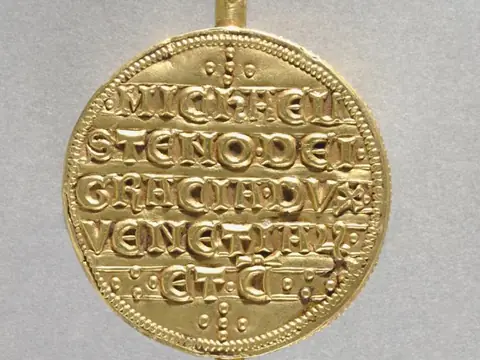
- Seal of Doge Michele Steno (reverse) (1400–1409) — Cleveland Museum of Art, CC0 1.0
- Nuova pianta di Roma data in luce da Giambattista Nolli l’anno MDCCXLVII, known as La Pianta Grande di Roma, Giovanni Battista Nolli (1748) — Cleveland Museum of Art, CC0 1.0