
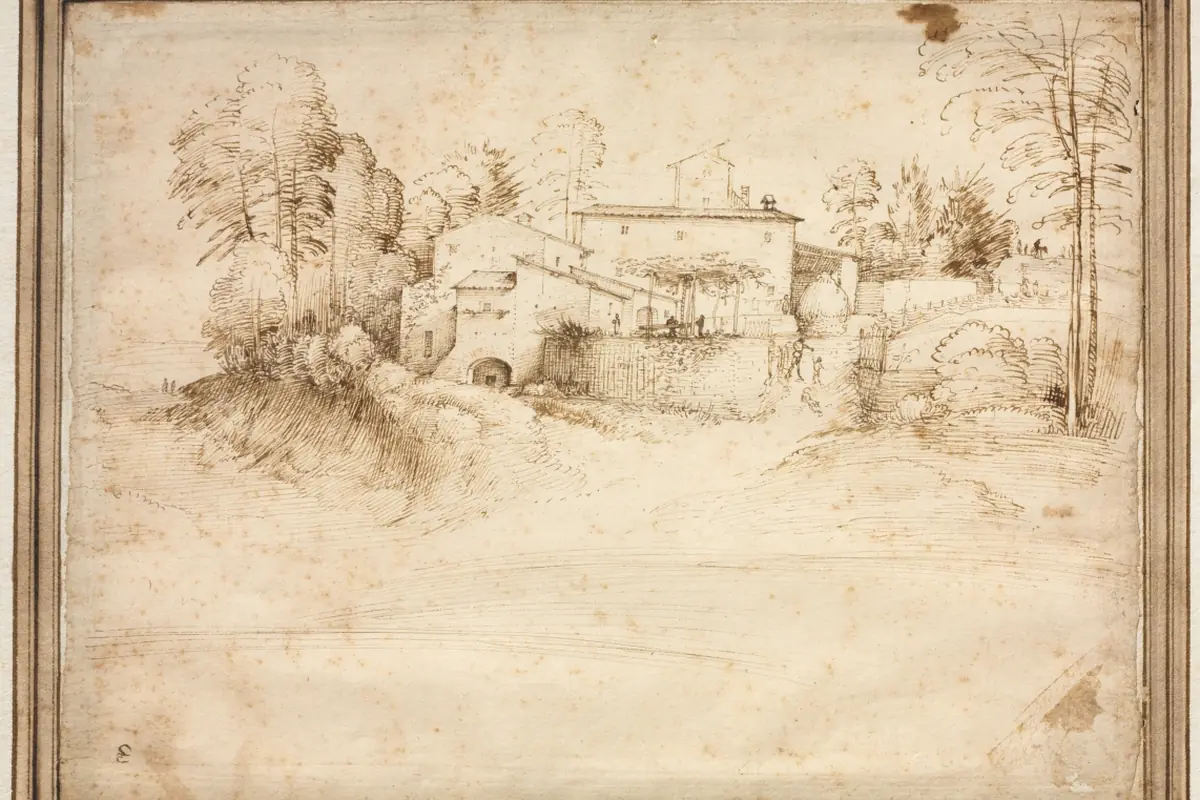
 Cleveland Museum of Art · CC0 1.0
Why common principles
Trust in a certificate depends less on the paper than on the rules governing its issue. Five principles apply to each file, in every Member State.
These principles derive from Directive No. 2019-07 and the experts' code of ethics. They are monitored by the certification committee and may be invoked by any declarant.
They answer three risks known to the market: complacent expertise, a break in the chain of provenance and the circulation of works of illicit origin.
The principles in figures
The five principles
 1Independence
The expert has no financial or personal link with the work or the declarant.
 2Traceability
Each step, each analysis and each source is recorded in the file.
 3Reasoned opinion
Every opinion, favourable or not, is reasoned in writing and verifiable.
 4Proportionality
The analyses undertaken are suited to the work, its value and what is at stake.
 5Mutual recognition
An OIMAP certificate is accepted by the 67 Member States.
The expert's independence
The expert is appointed by the Secretariat, never chosen by the declarant. They are drawn by lot within their specialty from among the available experts.
Before accepting, they declare in writing any conflict of interest: family tie, commercial relationship, holding works by the artist, earlier assignment on the same work. The declarant has 5 days to request their reasoned recusal.
A principle without exception
End-to-end traceability
Each file is a log: dates, participants, samples, laboratory results, documents consulted. Nothing is deleted; corrections are added without erasing.
This log is kept in the Registry for the whole life of the work. It makes it possible to reconstruct, years later, why a certificate was issued.
How the principle of reasoned opinion applies
- Finding
The expert describes what they observe: materials, technique, signatures, condition.
- Comparison
They compare the work with documented references: catalogues raisonnés, archives, autograph works.
- Analysis
They interpret the laboratory results and indicate their limits.
- Conclusion
They conclude with a degree of certainty: authentic, attributed, workshop, school, not authentic, undetermined.
The degrees of conclusion of an opinion
| Conclusion | Meaning | Effect |
|---|---|---|
| Authentic | The work is by the hand of the stated artist | Certificate issued |
| Attributed to | Strong presumptions, without decisive proof | Certificate with reasoned reservation |
| Workshop or school | Made by the artist's circle or in the style | Certificate of a different nature |
| Not authentic | The evidence contradicts the attribution | Reasoned refusal, entered in the file |
| Undetermined | Insufficient evidence at this stage | Supplements or analyses requested |
How the principles came to be established
- Independence
Ban on expertise paid by the seller in the founding States.
- Traceability
Creation of the file log entered in the Registry.
- Reasoned opinion
Directive No. 2019-07 makes the reasoned opinion mandatory.
- Recognition
Extension of mutual recognition to the 67 Member States.
What an OIMAP certificate guarantees… and what it does not
It guarantees
At the date of issue- A controlled, independent method
- Sources and analyses open to consultation
- A verifiable entry in the Registry
Solid documentary assurance.
It does not guarantee
In absolute terms- A market value
- That no new fact will arise
- The right to travel without a licence in every country
Hence the complementary acts: title, licence, approval.
A principle of caution
« An expert who is not sure must say so. Indetermination is not a failure: it is information. »
Case study: a conflict of interest discovered
A recusal accepted
A collector files a case for a landscape attributed to a 19th-century painter. The appointed expert had, years earlier, advised on the sale of a neighbouring painting by the same artist.
- The collector reports the link within 5 days.
- The Secretariat checks the expert's declaration of interests.
- Another expert is drawn by lot and takes over the file.
The timeframe is extended by two weeks; the certificate is issued with no possible challenge on independence.
Your rights in the procedure
Vocabulary of the principles
- Challenge
- Reasoned request to replace an expert.
- File log
- Dated history of all actions and documents in the file.
- Degree of certainty
- Level of conclusion expressed by the expert in their opinion.
- Mutual recognition
- Acceptance by each Member State of certificates issued by OIMAP.
Frequently asked questions
Can I choose my expert?
No. The expert is appointed by lot within their specialty, to guarantee independence.
Is the opinion confidential?
The file is confidential. Only the certificate, or its refusal entered in the Registry as the case may be, is enforceable against third parties.
What if the opinion is contested by a third party?
The third party may refer to the Arbitral Tribunal. The certificate remains valid until a decision.
Do the principles apply to digital certifications?
Yes. They rest on a paper certificate issued under the same conditions.
Contacts
Related pages
 ProcessFrom creating the account to issue of the certificate: the complete course of a certification application, with timeframes and statuses.›
 Code of ethicsThe ten principles binding on accredited experts: independence, impartiality, confidentiality, competence, prudence and transparency.›
 ArbitrationThe OIMAP Arbitral Tribunal (TAO) settles art and heritage disputes: authenticity, provenance, restitution and contracts, through arbitration or mediation.›
Going further
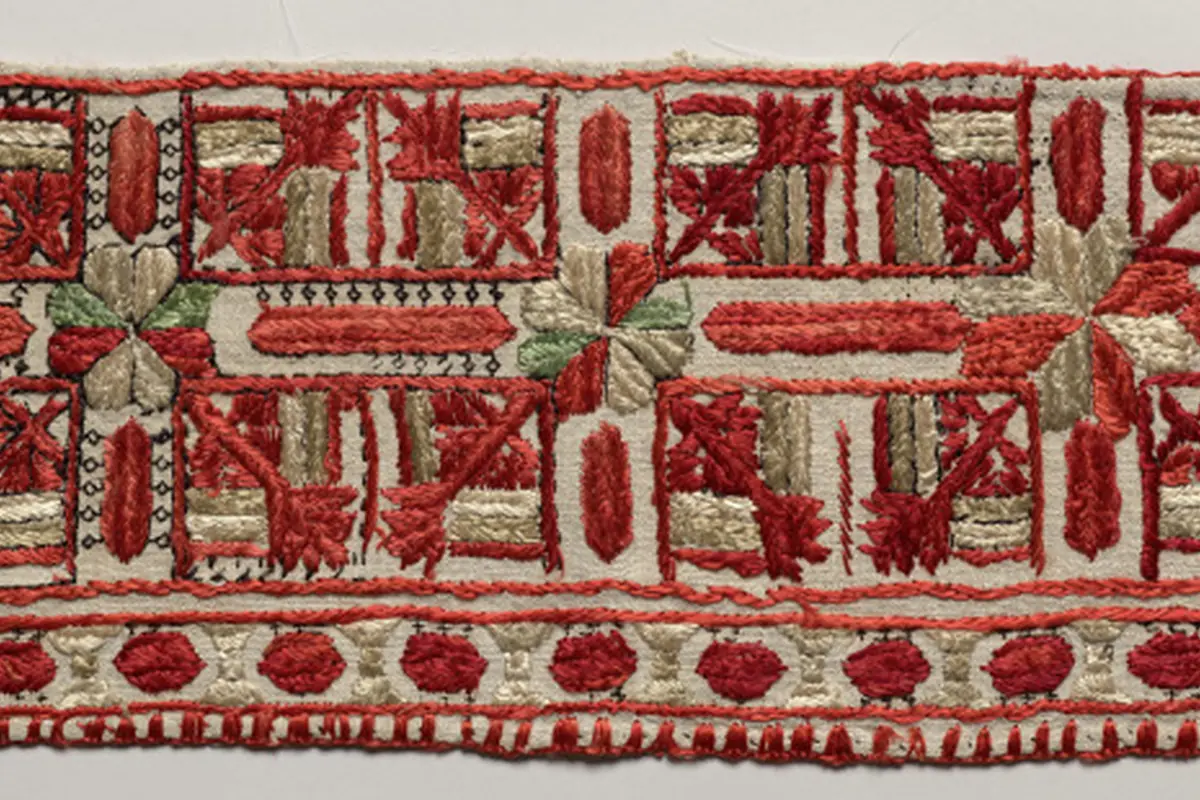
Image credits (21)
- Farmhouse on the Slope of a Hill, Fra Bartolommeo (c. 1508) — Cleveland Museum of Art, CC0 1.0
- Letter Box, Ogata Kōrin (1700s) — Cleveland Museum of Art, CC0 1.0
- Lace Towel End (c. 1700s–1800s) — Cleveland Museum of Art, CC0 1.0
- Adoration of the Shepherds, Bernardo Cavallino (c. 1650) — Cleveland Museum of Art, CC0 1.0
- Bidri Hookah Bowl with Roses (c. 1650s) — Cleveland Museum of Art, CC0 1.0
- Sweet Melancholy, Joseph-Marie Vien (1756) — Cleveland Museum of Art, CC0 1.0
- Saint Jerome and the Lion (From the former Church of St. Peter in Erfurt), Tilman Riemenschneider (c. 1495) — Cleveland Museum of Art, CC0 1.0
- Sports on a Frozen River, Aert van der Neer (ca. 1660) — The Metropolitan Museum of Art, CC0 1.0
- Gathering among the Members of Office Censor-General (1700s) — Cleveland Museum of Art, CC0 1.0
- Carnet (1863–1865) — Cleveland Museum of Art, CC0 1.0
- Edge of the Woods Near L'Hermitage, Pontoise, Camille Pissarro (1879) — Cleveland Museum of Art, CC0 1.0
- The Departure of Saints Paula and Eustochium for the Holy Land, Giuseppe Bottani — The Metropolitan Museum of Art, CC0 1.0
- Portrait of a Man, Gustave Caillebotte (1880) — Cleveland Museum of Art, CC0 1.0
- Seal of Doge Michele Steno (reverse) (1400–1409) — Cleveland Museum of Art, CC0 1.0
- The Four Seasons, Kano Tan’yū (1668) — Cleveland Museum of Art, CC0 1.0
- The Brook, Paul Cezanne (c. 1895–1900) — Cleveland Museum of Art, CC0 1.0
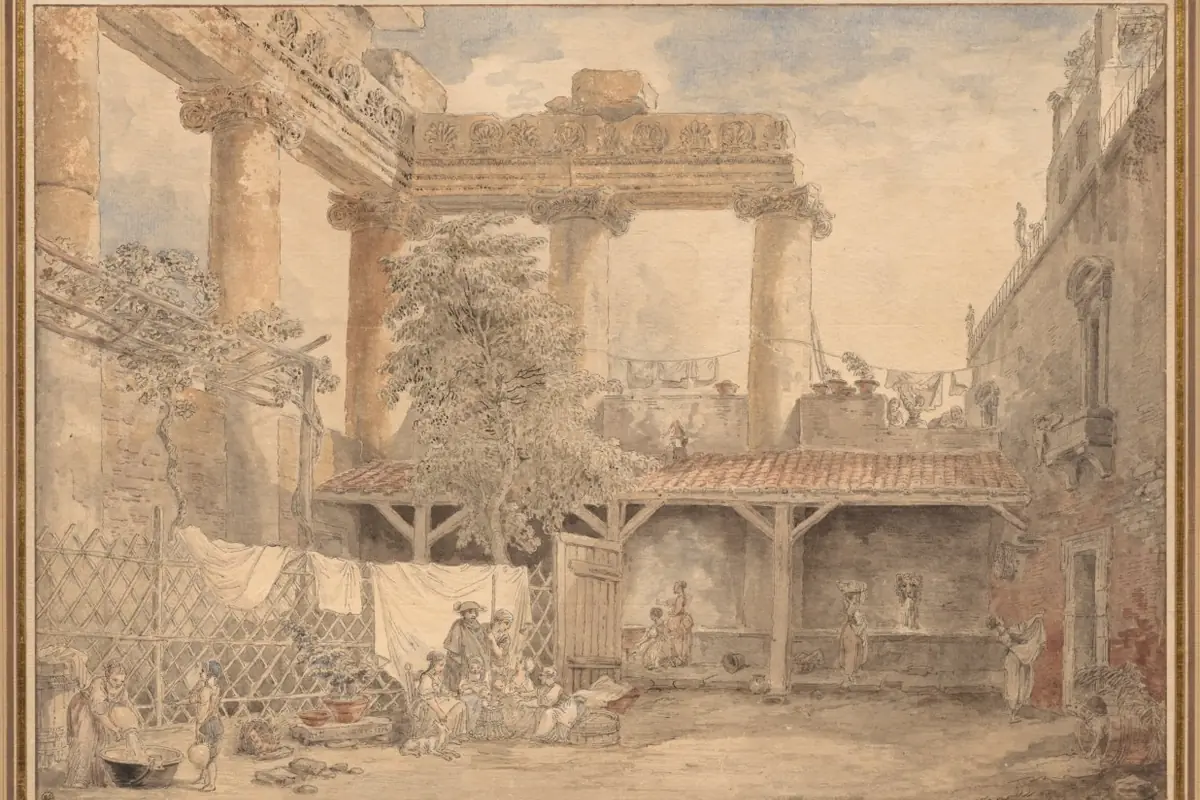
- Roman Ruins, Villa Pamfili, Hubert Robert (1774) — Cleveland Museum of Art, CC0 1.0
- Twilight in the Wilderness, Frederic Edwin Church (1860) — Cleveland Museum of Art, CC0 1.0
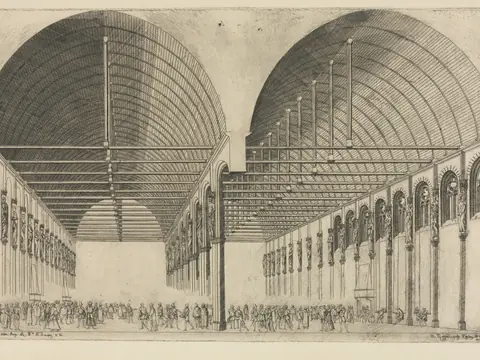
- The Antechamber of the Palace of Justice, Paris, Charles Meryon (1855) — Cleveland Museum of Art, CC0 1.0
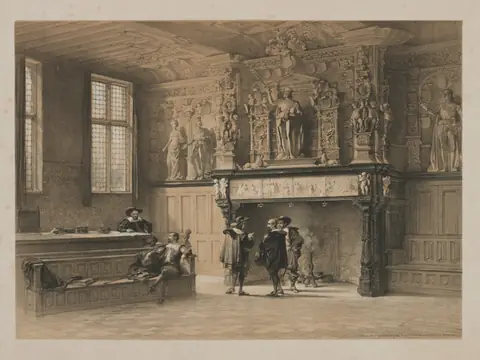
- Sketches in Belgium and Germany, Volume I: Hall of Justice of the Magistrates du Franc, Bruges, Louis Haghe (1840) — Cleveland Museum of Art, CC0 1.0
- Panel (c. 1780–1840) — Cleveland Museum of Art, CC0 1.0