
 Cleveland Museum of Art · CC0 1.0
What the Assembly will debate
The agenda sets the subjects examined during the three days of the session. It is settled by the Bureau, published 60 days before the opening and adopted in session by the delegations. The 19th General Assembly takes place in Singapore from 10 to 12 June 2026.
Any Member State may propose the entry of an item, provided it meets the deadlines and attaches an explanatory note.
The documents linked to each item are available on the documents page.
The agenda in figures
Source: Events and Communications Directorate.
How the agenda is drawn up
The General Secretariat gathers proposals from States, the Council and the technical committees. The Bureau examines them, checks their admissibility and sorts them by theme. An item is admissible if it falls within the Organisation's competence and is accompanied by a note of no more than one page.
The draft agenda is sent to States, which have fifteen days to submit comments before final publication.
The usual items
Each session includes statutory items: opening, verification of credentials, adoption of the agenda, Secretary-General's report, accounts and budget, elections. Substantive questions follow: the fight against trafficking, regulation of online sales, training programmes, restitutions.
Technical items are prepared in committee and presented in plenary for decision. States may request that an item be examined as a priority.
Sessions and their duration
The first day hosts the opening and the statutory items. The second is devoted to the committees, which sit in parallel to examine the draft resolutions. The third brings together the votes, the closing and the awards ceremony.
Speaking time is limited to five minutes per intervention, or ten minutes for a statement on behalf of a group of States. The presiding officer ensures that these limits are respected.
Amending the agenda in session
By a two-thirds majority of the States present and voting, the Assembly may add an urgent item or withdraw an item that has become moot. These changes are entered in the minutes.
An item may also be postponed to the next session when consultations have not been successful. The Bureau then informs all States and publishes the reasons for the postponement.
Structure of the session
| Day | Content | Format |
|---|---|---|
| Day 1 | Opening, credentials, adoption of the agenda | Plenary |
| Day 2 | Examination of draft resolutions | Committees |
| Day 3 | Votes, awards, closing | Plenary |
| Outside sessions | Bilateral meetings, side events | Free |
Milestones
- Call for proposals
States submit their items.
- Review by the Bureau
Admissibility and sorting.
- Publication
Final agenda.
- Opening
Adoption in session.
Deadlines
Plenary or committee
Plenary
All States together- Final votes
- General statements
- Live broadcast
To decide.
Committee
Specialised groups- In-depth debate
- Drafting of texts
- Parallel sessions
To prepare.
Propose an item
- Write
Note of no more than one page.
- Submit
To the General Secretariat.
- Wait
Review by the Bureau.
- Complete
Respond to comments.
- Present
Speak in session.
Proposal note
A member of the Bureau
« A tighter agenda allows for quality debates. We prefer fewer items, better prepared. »
Agenda vocabulary
- Admissibility
- Compliance of a proposal with the rules.
- Statutory item
- Mandatory item of each session.
- Plenary
- Meeting of all States.
- Focal point
- Contact person for an item.
Informing and consulting the public
The agenda is published on this page in French, English and Spanish. A plain-language summary presents the issues of each item, for the benefit of journalists, researchers and art market professionals.
Stakeholders accredited as observers may submit a written contribution before the session. The Secretariat passes it on to the delegations concerned.
Frequently asked questions
Who can propose an item?
Any Member State, the Council and the committees.
Where can I read the agenda?
On this page, 60 days before the opening.
Can it be amended?
Yes, by a two-thirds majority.
Where can I find the texts?
See Documents.
Useful documents
Contacts
Related pages
 General AssemblyThe supreme body of OIMAP: agenda, session documents and resolutions of the 19th General Assembly, in Singapore in June 2026.›
 Session documentsReports, draft resolutions, accounts and information notes of the General Assembly, posted online 30 days before the opening.›
 ResolutionsThe decisions adopted by the General Assembly: adoption procedure, legal scope, follow-up of implementation and consultation of the compendium.›
View the session documents
Image credits (16)
- The Dance at the Court of Herod, Israhel van Meckenem (c. 1500) — Cleveland Museum of Art, CC0 1.0
- Roman Ruins, Villa Pamfili, Hubert Robert (1774) — Cleveland Museum of Art, CC0 1.0
- Coronation of the Virgin, Christoffel Jegher (1632–36) — Cleveland Museum of Art, CC0 1.0
- Portrait of a Man, Louis Lafitte (1793) — The Metropolitan Museum of Art, CC0 1.0
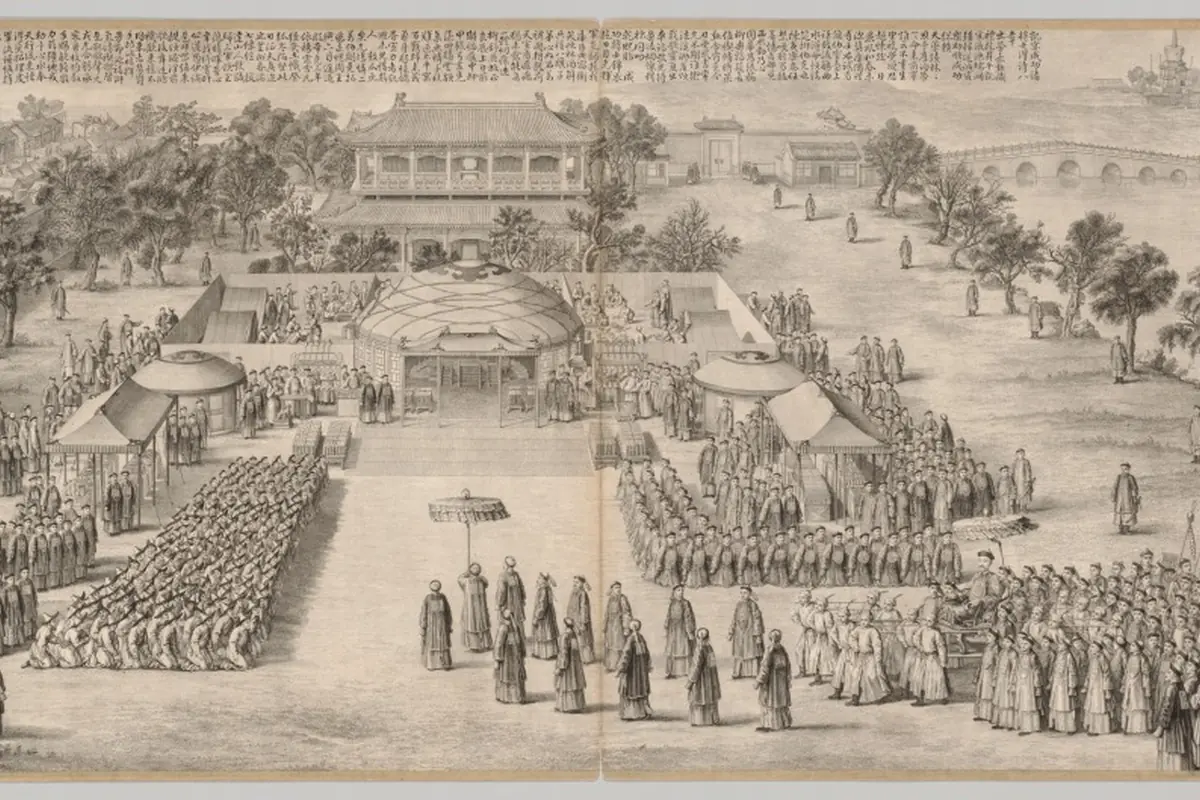
- The Victory Banquet: from Battle Scenes of the Quelling of Rebellions in the Western Regions, with Imperial Poems (c. 1765–74; poem dated 1760) — Cleveland Museum of Art, CC0 1.0
- Eighteen Views of Rome: The Piazza Farnese (recto); Cartouche (verso), Lievin Cruyl (1664) — Cleveland Museum of Art, CC0 1.0
- Portrait of John VIII Palaoelogus, Emperor of Constantinople, 1424-1428 (reverse), Pisanello (c. 1438–1439) — Cleveland Museum of Art, CC0 1.0
- Portrait of a Woman, Corneille de Lyon (c. 1540) — Cleveland Museum of Art, CC0 1.0
- Temple of Ramesses II, Abu Simbel, Antonio Beato (c. 1860s) — Cleveland Museum of Art, CC0 1.0
- A Palace with an Arched Bridge (A Roman Villa), Hubert Robert (1760) — Cleveland Museum of Art, CC0 1.0
- The Doge's Palace, Venice, Richard Parkes Bonington (1826) — Cleveland Museum of Art, CC0 1.0
- Châteauvieux-sur-Suran, Antoine-Claude Ponthus-Cinier (1848) — Cleveland Museum of Art, CC0 1.0
- The Apotheosis of Romulus: Design for a Ceiling, Domenico Maria Canuti (c. 1675–76) — Cleveland Museum of Art, CC0 1.0
- Capriccio: A Palace with a Courtyard by the Lagoon, Antonio Canaletto (c. 1750–55) — Cleveland Museum of Art, CC0 1.0
- Self-Portrait, John I Smart (1802) — Cleveland Museum of Art, CC0 1.0
- Portrait of a Woman, John I Smart (c. 1772) — Cleveland Museum of Art, CC0 1.0