
 Cleveland Museum of Art · CC0 1.0
Pages in this section
 Member countries of the Middle EastThe four Member States of the Middle East, with their year of accession and the means of reaching their focal point.›
 Cooperation in the Middle EastThe framework for cooperation with the four Middle Eastern States: monitoring from Geneva, bodies, partners and exchange channels.›
 Programmes in the Middle EastThe training, heritage protection and market support programmes conducted with the four Middle Eastern States.›
Four States, an exceptional heritage
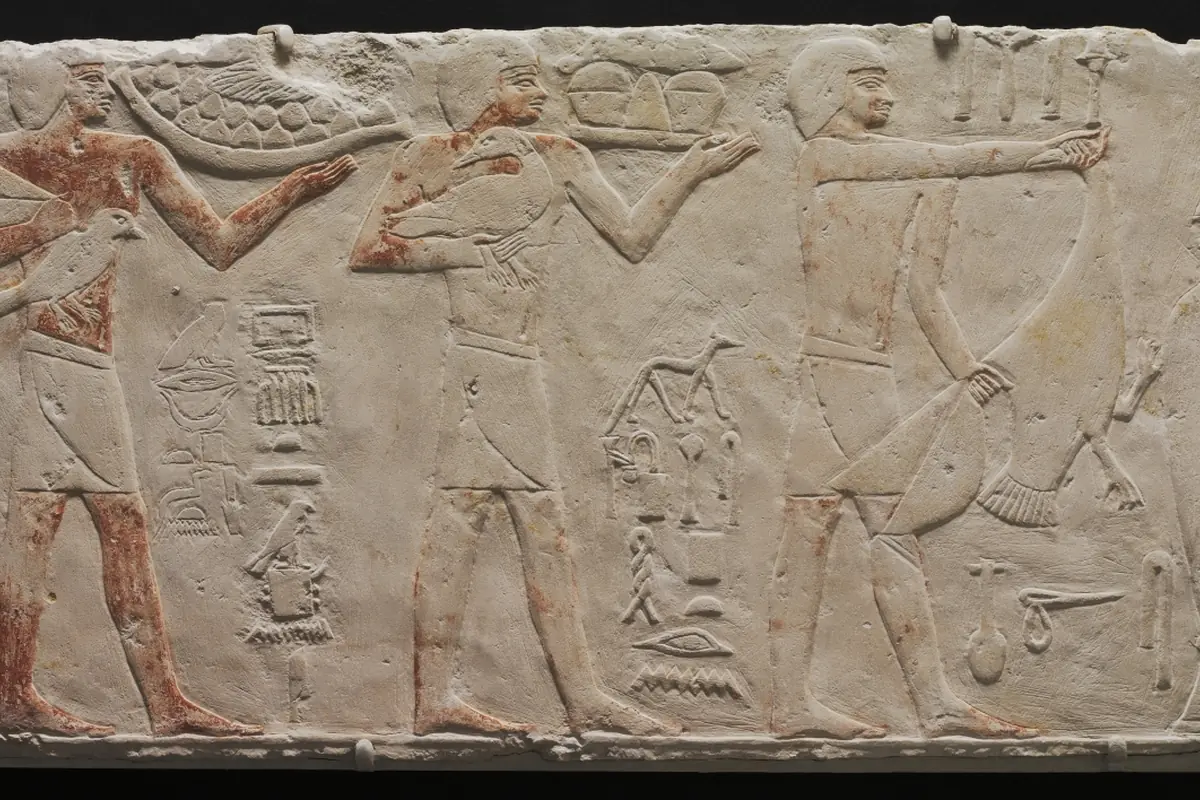
The Middle East has four of OIMAP's 67 Member States: Jordan, a founder in 2007, Lebanon, which joined in 2023, then the United Arab Emirates and Qatar in 2024.
The region accounts for 4% of the world art market, according to reference figures. It is growing strongly and is home to archaeological heritage of the first importance.
It is followed from the Geneva office. This section presents the member countries, cooperation and the programmes.
The Middle East in figures
Source: Member States Relations Directorate.
A region both long-standing and recent
Jordan has been a member since 2007 and is one of the 23 pioneers. For sixteen years, it was the only State in the region within the Organization.
Lebanon joined in 2023, followed by the United Arab Emirates and Qatar in 2024. The region has thus quadrupled its number of members in two years.
Contrasting challenges
The Middle East brings together States whose heritage is exposed to looting and States whose sales markets are developing fast. Protecting sites and regulating sales are therefore two complementary priorities.
The Organization adapts its support to both realities.
Monitoring from Geneva
The region has no office of its own. It is followed by the Geneva office, which liaises with international organizations and supports the focal points of the four States.
This arrangement may change if the number of members in the region increases.
Languages and practices
Exchanges take place in French, in English and, depending on the interlocutors, with the support of Arabic-speaking interpreters. Essential documents are translated for the focal points.
Online meetings are held at times compatible with the region's time zones.
The four Member States
| State | Membership |
|---|---|
| Jordan | 2007 (founder) |
| Lebanon | 2023 |
| United Arab Emirates | 2024 |
| Qatar | 2024 |
Milestones
- Jordan
Founding State.
- Lebanon
First recent accession.
- United Arab Emirates and Qatar
Two accessions in the same year.
- General Assembly
The four States take part in the 19th session.
Close monitoring
Two ways into the section
By country
The four States- Years of accession
- Focal points
- Country Profiles
To learn about a State.
By programme
Regional actions- Cooperation
- Training
- Legal support
To act at regional level.
Explore the section
- Consult
The list of member countries.
- Read
The cooperation page.
- Choose
A regional programme.
- Reach
The national focal point.
- Follow up
The region's meetings.
To prepare an exchange with the region
A delegate from the region
« Monitoring from Geneva allows us to speak directly to international organizations. It is an asset for a region that is still underrepresented. »
Regional vocabulary
- Founder
- Member State since 2007.
- Focal point
- National department designated to liaise with OIMAP.
- Liaison
- Relations with international organizations.
- Integration
- Period following accession.
Relationship with Headquarters
Decisions on accession, scale of contributions or suspension fall to the Organization's bodies in Paris. The Geneva office prepares and supports them.
The three recent accessions are still in their integration period, which justifies close monitoring.
Frequently Asked Questions
How many Middle Eastern States are members?
Four.
Who follows the region?
The Geneva office.
Where can the list be seen?
See Member countries.
When were the most recent accessions?
In 2024, for the United Arab Emirates and Qatar.
Useful Documents
Contacts
Related pages
 Member States67 Member States on five continents: list, regions, membership, focal points, finances, expert network, technical cooperation and member area.›
 Member countries of the Middle EastThe four Member States of the Middle East, with their year of accession and the means of reaching their focal point.›
 Cooperation in the Middle EastThe framework for cooperation with the four Middle Eastern States: monitoring from Geneva, bodies, partners and exchange channels.›
 Programmes in the Middle EastThe training, heritage protection and market support programmes conducted with the four Middle Eastern States.›
See the member countries
Image credits (20)
- Bath Pail (Satl) (c. 1580–1610) — Cleveland Museum of Art, CC0 1.0
- Qur'an Manuscript Folio (800s) — Cleveland Museum of Art, CC0 1.0
- Black-Figure Dinos (Mixing Vessel): Warships (Int.); Heroic Scenes (Top), Antimenes Painter (c. 520–515 BCE) — Cleveland Museum of Art, CC0 1.0
- Incense Burner (1200–1250) — Cleveland Museum of Art, CC0 1.0
- Relief of Three Offering Bearers (c. 2311–2281 BCE) — Cleveland Museum of Art, CC0 1.0
- Peonies (early 1900s) — Cleveland Museum of Art, CC0 1.0
- Wall Tile (1600s) — Cleveland Museum of Art, CC0 1.0
- Temple of Athene Nike. Venus Victrix—Wingless Victory, Dimitrios Constantin (c. 1850s–60s) — Cleveland Museum of Art, CC0 1.0
- Qur'an Manuscript Folio (recto); left side of bifolio (800s) — Cleveland Museum of Art, CC0 1.0
- Red-Figure Column Krater (Mixing Vessel): Komos (Revel), Pig Painter (c. 470–460 BCE) — Cleveland Museum of Art, CC0 1.0
- Luxury Inlaid Container (c. 1250–1350) — Cleveland Museum of Art, CC0 1.0
- Portrait of Raja Jagat Singh of Nurpur (reigned 1618–46), Bichitr (probably 1619) — Cleveland Museum of Art, CC0 1.0
- Wall Tile (1600s) — Cleveland Museum of Art, CC0 1.0
- View of the Gulf of Pozzuoli from Solfatara, Philipp Hackert (1803) — Cleveland Museum of Art, CC0 1.0
- The Apotheosis of Romulus: Design for a Ceiling, Domenico Maria Canuti (c. 1675–76) — Cleveland Museum of Art, CC0 1.0
- View of Venice, Jacopo de' Barbari (1500) — Cleveland Museum of Art, CC0 1.0
- Head of Bearded Banqueter (525–500 BCE) — Cleveland Museum of Art, CC0 1.0
- Wall Tile (1300s) — Cleveland Museum of Art, CC0 1.0
- Talatat: Portrait of Nefertiti (c. 1353–1347 BCE) — Cleveland Museum of Art, CC0 1.0
- Jug (late 900s) — Cleveland Museum of Art, CC0 1.0