
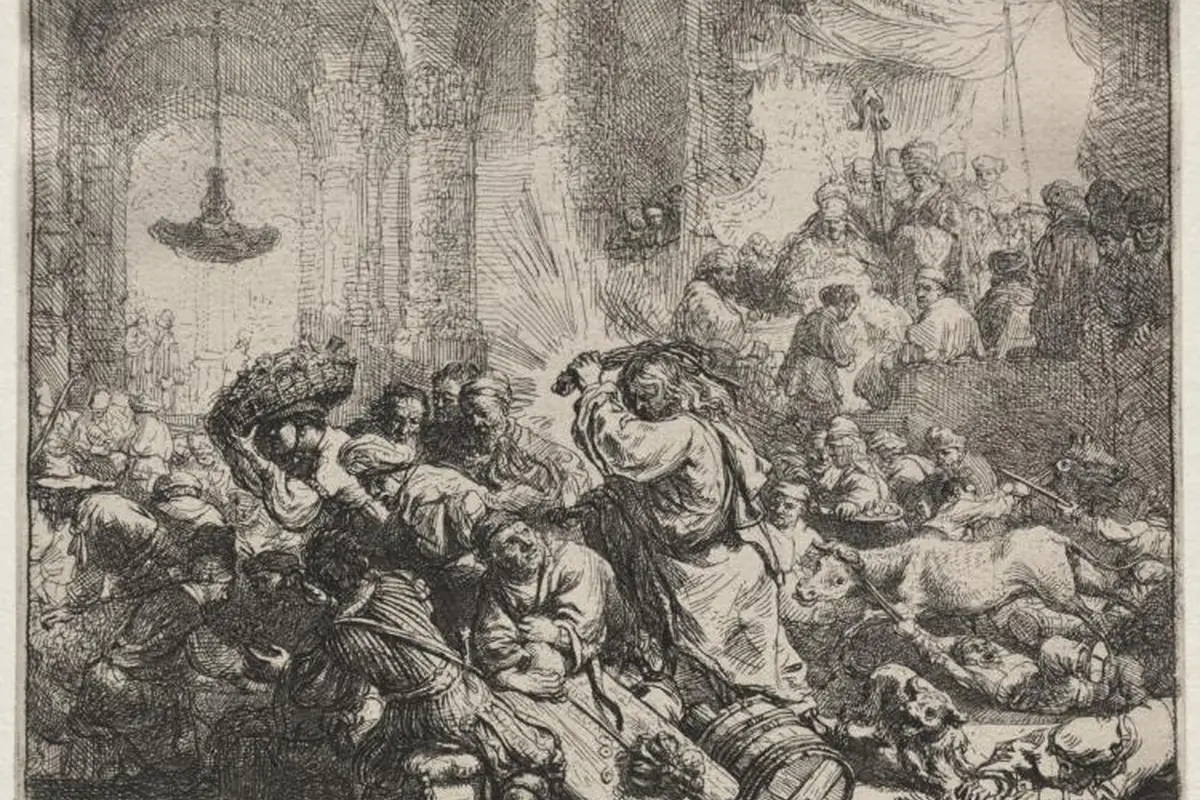
 Cleveland Museum of Art · CC0 1.0
Three levels of remedy
When a dispute arises, the buyer has three levels of remedy: a direct complaint to the seller, OIMAP's free mediation and, as a last resort, arbitration or the courts. Each level has its own time limits, costs and strengths.
Most disputes are settled at the first two levels. In 2024, 78% of the mediations conducted by OIMAP ended in an agreement.
This page describes each step and gives advice on preparing your file.
Buyer's remedies in figures
Source: OIMAP Legal Affairs Department.
From complaint to mediation
The first step is to send the seller a written complaint, describing the problem, attaching the evidence and proposing a solution. The seller generally has thirty days to reply. Many disputes end there.
Failing agreement, the buyer may refer the matter free of charge to OIMAP mediation, provided that the seller is approved or accepts the procedure. An independent mediator listens to both parties, proposes avenues and helps to formalise an agreement.
Arbitration and the courts
If mediation fails, the buyer may bring the matter before the OIMAP Arbitral Tribunal, whose decisions are recognised in Member States. Arbitration is confidential, faster than a trial — about six months — and conducted by art specialists.
It remains possible to apply to the competent national court, particularly where the seller is not subject to arbitration. Limitation periods vary from State to State; it is prudent to consult a lawyer so as not to let them expire.
Learning from disputes
Every dispute handled is a lesson. OIMAP publishes each year an anonymised summary of mediations and awards, with the most frequent problems and good prevention practices. Operators find in it material to improve their descriptions and their conditions of sale.
This feedback loop contributes to the steady fall in the dispute rate. It illustrates a conviction of the organisation: the best consumer protection is informing the seller.
The three levels
| Level | Duration | Cost | Strength |
|---|---|---|---|
| Direct complaint | 30 days | Free | Amicable agreement |
| OIMAP mediation | 45 days | Free for the buyer | Signed agreement |
| OIMAP arbitration | 6 months | Arbitration fees | Decision recognised in Member States |
| National courts | Variable | Trial costs | Enforceable judgment |
Landmarks
- Finding
Discovery of the problem.
- Complaint
Sending of the letter.
- Mediation
Referral to OIMAP.
- Agreement or failure
End of the mediation.
- Arbitration
Tribunal's decision.
Time limits run
Mediation or trial

Mediation
Negotiated agreement- Quick
- Free
- Confidential
To be preferred.
Trial
Imposed decision- Longer
- More expensive
- Public
As a last resort.
Preparing your remedy
- Gather
Collect all the documents.
- Write
Set out the facts clearly.
- Quantify
Estimate the loss.
- Propose
Suggest a solution.
- Refer
Choose the suitable route.
Supporting papers
A mediator
« In mediation, there is rarely a winner and a loser. There are two people who want to find a common path again. »
Vocabulary of remedies
- Limitation period
- Time after which an action is no longer possible.
- Arbitral award
- Decision of an arbitral tribunal.
- Enforceable
- Capable of being enforced.
- Mediator
- Neutral third party facilitating an agreement.
Frequently asked questions
Is mediation mandatory?
No, but it is strongly recommended.
How much does arbitration cost?
Depending on the amount in dispute: see Arbitration.
Can I be assisted?
Yes, by a lawyer or an association.
Where can I find a referral form?
On the Desk portal.
Useful documents
Contacts
Related pages
 Consumer protectionThe rights of the buyer of a work of art: information, guarantees, withdrawal, remedies and mediation.›
 ArbitrationThe OIMAP Arbitral Tribunal (TAO) settles art and heritage disputes: authenticity, provenance, restitution and contracts, through arbitration or mediation.›
 Case law640 summarised court and arbitration decisions: authenticity, provenance, ownership, good faith, restitution and operators' liability.›
Discover the recommendations to States
Image credits (16)
- Christ Driving the Money Changers from the Temple, Rembrandt van Rijn (1635) — Cleveland Museum of Art, CC0 1.0
- Dr. James Stuart; Mary Campbell Stuart, Gilbert Stuart (c. 1815) — Cleveland Museum of Art, CC0 1.0
- Yokkaichi: View of the Mie River, from the series The Fifty-Three Stations of the Tōkaidō, Utagawa Hiroshige (c. 1833–34) — Cleveland Museum of Art, CC0 1.0
- Portrait of Georges Arnold Fitzwilliam, Charles Balthazar Julien Fevret de Saint-Mémin (c. 1790–1852) — Cleveland Museum of Art, CC0 1.0
- Plate: Diana and Acteon, Maestro Giorgio Andreoli (1522) — Cleveland Museum of Art, CC0 1.0
- The Calumny of Apelles, Giorgio Ghisi (1560) — Cleveland Museum of Art, CC0 1.0
- Creamer, Louis Rorimer (c. 1910) — Cleveland Museum of Art, CC0 1.0
- Portrait Head of a Noble or Official (175–200 CE) — Cleveland Museum of Art, CC0 1.0
- Painting Enthusiasts at Auction House Bouillon, Honoré Daumier (1862, printed 1920) — Cleveland Museum of Art, CC0 1.0
- The Antechamber of the Palace of Justice, Paris, Charles Meryon (1855) — Cleveland Museum of Art, CC0 1.0
- Vanity Case (Nécessaire) (c. 1760) — Cleveland Museum of Art, CC0 1.0
- A Palace with an Arched Bridge (A Roman Villa), Hubert Robert (1760) — Cleveland Museum of Art, CC0 1.0
- Portrait of a Man, Louis Lafitte (1793) — The Metropolitan Museum of Art, CC0 1.0
- Sketches in Belgium and Germany, Volume I: Hall of Justice of the Magistrates du Franc, Bruges, Louis Haghe (1840) — Cleveland Museum of Art, CC0 1.0
- Hours of Queen Isabella the Catholic, Queen of Spain, Master of the First Prayerbook of Maximillian (c. 1500) — Cleveland Museum of Art, CC0 1.0
- Portrait of a Man, Nicholas Freese (c. 1795–1800) — Cleveland Museum of Art, CC0 1.0