
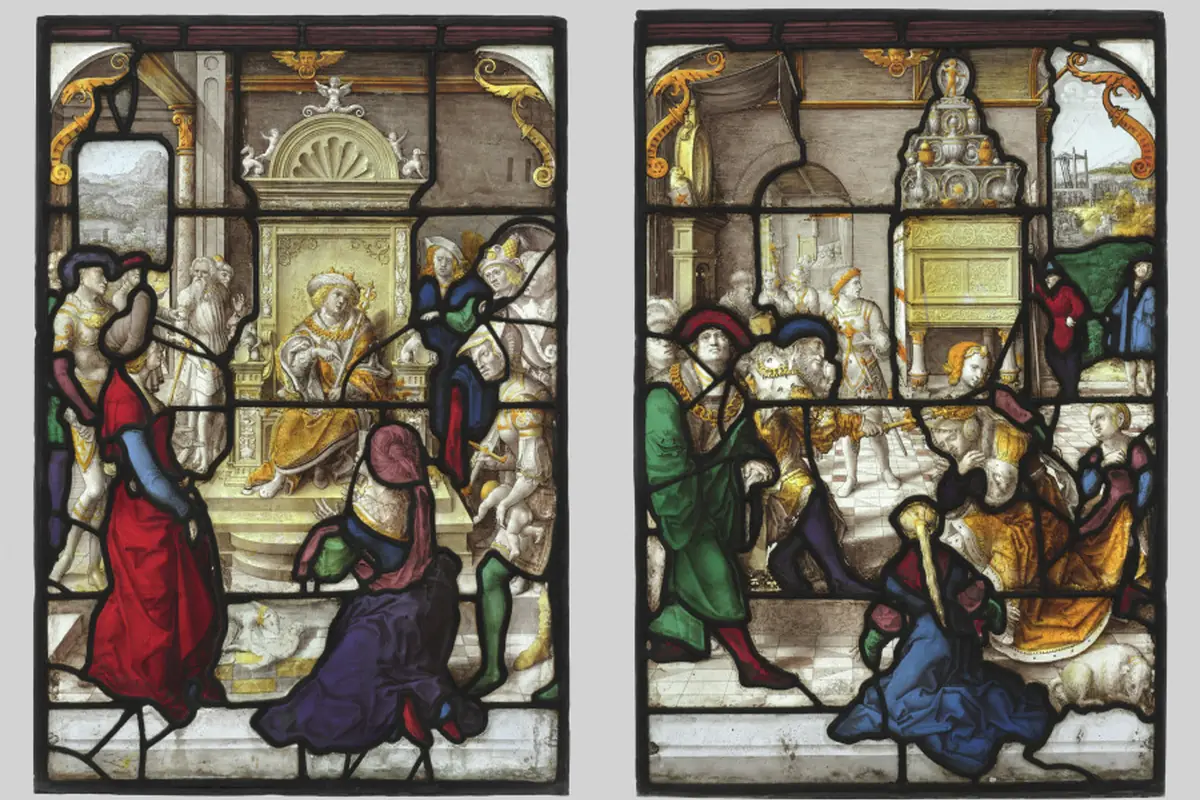
 Cleveland Museum of Art · CC0 1.0
Pages in this section
 Principles of provenance disputesTitle to property, good faith, acquisitive prescription and international standards: what the tribunal applies on provenance.›
 Evidence of provenanceArchives, inventories, invoices, photographs, appraisals: how to build and present a body of evidence before the TAO.›
 Provenance decisionsA few anonymised TAO decisions on provenance: inheritances, old thefts, spoliations and equitable solutions.›
The history of a work is a title deed
A work reappears on the market; a family claims it was stolen from them eighty years ago; the buyer, in good faith, produces an invoice. To whom does it belong? Provenance disputes raise the most sensitive question in arbitration: title.
They account for 22% of the requests received. The provenance chamber handles them with lawyers, historians and archivists, in a spirit of seeking an equitable solution.
This section presents the principles, the evidence and the decisions.
Provenance disputes in figures
Source: Registry of the OIMAP Arbitral Tribunal.
Three pages

A delicate balance
The law protects both the dispossessed owner and the good-faith buyer. The balance varies from country to country: some protect the buyer after a certain period, others maintain the original owner's right. The tribunal determines the applicable law and then examines the facts.
Beyond the law, the arbitrators pay attention to equity and to international principles on the restitution of spoliated property. Negotiated solutions are frequent: compensation, sharing, restitution coupled with compensation.
Archival investigations
Most of these disputes are decided on historical evidence: inventories, invoices, correspondence, old photographs, sale catalogues, insurance documents, files of past restitutions. The tribunal may appoint a historian or archivist to reconstruct the chain of ownership.
The research takes time: the average duration reaches fourteen months. The parties are well advised to put their file together very early and to request protective measures if the work risks being sold.
Sensitivities
Provenance disputes touch on personal and collective history: spoliation, war, colonisation. The tribunal ensures respectful treatment, avoids needlessly hurtful debates and, where possible, favours an amicable settlement.
The parties may request a reinforced closed-door hearing and the appointment of an arbitrator or mediator familiar with these issues.
Link with heritage protection
Provenance disputes overlap with the mission of the Protection department: BIOP database, provenance research, restitutions. The tribunal may, with the parties' agreement, query the database to check whether a work has been reported.
Parties holding a work of uncertain provenance are well advised to carry out a prior search: it may avoid a dispute or, on the contrary, open the way to an amicable solution.
Common questions of title
| Situation | Question | Key elements |
|---|---|---|
| Spoliation | Return to the owner? | Proof of dispossession |
| Succession | Who is the heir? | Death certificates, will |
| Old theft | Limitation? | Applicable law |
| Doubtful title | Proof of ownership? | Invoice, inventory |
Milestones
- Spoliations
Origin of many disputes.
- Washington Principles
International guidance.
- Creation of the TAO
Dedicated chamber.
- More than 300 cases
Accumulated experience.
Protective measures
Restitution or compensation
Restitution
Return of the work- Symbolic reparation
- Often claimed
- Buyer compensated in some cases
Case of proven spoliation.
Compensation
Sum or sharing- Work retained
- Negotiated agreement
- Faster
Balanced solution.
Handling a provenance dispute
- Gather
Archives.
- Have appraised
Historian.
- Refer
Application.
- Negotiate
Mediation.
- Decide
Award.
Provenance file
A lawyer
« In these cases, the evidence is an investigation. It sometimes takes two years of research to reconstruct a ten-page path. »
Vocabulary of provenance
- Provenance
- History of the ownership of a work.
- Title
- Right of ownership.
- Good faith
- Legitimate ignorance of the defect in title.
- Spoliation
- Forced dispossession.
Frequently asked questions
Who may act?
The owner or the heirs.
What time limit?
Depending on the applicable law.
Is the work blocked?
By interim measure, if requested.
Where can I see the principles?
See Principles.
Useful documents
Contacts
Related pages
 Principles of provenance disputesTitle to property, good faith, acquisitive prescription and international standards: what the tribunal applies on provenance.›
 Evidence of provenanceArchives, inventories, invoices, photographs, appraisals: how to build and present a body of evidence before the TAO.›
 Provenance decisionsA few anonymised TAO decisions on provenance: inheritances, old thefts, spoliations and equitable solutions.›
Read the principles
Image credits (22)
- The Judgment of Solomon and Esther before Ahasuerus (pair), Dirk Vellert (c. 1530) — Cleveland Museum of Art, CC0 1.0
- The Antechamber of the Palace of Justice, Paris, Charles Meryon (1855) — Cleveland Museum of Art, CC0 1.0
- Plaque (1500s–1600s) — Cleveland Museum of Art, CC0 1.0
- Dr. James Stuart; Mary Campbell Stuart, Gilbert Stuart (c. 1815) — Cleveland Museum of Art, CC0 1.0
- Nuova pianta di Roma data in luce da Giambattista Nolli l’anno MDCCXLVII, known as La Pianta Grande di Roma, Giovanni Battista Nolli (1748) — Cleveland Museum of Art, CC0 1.0
- Sketches in Belgium and Germany, Volume I: Hall of Justice of the Magistrates du Franc, Bruges, Louis Haghe (1840) — Cleveland Museum of Art, CC0 1.0
- Seal Color Box (1662–1722) — Cleveland Museum of Art, CC0 1.0
- The Calumny of Apelles, Giorgio Ghisi (1560) — Cleveland Museum of Art, CC0 1.0
- Nuova pianta di Roma data in luce da Giambattista Nolli l’anno MDCCXLVII, known as La Pianta Grande di Roma, Giovanni Battista Nolli (1748) — Cleveland Museum of Art, CC0 1.0
- Seal Color Box (1662–1722) — Cleveland Museum of Art, CC0 1.0
- The Triumph of Mordecai, Lucas van Leyden (1515) — Cleveland Museum of Art, CC0 1.0
- Arrival of the "Southern Barbarians" (c. 1600) — Cleveland Museum of Art, CC0 1.0
- Chemin de fer de Toulouse à Bayonne. Pont de l'Aran (en trois arches de 17m d'ouverture chacune). Situation des travaux au 21 juillet 1861, Édouard Baldus (1861) — Cleveland Museum of Art, CC0 1.0
- Mercury (Budha), from a Mandi Astrology Series, Sanju (c. 1810) — Cleveland Museum of Art, CC0 1.0
- Letter Box, Ogata Kōrin (1700s) — Cleveland Museum of Art, CC0 1.0
- Seven Jeweled Mountain (late 1800s) — Cleveland Museum of Art, CC0 1.0
- Sweet Melancholy, Joseph-Marie Vien (1756) — Cleveland Museum of Art, CC0 1.0
- The Pyramid of Cestius, Rome, Michiel van Overbeek (c. 1650–80) — Cleveland Museum of Art, CC0 1.0
- Nuova pianta di Roma data in luce da Giambattista Nolli l’anno MDCCXLVII, known as La Pianta Grande di Roma, Giovanni Battista Nolli (1748) — Cleveland Museum of Art, CC0 1.0
- Carnet (1863–1865) — Cleveland Museum of Art, CC0 1.0
- Dune Scene with Peasant Figures, Willem van de Velde (mid-1650s) — Cleveland Museum of Art, CC0 1.0
- Seal of Doge Michele Steno (reverse) (1400–1409) — Cleveland Museum of Art, CC0 1.0