
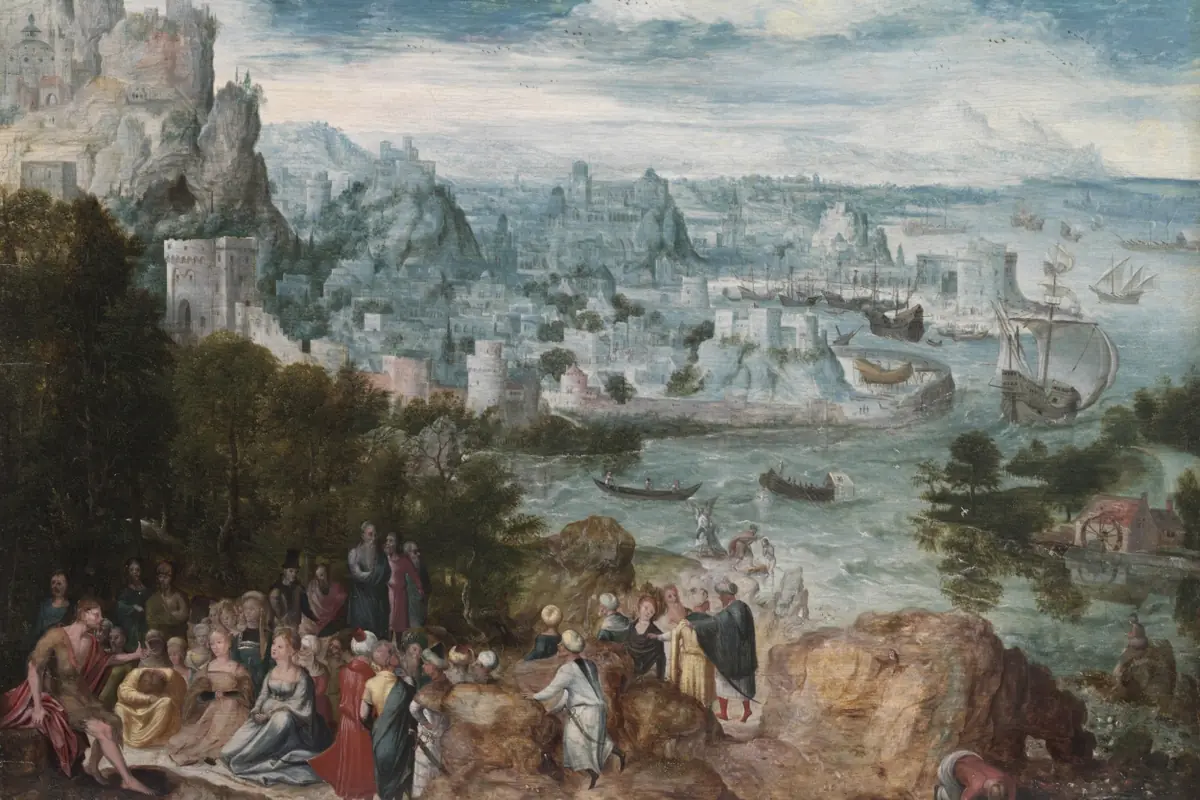
 Cleveland Museum of Art · CC0 1.0
Pages in this section
 Operation reviewsThe annual results: 23 operations in 2024, 847 works restituted in total, counting method and lessons learned.›
 Ongoing operationsWhat OIMAP can say about active operations: publication principles, types of operations monitored and channels for reporting a fact.›
 Operation partnersOMD, Interpol, UNESCO, ICOM: the organizations with which OIMAP cooperates, under cooperation agreements.›
Acting together against trafficking
International operations are the most concrete part of OIMAP's work. In 2024, the Organisation coordinated 23 joint operations among customs, police, museums and experts from several countries. In total, 847 works have been restituted to their countries or to their rightful owners since monitoring began.
OIMAP does not conduct investigations: it coordinates, connects, provides expertise and the BIOP registry, and monitors restitutions.
This section presents the reviews, the ongoing operations and the partners.
International operations in figures
Source: Events and Communications Directorate.
Three pages
What is an operation?
An international operation is a coordinated, time-limited action that brings together several administrations from different countries around a common objective: controlling a flow, checking a market, finding reported objects. OIMAP provides the framework, the introductions, the data and the expertise.
Each operation rests on a written mandate, a timetable and rules for sharing information. States remain in charge of their own investigations and prosecutions.
The role of OIMAP
The Organisation plays three roles. It alerts, thanks to the BIOP registry and to reports of theft or loss received within 24 hours. It coordinates, by bringing the actors together and ensuring the consistency of their actions. It monitors, by ensuring the restitution of works and the documentation of results.
It also makes accredited experts available to identify seized objects, together with legal support based on the 1954, 1970 and 1995 conventions.
Types of operations
Some operations are targeted checks, at the border or on an online marketplace. Others are verification campaigns in auction rooms and fairs. Still others accompany restitutions, from establishing the identity of the work to its physical return.
Training activities are linked to these operations: the officials who take part follow the Academy's modules, which strengthens the results.
Restitutions
A restituted work is one whose ownership is recognised as belonging to a State or a person and which returns to its rightful place. The process comprises identification, verification of rights, agreement of the parties, secure transport and a conservation report.
The cumulative total of 847 restituted works covers very varied objects: manuscripts, archaeological objects, paintings, ritual instruments. Each restitution is documented in the annual reviews.
Roles of the actors
| Actor | Role | Example |
|---|---|---|
| State | Investigates and prosecutes | National mandate |
| OIMAP | Coordinates and monitors | BIOP registry, experts |
| Partners | Support | Customs control, police, museum expertise |
| Market | Collaborates | Reporting of anomalies |
Milestones
- Creation
Cooperation mandate.
- First joint operations
Maritime borders (indicative).
- Directives
Common investigation framework.
- 23 operations
Official figure.
Confidentiality
One-off or permanent operation
One-off
A few weeks- Precise objective
- Concentrated resources
- Rapid review
For an identified flow.
Permanent
Lasting arrangement- Continuous monitoring
- Stable network
- Higher cost
For a sensitive region.
Cycle of an operation
- Alert
Receipt of a report.
- Frame
Mandate and partners.
- Act
Checks and verifications.
- Restitute
Return of the works.
- Report
Annual review.
Reporting an incident
A coordinator
« A successful operation is, first of all, a directory of people who know one another before they need one another. »
Operations vocabulary
- Joint operation
- Action carried out together by several States.
- Restitution
- Return of property to its rightful owner.
- BIOP
- OIMAP registry of works.
- Mandate
- Written framework of an operation.
Transparency and confidentiality
Ongoing operations are subject to the confidentiality of the investigation. OIMAP does not publish any detail liable to compromise proceedings, endanger officials or make it easier to circumvent controls.
Conversely, consolidated results are published each year. They allow the public, States and market professionals to assess the effectiveness of international action.
Frequently asked questions
Does OIMAP investigate?
No, it coordinates and supports.
How many operations in 2024?
23.
How many works restituted?
847 in total.
Where can I read the results?
See Reviews.
Useful documents
Contacts
Related pages
 ActivitiesEvents, conferences, publications, media, prizes, exhibitions and the sales calendar: the public life of OIMAP throughout the year.›
 Operation reviewsThe annual results: 23 operations in 2024, 847 works restituted in total, counting method and lessons learned.›
 Ongoing operationsWhat OIMAP can say about active operations: publication principles, types of operations monitored and channels for reporting a fact.›
 Operation partnersOMD, Interpol, UNESCO, ICOM: the organizations with which OIMAP cooperates, under cooperation agreements.›
Read the reviews
Image credits (23)
- Landscape with Saint John the Baptist, Herri met de Bles (c. 1540) — Cleveland Museum of Art, CC0 1.0
- Enjoying the Evening Cool Along the Sumida River, Kitagawa Utamaro (c. 1797–98) — Cleveland Museum of Art, CC0 1.0
- Sailing Vessels: Armed Four-Master Putting Out to Sea, Pieter Bruegel (1561–65) — Cleveland Museum of Art, CC0 1.0
- Boating in Moonlight (1600s) — Cleveland Museum of Art, CC0 1.0
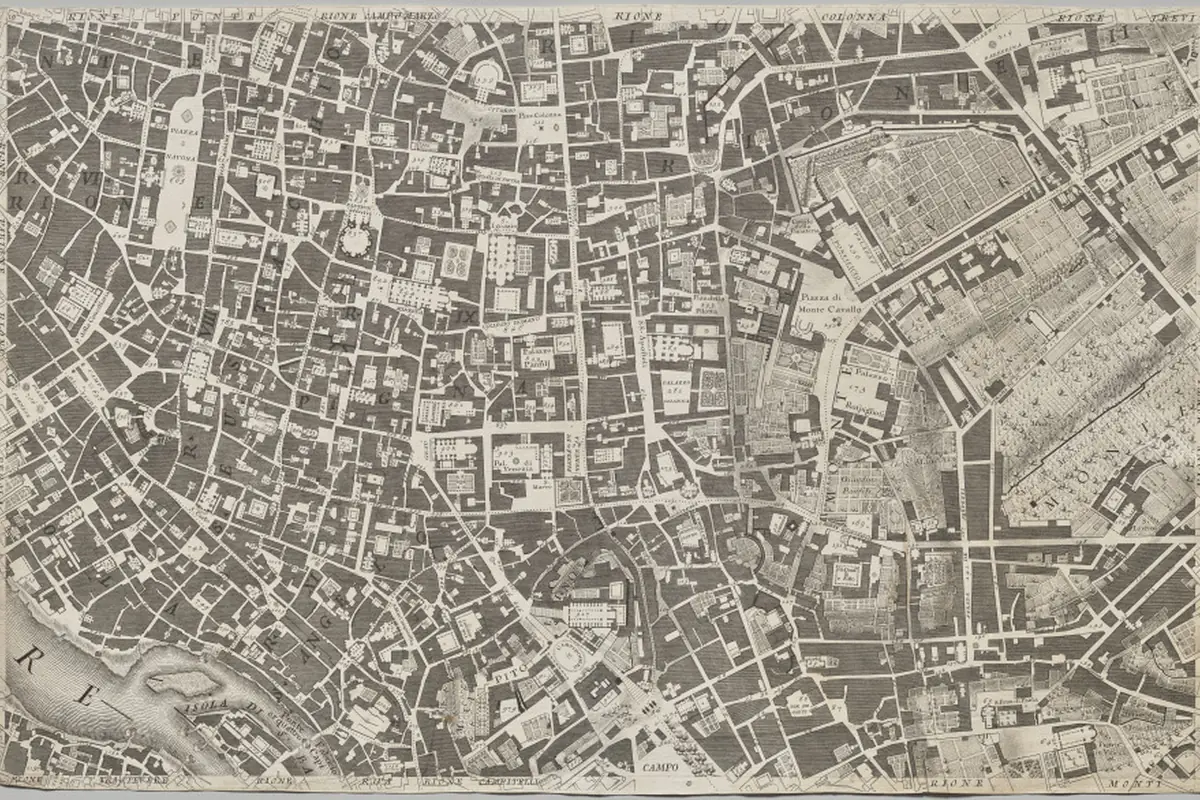
- Nuova pianta di Roma data in luce da Giambattista Nolli l’anno MDCCXLVII, known as La Pianta Grande di Roma, Giovanni Battista Nolli (1748) — Cleveland Museum of Art, CC0 1.0
- Sketchbook, The Dells, N° 127, page 090 & 91: Harbor with a Road, Maurice Prendergast (c. 1919–1921) — Cleveland Museum of Art, CC0 1.0
- Karnak, Les Pylônes d'Horus, Henri Béchard (1860s) — Cleveland Museum of Art, CC0 1.0
- View of Venice, Jacopo de' Barbari (1500) — Cleveland Museum of Art, CC0 1.0
- Fishing Boats along the Beach, Eugène Isabey (c. 1830) — Cleveland Museum of Art, CC0 1.0
- Châteauvieux-sur-Suran, Antoine-Claude Ponthus-Cinier (1848) — Cleveland Museum of Art, CC0 1.0
- Return of the Fishing Boats at Collioure, near the Spanish Border, Adolphe Appian (1878) — Cleveland Museum of Art, CC0 1.0
- Nuova pianta di Roma data in luce da Giambattista Nolli l’anno MDCCXLVII, known as La Pianta Grande di Roma, Giovanni Battista Nolli (1748) — Cleveland Museum of Art, CC0 1.0
- Ships near the Trieux River, Paul Signac (1925) — Cleveland Museum of Art, CC0 1.0
- View of the Gulf of Pozzuoli from Solfatara, Philipp Hackert (1803) — Cleveland Museum of Art, CC0 1.0
- Whitby Harbor, Frank Meadow Sutcliffe (c. 1885) — Cleveland Museum of Art, CC0 1.0
- Nuova pianta di Roma data in luce da Giambattista Nolli l’anno MDCCXLVII, known as La Pianta Grande di Roma, Giovanni Battista Nolli (1748) — Cleveland Museum of Art, CC0 1.0
- S. Giorgio Maggiore, Michele Marieschi (1741) — Cleveland Museum of Art, CC0 1.0
- Roman Ruins, Villa Pamfili, Hubert Robert (1774) — Cleveland Museum of Art, CC0 1.0
- Twilight in the Wilderness, Frederic Edwin Church (1860) — Cleveland Museum of Art, CC0 1.0
- A Rocky Cove with Fishing Boats, Allart van Everdingen (late 1650s) — Cleveland Museum of Art, CC0 1.0
- View of the Château of Pierrefonds, François-Louis Français (c. 1870) — Cleveland Museum of Art, CC0 1.0
- Temple of Athene Nike. Venus Victrix—Wingless Victory, Dimitrios Constantin (c. 1850s–60s) — Cleveland Museum of Art, CC0 1.0
- Net Fishing at Night on the Sumida River, Kitagawa Utamaro (c. 1800) — Cleveland Museum of Art, CC0 1.0