
 Cleveland Museum of Art · CC0 1.0
Pages in this section
 In alphabetical orderQuickly find a Member State with the alphabetical list of the 67 countries, with region and year of accession.›
 By date of accessionOIMAP's growth year after year: founders in 2007, then two or three accessions a year until 2024.›
 Interactive mapA world map to explore the 67 Member States by region, open their profiles and find the responsible office.›
Sixty-seven States, five continents
OIMAP has 67 Member States spread across five continents. Twenty-three of them are founding members and signed the constituent act in 2007; the others joined the Organisation at a rate of two or three accessions a year between 2008 and 2024.
This section offers three ways of consulting the list: in alphabetical order, by date of accession and on the interactive map.
The online module on this page lets you search for a State, filter by region and access its profile. The data it displays come from the reference database maintained by the Member States Relations Directorate.
List of the 67 States in figures
Source: Member States Relations Directorate.
How to read this list
Each Member State appears only once in the list, attached to the region where it is followed by one of the Organisation's offices. This attachment is administrative: it determines the contact office, not the strict geographical membership of the State. Thus the Middle East is followed from Geneva.
The regions used are Europe, the Americas, Asia-Pacific, Africa and the Middle East. Each has a detailed page presenting its countries, its office and its programmes.
The "one State, one vote" principle
Whatever its economic weight or the size of its art market, each State has one vote in the General Assembly. This principle guarantees the equality of members in decisions: adoption of the budget, admission of new members, amendment of the directives.
The amount of the financial contribution, on the other hand, varies according to a scale based on national wealth and the importance of the art market. The scale is described in the section on financial contributions.
The founding States
Twenty-three States took part in the creation of OIMAP in 2007: twelve in Europe, four in the Americas, two in Asia-Pacific, four in Africa and one in the Middle East. They drafted the constituent act and adopted the first operating rules.
The founders have no special prerogatives today, but their seniority explains the current structure of the regional offices and the composition of the first committees.
A list that evolves
Between 2008 and 2024, the Organisation welcomed two or three new States each year. Each admission is decided by the General Assembly by a two-thirds majority, after technical review and a probationary period. The list is updated on the day the accession takes effect.
The pages in this section are revised with each admission. In the event of a discrepancy between a page and the online module, the module is authoritative, as it reflects the reference database.
The 67 States by region
| Region | Number of States | Contact office |
|---|---|---|
| Europe | 25 | Paris |
| Americas | 14 | New York |
| Asia-Pacific | 13 | Singapore |
| Africa | 11 | Nairobi |
| Middle East | 4 | Geneva |
Milestones
- Creation of OIMAP
Twenty-three founding States.
- First accessions
Ireland, Denmark and Norway.
- Tenth year
Accessions in the Americas and Asia.
- Latest accessions
United Arab Emirates and Qatar.
Reference source
Three entry points to the same list
Alphabetical
Find a State- Search by name
- Quick reading
- Ideal for a letter
To find a specific country.
Chronological
Follow the accessions- Grouping by year
- View of the founders
- History of the Organization
To understand its growth.
Cartographic
See the distribution- Regional view
- Visual navigation
- Access to country profiles
For an overview.
View the list
- Open
The online module.
- Filter
By region or by year.
- Select
A State.
- Read
Its summary profile.
- Contact
Its focal point, if you are a member.
Before citing the list
A programme officer
« I check the list before every official letter: knowing which office follows which State saves me a great deal of back and forth. »
Vocabulary of the list
- Founding State
- State that signed the 2007 constituent act.
- Membership
- A State's entry into the Organization.
- Focal point
- Contact person designated by each State.
- Region
- Administrative grouping followed by an office.
Using the online module
The online module displays the complete list of States. A search box lets you enter a country name, a filter selects the region, and a sort switches between alphabetical order and chronological order of accession. Clicking a State opens its summary profile.
Each profile shows the region, the year of accession and the national focal point designated by the State. The detailed contact information of the focal point is reserved for members logged in to the member area.
Frequently Asked Questions
How many States are members?
Sixty-seven, including twenty-three founders.
Is the list up to date?
Yes, the online module reflects the reference database.
Where can I see a State's profile?
In the module, by clicking on its name.
Whom should I contact?
Useful Documents
Contacts
Related pages
 List of the 67 StatesThe 67 OIMAP Member States, presented in alphabetical order, by date of accession and on an interactive map.›
 In alphabetical orderQuickly find a Member State with the alphabetical list of the 67 countries, with region and year of accession.›
 By date of accessionOIMAP's growth year after year: founders in 2007, then two or three accessions a year until 2024.›
 Interactive mapA world map to explore the 67 Member States by region, open their profiles and find the responsible office.›
 Country profile contactsThe practical part of the country profiles: heritage department, national focal point, languages of correspondence and opening hours.›
Access the module
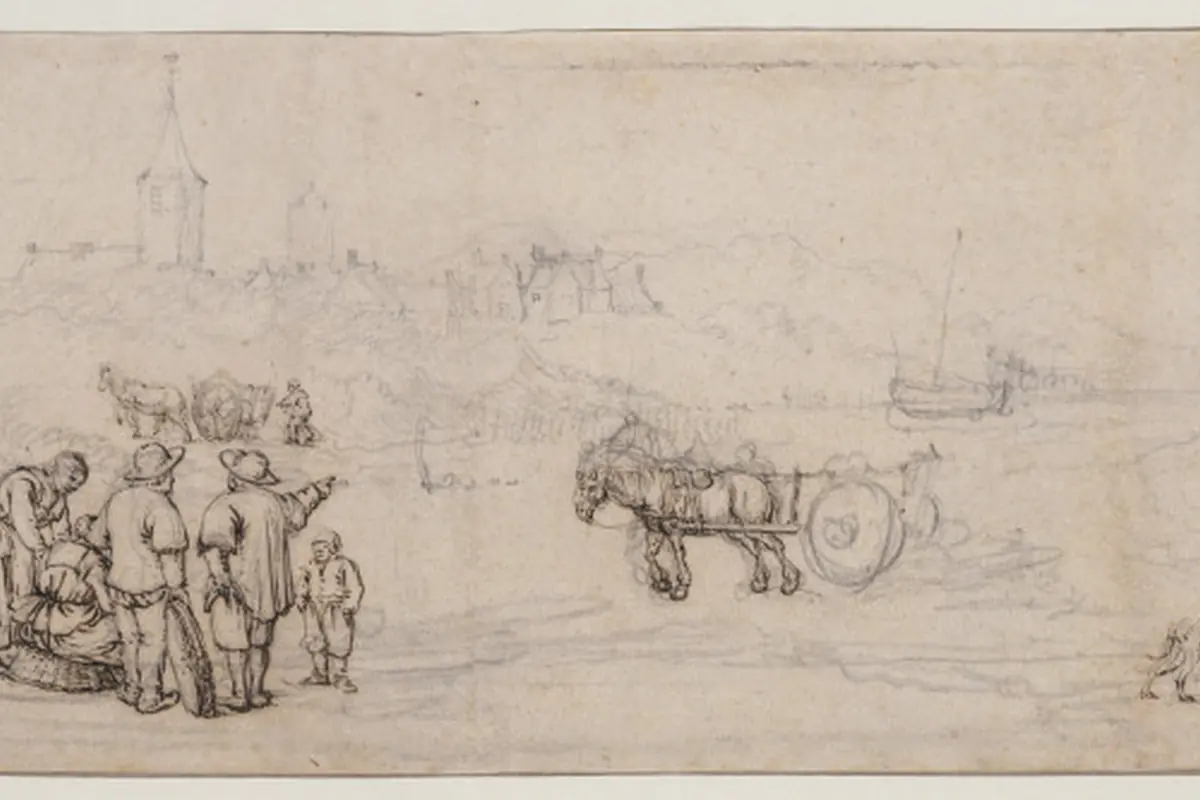
Image credits (22)
- Nuova pianta di Roma data in luce da Giambattista Nolli l’anno MDCCXLVII, known as La Pianta Grande di Roma, Giovanni Battista Nolli (1748) — Cleveland Museum of Art, CC0 1.0
- View of Venice, Jacopo de' Barbari (1500) — Cleveland Museum of Art, CC0 1.0
- Nuova pianta di Roma data in luce da Giambattista Nolli l’anno MDCCXLVII, known as La Pianta Grande di Roma, Giovanni Battista Nolli (1748) — Cleveland Museum of Art, CC0 1.0
- Coronation of the Virgin, Christoffel Jegher (1632–36) — Cleveland Museum of Art, CC0 1.0
- Bird Standard (early to mid-1900s) — Cleveland Museum of Art, CC0 1.0
- Oil Bottle (1100s–1200s) — Cleveland Museum of Art, CC0 1.0
- Nuova pianta di Roma data in luce da Giambattista Nolli l’anno MDCCXLVII, known as La Pianta Grande di Roma, Giovanni Battista Nolli (1748) — Cleveland Museum of Art, CC0 1.0
- Four-Cornered Hat (c. 1400–1532) — Cleveland Museum of Art, CC0 1.0
- Nuova pianta di Roma data in luce da Giambattista Nolli l’anno MDCCXLVII, known as La Pianta Grande di Roma, Giovanni Battista Nolli (1748) — Cleveland Museum of Art, CC0 1.0
- Akshobhya: the Buddha of the East (late 800s) — Cleveland Museum of Art, CC0 1.0
- Seven Jeweled Mountain (late 1800s) — Cleveland Museum of Art, CC0 1.0
- The Dance at the Court of Herod, Israhel van Meckenem (c. 1500) — Cleveland Museum of Art, CC0 1.0
- Arrival of the "Southern Barbarians" (c. 1600) — Cleveland Museum of Art, CC0 1.0
- Power figure (nkisi) (late 1800s-early 1900s) — Cleveland Museum of Art, CC0 1.0
- Nuova pianta di Roma data in luce da Giambattista Nolli l’anno MDCCXLVII, known as La Pianta Grande di Roma, Giovanni Battista Nolli (1748) — Cleveland Museum of Art, CC0 1.0
- The Grotto of Posillipo, Hubert Robert (c. 1769) — Cleveland Museum of Art, CC0 1.0
- Wine Ewer with Incised Scroll Design (1100s) — Cleveland Museum of Art, CC0 1.0
- The Victory Banquet: from Battle Scenes of the Quelling of Rebellions in the Western Regions, with Imperial Poems (c. 1765–74; poem dated 1760) — Cleveland Museum of Art, CC0 1.0
- Power figure (nkisi) (late 1800s-early 1900s) — Cleveland Museum of Art, CC0 1.0
- Prestige Cap (mpu ngola) (late 1800s–early 1900s) — Cleveland Museum of Art, CC0 1.0
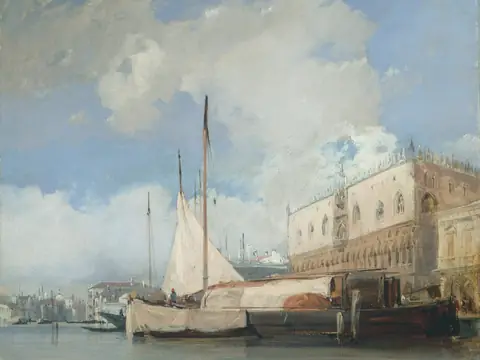
- The Doge's Palace, Venice, Richard Parkes Bonington (1826) — Cleveland Museum of Art, CC0 1.0
- Dune Scene with Peasant Figures, Willem van de Velde (mid-1650s) — Cleveland Museum of Art, CC0 1.0