
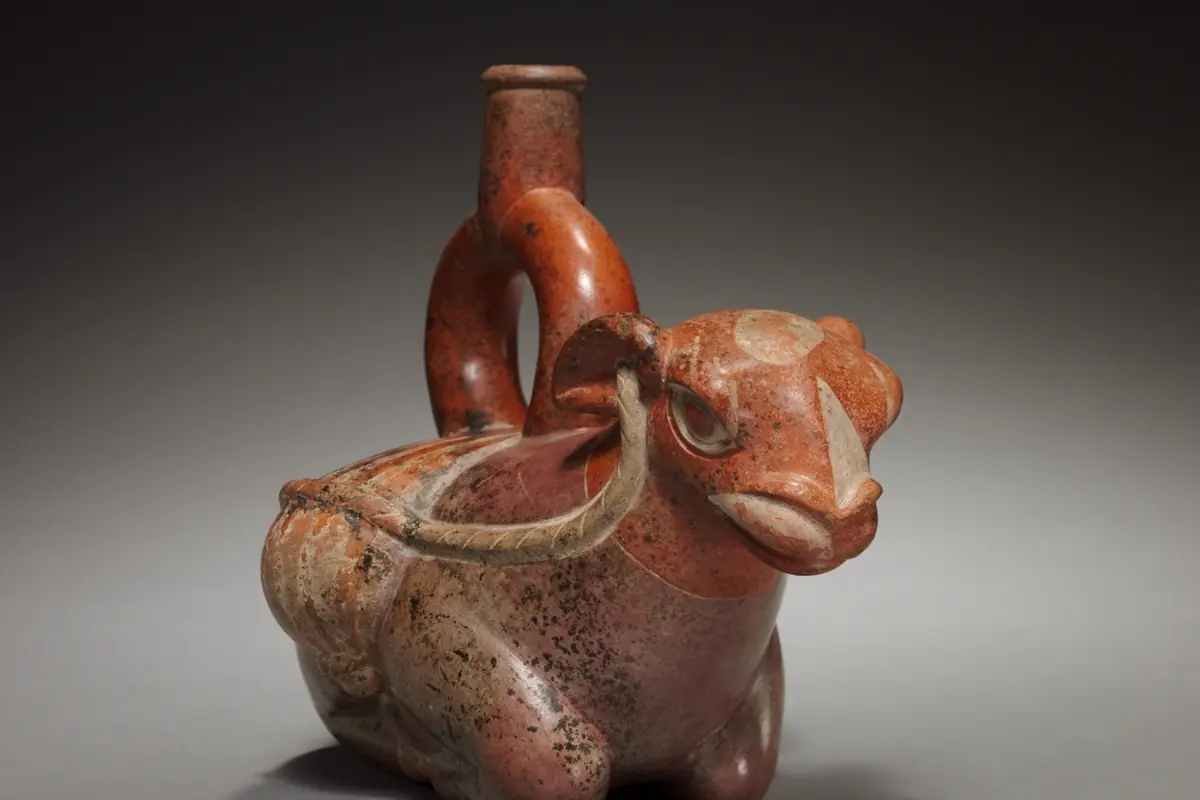
 Cleveland Museum of Art · CC0 1.0
Programmes tailored to the region
The programmes in the Americas respond to the priorities set by the focal points: training of officials, inventory support, restitution and joint operations. They are steered by the New York office.
Each programme is multi-year, funded by States' contributions and one-off support, and is the subject of an annual report.
The figures cited on this page are indicative, except for the overall results of the Organization.
Programmes in the Americas in figures
Source: Member States Relations Directorate.
Training of officers
The training programme is aimed at customs, police, museum and cultural administration staff. It includes in-person and online sessions, in Spanish, English, French and Portuguese.
The courses cover the identification of property, export procedures and international cooperation. See the training offer.
Inventory support
Many States in the region wish to document their collections and sites better. The Organization provides description methods, IT tools and experts to build or complete inventories.
A reliable inventory is the first condition of a successful restitution: it makes it possible to identify an item and establish its origin.
Restitution and cooperation
Several States in the Americas have concluded restitution agreements with their partners, with the legal support of the Organization. The office helps prepare files, verify provenance and organize the return of property.
The Organization as a whole counts 847 works returned. See the bilateral agreements.
Joint operations
Customs and police forces in several States of the region carry out coordinated operations, with the logistical support of the Organization: intelligence sharing, simultaneous inspections, seizures. The Organization coordinated 23 operations in 2024, several of them in the region.
The results are analysed at regional meetings and feed into the training programmes.
Programme strands
| Strand | Audience | Format |
|---|---|---|
| Training | Customs, police, museums | In-person and online courses |
| Inventories | Cultural administrations | Expert support and tools |
| Restitution | Ministries, lawyers | File support |
| Operations | Customs, police | Coordination of operations |
Milestones
- Training
First regional courses.
- Inventories
Support for six States.
- Restitution
First coordinated files.
- Operations
Twenty-three coordinated operations.
Figures
Training or operation
Training
Learn- General audience
- Regular sessions
- Materials in four languages
To build skills.
Operation
Act- Specialist audience
- International coordination
- Concrete results
To fight trafficking.
Requesting a programme
- Discuss
With the focal point.
- Formulate
The request.
- Review
With the office.
- Validate
At Headquarters.
- Implement
The programme.
Before applying
A curator
« Inventory support enabled us to describe thousands of items and make them traceable. »
Glossary of programmes
- Inventory
- Descriptive list of a set of property.
- Provenance
- Origin and history of an item.
- Joint operation
- Coordinated action by several departments.
- Multi-year
- Over several years.
Taking part in a programme
A State may request to join a programme through its focal point. Requests are reviewed by the New York office and then validated by Headquarters.
The practical arrangements are described in the technical cooperation section.
Frequently Asked Questions
Who funds the programmes?
States' contributions and one-off support.
Who can take part?
States in the region, through their focal point.
In which languages?
Spanish, English, French, Portuguese.
Where can the office be seen?
See New York office.
Useful Documents
Contacts
Related pages
 AmericasFourteen States in the Americas, including four founders, followed from the New York office.›
 Member countries in the AmericasThe list of the 14 States in the Americas that are OIMAP members, with their year of accession.›
 New York officeThe regional office for the Americas: missions, team, regional meetings and contacts.›
 Programmes in the AmericasTraining, restitution, inventories and joint operations: the programmes conducted with the States of the Americas.›
 Interactive mapA world map to explore the 67 Member States by region, open their profiles and find the responsible office.›
 TrainingThe OIMAP Academy trains judges, customs officers, market professionals, experts and curators: certification programmes, online training, scholarships and regional sessions.›
 Restitution AgreementsThe bilateral framework for the return of cultural property: principles, stages, evidence and results, with 847 works returned.›
Request support
Image credits (20)
- Llama Vessel (c. 200–550 CE) — Cleveland Museum of Art, CC0 1.0
- Landscape with the Town on a River and the Cottage between Trees, Hanns Lautensack (1551) — Cleveland Museum of Art, CC0 1.0
- Coiled Rattlesnake (c. 1200–1519) — Cleveland Museum of Art, CC0 1.0
- View of the Gulf of Pozzuoli from Solfatara, Philipp Hackert (1803) — Cleveland Museum of Art, CC0 1.0
- Seated Figurine (c. 1400–1540) — Cleveland Museum of Art, CC0 1.0
- Landscape with Winding Road, Thomas Doughty (1833) — Cleveland Museum of Art, CC0 1.0
- Head from a Building's Façade (250–900 CE) — Cleveland Museum of Art, CC0 1.0
- Temple of Athene Nike. Venus Victrix—Wingless Victory, Dimitrios Constantin (c. 1850s–60s) — Cleveland Museum of Art, CC0 1.0
- Incense Burner Support (600–900) — Cleveland Museum of Art, CC0 1.0
- Breton Landscape, Jan Verkade (1891–92) — Cleveland Museum of Art, CC0 1.0
- Ring-Base Vessel (c. 600–1000) — Cleveland Museum of Art, CC0 1.0
- Small Mosque in the Kaiserbagh, Felice A. Beato (1858) — Cleveland Museum of Art, CC0 1.0
- Sea Lion Pup Vessel (200–850 CE) — Cleveland Museum of Art, CC0 1.0
- Wedding Jar (c. 1900) — Cleveland Museum of Art, CC0 1.0
- River Landscape with Large Tree at Left, Augustin Hirschvogel (1546) — Cleveland Museum of Art, CC0 1.0
- Karnak, Les Pylônes d'Horus, Henri Béchard (1860s) — Cleveland Museum of Art, CC0 1.0
- Nuova pianta di Roma data in luce da Giambattista Nolli l’anno MDCCXLVII, known as La Pianta Grande di Roma, Giovanni Battista Nolli (1748) — Cleveland Museum of Art, CC0 1.0
- Leaf from a Lectionary with St. Luke (1057–1063) — Cleveland Museum of Art, CC0 1.0
- Portrait of John VIII Palaoelogus, Emperor of Constantinople, 1424-1428 (reverse), Pisanello (c. 1438–1439) — Cleveland Museum of Art, CC0 1.0
- Border Fragment (100 BCE–700 CE) — Cleveland Museum of Art, CC0 1.0