
 Cleveland Museum of Art · CC0 1.0
Measuring to progress
Each year, the Secretariat publishes a monitoring report that measures Member States' progress in applying the conventions and directives. The aim is not to rank in order to sanction, but to understand where support is most needed.
The report relies on twenty indicators, grouped into four dimensions: legal framework, institutions, practices and results. Each State receives an individual sheet, discussed with its focal point before publication.
This page presents the method, recent results and follow-up.
Monitoring of implementation in figures
Source: OIMAP Legal Affairs Department.
The four dimensions
The legal framework measures the existence and quality of transposition laws. Institutions assess the presence of a supervisory authority, a focal point and human resources. Practices measure training, inventories and cooperation. Finally, results count seizures, restitutions, reports and checks.
Each indicator is scored from 0 to 5 by the Secretariat, on the basis of documents supplied by the State and independent sources. The overall score is the weighted average of the four dimensions.
Contrasting progress
The average score rose from 61 in 2020 to 78 in 2024. The clearest progress concerns the legal framework, where almost all States have transposed the directives. Practices progress more slowly, because they depend on resources and training.
Nine States have a score below 50; they are the subject of an action plan agreed with the Secretariat. Fifteen States exceeded 90 and act as sponsors for those making progress.
Follow-up
The monitoring report feeds three processes: individual action plans, decisions on allocating support missions and preparation of revisions of the directives. Recurring findings — for example the weakness of customs officers' training — are turned into general recommendations.
The report is presented each year to the Assembly, which may adopt resolutions. It is also made available to the public, which contributes to the organisation's transparency.
The 2024 results
| Category of States | Number | Score |
|---|---|---|
| Scores above 90 | 15 | Sponsors |
| Scores from 70 to 90 | 28 | Satisfactory progress |
| Scores from 50 to 70 | 15 | Progress to be consolidated |
| Scores below 50 | 9 | Action plan |
Landmarks
- First report
Average score of 61.
- Individual sheets
Dialogue with focal points.
- Sponsorship
New scheme.
- Average score of 78
Progress of 17 points.
No public ranking by name
Quantitative or qualitative monitoring

Quantitative
Numerical indicators- Comparable over time
- Easy to read
- Risk of oversimplification
Basis of the report.
Qualitative
Interviews and visits- Nuanced
- Understanding of context
- Longer
Indispensable complement.
Preparing for monitoring
- Designate
Appoint an active focal point.
- Gather
Collect the data.
- Supplement
Answer the questionnaire.
- Discuss
Talk with the Secretariat.
- Act
Implement the action plan.
Items to document
An evaluator
« An indicator is worth something only if it triggers a conversation. That is what we are after: useful conversations. »
Vocabulary of monitoring
- Indicator
- Numerical measure of a phenomenon.
- Weighted score
- Score taking account of the weight of each criterion.
- Action plan
- Timetable of corrective actions.
- Sponsor
- State helping another to progress.
Frequently asked questions
Where can I see my State's sheet?
Can the scores be challenged?
Yes, during the dialogue before publication.
What happens with a low score?
An action plan is proposed.
How often?
Once a year.
Useful documents
Contacts
Related pages
 Recommendations to StatesTransposition, good practices and monitoring: how Member States can fully apply the conventions and directives.›
 Transposing the directivesGuide for States: steps, model law, fit with existing law, supervisory authority and timetable.›
 List of the 67 StatesThe 67 OIMAP Member States, presented in alphabetical order, by date of accession and on an interactive map.›
Discover the public consultations
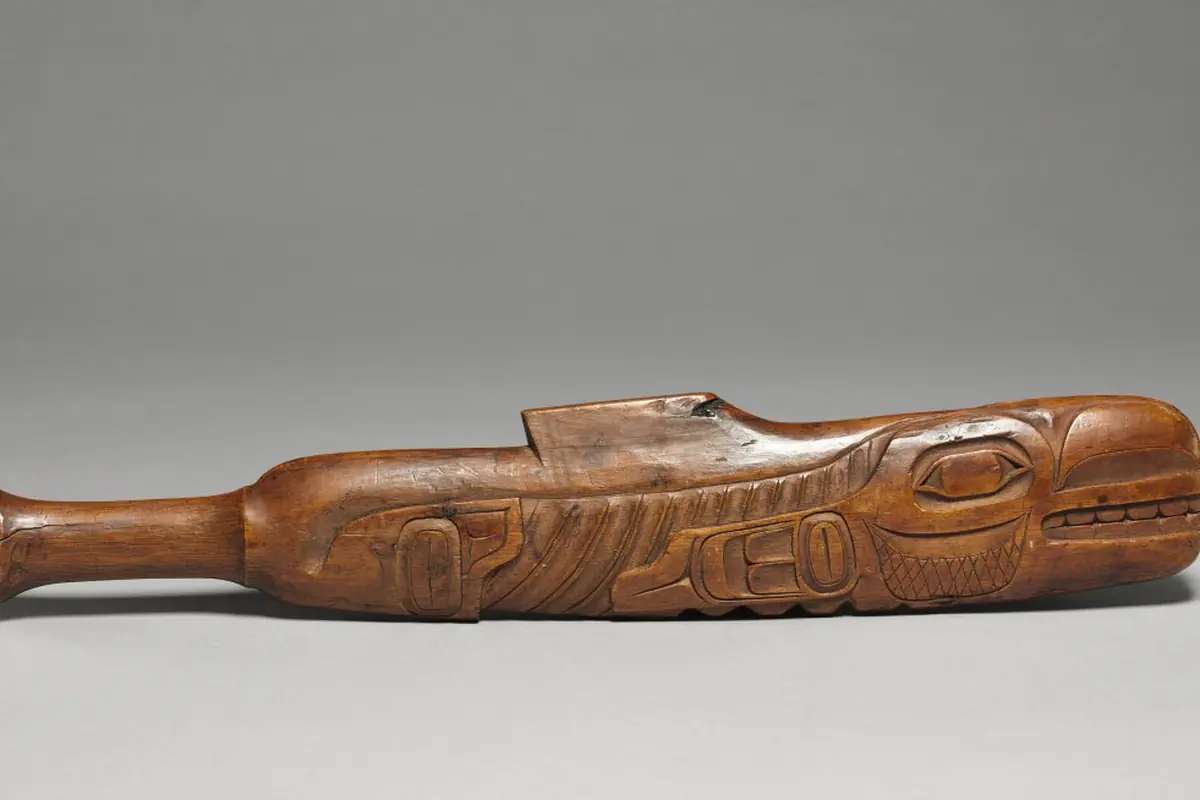
Image credits (16)
- The Dance at the Court of Herod, Israhel van Meckenem (c. 1500) — Cleveland Museum of Art, CC0 1.0
- Seal of Doge Michele Steno (reverse) (1400–1409) — Cleveland Museum of Art, CC0 1.0
- Coronation of the Virgin, Christoffel Jegher (1632–36) — Cleveland Museum of Art, CC0 1.0
- Nuova pianta di Roma data in luce da Giambattista Nolli l’anno MDCCXLVII, known as La Pianta Grande di Roma, Giovanni Battista Nolli (1748) — Cleveland Museum of Art, CC0 1.0
- The Victory Banquet: from Battle Scenes of the Quelling of Rebellions in the Western Regions, with Imperial Poems (c. 1765–74; poem dated 1760) — Cleveland Museum of Art, CC0 1.0
- Sweet Melancholy, Joseph-Marie Vien (1756) — Cleveland Museum of Art, CC0 1.0
- Portrait of John VIII Palaoelogus, Emperor of Constantinople, 1424-1428 (reverse), Pisanello (c. 1438–1439) — Cleveland Museum of Art, CC0 1.0
- Nuova pianta di Roma data in luce da Giambattista Nolli l’anno MDCCXLVII, known as La Pianta Grande di Roma, Giovanni Battista Nolli (1748) — Cleveland Museum of Art, CC0 1.0
- Letter Box, Ogata Kōrin (1700s) — Cleveland Museum of Art, CC0 1.0
- Carved Lacquer Scroll Box (1736–95) — Cleveland Museum of Art, CC0 1.0
- Seal with Two Qilin Playing (1849) — Cleveland Museum of Art, CC0 1.0
- The Pyramid of Cestius, Rome, Michiel van Overbeek (c. 1650–80) — Cleveland Museum of Art, CC0 1.0
- Seal Color Box (1662–1722) — Cleveland Museum of Art, CC0 1.0
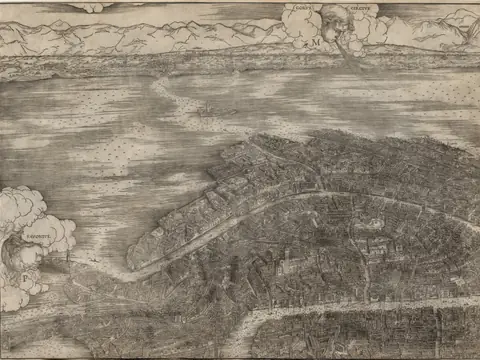
- View of Venice, Jacopo de' Barbari (1500) — Cleveland Museum of Art, CC0 1.0
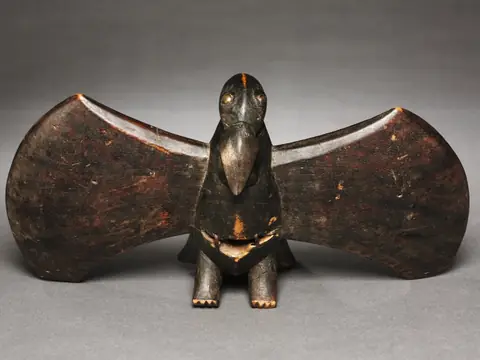
- Bird Standard (early to mid-1900s) — Cleveland Museum of Art, CC0 1.0
- Fish or Seal Club (X’ús’) (late 1800s–early 1900s) — Cleveland Museum of Art, CC0 1.0