
 Cleveland Museum of Art · CC0 1.0
Pages in this section
 Directory of national expertsThe directory lists, by Member State, the national experts and their fields of competence; access is reserved for members.›
 Joining the networkConditions, appointment procedure and commitments of a national expert: how to join the OIMAP network.›
 Network meetingsAnnual plenary, working groups and online sessions: how the national experts network meets and produces.›
Relays in every Member State
The national experts network brings together heritage, legal and customs specialists put forward by the Member States. They are the Organisation's first contact in their country and ensure that information flows between national administrations and the Secretariat.
The network relies on the national focal points but is distinct from them: the focal point is an institution designated by the State, whereas the expert is a person chosen for their competence.
This section presents the directory, the procedure for joining the network and the meetings.
National experts network in figures
Source: Member States Relations Directorate.
Three pages
Why an experts network
International conventions only take effect if competent people apply them every day. In each State, a few officials know the procedures, the contacts and the case law; the network gives them a framework for sharing this knowledge.
It also allows the Secretariat to consult specialists quickly when a case involves several countries, for example a work stolen in one State and offered for sale in another.
A balanced composition
Each Member State may put forward between three and ten experts, taking care to represent several disciplines: law, customs, police, museums, universities, the art market. The Secretariat works to ensure balance between regions and between women and men.
Experts remain officials of their administration or institution; their participation in the network is covered by a letter of assignment signed by the supervisory authority.
What experts do
They respond to Secretariat consultations, review draft guidelines, take part in working groups and lead training sessions in their country. They also report developments in national legislation, which feed into the country profiles.
In sensitive cases, they serve as an entry point to the competent departments of their State, in compliance with confidentiality rules.
The working groups
The network is organised into thematic groups, for example on the restitution of cultural property, on online trade or on the training of officials. Each group is coordinated by two experts from different regions and meets remotely several times a year.
The groups' outputs, notes, guides and recommendations, are published in the member area and, once adopted, incorporated into the Organisation's publications.
The network at a glance
| Element | Description | Accuracy |
|---|---|---|
| Status | Appointment by the Member State | Letter of assignment |
| Number per State | 3 to 10 experts | Indicative |
| Mandate | Three years, renewable | Indicative |
| Plenary meeting | Once a year | Headquarters or regional office |
Milestones
- Creation of the network
First experts appointed by the founding States.
- Working groups
Three thematic groups established.
- Remote meetings
Online sessions for all experts.
- Online directory
Consultation reserved for members.
Confidentiality
Expert or focal point
National expert
One person- Chosen for their competence
- Three-year term
- Takes part in working groups
To provide expertise.
Focal point
An institution- Designated by the State
- Permanent contact
- Receives official correspondence
To coordinate national action.
Promoting the network in your country
- Identify
National competences.
- Propose
Candidates to the Secretariat.
- Inform
The administrations.
- Train
The new experts.
- Evaluate
The results each year.
For a State building its team
A national expert
« The network gave me an address book spanning forty countries. A single phone call is now enough to check a provenance. »
Vocabulary
- National expert
- Person appointed by a Member State to sit on the network.
- Letter of assignment
- Official document authorising participation.
- Working group
- Thematic team of the network.
- Plenary
- Annual meeting of all experts.
Link with certification and training
The network is distinct from the body of accredited experts who issue certificates; it is nonetheless a natural partner. National experts direct applicants to certification and relay the offers of training.
They thus help spread good practice well beyond the circles that attend meetings at Headquarters.
Frequently Asked Questions
Who appoints the experts?
The Member State, through its focal point.
Can one be an expert without being a public official?
Yes, on the State's proposal, for example an academic.
Is the network public?
No, the directory is reserved for members.
Where can I find the directory?
See Directory.
Useful Documents
Contacts
Related pages
 Directory of national expertsThe directory lists, by Member State, the national experts and their fields of competence; access is reserved for members.›
 Joining the networkConditions, appointment procedure and commitments of a national expert: how to join the OIMAP network.›
 Network meetingsAnnual plenary, working groups and online sessions: how the national experts network meets and produces.›
 National Focal PointsA designated contact in each Member State: the directory, the role and the annual plenary meetings.›
Consult the directory
Image credits (23)
- Nuova pianta di Roma data in luce da Giambattista Nolli l’anno MDCCXLVII, known as La Pianta Grande di Roma, Giovanni Battista Nolli (1748) — Cleveland Museum of Art, CC0 1.0
- Portrait of a Man, Nicholas Freese (c. 1795–1800) — Cleveland Museum of Art, CC0 1.0
- Nuova pianta di Roma data in luce da Giambattista Nolli l’anno MDCCXLVII, known as La Pianta Grande di Roma, Giovanni Battista Nolli (1748) — Cleveland Museum of Art, CC0 1.0
- Arrival of the "Southern Barbarians" (c. 1600) — Cleveland Museum of Art, CC0 1.0
- The Victory Banquet: from Battle Scenes of the Quelling of Rebellions in the Western Regions, with Imperial Poems (c. 1765–74; poem dated 1760) — Cleveland Museum of Art, CC0 1.0
- Nuova pianta di Roma data in luce da Giambattista Nolli l’anno MDCCXLVII, known as La Pianta Grande di Roma, Giovanni Battista Nolli (1748) — Cleveland Museum of Art, CC0 1.0
- Face Mask (possibly early 1900s) — Cleveland Museum of Art, CC0 1.0
- View of Venice, Jacopo de' Barbari (1500) — Cleveland Museum of Art, CC0 1.0
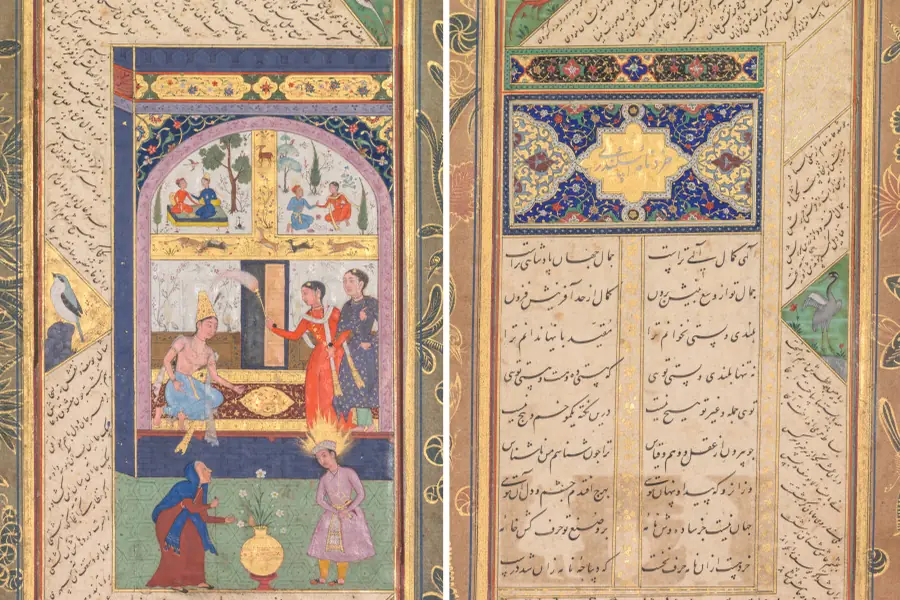
- Zulaykha in her palace and as an old woman with Joseph, from a Panj Ganj (Five Treasures) of Abd al-Rahman Jami (Persian, 1414–1492); verso , Mushfiq (Text copied by Sultan-Ali Mashhadi (Pers) — Cleveland Museum of Art, CC0 1.0
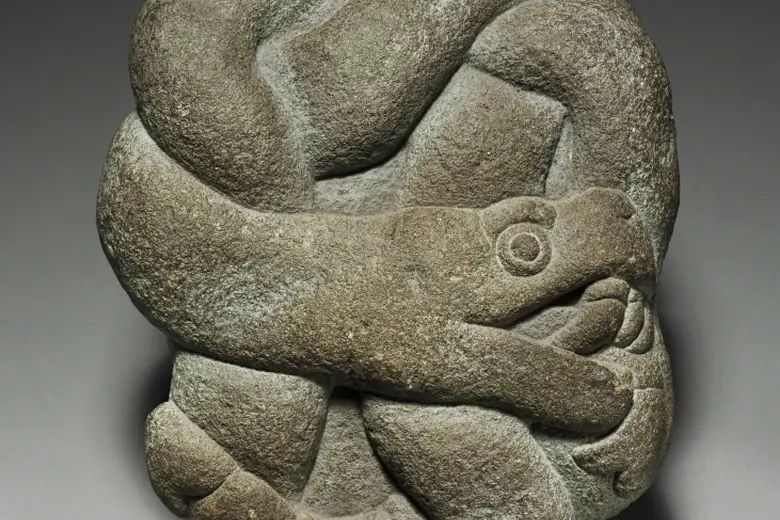
- Coiled Rattlesnake (c. 1200–1519) — Cleveland Museum of Art, CC0 1.0
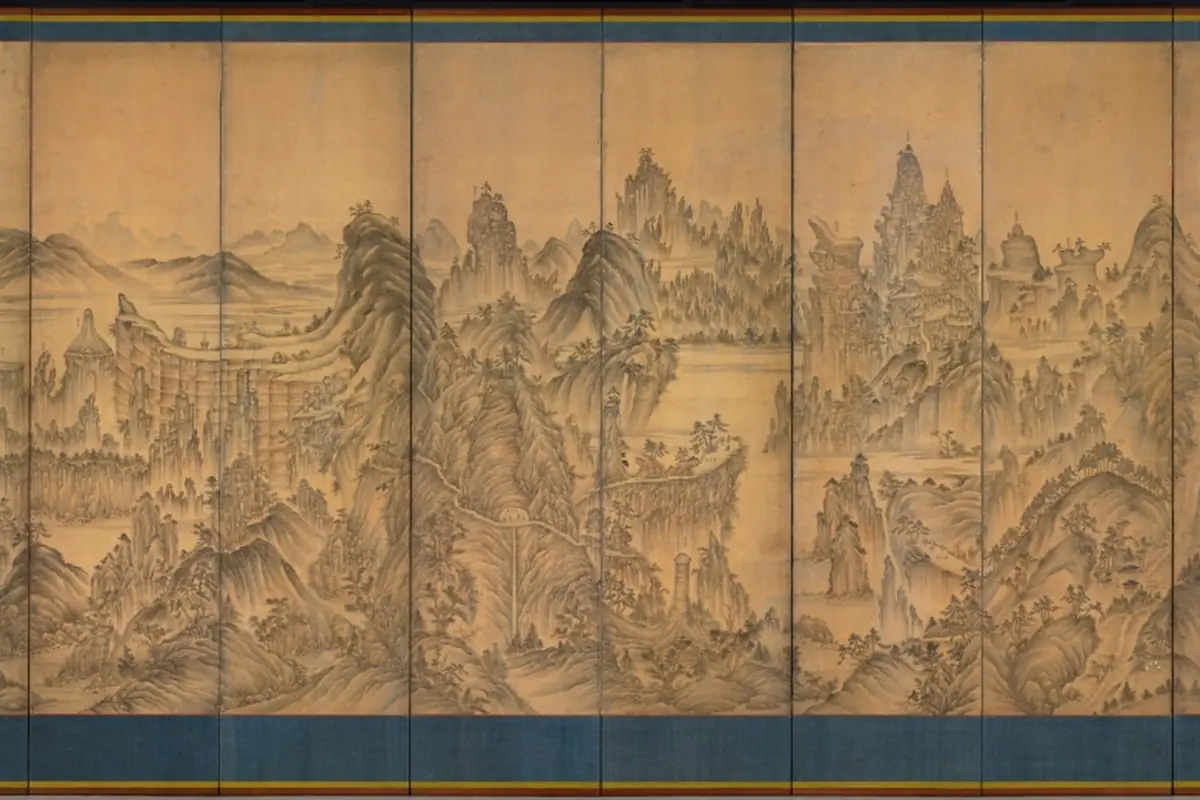
- Seven Jeweled Mountain (late 1800s) — Cleveland Museum of Art, CC0 1.0
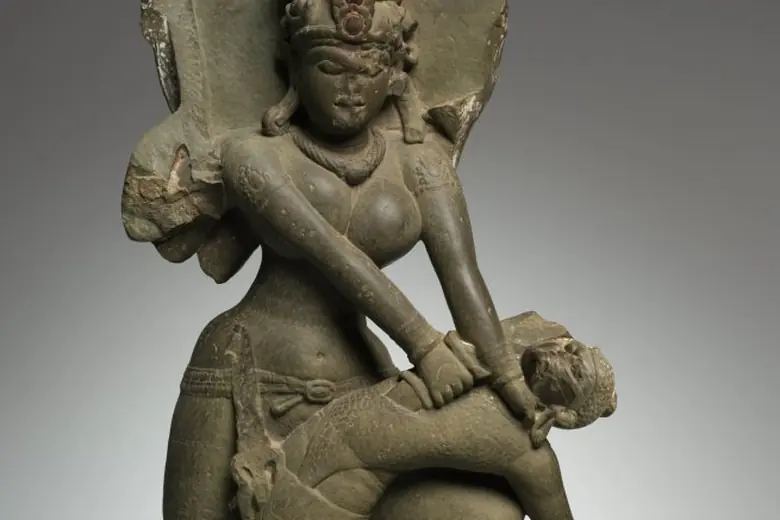
- Durga Destroying the Buffalo Demon (800s–900s) — Cleveland Museum of Art, CC0 1.0
- Nuova pianta di Roma data in luce da Giambattista Nolli l’anno MDCCXLVII, known as La Pianta Grande di Roma, Giovanni Battista Nolli (1748) — Cleveland Museum of Art, CC0 1.0
- Portrait of John VIII Palaoelogus, Emperor of Constantinople, 1424-1428 (reverse), Pisanello (c. 1438–1439) — Cleveland Museum of Art, CC0 1.0
- Dune Scene with Peasant Figures, Willem van de Velde (mid-1650s) — Cleveland Museum of Art, CC0 1.0
- Power figure (nkisi) (late 1800s-early 1900s) — Cleveland Museum of Art, CC0 1.0
- Nuova pianta di Roma data in luce da Giambattista Nolli l’anno MDCCXLVII, known as La Pianta Grande di Roma, Giovanni Battista Nolli (1748) — Cleveland Museum of Art, CC0 1.0
- Roman Ruins, Villa Pamfili, Hubert Robert (1774) — Cleveland Museum of Art, CC0 1.0
- Portrait of Sandford Peacocke, William Wood (1801) — Cleveland Museum of Art, CC0 1.0
- Coronation of the Virgin, Christoffel Jegher (1632–36) — Cleveland Museum of Art, CC0 1.0
- Sandal (mtalawanda / mtawanda) or Clog (kiatu cha mti) (c 1800s) — Cleveland Museum of Art, CC0 1.0
- Power figure (nkisi) (late 1800s-early 1900s) — Cleveland Museum of Art, CC0 1.0
- Third Print from A Low Tide Pentaptych, Utagawa Kuniyoshi (c. 1830) — Cleveland Museum of Art, CC0 1.0