
 Cleveland Museum of Art · CC0 1.0
The applicable law, State by State
The legal part of a country profile describes the national law that applies to cultural property and the art trade. It is drawn up from the texts published by the State and validated by its national focal point. It answers a simple question: what must be done, and with whom, to sell, export, import or return a work in this country?
The section is built around the main international conventions: the 1954 Hague Protocol, the 1970 UNESCO Convention and the 1995 UNIDROIT Convention. It also incorporates the 2019 OIMAP Directives.
For market figures, see market figures.
National legal framework in figures
Source: Member States Relations Directorate.
Heritage protection texts
Each profile cites the main law protecting cultural heritage, any amendments and the implementing texts. It specifies the national definition of cultural property, as this varies: some States use an age criterion, others a criterion of value or historical interest.
National lists or inventories are mentioned where they exist. A listed or registered item is generally subject to stricter rules on circulation and transfer.
The export and import regime
The profile indicates whether exporting a cultural object requires an authorisation, a certificate or a simple declaration. It describes the authority that issues the document, the usual deadlines and the grounds for refusal. It also flags the items that may under no circumstances leave the territory.
For imports, the profile recalls the proof of provenance that customs may require. This information complements the import and export licence service of the OIMAP Desk, whose processing time is ten to twenty days.
Sales and provenance rules
National law regulates the sale of works of art through rules on the approval of operators, the keeping of a register of transactions and the verification of provenance. The profile summarises these obligations and indicates the professions concerned: auction houses, galleries, antique dealers, online platforms.
It also specifies how long documents must be kept and how they are to be communicated to the authorities in the event of an inspection.
Ratifications and transposition
The profile keeps up to date the list of conventions ratified by the State and the date of ratification. For States whose procedure is under way, it states the stage reached. Accession to OIMAP indeed requires ratifying, or committing to ratify, these texts.
Lastly, it indicates whether the 2019 OIMAP Directives, and in particular Directive No. 2019-07 on the authentication of cultural property, have been transposed into domestic law, and in what form.
Ratifications: how to read the table
| Text | Purpose | Mention in the profile |
|---|---|---|
| 1954 Hague Protocol | Cultural property in armed conflict | Yes / No / In progress |
| 1970 UNESCO Convention | Illicit transfers | Yes / No / In progress |
| 1995 UNIDROIT Convention | Stolen or illegally exported property | Yes / No / In progress |
| OIMAP Guidelines 2019 | Seven binding directives | Transposed / Partial |
Milestones
- Hague Protocol
Protection of cultural property in the event of armed conflict.
- UNESCO Convention
Combating illicit transfers.
- UNIDROIT Convention
Return of stolen or illegally exported property.
- OIMAP Guidelines
Seven binding directives, including No. 2019-07.
The official text is authoritative
National law and conventions
National law
Laws of the State- Directly applicable
- Varies by State
- Own penalties
First source to consult.
Conventions
International treaties- Obligations between States
- Common foundation
- Ratification required
Framework that guides national law.
Reading the legal part
- Locate
The property concerned and its definition.
- Identify
The competent authority.
- Check
The authorisations required.
- Plan ahead
The usual deadlines.
- Confirm
From the focal point.
Before an export
A heritage law specialist
« The ratification table saves me from searching ten different databases. I use it as the starting point for every case. »
Legal vocabulary
- Ratification
- Act by which a State undertakes to abide by a treaty.
- Transposition
- Incorporation of an international rule into domestic law.
- Cultural property
- Object protected for its historical or artistic value.
- Export regime
- Rules for leaving the territory.
Penalties and remedies
The penalties applicable to illicit trafficking, export without authorisation or false declaration of provenance are summarised: fine, confiscation, ban on practising, custodial sentences. The profile refers to the texts for details.
The remedies available to individuals and professionals are also indicated, together with the competent authority. For more personalised help, a State may request the Organisation's legal assistance.
Frequently Asked Questions
Do the profiles cover all texts?
They summarise the main ones; the detail is in the official texts.
How do I report an error?
Write to the focal point or to the Member States Relations Directorate.
Where can I see the figures?
See Market figures.
Useful Documents
Contacts
Related pages
 Country ProfilesOne profile per Member State: national legal framework, art market figures and focal point contacts.›
 Market figuresThe statistical part of the country profiles: indicative size of the art market, dominant segments and sales venues.›
 Legal assistanceOpinions, drafting of texts and support for transposing the reference conventions: OIMAP's legal offer to Member States.›
 Conditions of membershipThe four conditions a State must meet in order to apply to OIMAP.›
See the market figures
Image credits (17)
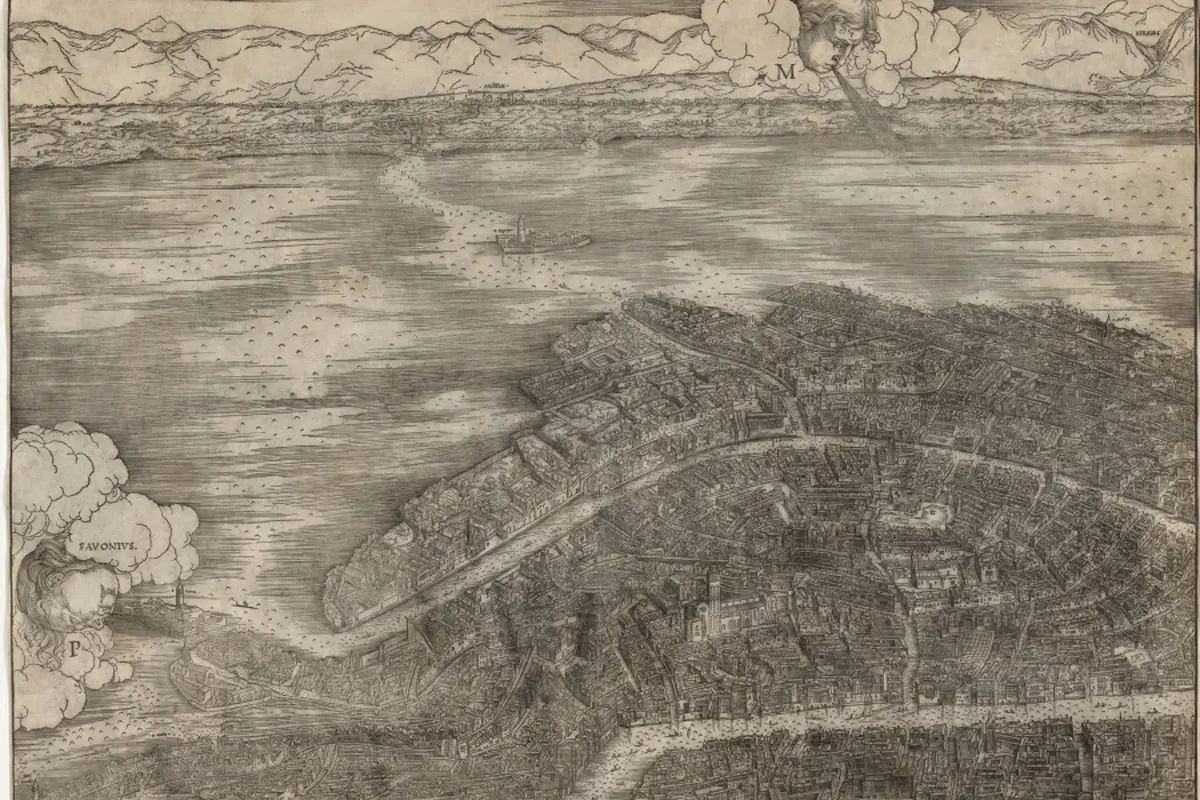
- View of Venice, Jacopo de' Barbari (1500) — Cleveland Museum of Art, CC0 1.0
- The Dance at the Court of Herod, Israhel van Meckenem (c. 1500) — Cleveland Museum of Art, CC0 1.0
- Nuova pianta di Roma data in luce da Giambattista Nolli l’anno MDCCXLVII, known as La Pianta Grande di Roma, Giovanni Battista Nolli (1748) — Cleveland Museum of Art, CC0 1.0
- Beaded Hat or Headpiece (early 1900s(?)) — Cleveland Museum of Art, CC0 1.0
- Nuova pianta di Roma data in luce da Giambattista Nolli l’anno MDCCXLVII, known as La Pianta Grande di Roma, Giovanni Battista Nolli (1748) — Cleveland Museum of Art, CC0 1.0
- Seated Shakyamuni Buddha (c. 120 CE) — Cleveland Museum of Art, CC0 1.0
- Nuova pianta di Roma data in luce da Giambattista Nolli l’anno MDCCXLVII, known as La Pianta Grande di Roma, Giovanni Battista Nolli (1748) — Cleveland Museum of Art, CC0 1.0
- Vase (c. 1000) — Cleveland Museum of Art, CC0 1.0
- Nuova pianta di Roma data in luce da Giambattista Nolli l’anno MDCCXLVII, known as La Pianta Grande di Roma, Giovanni Battista Nolli (1748) — Cleveland Museum of Art, CC0 1.0
- Prunus Vase with Inlaid Lotus and Reed Design (1300s) — Cleveland Museum of Art, CC0 1.0
- Dune Scene with Peasant Figures, Willem van de Velde (mid-1650s) — Cleveland Museum of Art, CC0 1.0
- Small Mosque in the Kaiserbagh, Felice A. Beato (1858) — Cleveland Museum of Art, CC0 1.0
- Portrait of John VIII Palaoelogus, Emperor of Constantinople, 1424-1428 (reverse), Pisanello (c. 1438–1439) — Cleveland Museum of Art, CC0 1.0
- Coronation of the Virgin, Christoffel Jegher (1632–36) — Cleveland Museum of Art, CC0 1.0
- A Lady Reading, Francis Seymour Haden (1833–1910) — Cleveland Museum of Art, CC0 1.0
- Seven Jeweled Mountain (late 1800s) — Cleveland Museum of Art, CC0 1.0
- Nuova pianta di Roma data in luce da Giambattista Nolli l’anno MDCCXLVII, known as La Pianta Grande di Roma, Giovanni Battista Nolli (1748) — Cleveland Museum of Art, CC0 1.0