
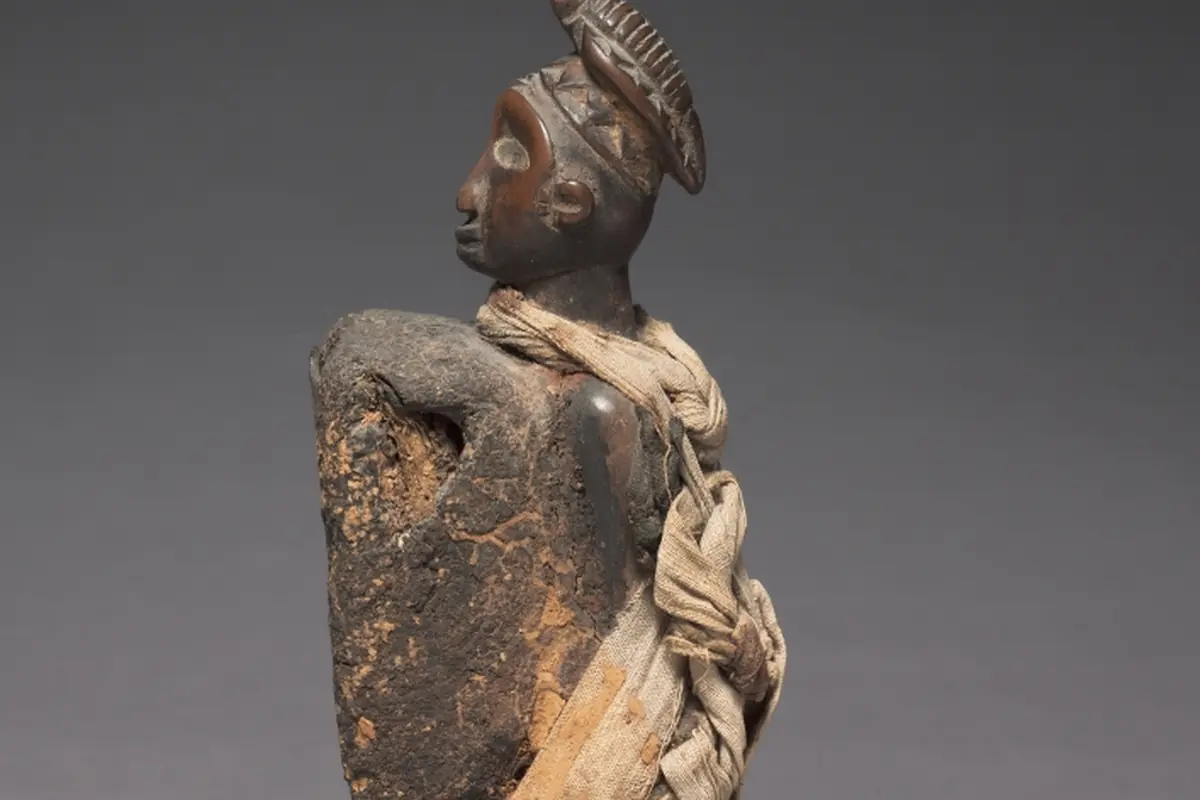
 Cleveland Museum of Art · CC0 1.0
Programmes for the continent
OIMAP programmes in Africa respond to the needs of the eleven Member States: training of officials, restitution of works, customs cooperation and legal support.
They are steered from the Nairobi office and funded by the regular budget and voluntary contributions.
States apply to benefit from them through the request for assistance procedure.
Programmes in Africa in figures
Source: Member States Relations Directorate.
Training of officers
The first strand trains customs, police and museum staff to recognize cultural property, read an export licence and file an alert. The Organization has trained 8,940 officials worldwide.
Sessions are held in Nairobi, in capitals and online. They draw on the training catalogue.
Restitution
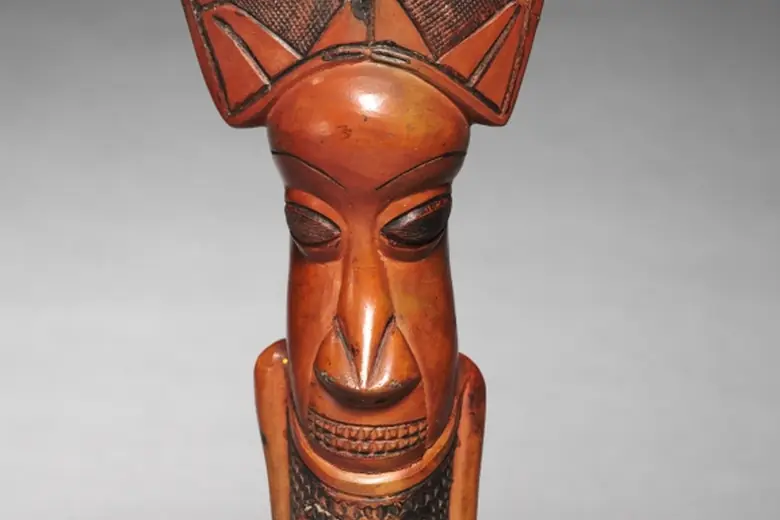
The second strand supports procedures for returning works to their State of origin: compiling the file, proof of provenance, negotiation, handover. African States make wide use of it.
The arrangements are described on the restitution page.
Customs cooperation
The third strand networks customs administrations: sharing alerts, cross-reporting, preparing joint operations. It builds on customs training.
The Organization coordinated 23 operations in 2024, several of which involved African States.
Legal support
The fourth strand helps States align their law with the reference conventions: the 1954 Hague Protocol, the 1970 UNESCO Convention and the 1995 UNIDROIT Convention.
It also helps transpose the OIMAP Guidelines 2019, notably Guideline No. 2019-07 on authentication.
Programmes and audiences
| Programme | Audience | Format |
|---|---|---|
| Basic training | Front-line officers | Three days |
| Advanced training | Customs managers | Five days |
| Restitution support | Heritage departments | Case by case |
| Regional meeting | Focal points | Once a year |
Milestones
- First workshops
Training cycle in Nairobi (indicative).
- OIMAP Guidelines 2019
Transposition workshops.
- Hybrid format
Online sessions.
- Joint operations
Participation in coordinated operations.
An online request
In person or online
In person
On site- Practical exercises
- Direct contacts
- Teaching equipment
For practice.
Online
Remote- No travel required
- Adapted schedules
- Downloadable materials
To reach more officials.
Benefiting from a programme
- Identify
The national need.
- Consult
The available strands.
- Submit
The request for assistance.
- Take part
In the selected actions.
- Evaluate
The results.
Before submitting a request
A head of heritage department
« The training gave us methods for building a solid restitution file. Our most recent file succeeded more quickly. »
Glossary of programmes
- Programme
- A set of actions followed over time.
- Provenance
- Ownership history of a work.
- Joint operation
- Action carried out by several States.
- Review
- Annual evaluation.
Evaluation of programmes
Each programme is subject to an annual review: participants, results, feedback from States. Regional figures are indicative until the annual report is published.
States may request an adaptation of the programme following the review.
Frequently Asked Questions
Are the programmes fee-based?
They are funded by the Organization; States cover their own travel costs.
Who can benefit?
The eleven Member States that are up to date with their obligations.
How do I register?
Through the online request for assistance.
Where can the training be found?
See Training.
Useful Documents
Contacts
Related pages
 AfricaEleven African Member States, a regional office in Nairobi and programmes focused on heritage protection and training.›
 Nairobi officeOIMAP's regional office for Africa: missions, team, services to Member States and contact details.›
 Technical AssistanceTraining of officials, equipment, audit of services and on-site missions: OIMAP's operational support to Member States.›
 Restitution AgreementsThe bilateral framework for the return of cultural property: principles, stages, evidence and results, with 847 works returned.›
Submit a request for assistance
Image credits (17)
- Male Figure (Nkisi) (late 1800s-early 1900s) — Cleveland Museum of Art, CC0 1.0
- A Home in the Wilderness, Sanford Robinson Gifford (1866) — Cleveland Museum of Art, CC0 1.0
- Prestige Cap (mpu ngola) (late 1800s–early 1900s) — Cleveland Museum of Art, CC0 1.0
- Châteauvieux-sur-Suran, Antoine-Claude Ponthus-Cinier (1848) — Cleveland Museum of Art, CC0 1.0
- Pipe Bowl (before 1935) — Cleveland Museum of Art, CC0 1.0
- An October Day in the White Mountains, John Frederick Kensett (1854) — Cleveland Museum of Art, CC0 1.0
- Carved Tooth (late 1800s) — Cleveland Museum of Art, CC0 1.0
- View of the Gulf of Pozzuoli from Solfatara, Philipp Hackert (1803) — Cleveland Museum of Art, CC0 1.0
- Power figure (nkisi) (late 1800s-early 1900s) — Cleveland Museum of Art, CC0 1.0
- Mt. Dong (Grotto Mountain), Song Xu (c. 1588) — Cleveland Museum of Art, CC0 1.0
- Helmet Mask (early to mid-1900s) — Cleveland Museum of Art, CC0 1.0
- The Apotheosis of Romulus: Design for a Ceiling, Domenico Maria Canuti (c. 1675–76) — Cleveland Museum of Art, CC0 1.0
- Bird Standard (early to mid-1900s) — Cleveland Museum of Art, CC0 1.0
- Beaded Necklace (c. 1900) — Cleveland Museum of Art, CC0 1.0
- Leaf from a Lectionary with St. Luke (1057–1063) — Cleveland Museum of Art, CC0 1.0
- Portrait of John VIII Palaoelogus, Emperor of Constantinople, 1424-1428 (reverse), Pisanello (c. 1438–1439) — Cleveland Museum of Art, CC0 1.0
- Temple of Athene Nike. Venus Victrix—Wingless Victory, Dimitrios Constantin (c. 1850s–60s) — Cleveland Museum of Art, CC0 1.0