
 Cleveland Museum of Art · CC0 1.0
Pages in this section
 Full text of the 1954 Hague ConventionThe provisions of the 1954 Hague Convention, presented article by article, with their practical scope.›
 Additional Hague ProtocolsThe First Protocol of 1954 and the Second Protocol of 1999: return of exported property, enhanced protection and criminal responsibility.›
 Application of the Hague ConventionHow OIMAP Member States implement the Hague Convention and its protocols: national laws, inventories, training.›
Protecting heritage when the guns speak
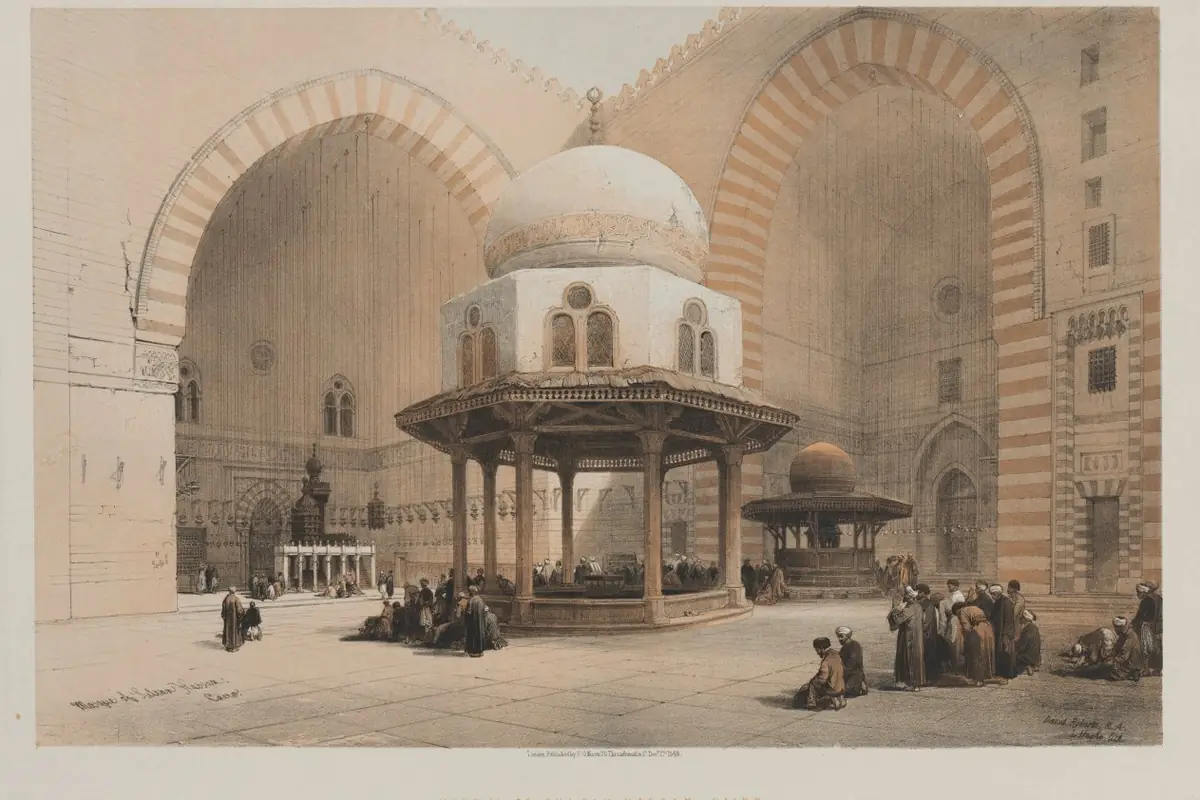
Adopted at The Hague on 14 May 1954, the Convention for the Protection of Cultural Property in the Event of Armed Conflict is the first international treaty devoted to this subject. It sets out a simple principle: the heritage of a people is the heritage of humanity.
It is supplemented by a First Protocol (1954), which prohibits the export of cultural property from occupied territory and organises its return, and by a Second Protocol (1999), which strengthens protection and establishes individual criminal responsibility.
This section presents its text, the additional protocols and its application by OIMAP Member States.
Hague Protocol 1954 in figures
Source: OIMAP Legal Affairs Department.
The three pages of the section
What the Convention says
The Convention imposes two main obligations. In peacetime, States must prepare the protection of their heritage: inventories, safeguarding measures, training of military personnel. In time of conflict, they must refrain from using cultural property for military purposes and from attacking it, except in cases of imperative military necessity.
It establishes a distinctive emblem, the blue and white shield, which may be affixed to monuments, museums, archives and repositories of property. It also provides for a special protection regime for a limited number of refuges.
Why the Convention matters to the art market
Armed conflicts are one of the main sources of trafficking. Looted museums, archaeological sites dug in haste and scattered collections feed an underground market that ends up in salerooms and on platforms.
That is why OIMAP directives require enhanced vigilance for property from conflict zones or occupied territories, and systematically consult the BIOP database for these provenances.
Links with other conventions
The Hague Convention protects cultural property during conflicts; the 1970 UNESCO Convention fights trafficking in normal times; the 1995 UNIDROIT Convention organises restitution before the judges. These three instruments complement one another.
In practice, the same object can fall under several texts: a statue looted from a museum during a conflict, illegally exported and then sold to a good-faith buyer falls under all three.
The three instruments
| Instrument | Year | Main purpose |
|---|---|---|
| Hague Convention | 1954 | General and special protection of cultural property |
| First Protocol | 1954 | Ban on exporting from an occupied territory and return of property |
| Second Protocol | 1999 | Enhanced protection and individual criminal responsibility |
Landmarks
- Convention and First Protocol
Adoption at The Hague.
- Entry into force
After five ratifications.
- Second Protocol
Strengthening of the regime.
- Entry into force of the Second Protocol
Enhanced protection operational.
Property stolen in wartime
General or enhanced protection
General protection
1954 Convention- All cultural property
- Respect and safeguarding
- Waiver for military necessity
Basic regime.
Enhanced protection
1999 Second Protocol- Property of the greatest importance
- No waiver for military necessity except in specific cases
- Criminal penalties
Most protective regime.
Applying the Convention in practice
- Inventory
Draw up the list of property to protect.
- Report
Affix the emblem.
- Prepare
Train the armed forces.
- Respect
Refrain from any attack.
- Restitute
Return illicitly exported property.
Reflexes for the market operator
A humanitarian law specialist
« The Hague Convention reminds us that protecting a work means protecting the memory of those who made it. »
Vocabulary of The Hague
- Blue shield emblem
- Distinctive sign of protected cultural property.
- Occupied territory
- Territory placed under the authority of a foreign army.
- Military necessity
- Exception to the prohibition on attacking property.
- Blue Shield
- Network of heritage protection organisations in times of crisis.
Frequently asked questions
Does the Convention apply to internal conflicts?
Yes, for its essential provisions, and the Second Protocol also applies to them.
Does OIMAP apply these texts?
It incorporates them in its directives and in the BIOP database.
Where can I read the texts?
On the full text and additional protocols pages.
How to report an item from a conflict zone?
Through reporting to the BIOP.
Useful documents
Contacts
Related pages
 Full text of the 1954 Hague ConventionThe provisions of the 1954 Hague Convention, presented article by article, with their practical scope.›
 Additional Hague ProtocolsThe First Protocol of 1954 and the Second Protocol of 1999: return of exported property, enhanced protection and criminal responsibility.›
 Application of the Hague ConventionHow OIMAP Member States implement the Hague Convention and its protocols: national laws, inventories, training.›
 BIOP databaseThe international database of protected works: 48,200 stolen, lost or suspect works, searchable by all and enriched by police forces and museums.›
Read the text
Image credits (23)
- Temple at Naveshera, Kashmir, India, Samuel Bourne (1864) — Cleveland Museum of Art, CC0 1.0
- Châteauvieux-sur-Suran, Antoine-Claude Ponthus-Cinier (1848) — Cleveland Museum of Art, CC0 1.0
- The Dance at the Court of Herod, Israhel van Meckenem (c. 1500) — Cleveland Museum of Art, CC0 1.0
- The Victory Banquet: from Battle Scenes of the Quelling of Rebellions in the Western Regions, with Imperial Poems (c. 1765–74; poem dated 1760) — Cleveland Museum of Art, CC0 1.0
- Egypt & Nubia, Volume III, No. 8: Mosque of Sultan Hassan, Cairo, Louis Haghe (1842–49) — Cleveland Museum of Art, CC0 1.0
- Roman Ruins, Villa Pamfili, Hubert Robert (1774) — Cleveland Museum of Art, CC0 1.0
- India. Benares. Aurangzeb's Mosque, after a photo by Dr. Kurt Boeck, Photoglob Co. (c. 1890–1910) — Cleveland Museum of Art, CC0 1.0
- Portrait of John VIII Palaoelogus, Emperor of Constantinople, 1424-1428 (reverse), Pisanello (c. 1438–1439) — Cleveland Museum of Art, CC0 1.0
- Pastoral Landscape with Ruins and a Ford, Gerhardt Janssen (1722) — Cleveland Museum of Art, CC0 1.0
- Temple of Ramesses II, Abu Simbel, Antonio Beato (c. 1860s) — Cleveland Museum of Art, CC0 1.0
- Egypt and Nubia, Volume I: Pyramids of Geezeh, from the Nile, Louis Haghe (1846) — Cleveland Museum of Art, CC0 1.0
- Vue générale prise à l'angle sud-ouest, Philoe, Maxime Du Camp (1849–50) — Cleveland Museum of Art, CC0 1.0
- Eighteen Views of Rome: The Piazza Farnese (recto); Cartouche (verso), Lievin Cruyl (1664) — Cleveland Museum of Art, CC0 1.0
- Karnak, Les Pylônes d'Horus, Henri Béchard (1860s) — Cleveland Museum of Art, CC0 1.0
- Coronation of the Virgin, Christoffel Jegher (1632–36) — Cleveland Museum of Art, CC0 1.0
- Egypt and Nubia: Volume I - No. 4, Slave Boats on the Nile, View Looking Towards the Pyramids of Dashour and Saccara, Louis Haghe (1838) — Cleveland Museum of Art, CC0 1.0
- A Palace with an Arched Bridge (A Roman Villa), Hubert Robert (1760) — Cleveland Museum of Art, CC0 1.0
- Architectural Conference (c. 1622) — Cleveland Museum of Art, CC0 1.0
- Eighteen Views of Rome: The Piazza Farnese (recto), Lievin Cruyl (1664) — Cleveland Museum of Art, CC0 1.0
- The Grotto of Posillipo, Hubert Robert (c. 1769) — Cleveland Museum of Art, CC0 1.0
- The Apotheosis of Romulus: Design for a Ceiling, Domenico Maria Canuti (c. 1675–76) — Cleveland Museum of Art, CC0 1.0
- Seal with Two Qilin Playing (1849) — Cleveland Museum of Art, CC0 1.0
- Album with Views of Rome and Surroundings, Landscape Studies, page 23a: Castle Saint Angelo, Rome, Franz Johann Heinrich Nadorp (c. 1830s-70s) — Cleveland Museum of Art, CC0 1.0